Hanging Bird Feeders: The Complete Guide to Hardware, Placement & Setup
A hanging bird feeder is the most versatile feeder design, it works from a tree branch, a shepherd’s hook, an eave bracket, or a deck overhang, and adapts to almost any yard. The catch is that hanging feeders fail in specific ways that pole-mounted feeders don’t: they swing in wind, they’re vulnerable to climbing predators when hung from trees, and they’re harder to defend against squirrels. This guide covers what makes a feeder “hanging” rather than pole-mounted or window-mounted, the hardware that holds them securely, where to hang them for maximum bird traffic and minimum problems, and how to solve every common issue from squirrel raids to wind-spilled seed.
What Counts as a Hanging Bird Feeder
A hanging bird feeder is any feeder designed to be suspended from above, typically by a wire, chain, or rope attached to a hanging hook or branch. The defining feature is that the feeder hangs freely, swinging gently in wind, rather than being rigidly mounted to a pole, post, or wall.
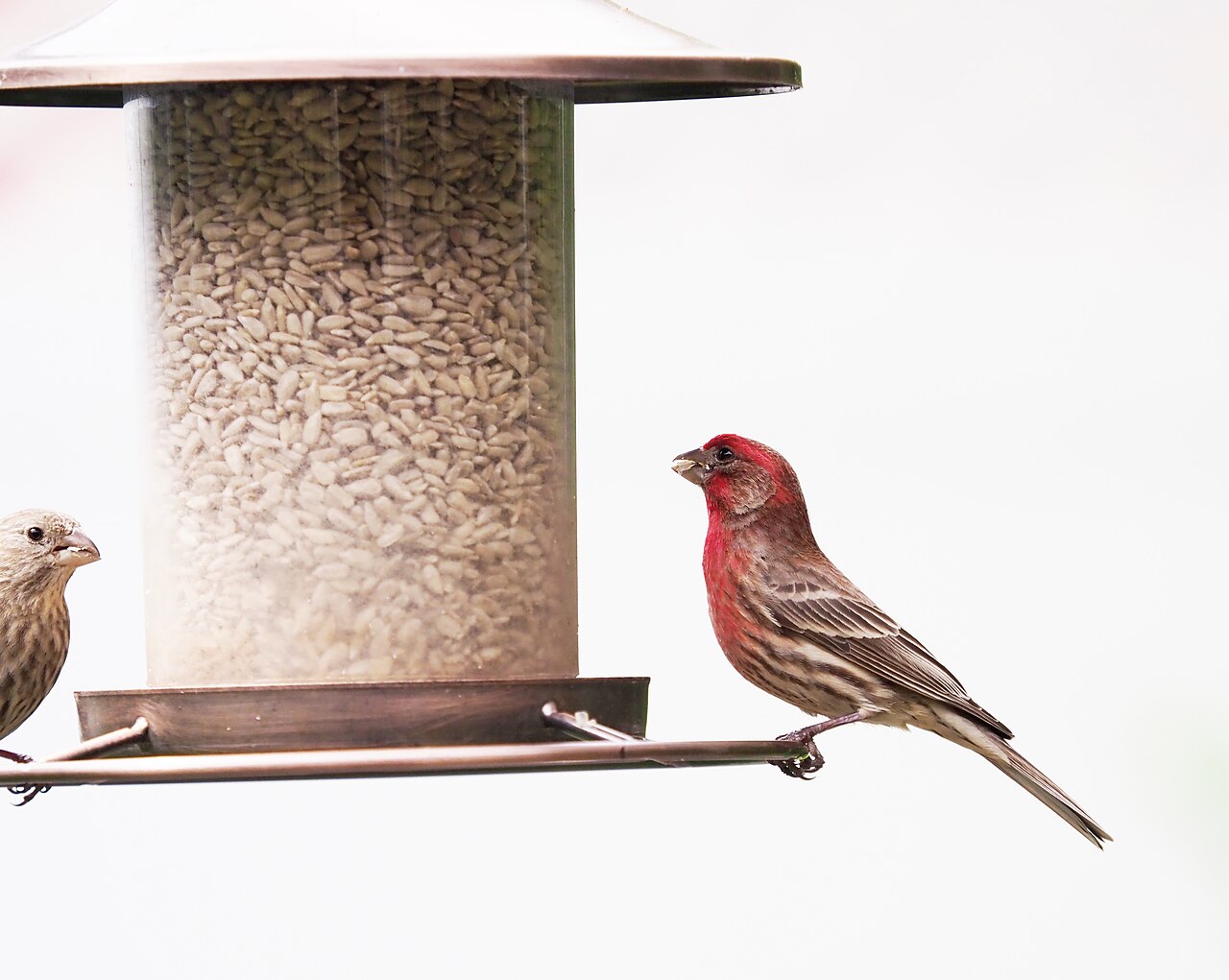
Most feeder types can be hung. Tube feeders, hopper feeders, suet cages, nyjer socks, and platform feeders all have hanging versions. The choice of hanging design depends on what you want to attract:
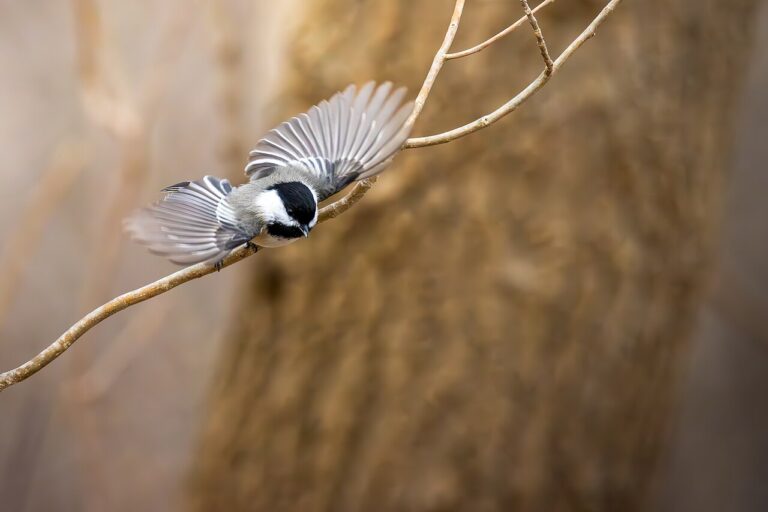
- Tube feeders for chickadees, finches, titmice, nuthatches
- Hopper feeders for cardinals, jays, grosbeaks, larger songbirds
- Suet cages for woodpeckers, nuthatches, wrens
- Nyjer socks or tubes for goldfinches and other small finches
- Hanging platform feeders for ground-feeding species adapted to elevated use
For a complete breakdown of which feeder type to choose, see the bird feeders complete guide. This guide focuses on the hanging-specific aspects: hardware, placement, and the unique problems hanging feeders introduce.
Where to Hang a Bird Feeder
Placement is the single biggest variable in hanging feeder success. The hanging feeder placement rules combine the universal feeder rules (10 to 15 feet from cover, 3 or 30+ feet from windows) with hanging-specific concerns about height, wind exposure, and predator access.
From a Tree Branch
Hanging a feeder from a tree branch is the most natural-looking option and the most common beginner choice. It works well, with one significant caveat. Trees are climbable highways for raccoons, squirrels, and snakes. Without specific predator protection, a tree-hung feeder will lose most of its food to mammals within weeks.
The placement rules for tree-hung feeders:
- Branch should be 10+ feet from any climbable surface to the side (other tree trunks, fences, or structures). Squirrels and raccoons can jump astonishing distances; the gap matters.
- Feeder should hang 4 to 8 feet above the ground. Higher than 8 feet makes refilling difficult; lower than 4 feet exposes birds to ground predators.
- At least 4 feet below the supporting branch. This prevents squirrels from reaching down to access the feeder while clinging to the branch.
- Use a baffle on the hanging wire if squirrel access is a concern. A clear plastic dome baffle 12 to 15 inches above the feeder blocks squirrels descending the wire.
The branch itself matters: dead branches break unpredictably, oversized branches make access too easy for squirrels. Choose a live, healthy branch about 1 to 2 inches in diameter for typical feeder weight (2 to 10 pounds when loaded).
From a Shepherd’s Hook
A shepherd’s hook is a curved metal pole staked into the ground, with a hook at the top for hanging feeders. This is functionally similar to a pole-mounted setup but uses a hanging mechanism, which gives you placement flexibility a fixed pole doesn’t.
The shepherd’s hook setup:
- Plant the hook 5 to 6 feet deep in solid ground. Shallow placement allows the hook to lean or tip when birds add weight or wind blows.
- Place 10+ feet from cover (same as other feeders) but use the placement flexibility to position for the best view from inside.
- Use the proper-rated hook, most commercial shepherd’s hooks support 5 to 15 pounds. Heavier feeders may need a sturdier hook.
- Add a wraparound baffle 3 to 4 feet up the pole to block squirrels climbing from below. We cover specific baffle options in the squirrel baffles guide.
Shepherd’s hooks are particularly good for yards without good tree placement, open lawns, edges of garden beds, deck-adjacent spaces.
From an Eave or Bracket
An eave-mounted bracket attaches to the side of a house, garage, or other structure, with a hook at the end for hanging feeders. This is the closest you’ll get to a hanging feeder for apartments or homes without yard hanging options.
Eave-mounted considerations:
- Distance from windows. Bracket-mounted feeders are often within the 5 to 30 foot window danger zone. Either move the feeder closer to the wall (under 3 feet) or use applied window markers on nearby glass.
- Sun exposure. Eaves often face one direction; if it’s south-facing, expect more sun damage to feeders. East-facing eaves are ideal.
- Wind protection. Eaves block wind from one side. This can be a feature (protected feeders) or a bug (limited flight approach for birds).
Under an Overhang or Deck
Some yards have natural overhangs, a deck soffit, an awning, an old shed roof, that can host a hanging feeder. These setups are wind-protected, rain-protected, and easy to access. The trade-off is reduced visibility from passing flight paths.
For most beginners, a deck-mounted feeder is a good complement to other yard placements rather than a primary feeder, because visibility is the main attraction factor for new feeders.
Hanging Hardware: What Actually Holds
The biggest avoidable mistake with hanging feeders is undersized hardware that fails over time. A new feeder hung on a thin gauge wire from a small hook will eventually drop, usually filled with seed in the middle of winter when squirrels and birds are most desperate.
Wire and Chain
The connection between the feeder and the hook should be sized for at least twice the feeder’s maximum weight. Specific specifications:
- Tube and hopper feeders (2 to 5 lbs loaded): 14-gauge galvanized wire or small chain (3/16 inch).
- Larger hoppers and platforms (5 to 10 lbs loaded): 12-gauge wire or 1/4 inch chain.
- Heavy duty (10+ lbs): 10-gauge wire or 5/16 inch chain.
Galvanized steel resists rust; copper wire is decorative but degrades faster. Replace wire annually in cold or damp climates; wire that’s discolored, kinked, or showing wear is past its useful life.
Hooks and Brackets
Wall-mounted brackets, ceiling hooks, and shepherd’s hook tops should be rated for at least 25 pounds even if the feeder weighs only 5 pounds. The extra capacity prevents fatigue failure over years of swinging and birds landing.
For tree hangs, avoid hooks that wrap directly around branches. They damage the tree by girdling the bark, eventually killing that branch. Use a soft cloth strap around the branch with the hook attached, or hang from a sturdy nail driven horizontally into a dead branch (never live wood).
Anti-Sway Hardware
A swinging feeder isn’t just annoying, it actively reduces bird visits. Birds prefer stable landing surfaces and will choose a still feeder over a swinging one consistently. Several solutions:
- Anti-sway hooks are spring-loaded brackets that dampen feeder motion. Cost $8 to 15.
- Counterbalanced hanging systems use weights to prevent swinging. More expensive ($25 to 50) but more effective.
- Triangular hang, using three wires from three different attachment points to a feeder creates a stable tripod that doesn’t swing.
In windy locations, the triangular hang is the most effective solution and works with any feeder.
Optimal Height for Hanging Feeders
The right height balances bird preference, refill access, and predator protection. The sweet spot for most hanging feeders is 4 to 6 feet above the ground.
Why this range:
- Above 4 feet protects from ground-level predators (cats, dogs, ground squirrels, raccoons walking through the yard).
- Below 6 feet is reachable for refilling and cleaning without ladders or step-stools.
- Birds prefer 4 to 8 feet as a “safe” landing height, high enough to escape, low enough to perch on cover plants.
Adjustments:
- In areas with heavy outdoor cat traffic: push toward 6 to 8 feet.
- For elderly users or anyone with mobility issues: keep at 4 feet for easy access.
- For window-mounted hanging brackets: match the feeder height to your viewing height inside.
For specific shepherd’s hook setups with these heights, the bird feeder poles guide covers pole types and installation, and the bird feeder stands guide covers free-standing alternatives.
Solving the Squirrel Problem on Hanging Feeders
Squirrels are the single biggest failure mode for hanging feeders, more than wind or rain combined. Without specific squirrel defenses, a hanging feeder accessible from any climbable surface will be raided within days, and the feeder may be damaged within weeks.
Defense Layer 1: The Hanging Baffle
A clear plastic dome baffle, 12 to 15 inches in diameter, suspended 6 to 10 inches above the feeder, blocks squirrels descending the hanging wire. The squirrel can climb the wire to the dome but can’t reach around it to access the feeder below.
Cost: $15 to 25. Effectiveness: very high when properly installed (dome at the right diameter and height).
Defense Layer 2: Squirrel-Proof Mechanism
Many hanging feeders include weight-triggered mechanisms that close the seed ports when something heavier than a bird (i.e., a squirrel) lands on them. Brands like Brome (Squirrel Buster Plus), Droll Yankees, and Perky-Pet offer reliable weight-triggered designs.
Cost: $40 to 80. Effectiveness: very high for properly-functioning units.
Defense Layer 3: Seed Choice
Safflower seed deters squirrels (they generally dislike it) while attracting cardinals, finches, and titmice. Filling a hanging feeder with straight safflower is an effective passive defense that doesn’t require additional hardware.
Cost: roughly $2/lb (slightly more than sunflower). Effectiveness: moderate to high depending on how desperate the local squirrels are.
For specific squirrel-proof feeder recommendations, see the best squirrel-proof bird feeders guide.
Maintenance Specific to Hanging Feeders
Hanging feeders have some unique maintenance considerations beyond the standard feeder upkeep:
- Check the hanging hardware monthly. Wire degrades, hooks corrode, connections work loose over time. A 30-second visual inspection prevents catastrophic drops.
- Re-balance after windy storms. Strong winds can spin or rotate feeders, leading to wire kinks or hook stress. Untangle and reset orientation after major weather.
- Test stability before each refill. Press lightly on the feeder; if it moves more than expected, address the hardware issue before it fails fully.
- Clean the hanging mechanism every 2 weeks along with the feeder itself. Bird droppings on hooks and wires can corrode metal faster than expected.
The standard cleaning protocol still applies: every 2 weeks normally, weekly in damp or hot weather, with a 1:9 bleach-to-water solution.
When Hanging Feeders Aren’t the Best Choice
Hanging feeders work in most yards, but some situations favor pole-mounted or fixed alternatives:
- Yards with heavy squirrel pressure and limited budget, pole-mounted with a baffle is more squirrel-proof than most hanging setups.
- Heavy wind areas, hanging feeders swing more than fixed alternatives, reducing bird visits and increasing wear.
- Yards with no suitable hanging point, no trees, no eaves, no installation hardware available. Pole-mounted is the practical alternative.
- Heavy feeders requiring stability, Purple Martin houses, large multi-compartment systems, or any setup over 15 pounds works better fixed than hung.
For these situations, see the bird feeder poles guide and the bird feeder stands guide.
Combining Hanging Feeders for a Complete Yard Setup
A high-functioning yard typically uses hanging feeders alongside other types rather than exclusively. A common setup that maximizes variety:
- One hanging tube feeder with black oil sunflower for chickadees, finches, titmice
- One hanging hopper feeder for cardinals and larger birds
- One hanging suet cage for woodpeckers
- One pole-mounted setup with a baffle as a squirrel-defended option
This combination attracts the widest variety while keeping at least one feeder reliably squirrel-defended. Add a hummingbird feeder during nectar season and a water source within 15 feet, and you’ve covered the four habitat fundamentals from the attract birds to your yard guide.
Frequently Asked Questions
How high should I hang a bird feeder?
4 to 6 feet above the ground is optimal for most situations. Higher than 6 feet makes refilling difficult; lower than 4 feet exposes birds to ground predators like cats. In yards with heavy outdoor cat traffic, push toward 6 to 8 feet.
Where is the best place to hang a bird feeder?
10 to 15 feet from dense cover (trees, shrubs, brush piles) for safety, and either under 3 feet or over 30 feet from windows to avoid bird strikes. Visible from inside your home so you’ll actually watch and maintain it. East-facing or south-facing for morning sun and afternoon shade.
Can I hang a bird feeder from a tree branch?
Yes, but trees are climbable highways for raccoons and squirrels. Hang at least 4 feet below the supporting branch with a baffle on the wire, and ensure the branch is at least 10 feet from any other climbable surface (other trees, fences, decks).
How do I keep my hanging feeder from swinging in the wind?
Use an anti-sway hook (spring-dampened bracket, $8 to 15) or a triangular hang setup (three wires from three attachment points). Stable feeders see significantly more bird visits than swinging ones.
What’s the strongest hanging hardware for a bird feeder?
For typical 2 to 10 pound feeders, 12 to 14 gauge galvanized steel wire or 3/16 to 1/4 inch chain. Hooks and brackets should be rated for at least 25 pounds even for lighter feeders, to handle accumulated wear and bird/wind stress.
How do I keep squirrels off a hanging feeder?
Three layers: a clear plastic dome baffle above the feeder, a weight-triggered squirrel-proof mechanism on the feeder itself, and safflower seed (squirrels dislike it). Combination of all three is highly effective.
Can I hang a bird feeder from my deck or eave?
Yes, with an eave-mounted bracket. Ensure the feeder is either under 3 feet or over 30 feet from any windows to avoid bird strikes, and consider applied window markers on nearby glass.
How heavy can a hanging bird feeder be?
For typical residential hanging hardware: up to 15 pounds when fully loaded. Heavier setups (large multi-compartment feeders, Purple Martin houses) typically work better pole-mounted than hung.
Should I take down hanging feeders in winter?
No, except during severe storms when wind could damage the feeder or hardware. Hanging feeders work year-round and are especially valuable in winter when natural food is scarce. Brace for strong winds by temporarily relocating or removing the feeder for the duration.
How often should I check my hanging feeder hardware?
Monthly visual inspection of wire, hook, and connections. Replace wire annually in cold or damp climates, or sooner if you see discoloration, kinks, or wear. Catastrophic drops are almost always preventable with routine inspection.