How to Attract Birds to Your Feeder: The Complete Step-by-Step Guide
You hung a new feeder. Filled it with seed. Stepped back. And then… nothing happened for a week, maybe two. Most new feeders take 1 to 3 weeks before birds find them, but the speed and consistency of that discovery depends almost entirely on five decisions you make during setup. Skip any one of them and you’ll wait twice as long, attract half the variety, or watch the wrong birds (House Sparrows, squirrels, grackles) dominate while everything you actually want stays away. This guide walks through the exact five steps, in the order they matter, to go from “empty feeder” to “active backyard” in two weeks or less.
Why Most New Feeders Stay Empty
Birds are cautious about new objects in their environment. A feeder is an unfamiliar shape, in an unfamiliar location, with an unfamiliar smell, and birds need to verify it’s safe before risking a visit. The default discovery process: a single curious chickadee or titmouse notices the feeder, watches it from cover for hours or days, eventually descends for a quick test peck, retreats to watch again, then returns more confidently the next day. Once one bird uses the feeder and lives, others follow within hours.
The whole process typically takes 1 to 3 weeks for a properly-set-up feeder. It takes much longer, or never finishes, for feeders that fail one of the five setup fundamentals. Most beginners experience the longer version, conclude that “the birds in my neighborhood just don’t come to feeders,” and either give up or accept poor results. Almost always, the problem is fixable.
If you’ve already addressed the broader habitat setup, the complete guide to attracting birds to your yard covers the four habitat levers. This guide focuses on the specific question of getting birds to a feeder.
Step 1: Pick the Right Feeder Type
Different feeders attract different birds. A tube feeder with thistle seed brings goldfinches and nothing else; a platform feeder brings doves, sparrows, and jays. Match the feeder type to the species you want, or, for fastest general results, pick the most universally-attractive design first.
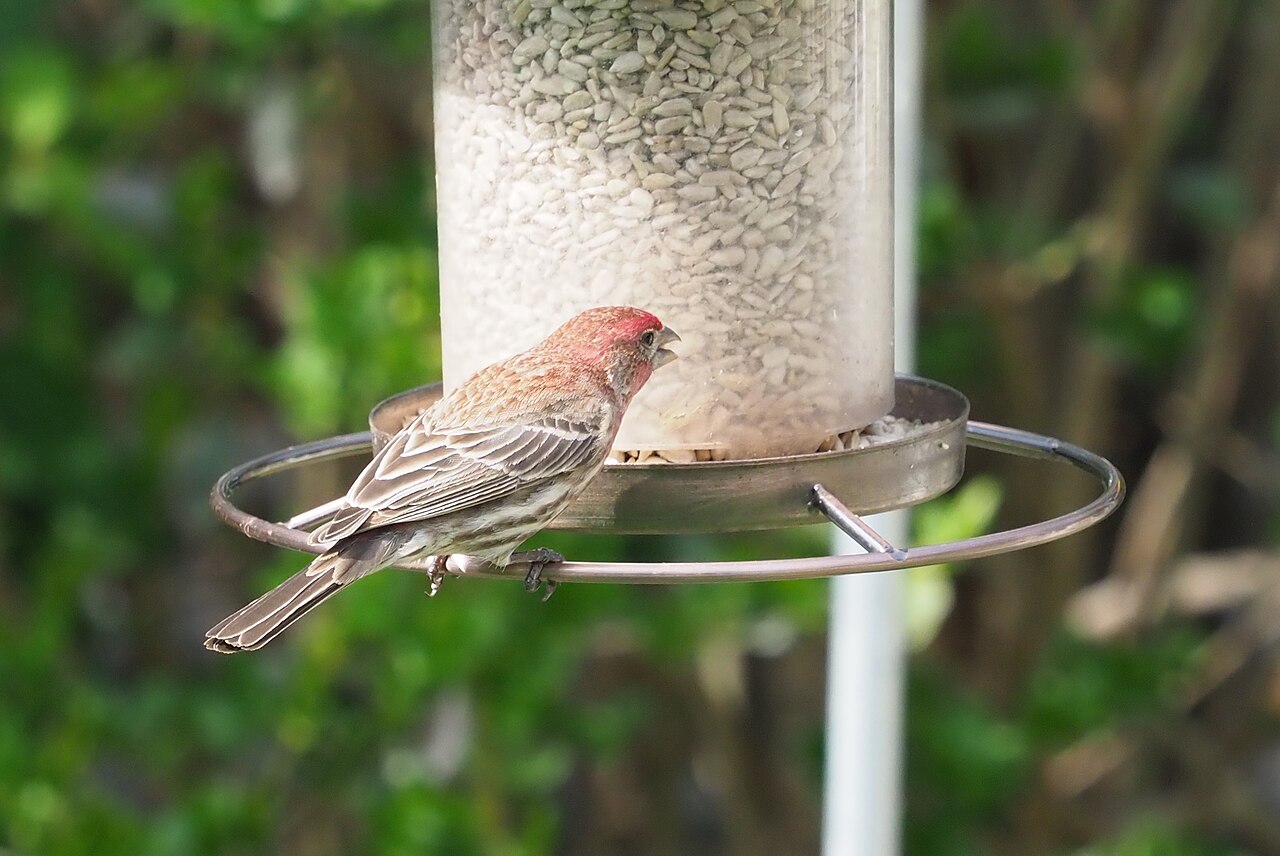
For a new yard with no established bird traffic, the highest-yield starter feeder is a tube or hopper feeder filled with black oil sunflower seed. This combination attracts the widest variety of common backyard species: chickadees, titmice, cardinals, finches, jays, nuthatches, woodpeckers, grosbeaks, and several sparrow species.
What to avoid as a first feeder:
- Decorative or unusual shapes. Birds approach novel objects cautiously. Standard feeder shapes get visited faster.
- Wide-open platform feeders without protection. They work, but they attract every non-target visitor (squirrels, raccoons, House Sparrows) before birds find them.
- Hummingbird-only feeders as a first setup. Hummingbirds are seasonal and selective; you’ll wait months for visits in many regions.
The complete bird feeders guide breaks down each feeder type with the species pairings. For now, the headline: tube or hopper, black oil sunflower, one feeder. Don’t complicate it.
Step 2: Use Seed That Birds Actually Want
The single most common reason new feeders stay empty: cheap “wild bird mix” filled with seeds that backyard birds don’t eat. Generic mixes are heavy on milo, red millet, cracked corn, and wheat, filler seeds that the majority of native songbirds reject. The expensive seeds (sunflower, safflower, nyjer) are present in small amounts. Birds pick out the few good seeds, scatter the rest, and most of the bag rots on the ground.
The fix is straightforward: buy single-ingredient bags, not mixes. The high-yield starter combination:
- Black oil sunflower seed as the primary food. Universal attraction. 20-pound bag costs $25 to 35.
- Optional: add nyjer seed in a separate feeder for goldfinches (if you have any in your region), or safflower seed if House Sparrows already dominate your yard.
Don’t use:
- Generic “wild bird mix” unless the label specifies high-quality seeds
- Stale seed (sniff-check it; fresh seed has a faint nutty smell, stale smells musty or sour)
- Bread, breakfast cereal, or kitchen scraps
The complete bird seed guide covers every seed type with the species pairings. The headline for new setups: just black oil sunflower.
Step 3: Placement (The Make-or-Break Decision)
Where you put the feeder matters more than what feeder you bought or what seed you filled it with. A perfect feeder in the wrong location underperforms a basic feeder in the right location, every time. Three placement rules to follow:
Rule A: 10 to 15 Feet from Cover
Birds need a quick escape route. Without dense cover (shrubs, trees, or even a brush pile) within 10 to 15 feet of the feeder, birds feel exposed and visit reluctantly. This is the single most important placement variable.
Too close (under 6 feet) and outdoor cats can ambush from cover. Too far (over 20 feet) and small birds avoid the open crossing. The sweet spot is consistently 10 to 15 feet, close enough for safety, far enough to prevent predator surprise attacks.
If your yard has no cover in that range, plant a single dense native shrub 10 to 15 feet from where you want the feeder. A serviceberry, viburnum, or holly under 5 feet tall and 3 feet wide is enough. The shrub takes a season to establish; the feeder works immediately, but full attraction comes after the cover matures.
A faster fix: build a brush pile. A pile of trimmed branches and woody debris, 4 feet across and 3 feet tall, is functional shelter within hours. Aesthetically not for everyone, but it works.
Rule B: 3 Feet or 30+ Feet from Windows
Birds hit windows at predictable rates, and the danger zone is 5 to 30 feet from glass. Place feeders either very close to windows (under 3 feet, where birds can’t build enough speed to injure themselves) or further than 30 feet away.
Many beginners place feeders right outside a kitchen window 10 to 15 feet out, directly in the danger zone. This setup is responsible for many of the bird-window strikes that frustrate homeowners. The fix is moving the feeder closer (within 3 feet, often achievable with a window-mounted feeder) or further from the house.
For unavoidable mid-range placements, applied window markers (small dots at 2 to 4 inch spacing) reduce strikes substantially. The American Bird Conservancy maintains a list of effective products.
Rule C: Visible from Inside Your Home
A feeder you can’t see won’t reward you with the daily observation that motivates birding. Place feeders where you actually look, kitchen window, dining table, home office, living room. The discovery and enjoyment loop is part of why backyard birding compounds; remove it and feeders feel like an obligation.
This rule has a practical SEO benefit too: feeders you watch get noticed more often, and you spot maintenance issues (empty levels, sick birds, predator activity) sooner.
Step 4: Add Water (Doubles Variety in Weeks)
Water is the most underestimated attractant in backyard birding. A bath or shallow water source near your feeder typically doubles the variety of birds you’ll see within a few weeks, because dozens of species visit water but ignore seed.
The minimum-viable water source: a shallow ceramic saucer (1.5 to 2 inches deep), placed on the ground 6 to 8 feet from your feeder, refilled every 1 to 3 days. Cost: $5 to 15. Effect: significant.
Better options:
- Pedestal bath at the same proximity
- Solar fountain (movement multiplies attraction 2 to 5x)
- Dripper hose set to drip 2 to 3 drops per second
A heated bath in winter is the single biggest cold-season upgrade you can make. Open water in freezing weather is rare and valuable; birds will travel from neighborhoods around to reach a reliable source.
The complete bird baths guide covers every bath type, placement rules, and maintenance.
Step 5: Maintain the Setup (Consistency Builds Trust)
Birds learn whether your feeder is reliable. A feeder that goes empty for days at a time becomes a worse food source than no feeder at all, because it teaches birds that visits to your yard are wasted effort.
The maintenance baseline:
- Refill before the feeder is fully empty (every 4 to 7 days for typical activity).
- Clean every 2 weeks with a 1:9 bleach-to-water solution, scrub all surfaces, rinse, air-dry, refill.
- Check water every 1 to 3 days; refresh before it gets cloudy.
- Sweep under the feeder weekly to prevent seed accumulation that attracts rodents.
Skipped maintenance is a common reason feeders that started well decline in activity over weeks. Mold and old seed don’t just look bad, they spread avian diseases. Salmonellosis outbreaks at neglected feeders have killed thousands of birds in recent years.
How Long Until Birds Come? (Realistic Timeline)
The honest answer: most properly-set-up feeders see first visitors within 2 to 14 days, with established traffic by week 3 to 4. Some yards see birds within hours. Others take 3 to 4 weeks even with perfect setup.
Factors that speed up discovery:
- Existing feeders in the neighborhood create a pool of local birds already visiting feeders. They’ll find yours faster.
- Active migration periods (spring and fall) put more birds in transit, increasing the chance of discovery.
- Bright-colored feeders (red, yellow, white-accented) get noticed from longer distances. See what colors attract birds for the color-bird mapping.
- Existing native plants in your yard signal “bird-friendly habitat” before you ever hang a feeder.
Factors that slow discovery:
- Treeless lawns with no cover within 30 feet
- No existing bird traffic in the neighborhood (very urban or very rural settings)
- Strong winter cold (birds focus on known food sources, slower to explore)
- Heavy outdoor cat traffic (birds avoid cat-frequented yards entirely)
If your feeder is still empty after 4 weeks despite proper setup, see the troubleshooting guide for feeders not attracting birds for the full diagnostic checklist.
Five Tricks to Speed Things Up
When you want birds at your feeder fast, not in two weeks but in days, these proven accelerants work:
1. Scatter seed on the ground under the feeder for the first week. Ground-feeding species (juncos, sparrows, doves) find scattered seed faster than they find elevated feeders. Their visits then draw other birds, who notice the activity and investigate.
2. Move an existing active feeder, if you have one. If a neighbor has feeders, ask if you can borrow established birds by hanging a feeder closer to the neighborhood’s existing food source. As your traffic builds, gradually move the feeder back toward your preferred location.
3. Add a moving water feature. A drip, solar fountain, or mister visible from passing flight paths attracts birds from much further than seed alone. Once they’re in your yard for water, they discover the feeder.
4. Use bright-colored attractors initially. A red-accented feeder or a yellow bird bath ring announces “food here” from distance. After traffic establishes, color matters less.
5. Play recorded bird calls. This is controversial in the birding community (it can stress wild birds during breeding season), but during late summer or early fall, playing short clips of chickadee or finch calls from a phone near the feeder can pull curious birds in for investigation. Use sparingly and only outside nesting season.
The complete guide to attracting birds quickly covers the fast-attraction strategies in more depth.
What to Skip (Common Beginner Time-Wasters)
Several common “tips” don’t actually work or actively hurt:
- Painting feeders elaborate colors. A single accent color (red, yellow) helps; a rainbow of colors doesn’t add attraction.
- Hanging multiple feeders before the first one works. Multiple feeders compete with each other and dilute the visible activity that attracts new birds. One working feeder beats three competing ones.
- Adding “bird attractant” sprays or aromas. None of the commercial bird attractants on the market have evidence of working. Save the money.
- Constantly moving the feeder. Birds learn locations. Frequent moves restart the discovery process each time. Pick a spot and leave it for at least 4 weeks before judging effectiveness.
- Putting up a feeder right after construction or major yard work. Birds avoid recently-disturbed areas. Wait 2 to 3 weeks after major work before installing feeders.
When Birds Still Don’t Come: Troubleshooting
If you’ve followed every step above and birds still aren’t visiting after 4 to 6 weeks, something specific is wrong. The most common diagnostic causes:
- Predator presence. Outdoor cats, Cooper’s Hawk patrolling the yard, or even just a glass house cat visible through a window can suppress feeder activity.
- Wrong region or season. Some yards genuinely have low bird traffic in summer because nesting birds are spread out. Winter activity is usually much higher.
- Competition. A neighbor’s well-established feeder may be holding the local bird population.
- Pesticide use in the yard or adjacent properties. Reduces the insect base that supports bird populations.
- Water source issues. Birds may be visiting but only at water, not at the feeder.
The dedicated troubleshooting guide walks through the full diagnostic process.
Frequently Asked Questions
How long does it take birds to find a new feeder?
Most properly-set-up feeders see first visitors within 2 to 14 days. Established traffic typically builds by weeks 3 to 4. Yards with existing feeders in the neighborhood see faster discovery; isolated yards take longer.
What’s the best seed for a new feeder?
Black oil sunflower seed. It attracts more backyard species than any other single food and works in tube, hopper, and platform feeders. A 20-pound bag costs $25 to 35 and lasts most yards 4 to 6 weeks.
Why aren’t birds coming to my new feeder?
The four most common causes: wrong seed (generic mix instead of black oil sunflower), wrong placement (too exposed or too close to windows), no cover within 10 to 15 feet, or simple patience required (1 to 3 weeks is normal for discovery).
Should I leave my feeder up if no birds come?
Yes, for at least 4 weeks. Frequent removal and replacement restarts the discovery process. Most “the birds in my neighborhood don’t come to feeders” conclusions are actually “I gave up before discovery happened.”
Can I attract birds to a feeder in winter?
Winter is often the best season for attracting birds to feeders, especially in cold climates. Natural food becomes scarce, and birds rely more heavily on supplemental feeding. Suet and black oil sunflower are particularly attractive winter foods.
Does the feeder color matter?
Yes, especially during the first weeks when birds are discovering it. Red and yellow accents get noticed from longer distances. After established traffic, color matters less. See what colors attract birds for the full color-to-bird mapping.
Should I put up multiple feeders at once?
No, not for a brand-new setup. One working feeder beats three competing ones. Add feeders gradually as your first feeder builds traffic, typically one new feeder per month.
Can I put a feeder on an apartment balcony?
Yes, with a window or balcony-rail feeder. Suction-cup window feeders and small platform feeders work surprisingly well in urban settings. Some balconies attract more species than you’d expect, especially during migration.
Does the time of year matter for new feeders?
Fall (September, November) and winter (December, February) are typically the easiest seasons to attract birds to a new feeder. Spring migration also creates opportunity. Summer is the hardest season because birds are dispersed for nesting.
Will squirrels ruin my new feeder setup?
Probably yes, unless you plan for them. Squirrels find feeders within 24 hours and figure out access within a week. A pole-mounted feeder with a baffle solves this for most setups. See the squirrel-proof bird feeders guide for specific solutions.
Related reading: types of wrens.
Related reading: types of swallows.