What Colors Attract Birds? The Complete Science-Backed Guide
The short answer: different colors attract different birds. Red and orange attract hummingbirds and orioles. Yellow attracts goldfinches and warblers. Blue attracts bluebirds and jays. White and black serve as visibility markers across species. And one color, bright white, actively repels House Sparrows, which is the trick most beginners don’t know. This guide breaks down which colors attract which birds, the science behind bird color vision (it’s not what most humans assume), and how to use color strategically in feeders, baths, and yard plantings.
Why Color Matters to Birds (More Than to Us)
Birds see color differently than humans, and significantly better. Most birds have four types of color receptors in their eyes (humans have three), which gives them an extra dimension of color perception including the ability to see ultraviolet (UV) light. A flower that looks plain yellow to humans may have brilliant UV patterns visible only to birds. A male goldfinch in spring isn’t just yellow, he glows with UV markings that signal his health and breeding readiness to potential mates.
For backyard birding, the practical implication is this: birds are highly tuned to color cues, and matching feeder or flower colors to the birds you want is a real, measurable lever for attraction. It’s a smaller lever than food choice or placement, but a real one.
The science was first documented in the 1920s with Karl von Frisch’s color-vision experiments (he later won the Nobel Prize for his work on bees), and refined through decades of ornithological research. Modern studies consistently show that birds use color as a primary cue when locating food sources, especially for nectar feeders and fruit.
If you’re new to backyard birding, the complete beginner’s guide covers the broader setup. This guide goes deep on the color question specifically.
The Color-to-Bird Matrix (Quick Reference)
Different colors attract different birds. Here’s the working reference:
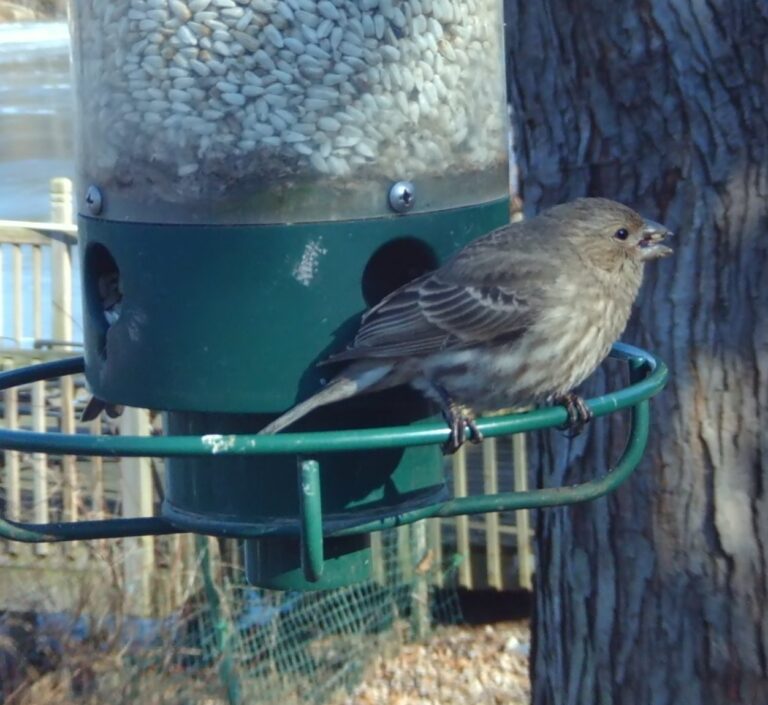
- Red. Hummingbirds (strongest attraction), Northern Cardinals, House Finches, Purple Finches, Pileated Woodpeckers, Scarlet Tanagers.
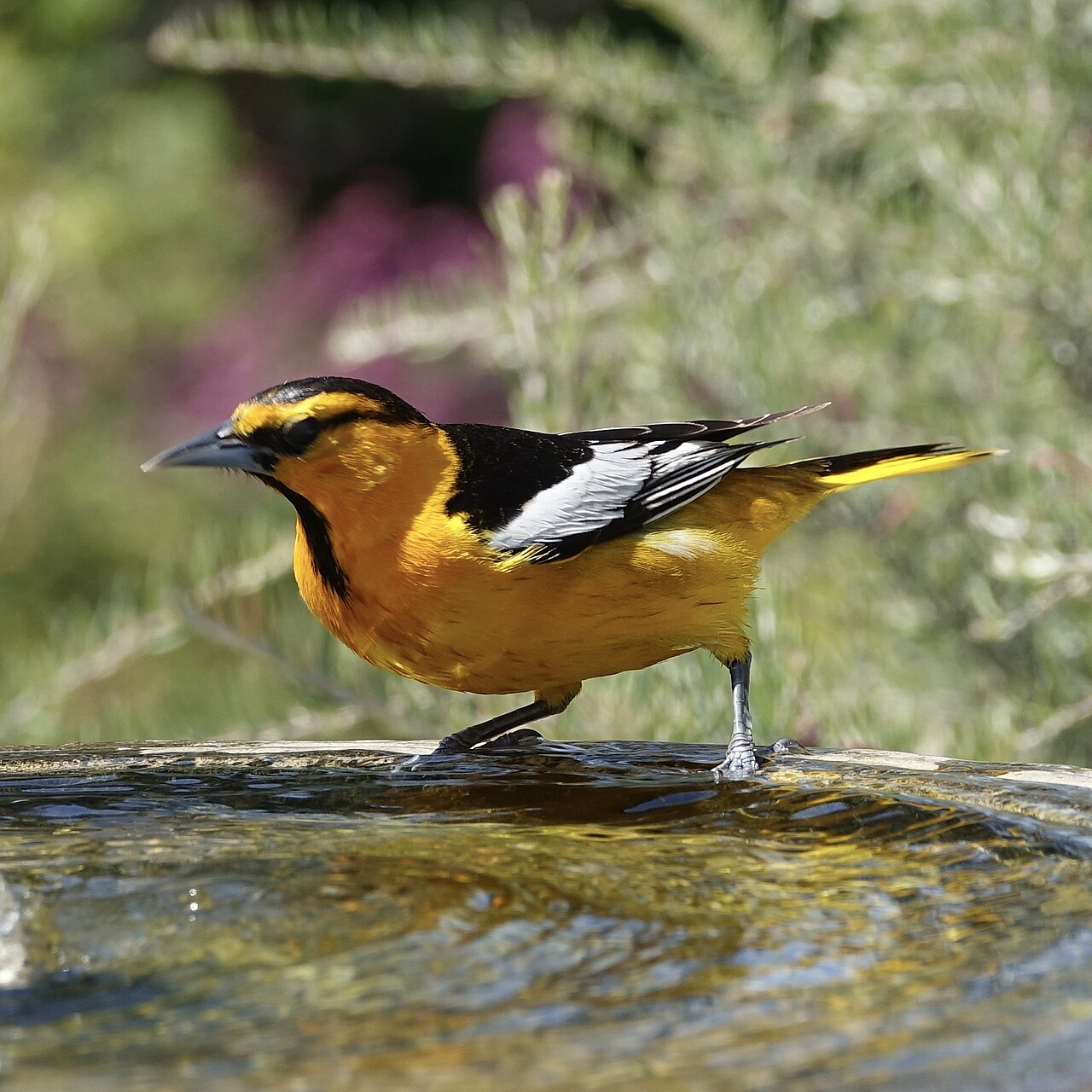
- Orange. Baltimore Orioles, Bullock’s Orioles, hummingbirds (secondary), American Robins (subtle).
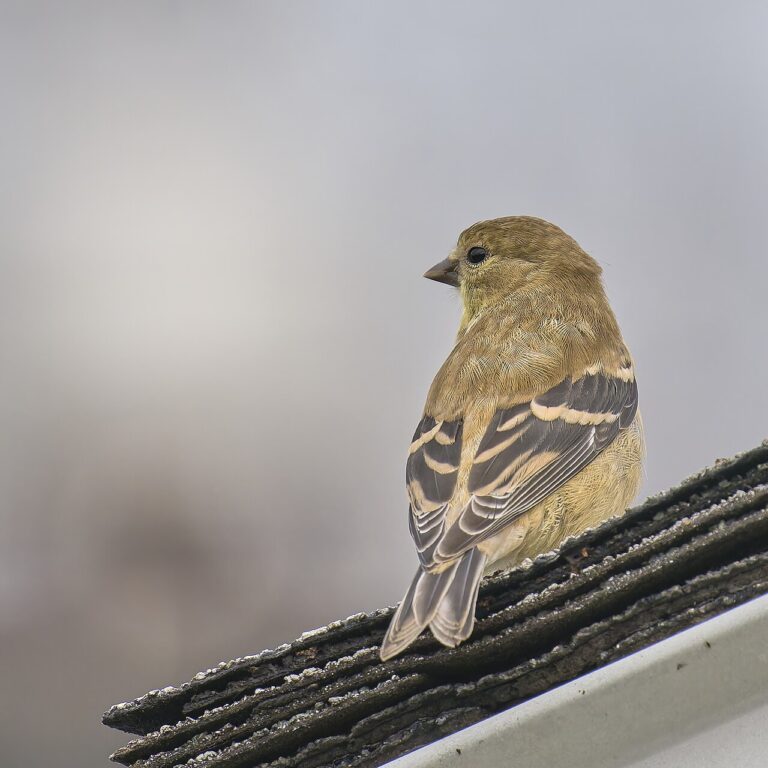
- Yellow. American Goldfinches, Lesser Goldfinches, warblers (multiple species), Yellow-Bellied Sapsuckers.
- Blue. Eastern Bluebirds, Western Bluebirds, Mountain Bluebirds, Blue Jays, Indigo Buntings.
- Pink/Purple. Hummingbirds (especially Anna’s), Purple Finches.
- Green. Camouflage color, most birds approach green-colored feeders cautiously, then ignore the color entirely. Useful for “natural” looking setups but not attraction-boosting.
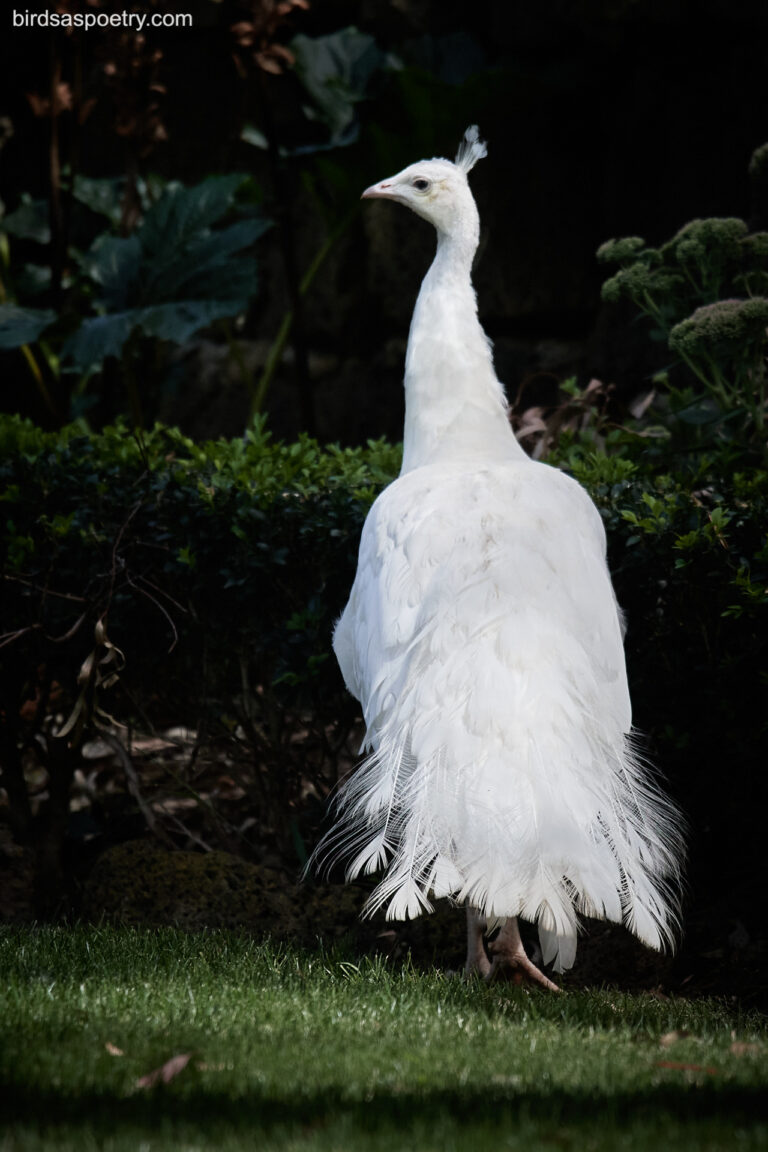
- White. Repels House Sparrows specifically. Slight deterrent to many small songbirds; preferred by doves and pigeons.
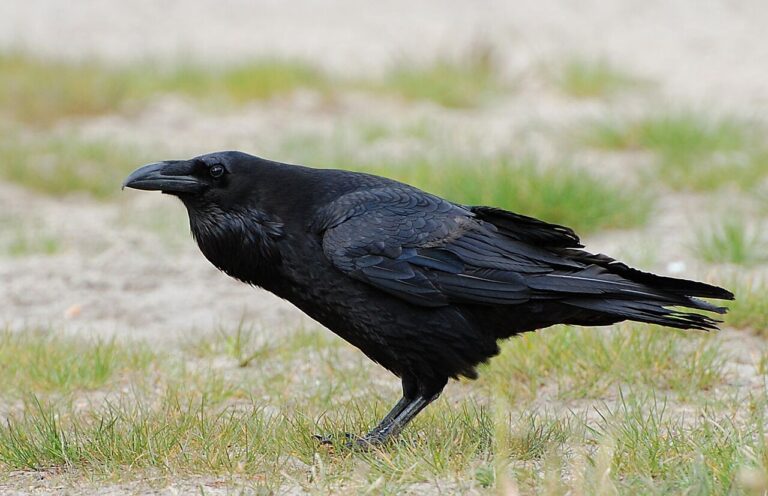
- Black. Visibility marker. Attracts crows, blackbirds, grackles. Many birds use high-contrast black-and-white as a “landing target.”
- Brown/Beige. Neutral. Doesn’t attract or repel most species.
This matrix is what you’ll find rebuilt across the entire color-ID cluster on the site: yellow birds, red birds, blue birds, black birds, white birds, and more.
Red: The Hummingbird Imperative
Hummingbirds are the most color-driven backyard birds. Their attraction to red is genuinely hardwired, not just learned. The red parts of hummingbird feeders (the typical plastic flowers, the colored bases) are what hummingbirds see from distance, and what brings them in from passing flight paths.
Several specific points to know:
- You don’t need red food coloring in the nectar itself. The red on the feeder is what attracts. We cover this in detail in the sugar water recipe guide, red dye is unnecessary and possibly harmful.
- All-red feeders outperform red-with-yellow feeders for hummingbirds, though the difference is modest. Yellow accents (often added for “flower” decoration) attract bees, which then dominate the feeder.
- Red flowers in your yard work the same way. Trumpet Honeysuckle, Cardinal Flower, Bee Balm, Salvia coccinea, and Trumpet Vine are all hummingbird magnets specifically because of their red coloration combined with tubular shape.
Beyond hummingbirds, red also attracts Northern Cardinals (named for the male’s red plumage), House Finches, and Purple Finches. Cardinals don’t seek out red feeders specifically, but cardinal-red feeder bases and bird baths get noticed faster than neutral-colored ones.
The complete hummingbird guide covers nectar recipes, feeder placement, and which red flowers work best in each region.
Orange: The Oriole Magnet
Orange is the signal color for orioles. Baltimore Orioles and Bullock’s Orioles will fly down to investigate almost any bright orange object in a yard during spring migration. The classic setup, orange halves nailed to a post or branch, works because the color is the attraction, with the fruit reinforcing the choice.
Practical orange applications:
- Orange-colored oriole feeders (jelly dishes, nectar feeders designed for orioles) outperform any other color for the species.
- Fresh orange halves placed cut-side-up on a hook or board. Combines color with food.
- Plant orange flowers. Trumpet Vine, Mexican Sunflower (Tithonia rotundifolia), and Butterfly Weed (Asclepias tuberosa) attract orioles secondarily.
Set out orange-colored offerings 1 to 2 weeks before orioles arrive in your area (mid-April for most of the eastern US). Late setups miss the migration window when orioles are most actively scouting.
Yellow: For Goldfinches and Warblers
Yellow attracts goldfinches strongly during their bright breeding plumage period (April through August), and more subtly through the rest of the year. Yellow accents on feeders, baths, or garden flowers serve as visibility markers that pull goldfinches in from passing flight.
The specific applications:
- Yellow nyjer feeders (or feeders with yellow flower-port markings) attract American Goldfinches and Lesser Goldfinches.
- Yellow plantings. Black-Eyed Susan, Goldenrod, native sunflowers, and Coreopsis all attract goldfinches both as nectar/seed sources and as visual markers.
- Yellow doesn’t attract warblers strongly enough to be a deliberate strategy, but it doesn’t hurt. Warblers are insect-driven; they come for the insects on plants more than for color cues.
A common myth worth addressing: bright yellow doesn’t attract bees as strongly to bird-related setups as it does to flowers. Bees are drawn to UV patterns on flowers more than to yellow per se. That said, all-red hummingbird feeders without yellow accents do report fewer bee issues than red-and-yellow models.
For region-specific guides to yellow species, see the yellow birds guide, small yellow birds, and yellow birds in Florida.
Blue: The Bluebird Signal
Blue attracts bluebirds, directly and reliably. Eastern Bluebirds, Western Bluebirds, and Mountain Bluebirds will respond to blue mounting surfaces, blue accents on nest boxes, and even blue lawn ornaments, because they use blue as both a species-recognition cue and a territory marker.
Practical blue applications:
- Blue nest boxes for bluebirds. This is a known practitioner trick. A bluebird-blue exterior on a properly-spec’d nest box can increase first-year occupancy rates. The box specs still matter more than the color (see the bird houses guide for dimensions), but blue tips the discovery edge.
- Bluebird-targeted mealworm dishes. A blue dish near an active nest box can become a “this is for you” signal that bluebirds learn to use.
- Blue Jays respond similarly but less strongly. They use feeders regardless of color, so blue isn’t critical for jay attraction.
Blue is also a useful color for visibility from the human side, a blue bird bath or feeder in green foliage stands out, both to birds and to you watching from indoors.
The blue birds guide covers all the blue-colored species in North America for identification, not just bluebirds proper.
White: The Surprising Repellent
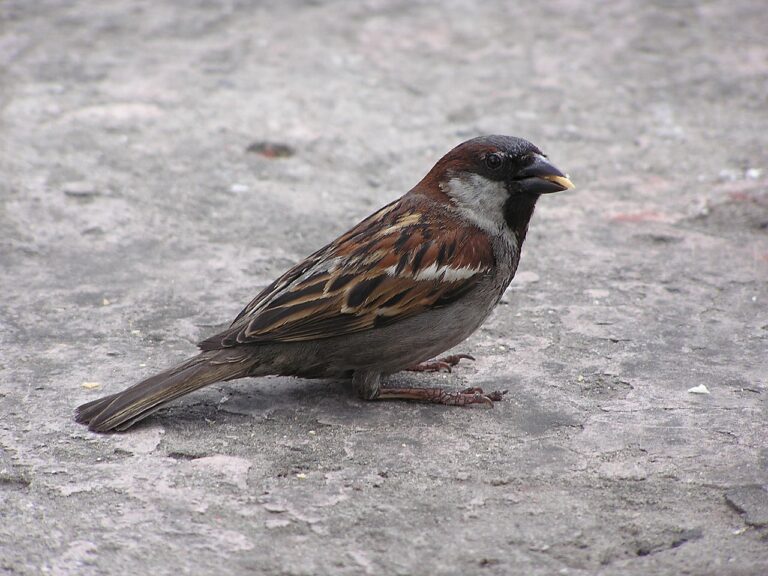
Here’s the counter-intuitive part. House Sparrows, the most aggressive non-native species at most North American feeders, actively avoid bright white objects. This is genuinely useful because House Sparrows are the species most beginners struggle with, the species that dominates feeders and outcompetes natives.
The practical white tricks:
- White feeder caps or covers reduce House Sparrow visits noticeably. The effect isn’t total, a hungry sparrow eventually visits, but cuts traffic.
- White or off-white pole-mounted feeders see fewer sparrow problems than red or brown poles.
- White nest boxes are less attractive to sparrows but also slightly less attractive to bluebirds. The trade-off is usually worth it in sparrow-heavy yards.
The exact mechanism isn’t fully understood, some researchers suspect that bright white signals “exposed/unsafe” to sparrows that evolved as ground-feeders in cover. Whatever the cause, the effect is real and replicable.
What white doesn’t deter: native sparrows, finches, chickadees, cardinals, or most other backyard species. The effect is highly House-Sparrow-specific.
Black: The Visibility Marker
Black isn’t typically an attractant color, but black-and-white contrast functions as a “this is a thing here” signal that helps birds locate feeders and baths, especially for species like chickadees and titmice that visually scan their territories.
Black is also the dominant color of many cavity-nester species, woodpeckers, crows, blackbirds, grackles, but those species don’t seek out black feeders specifically. They use feeders regardless of color.
The black birds identification guide covers identification of black-feathered species, which is a common beginner question because so many superficially black birds are actually different species.
Green: The Camouflage Problem
Green is the natural color of leaves, grass, and many bird habitats. Most birds approach green-colored feeders cautiously at first, treating them as part of the background. Once a feeder is established, the color matters less, but for new setups, green is a slower-discovery color than red, yellow, or blue.
This is why “naturalistic” green or olive feeders, marketed for not standing out in landscaping, often underperform brightly-colored feeders for the first 2 to 4 weeks. After established traffic, the difference fades.
If aesthetics matter to you and you want a feeder that blends with planting, the practical compromise is: green or brown base with a colored top or accent. Birds find it via the color cue; the body blends with foliage.
Designing a Multi-Color Yard Strategy
The right approach for most backyards isn’t to pick one color, it’s to use colors strategically across feeders, baths, and plantings to maximize total species diversity.
A high-performance setup combining colors:
- Red hummingbird feeder for hummingbirds, with all-red coloring to minimize bee issues.
- Orange oriole station (jelly dish, orange halves on hooks) for migration season.
- Yellow accents on a nyjer feeder for goldfinches.
- Blue nest box for bluebirds, properly spec’d for the species.
- Neutral or dark-colored main seed feeder (the food matters more than the feeder color for established traffic).
- White or light-colored hooks/poles as a House Sparrow deterrent layer.
This isn’t about chasing color trends, it’s about using color as one of several tools to curate which birds show up. Combined with the complete attract-birds-to-yard guide for habitat and the bird feeders guide for feeder selection, color becomes a meaningful adjustment lever.
Plants as Color Signals
The strongest color attraction in any yard comes from native flowering plants, not from feeders or baths. A patch of red Trumpet Honeysuckle, orange Trumpet Vine, or yellow native Sunflowers brings birds in from much further away than a similarly-colored feeder.
The reason: birds evolved to recognize flower colors as signals of food (nectar, seeds, the insects flower clusters host). Synthetic colors on feeders work partly because they piggyback on the same instinctive recognition, but the real signal is the plants.
Region-by-region plant recommendations are in the plants that attract birds guide and the flowers that attract birds guide. A yard with the right colored native plants outperforms any feeder-based attraction strategy long-term.
Common Color Myths to Skip
A few persistent myths circulate in the bird-feeding community:
Myth 1: Hummingbirds need red dye in their nectar. False. The red on the feeder attracts; the liquid doesn’t need coloring. Cornell Lab specifically recommends against red dye.
Myth 2: Birds will only visit feeders that match their plumage. Partially false. Cardinals are red, but they’ll happily visit a green feeder. Bluebirds prefer blue but use whatever color matches their habitat.
Myth 3: Yellow attracts wasps. Mostly true for flowers, less true for feeders. Bees and wasps are drawn more to UV patterns and sugar smell than to yellow per se. All-red feeders do report somewhat fewer bee issues than red-and-yellow.
Myth 4: Bright colors stress birds out. False. Birds in the wild encounter brilliant colors constantly (flowers, fruit, mates). Bright feeder colors don’t stress them; they signal “this is a thing worth checking.”
Myth 5: A specific color attracts all birds equally. Definitely false. Color attraction is species-specific. There’s no universal “best color.”
Frequently Asked Questions
What’s the single best color to attract birds?
There’s no universal best color, different birds respond to different colors. Red attracts hummingbirds most strongly. Orange attracts orioles. Yellow attracts goldfinches. Blue attracts bluebirds. For maximum overall variety, use multiple colors strategically across feeders, baths, and plantings.
Why are hummingbird feeders red?
Red triggers hummingbird investigation instinct from a distance. Hummingbirds evolved to associate red with high-nectar tubular flowers (Cardinal Flower, Trumpet Honeysuckle, Bee Balm). Red feeder bases or “flower” ports take advantage of this instinct, making feeders visible from passing flight paths.
Do I need to put red food coloring in hummingbird nectar?
No. The red parts of the feeder itself attract hummingbirds, the nectar doesn’t need to be colored. Cornell Lab and every major bird conservation organization recommend against red dye in nectar.
Which colors do birds see best?
Birds see ultraviolet (UV) light, which humans cannot see. They have four color receptors in their eyes versus three in humans. Red, orange, yellow, and blue are all strongly perceived, plus they see UV patterns invisible to us. White and black serve as high-contrast markers rather than color signals.
What color is best for a bluebird house?
Properly-dimensioned nest boxes painted bluebird-blue can have slightly higher first-year occupancy rates than natural-wood boxes. The dimensions and placement still matter much more, see the bird houses guide for the species-specific specifications.
Does the color of a bird bath matter?
Yes, but less than the depth and surface texture. Light blue, terracotta, or natural stone are all effective. Avoid all-dark or all-light interiors, birds prefer some surface contrast. See the bird baths guide for full bath setup.
What color repels House Sparrows?
Bright white. House Sparrows actively avoid white objects more than other colors. White or off-white feeder caps, poles, and nest boxes see noticeably less House Sparrow traffic, without strongly deterring native species.
Are bright feeder colors stressful to birds?
No. Birds in the wild encounter brilliant colors constantly through flowers, fruit, and other birds. Bright feeder colors don’t cause stress, they signal “this might be food, worth investigating.”
Do birds see in color or just black and white?
In color, and better than humans. Most birds have four-color vision (humans have three), including the ability to see ultraviolet. They perceive a richer color world than we do.
Should my whole feeder setup be the same color?
No, and probably shouldn’t be. Different colors attract different species, so using multiple colors across feeders and accessories gives you broader species variety than monochrome setups.