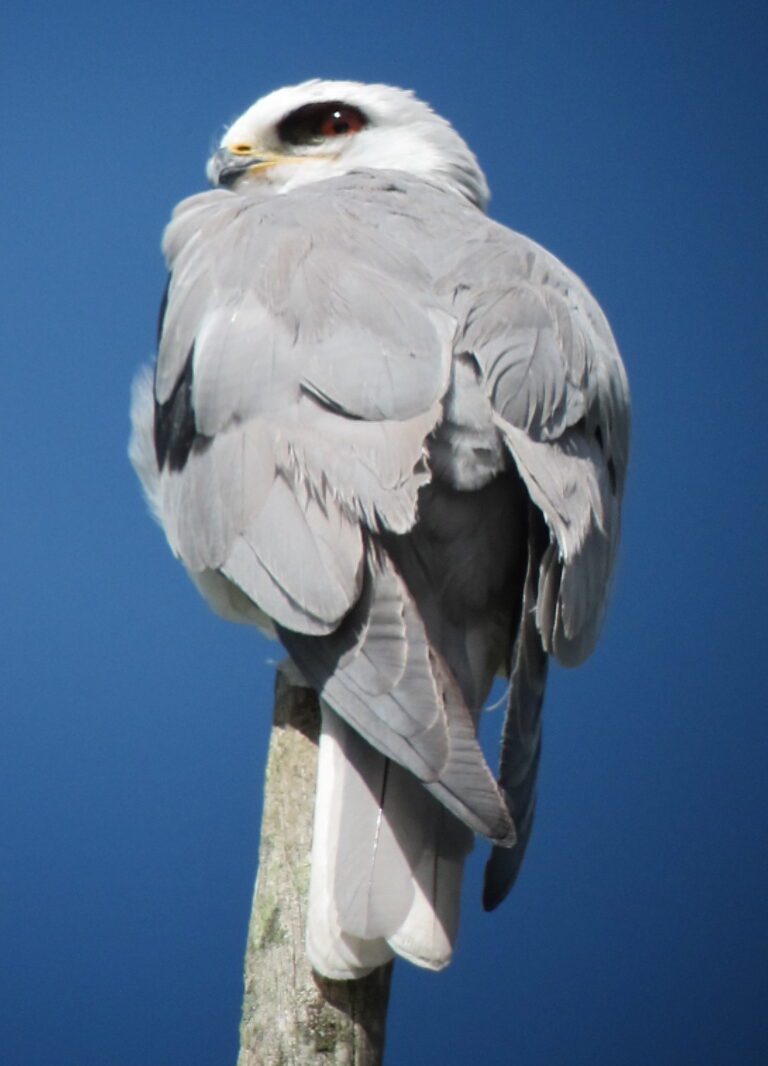
Birding Glossary: 80+ Bird Watching Terms Every Beginner Should Know
Birding has its own vocabulary. Some of it is technical (gorget, supercilium, sallying), some is cultural (lifer, twitcher, big year), and some is practical (jizz, GISS, pishing). Most beginners encounter these words in field guides, eBird, podcasts, or guided walks, then stop reading or listening because the jargon feels alienating. This glossary covers every term a beginner regularly encounters, organized by category, with concrete examples. Bookmark it, search it (Ctrl-F is your friend), and link back here when other Faunalist articles reference terms you don’t yet know.
How to Use This Glossary
The glossary is organized into eight thematic sections: bird anatomy, behavior, identification, habitat and ecology, migration and life cycle, birding culture, gear, and conservation. Most terms include a short example or context to help the definition stick. Where a term connects to a longer guide on the site, we link to it.
For specific questions covered in depth elsewhere, the relevant pillars are: the complete beginner’s guide, the bird identification pillar, the bird feeders guide, the bird seed guide, the attract birds to your yard guide, the hummingbird guide, the bird baths guide, and the bird houses guide.
Bird Anatomy Terms
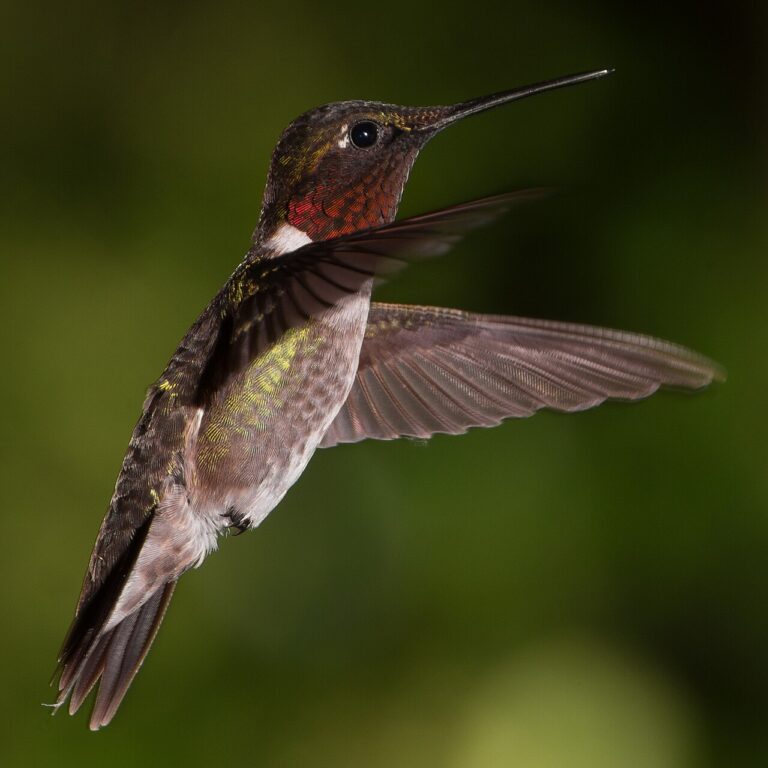
Gorget. The brilliantly colored, iridescent throat patch on adult male hummingbirds and some other species. The Ruby-Throated Hummingbird’s red gorget and Anna’s Hummingbird’s magenta gorget are classic examples. The color comes from microscopic feather structures that refract light, not pigment, which is why a gorget can look black from one angle and brilliant from another. See the hummingbird guide for species-by-species gorget identification.
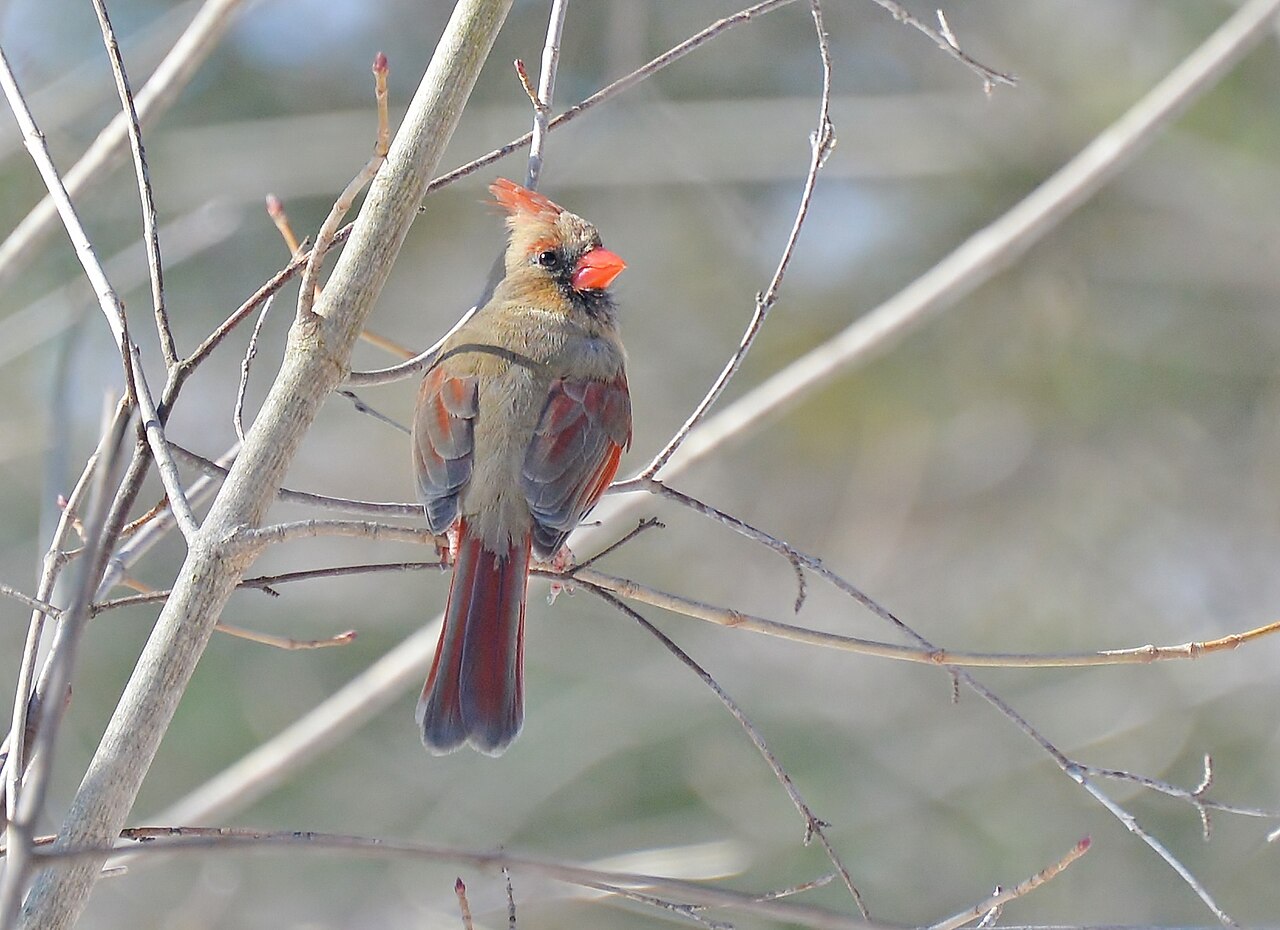
Crest. A tuft of feathers on the top of a bird’s head, sometimes erectile (raised and lowered). Northern Cardinals, Blue Jays, Tufted Titmice, and Cedar Waxwings all have prominent crests. The crest’s position often signals mood, alert, calm, or aggressive.
Wing bar. A horizontal stripe of contrasting color across a bird’s folded wing, formed by the colored tips of wing covert feathers. Wing bars are critical field marks for separating similar species, many warblers, vireos, and finches are distinguished partly by whether they have one, two, or no wing bars.
Wing patch. A larger area of contrasting color on the wing, distinct from a wing bar. Mockingbirds have prominent white wing patches visible in flight; Red-Winged Blackbird males have red and yellow shoulder patches (epaulets).
Speculum. A patch of iridescent color on the secondary flight feathers, visible mostly when the wing is spread. Most duck species have distinctive specula, Mallard males have a blue speculum bordered by white; American Wigeons have a green speculum.
Eye ring. A ring of differently-colored feathers (usually white or pale) encircling the eye. Eye rings are critical for identifying many warblers and flycatchers. A bird with an eye ring vs. one with an eye line (a stripe through the eye) vs. one with a supercilium (a stripe above the eye) can mean three different species.
Eyebrow stripe (supercilium). A line of color above the eye, like an eyebrow. Often a key field mark, White-Throated Sparrows have bold black-and-white supercilium stripes; House Sparrows are largely unmarked above the eye.
Crown. The top of the bird’s head. Color and pattern of the crown is often a key field mark, White-Crowned Sparrow vs. White-Throated Sparrow distinguish primarily by crown markings.
Cap. A solid patch of color covering the crown and sometimes part of the forehead. Black-Capped Chickadees, Carolina Chickadees, and Chipping Sparrows are named for their distinctive caps.
Nape. The back of the bird’s neck. Red-Bellied Woodpeckers have a bright red nape (the name is confusing, the red is on the head and neck, not the belly).
Mantle. The upper back and the inner wing feathers as a unit, often described as a single color block in field guides.
Rump. The lower back, where the back meets the tail. Yellow-Rumped Warblers are named for their distinctive yellow rump patch, visible especially when they fly.
Undertail coverts. The feathers covering the underside of the tail base. Often important for identification when looking at a bird from below.
Bill (or beak). The hard external structure of the upper and lower jaws. Bill shape strongly indicates diet: thick conical bills are for seeds (cardinals, finches), thin pointed bills for insects (warblers, kinglets), long chisel-like bills for excavation (woodpeckers), hooked bills for tearing flesh (raptors). See the bird identification pillar for the full bill-to-diet mapping.
Tarsus. The lower leg of a bird, between what looks like the “ankle” (actually the heel) and the foot. Tarsus color is occasionally a useful field mark (Solitary Sandpiper vs. Spotted Sandpiper).
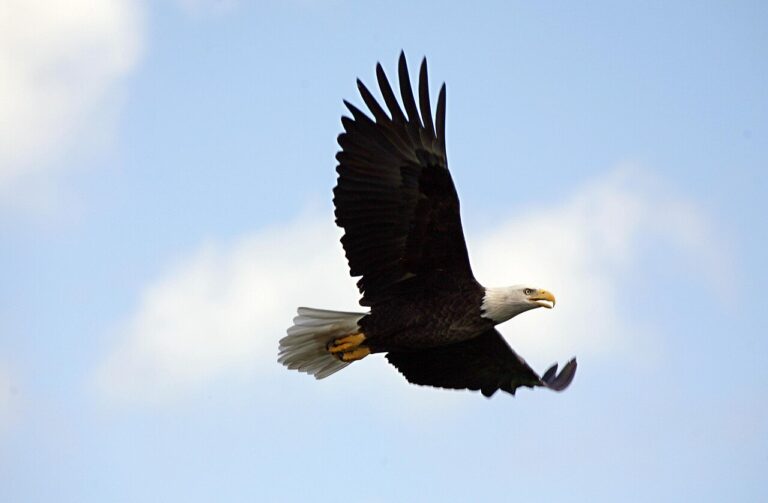
Talon. The sharp claw on a raptor’s foot, used for capturing and killing prey.
Behavior Terms
Sallying. Flying out from a perch to catch an insect in mid-air, then returning to the same or nearby perch. This is the diagnostic flycatcher behavior, if you see a bird repeatedly leaving a perch to grab insects and returning, it’s almost certainly a flycatcher.
Hovering. Holding flight position in place without forward motion. Hummingbirds are the only North American birds capable of true hovering for extended periods, but kestrels, kingfishers, and some hawks hover briefly while hunting.
Hawking. Aerial pursuit of flying insects. Similar to sallying but generally describes longer aerial pursuits rather than perch-and-return cycles. Common Nighthawks and swallows hawk insects.
Mobbing. Multiple birds harassing a larger predator (typically an owl, hawk, or crow) with calls, dives, and proximity, often forcing it to leave. Chickadees and crows are famous mobbers. If you hear sudden agitated calling from multiple species in your yard, scan the trees for a perched owl or hawk, that’s usually what they’re mobbing.
Caching. Hiding food for later retrieval. Many corvids (jays, crows, ravens) and chickadees cache seeds and nuts, sometimes thousands per individual per season. Their spatial memory for cache locations is remarkable.
Anting. Deliberately allowing or encouraging ants to crawl through their feathers, possibly to use formic acid as a parasite repellent. Crows, jays, and other species have been observed anting. Still not fully understood scientifically.
Sunning. Spreading wings and tail in direct sunlight, often with feathers fluffed out. Possibly aids parasite control, feather maintenance, and thermoregulation. Mockingbirds, robins, and grackles are common sunners.
Pishing. Making a “psh-psh-psh” or similar sound to attract small songbirds within view. Birds approach pishing thinking another bird is alarmed, and many will come closer to investigate. A standard tool for active birders trying to spot warblers and sparrows in dense cover.
Drumming. Rapid percussive pecking on a resonant surface by woodpeckers, both to communicate territorial claims and to attract mates. Different woodpecker species have distinctive drumming rhythms, listen for them in late winter and early spring.
Tail-bobbing. Continuous up-and-down motion of the tail while perched. Phoebes are particularly noted for tail-bobbing; Palm Warblers and waterthrushes also bob. The behavior is part of how experienced birders identify these species at distance.
Tail-cocking. Holding the tail raised vertically above the body. Wrens are the classic tail-cockers, especially Carolina Wrens and House Wrens.
Foraging. Searching for and obtaining food. Foraging behavior often identifies family or species, Brown Creepers spiral up tree trunks; nuthatches walk headfirst down trunks; flycatchers wait and sally; warblers glean leaves.
Allopreening. One bird preening another, usually a mate. Common in cardinals, jays, and many other species during pair-bonding.
Bathing (water bathing). Splashing in shallow water to clean feathers. Most songbirds water-bathe daily. See the bird baths guide for the setups that encourage it.
Dust bathing. Rolling and fluffing in dry dust, soil, or fine sand to clean feathers and discourage parasites. House Sparrows, doves, and quail are common dust bathers.
Identification Terms
Field mark. A specific visual feature used to identify a bird species, wing bars, eye rings, throat patches, breast spots, etc. Field marks are the building blocks of visual identification. The bird identification pillar covers using them systematically.
GISS or Jizz. Pronounced “jizz.” Stands for “general impression of size and shape.” The holistic look of a bird, its overall posture, proportions, and movement, that experienced birders use to identify species even at distance or in poor light. Jizz often precedes detailed analysis.
Plumage. The complete set of feathers covering a bird. Plumage changes through life and across seasons, most adult birds have distinct breeding and nonbreeding plumages.
Sexual dimorphism. Visible difference between males and females of the same species. Many songbird species are sexually dimorphic: male Cardinals are bright red, females are warm brown. Goldfinches, House Finches, Buntings, and Orioles are all strongly dimorphic.
Eclipse plumage. A duller, often female-like plumage adopted by some male ducks for the brief period of summer molt when they’re flightless. Eclipse-plumaged Mallards confuse many beginners because they look almost like females.
Molting. The seasonal process of shedding old feathers and growing new ones. Most songbirds molt completely once a year (usually late summer or early fall), and some species also molt partially before breeding season.
Breeding plumage (alternate plumage). The plumage adopted for the breeding season, often brighter and more colorful in males. Spring is when most birds are at their most identifiable.
Nonbreeding plumage (basic plumage). The plumage worn outside the breeding season, generally duller. Many warblers in fall are notoriously difficult to identify because their nonbreeding plumage washes out many of their breeding field marks.
Vagrant. A bird far from its normal range, usually due to weather, navigation error, or storm displacement. Rare vagrants, a Eurasian species in Maine, a tropical species in Texas, are the most exciting finds for serious birders.
Endemic. A species found only in a specific geographic area. Florida Scrub-Jay is endemic to Florida; California Condor is endemic to the western US.
Subspecies. A geographically distinct population within a species. Dark-Eyed Junco has multiple subspecies (Slate-Colored, Oregon, Pink-Sided, etc.) that look different but interbreed where their ranges overlap.
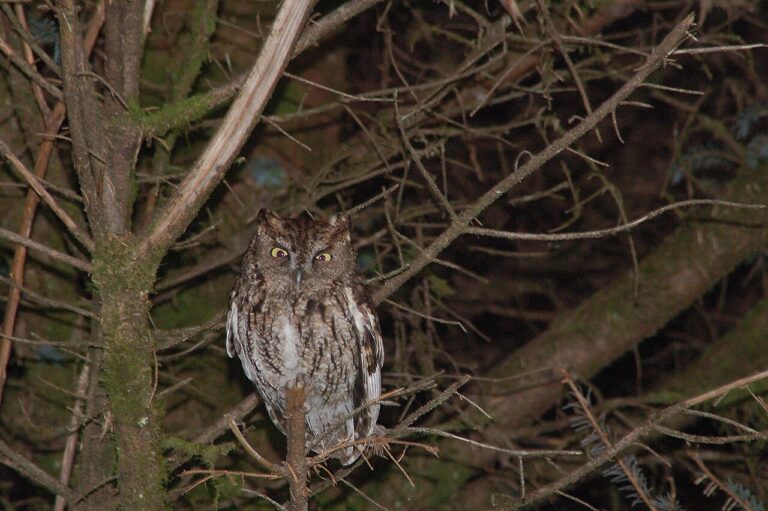
Morph. A color variant within a species. Some species have light morphs and dark morphs, or rufous morphs and gray morphs. Eastern Screech-Owls come in gray and red morphs.
Habitat and Ecology Terms
Territory. The area a bird actively defends from rivals, especially during breeding season. Territory size varies dramatically, chickadees might defend a few acres, while some hawks defend square miles.
Range. The geographic area where a species occurs. Range maps in field guides show where each species lives, often broken down by season (breeding, wintering, year-round, migration).
Habitat. The type of environment a species prefers, forest, marsh, prairie, urban, etc. Most species are habitat-specific; matching observed bird to expected habitat is part of identification.
Edge habitat. The boundary zone between two habitat types (forest meets meadow, marsh meets woodland). Edge habitats often hold more species than either adjacent pure habitat, because they support specialists from both plus edge specialists.
Riparian. Vegetation along streams, rivers, and other waterways. Riparian habitat is particularly important for breeding and migrating birds, even in otherwise dry regions.
Brood parasitism. When one species lays its eggs in the nest of another, leaving the host to raise the parasite’s young. Brown-Headed Cowbirds are North America’s most prominent brood parasites; their chicks often outcompete the host’s own young.
Cavity nester. A species that nests inside a hollow tree, woodpecker hole, or similar enclosed space. Includes bluebirds, chickadees, wrens, nuthatches, woodpeckers, and many owls. See the bird houses guide for the species that use backyard nest boxes.
Niche. The ecological role and resource use of a species. Two species in the same habitat usually occupy different niches, one might feed on caterpillars in canopy, the other on insects in low shrubs.
Resident. A bird species that lives in an area year-round, rather than migrating. Carolina Chickadees and Northern Cardinals are residents in most of their range; American Goldfinches are partial residents (some populations migrate, others don’t).
Migrant. A species that moves between breeding and wintering grounds seasonally. Most North American songbirds are at least partially migratory.
Neotropical migrant. A bird that breeds in North America but winters in Central or South America. Most warblers, vireos, hummingbirds, and many flycatchers are neotropical migrants, they make remarkable annual journeys of thousands of miles.
Migration and Life-Cycle Terms
Migration. Regular seasonal movement between breeding and wintering grounds. Most North American songbirds migrate twice yearly. Triggers include day length, temperature, and food availability.
Stopover. A location where migrating birds rest and refuel during migration. Major stopover habitats (Gulf Coast, Great Lakes shorelines, Appalachian ridges) concentrate millions of migrants in spring and fall.
Trans-Gulf migration. The non-stop flight across the Gulf of Mexico made by many neotropical migrants in spring. Ruby-Throated Hummingbirds, many warblers, and other species cross 500+ miles of open water in 18 to 24 hours. See the hummingbird guide for more on hummingbird migration.
Hatchling. A newly hatched bird, eyes closed, often featherless or with minimal down. Hatchlings are entirely dependent on parents.
Nestling. A young bird still in the nest, after hatching but before fledging. Nestlings cannot fly and depend on parents for food.
Fledgling. A young bird that has left the nest but cannot yet fly well or independently survive. Fledglings often look fully feathered but are clumsy and still being fed by parents. The most common reason people pick up “abandoned” baby birds is finding fledglings on the ground, most of the time, the parents are watching from nearby. See the baby bird identification guide for full life-stage breakdowns.
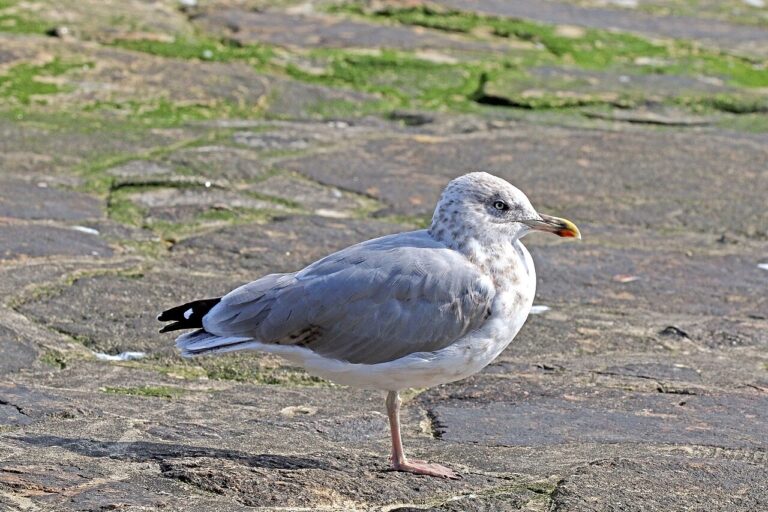
Juvenile. A young bird in its first plumage after molting from down, usually duller than adults of the same species and harder to identify.
Brood. A group of young birds raised together from a single clutch of eggs. Many backyard species raise 2 to 3 broods per season.
Clutch. A complete set of eggs laid in a single nesting attempt. A typical chickadee clutch is 6 to 8 eggs; a hummingbird clutch is always 2.
Incubation. The period during which eggs are kept warm (usually by a parent’s body) until they hatch. Incubation periods vary by species, typically 12 to 14 days for songbirds, 16 to 18 days for hummingbirds, 28+ days for waterfowl.
Dispersal. The movement of young birds away from their natal area to find their own territory. Most songbirds disperse a few miles to many tens of miles from their birthplace.
Site fidelity. The tendency to return to the same breeding or wintering location year after year. Many species show strong site fidelity, the same bluebirds may return to your nest box for multiple years.
Birding Culture and Community Terms
Birder. A person actively engaged in observing and identifying birds, typically with a degree of seriousness about list-keeping, travel, or skill development. Often used interchangeably with “bird watcher,” though some birders draw a distinction.
Bird watcher. A person who watches birds, generally implying a more casual or passive engagement than “birder.” Many backyard observers are bird watchers rather than birders.
Lifer. A species you’ve seen and identified for the first time in your life. Lifers are a major motivator for many birders.
Life list. A personal record of every species you’ve identified during your lifetime. Many birders track their life list on eBird or in a personal notebook.
Twitcher. A birder who travels long distances specifically to see rare birds. Twitching is the British term; the practice is common in both the US and UK birding scenes.
Big year. A self-imposed challenge to see as many bird species as possible within a single calendar year. The book and film The Big Year popularized this practice. Top big-year counts in the ABA area now exceed 800 species.
Big day. A challenge to see as many species as possible within 24 hours. Often done as a team competition, particularly the World Series of Birding in New Jersey.
ABA area. The geographic area covered by the American Birding Association, North America north of Mexico, including the US, Canada, Bermuda, and certain offshore waters. The “ABA list” is the standard reference for what counts as a US/Canada bird.
Yard list. The list of species observed in or from your own yard. Many backyard birders maintain yard lists alongside life lists; some compete with neighbors.
eBird. A free citizen-science platform from the Cornell Lab of Ornithology where birders submit observations. Millions of birders contribute to the world’s largest bird database. eBird checklists are valuable both for the individual birder and for ornithological research.
Christmas Bird Count (CBC). An annual citizen-science event run by the National Audubon Society since 1900, where birders count all birds within designated 15-mile-diameter circles during a 24-hour window in late December.
Great Backyard Bird Count (GBBC). A 4-day citizen-science event in February, where anyone can submit bird counts from their yard or local patch. See our Great Backyard Bird Count guide for participation details.
Patch. A regularly-visited local area that a birder treats as “their” birding territory. Patches build deep familiarity over years and often produce surprises that one-time visits would miss.
Trip list. The list of species observed on a single birding trip or outing.
Tick. Verb: to add a species to a list. “I ticked the Painted Bunting at the feeder this morning.”
Gear Terms
Binoculars. The fundamental birding tool. Specified by two numbers: magnification x objective lens diameter. 8×42 is the standard for backyard and general birding, eight times magnification, 42mm front lens diameter. See our binoculars guide for beginners for specific recommendations.
Spotting scope. A higher-magnification single-eye optical instrument used for distant viewing, typically 20 to 60x zoom. Essential for shorebirds, raptors at distance, and ducks far across a lake. Usually mounted on a tripod.
Field guide. A book (or app) used for bird identification. Major field guides include Sibley, Peterson, and National Geographic. See the bird identification pillar for guide comparisons.
Merlin Bird ID. A free identification app from the Cornell Lab of Ornithology. Identifies birds by photo, sound, or a five-question wizard. See the best bird identification apps comparison for details.
Bird blind (or hide). A camouflaged shelter that conceals a birder from the birds they’re watching, allowing close observation without disturbance. Common at nature reserves and in dedicated bird photography.
Mist net. A fine-mesh net used by licensed bird banders to capture birds for research. Not used by typical birders; mentioned because it occasionally comes up in conservation discussions.
Conservation and Science Terms
Citizen science. Research where amateur volunteers contribute observations to scientific studies. eBird, the Christmas Bird Count, and the Great Backyard Bird Count are major citizen-science projects in birding. Submitting your sightings to eBird directly contributes to peer-reviewed ornithological research.
Audubon Society. A national nonprofit dedicated to bird conservation, founded in 1905 and named after ornithologist and illustrator John James Audubon. Local Audubon chapters across North America offer guided walks, conservation projects, and birding education.
USFWS (US Fish and Wildlife Service). The federal agency responsible for managing migratory birds, endangered species, and wildlife refuges in the United States. Maintains the National Wildlife Refuge system and enforces federal bird protection laws.
Migratory Bird Treaty Act. A 1918 US federal law that protects nearly all native bird species. Makes it illegal to capture, kill, sell, or possess native birds, their parts, eggs, or nests without a permit. Hunting waterfowl is regulated separately under specific seasonal permits.
Endangered Species Act (ESA). The 1973 US federal law providing legal protection for species listed as endangered or threatened. Notable bird species protected under the ESA include the California Condor, the Whooping Crane, and the Piping Plover.
Conservation status. The level of risk a species faces of extinction. The International Union for Conservation of Nature (IUCN) ranks species from Least Concern through Endangered to Extinct.
Banding. The practice of attaching small metal or plastic bands to birds’ legs to track individual birds across time and geography. Bird banding is conducted only by licensed banders; it has produced most of what we know about bird longevity, site fidelity, and migration routes.
Common Beginner Questions About Birding Terms
What’s the difference between birding and bird watching?
The terms are largely interchangeable, but “birding” often implies more active identification, list-keeping, and travel, while “bird watching” sometimes describes more passive observation. In practice, most people use whichever feels more natural without worrying about the distinction.
What does it mean to “list” a bird?
To list a bird is to add it to a personal record of species you’ve identified, most commonly a life list (every species ever seen) or a year list (species seen in a calendar year). The practice ranges from casual to highly competitive.
What’s a “good” bird in birding?
A “good” bird usually means a rare, unusual, or unexpected species for your area or season. “Are you seeing anything good?” is a standard birder greeting at a hotspot.
What’s an “LBJ”?
LBJ stands for “Little Brown Job”, birder slang for any small, brown, hard-to-identify bird, typically a sparrow, female finch, or juvenile songbird that defies quick identification. Most birders eventually accept that they’ll log some LBJs unidentified.
What’s a “yard bird”?
A species observed in or from your yard. The phrase “first yard bird” refers to a new species for your personal yard list. Many backyard birders track yard lists as carefully as their life lists.
What does “stringing” mean?
To string a bird is to report an identification you’re not actually certain about, typically by overcommitting to a rare or wished-for species. Stringing is heavily frowned upon in the birding community because it pollutes shared databases like eBird. The correct approach is to log uncertain birds with appropriate qualifications or as “passerine sp.” (unknown songbird).
What does it mean when a bird is “calling” vs. “singing”?
Calls are short, simple vocalizations used for communication, alarm, or location. Songs are longer, more complex vocalizations used primarily by males to attract mates and defend territory during breeding season. Most species have both. See our guide to identifying birds by sound for more on vocalizations.
A Final Note on Birding Language
Birding jargon can feel exclusionary at first, but it’s almost all functional, the words exist because they describe specific things that matter for identification, behavior, or conservation. You’ll absorb most of it naturally within a few months of active birding. Don’t feel like you need to memorize this glossary; just bookmark it and come back when you encounter a term that stops you mid-sentence.
If you’re brand new to birding, the complete beginner’s guide covers the broader setup. Already comfortable with the basics? The bird identification pillar and the attract birds to your yard guide are the natural deepening steps.