Baby Bird Identification: The Complete Guide (Plus What to Do If You Find One)
To identify a baby bird, start with its stage, not its species. A naked or downy bird with closed eyes is a nestling that belongs back in the nest, while a feathered bird hopping on the ground is usually a fledgling that its parents are still feeding. Once you know the stage, size, bill shape, and the adults nearby narrow down the species. This guide covers both, and what to do (and not do) if you find one.
You found a baby bird and have two urgent questions: what species is it, and should you do something? The second question matters far more than the first. An estimated 80% of “rescued” baby birds were doing fine on their own, taken from healthy parents by well-meaning humans who didn’t recognize the fledgling stage as normal. This guide covers the critical decision tree first (what stage of life is the bird in, and what action that calls for), then the identification techniques for common species, and finally the legal and practical considerations. The single most important takeaway: most baby birds on the ground don’t need help, and trying to “save” them often makes their survival worse.
Identify a baby bird by stage before species. Naked or downy with closed eyes means a nestling that belongs back in the nest. Fully feathered and hopping on the ground with a short tail means a fledgling whose parents are still feeding it, and it should be left alone.
The Critical Decision Tree
Before identifying the species, identify the life stage. This determines what to do, and what NOT to do.
Stage 1: Hatchling (0-3 days)
Appearance: Eyes closed, no feathers (or just sparse down), pink skin, may not even lift head. Looks fragile and helpless.
On the ground: This is genuinely abnormal. Hatchlings cannot survive away from the nest.
What to do:
- Look for the nest in nearby trees, shrubs, eaves
- If you can locate the nest, gently return the hatchling to it. Parents do not reject babies because of human scent, this is a persistent myth. Birds have poor sense of smell.
- If you can’t find the nest, contact a licensed wildlife rehabilitator immediately
- Keep the bird warm (a small box with a soft cloth, away from sun and rain) until you reach a rehabber
Stage 2: Nestling (3-13 days)
Appearance: Pin feathers visible (look like spikes coming through the skin), eyes opening or open, some downy fluff, but clearly not ready to fly. Cannot hop or grip with feet.
On the ground: Also abnormal. Nestlings cannot survive off the nest.
What to do:
- Same as hatchling, look for the nest and return the bird
- If the nest is destroyed or unreachable, contact a licensed wildlife rehabilitator
- Don’t feed the bird. Most “feeding” attempts by humans cause injury or death. Wait for professional help.
Stage 3: Fledgling (13-21 days, sometimes up to 30)
Appearance: Full or nearly-full feathers, can hop, can grip with feet, may have a short tail. Looks like a smaller version of an adult.
On the ground: This is normal. Fledglings deliberately leave the nest before they can fly fully. They spend 2-7 days hopping around the ground, in low shrubs, calling for their parents.
What to do:
Most cases: leave the bird alone. This is one of the most important things to internalize about wild birds. Parents are nearby (often within 50 feet, watching from cover), continuing to feed and protect the fledgling. Removing the bird “for safety” actually decreases its survival chances.
Only intervene if:
- The bird is clearly injured (visible blood, unable to move normally)
- A cat or dog is actively threatening it (remove the threat, not the bird)
- It’s on a busy road (gently move it to nearby cover, then leave)
- 24+ hours pass with no parental visits (very rare, usually parents are present)
When in doubt about fledgling status: observe from at least 30 feet for 1-2 hours. Parents typically visit at least every 30 minutes if not more.
Stage 4: Juvenile (3-12 weeks)
Appearance: Looks essentially like an adult, but may have slightly different plumage (often duller). Can fly, but may look awkward or land oddly.
On the ground: Normal. Juveniles are essentially independent and just learning skills.
What to do: Leave alone. They’re not in trouble unless visibly injured.
How to Tell If a Baby Bird Is Truly in Distress
Even fledglings can be genuinely in trouble. Signs that indicate real intervention is needed:
- Visible blood or wound, needs professional care
- Unable to lift head, usually indicates severe injury or illness
- Eyes closed, lying flat, not breathing visibly, possible death (verify before acting)
- Active predator threat that you can’t remove, temporary intervention may help
- Stuck in something (wire, fence, branch), careful removal needed
- Soaked wet from rain on a cold day, temporary warming may help
If genuine intervention is needed:
- Place in a quiet, warm, dark box (a paper grocery bag with a soft towel works well)
- Don’t try to feed or give water, these can cause aspiration pneumonia
- Contact a licensed wildlife rehabilitator immediately
- Keep the box away from children, pets, and noise
Why “Saving” a Healthy Fledgling Hurts It
The reasons fledglings shouldn’t be taken from the wild, even when they look helpless:
Their Parents Are Still Feeding Them
A fledgling’s parents continue providing food during the post-fledging period. A bird raised in a wildlife rehab facility is significantly less likely to survive release than one that stayed with its parents. Parents teach feeding behaviors, predator awareness, and species-specific skills that humans can’t replicate.
Imprinting on Humans Is Permanent and Fatal
Young birds that imprint on humans cannot survive in the wild. They don’t recognize members of their own species, don’t develop normal feeding skills, and often can’t be successfully released. Many “rescued” baby birds end up euthanized because they’ve imprinted on humans and can’t be returned to wild life.
Wildlife Rehabbers Have Limited Resources
Reputable wildlife rehabbers operate on limited funds and volunteer time. Every unnecessary intake reduces their ability to help genuinely needy animals. Bringing healthy fledglings to a rehab facility takes resources away from injured or orphaned birds that genuinely need help.
The Legal Reality
Possessing a native wild bird without a permit is a federal crime under the Migratory Bird Treaty Act of 1918. Penalties can reach $15,000 and 6 months imprisonment. You cannot legally raise a wild bird at home, even with good intentions.
Identifying Common Baby Bird Species
Species identification of baby birds is notoriously difficult. Babies of many species look similar, gray-brown, downy, indistinct. The most reliable approach: look at the nest type, location, parental behavior, and adult birds visible nearby.
American Robin
Hatchlings: Pink, no feathers, eyes closed.
Nestlings: Pin feathers in dark gray, distinctive yellow gape (corners of mouth).
Fledglings: Spotted breast (different from adult robin’s plain red breast), brownish gray overall, still has yellow gape.
Distinguishing features: Spotted breast is highly distinctive of juvenile robins. Adult robins lose the spots over their first year.
Eastern Bluebird
Hatchlings: Pink, no feathers.
Nestlings: Pin feathers in gray, develops blue tips early.
Fledglings: Spotted breast, blue-gray back, white eye-ring. Less blue than adult.
Distinguishing features: The white eye-ring and spotted breast on a small bird with bluish back.
Northern Cardinal
Hatchlings: Pink, no feathers.
Nestlings: Pin feathers, dark gape with bright yellow gape flanges.
Fledglings: Brownish all over (males haven’t developed red yet), dark beak (turning to characteristic orange-red over weeks).
Distinguishing features: Crest visible even on young birds, sturdy seed-eating beak.
House Sparrow (non-native)
Hatchlings: Pink, no feathers.
Nestlings: Pin feathers in brown-gray.
Fledglings: Brown-streaked, similar to adult female. Tan eye-stripe.
Distinguishing features: Compact, brown, frequently in urban environments near buildings.
House Finch
Hatchlings: Pink, no feathers.
Nestlings: Brown pin feathers.
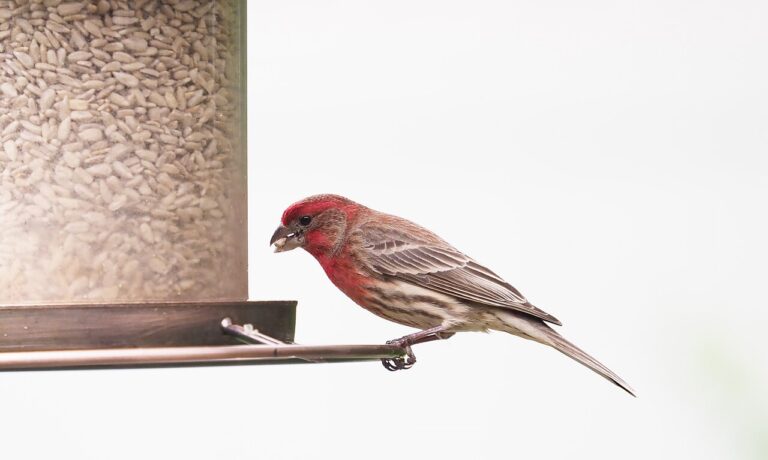
Fledglings: Streaky brown all over (females and juveniles look identical). Distinctive song.
Distinguishing features: Streaky brown, often at feeders, distinctive jumbled song.
Mourning Dove
Hatchlings: Pink, slight yellow fuzz.
Nestlings: Yellowish-white down, develop gray-brown feathers.
Fledglings: Brownish-gray with scaly pattern (different from adult’s plain gray), short tail.
Distinguishing features: Slender body, long tail, mostly on ground or low branches.
Common Grackle
Hatchlings: Pink with sparse down.
Nestlings: Dark pin feathers.
Fledglings: Brown-gray with darker head, dull yellow eye (adult’s bright yellow not yet developed).
Distinguishing features: Long tail, robust body, often in flocks.
European Starling (non-native)
Hatchlings: Pink with sparse pale down.
Nestlings: Gray-brown pin feathers.
Fledglings: Gray-brown all over (no adult black/iridescent until first molt), pale beak.
Distinguishing features: Pale beak, compact body, often near buildings.
Black-Capped/Carolina Chickadee
Hatchlings: Pink, almost no down.
Nestlings: Pin feathers, develops cap and bib early.
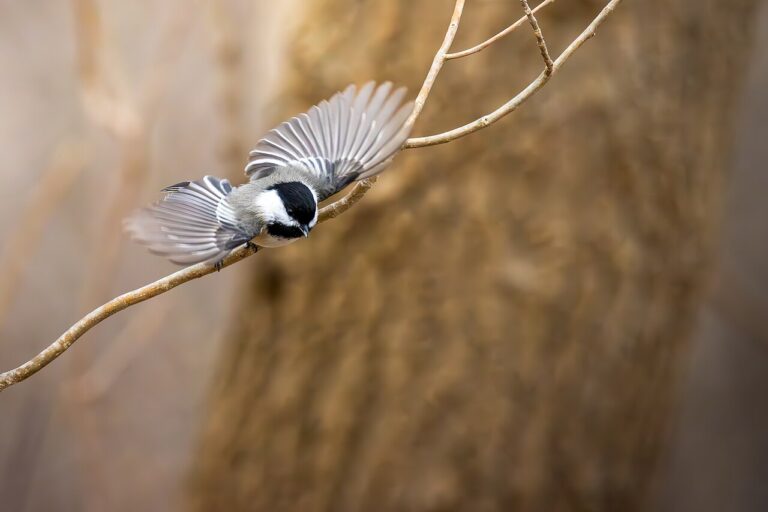
Fledglings: Looks like miniature adult, black cap, white cheek, dark bib. Slightly fluffier.
Distinguishing features: Distinctive head pattern visible even at fledgling stage.
House Wren
Hatchlings: Pink with sparse white down.
Nestlings: Pin feathers, very tiny.
Fledglings: Brown overall, short upturned tail (held high). Active and curious.
Distinguishing features: Tiny size, brown overall, short upturned tail.
Blue Jay
Hatchlings: Pink with sparse down.
Nestlings: Pin feathers in blue-gray.
Fledglings: Blue overall (less crisp than adult), crest visible, blackish necklace.
Distinguishing features: Crest and blue coloring obvious from fledgling stage.
Northern Mockingbird
Hatchlings: Pink.
Nestlings: Gray-brown pin feathers.
Fledglings: Gray-brown like adult but slightly duller, spotted breast.
Distinguishing features: Long tail, gray-brown coloring, often in dense shrubs.
Why Species ID Is Hard with Babies
Several factors make baby bird identification particularly difficult:
Many Babies Look Similar
Hatchlings and young nestlings of most songbird species are functionally identical, pink, helpless, eyes closed. Species recognition requires later development stages when distinctive markings appear.
Adult Markings Develop Gradually
Many species don’t show adult coloring until 6-12 weeks old. Male cardinals start brown, not red. Robins start with spotted breasts. The juvenile plumage is often a poor predictor of adult appearance.
Adult Birds Are Better Markers
If you see an adult bird visiting the nest or fledgling, the species ID is much easier. Watch from a distance to identify the parents, this gives you a definitive answer.
Nest Type and Location Help
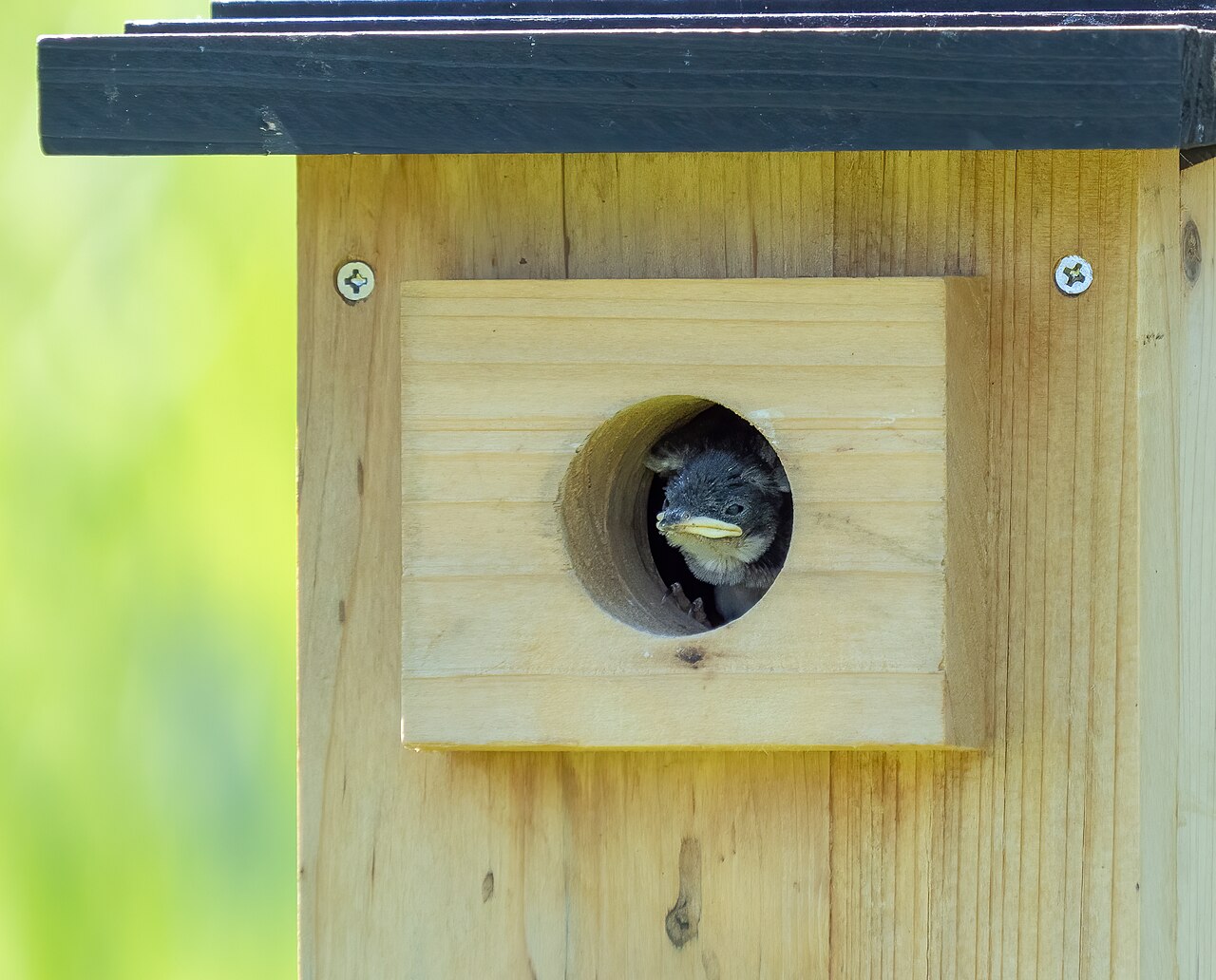
A nest in a cavity tells you it’s a cavity-nesting species (chickadees, bluebirds, woodpeckers, wrens). A nest in a low shrub tells you it’s likely a robin or mockingbird. The nest is often more identifiable than the babies.
When You Find a Nest with Babies
If you discover an active nest in your yard or property:
Observe From Distance
Use binoculars or a camera with zoom. Don’t approach closer than 10-15 feet during nesting season, disturbance can cause parents to abandon the nest.
Don’t Touch
Don’t lift babies, don’t peek directly into the nest, don’t disturb the nest in any way. The “human scent makes parents reject” myth is false, but the actual disturbance does drive parents away.
Wait for the Cycle to Complete
From hatching to fledging is typically 11-30 days depending on species. The whole nesting cycle (egg to flying chicks) is 4-7 weeks. Be patient.
Don’t Feed
Parent birds provide species-specific food. Human supplementation can disrupt natural feeding patterns or even cause harm. Trust the parents.
When You Find a Baby Bird Without a Nest
This is the most common scenario. The decision tree:
Step 1: Determine Life Stage
Look at the bird:
- No feathers, eyes closed → Hatchling
- Pin feathers, eyes open or opening → Nestling
- Full feathers, can hop → Fledgling
- Adult-like, can fly → Juvenile
Step 2: Action Based on Stage
Hatchling or Nestling:
- Look for the nest within 50 feet
- Return to nest gently if found
- If no nest, contact a wildlife rehabilitator
Fledgling or Juvenile:
- Leave alone (most likely scenario)
- Move to nearby cover if in immediate danger (road, predator)
- Observe from 30+ feet for 1-2 hours to see if parents return
- If parents don’t appear in 2-3 hours and the bird shows signs of distress, contact a rehabber
Step 3: If Intervention Is Needed
Don’t feed or water. Don’t try to keep it. Don’t put it in your house overnight. Get it to a licensed wildlife rehabilitator within hours, not days.
To find a local rehabber:
- Search “wildlife rehabber [your state]”
- Call your state wildlife agency
- Contact local Audubon chapter
- The Animal Help Now app (helpnow.app) maps rehabbers nationally
Common Baby Bird Misidentifications
A few situations are frequently misread:
Mistaken Abandonment
Fledglings on the ground for several days while parents feed them are often assumed to be abandoned. This is normal post-fledging behavior, not abandonment. Parents are nearby, watching, returning every 20-60 minutes.
Cowbird Babies in Other Species’ Nests
Brown-headed Cowbirds are nest parasites, they lay eggs in other species’ nests. The host species often raise the cowbird as their own. A “wrong” looking baby in a cardinal or warbler nest may be a cowbird. Cowbirds typically outcompete their host’s natural babies.
Mistaking Adult Females for Babies
Some adult female songbirds look quite similar to juveniles of their species. A small, drab-looking bird isn’t necessarily a baby. Adult female House Finches, for example, look very similar to juveniles.
Confusing Different Species of Fledglings
Multiple species fledge at similar sizes and look superficially similar. Without knowing the parental species, identification can be impossible.
What Wildlife Rehabbers Actually Do
Licensed wildlife rehabilitators are trained professionals with state and federal permits. They can legally handle wild animals; you cannot.
Their role:
- Provide species-appropriate medical care
- Feed appropriate diet at appropriate intervals (often every 15-30 minutes for nestlings)
- Maintain proper temperature, humidity, lighting
- Minimize human imprinting through specific protocols
- Eventually release the bird back to wild life
Rehabbers work largely with donations. If you find a bird that genuinely needs help, the rehabber will appreciate a donation along with the bird. Most operate on extremely tight budgets.
When to Just Let Nature Take Its Course
This is hard, but important: not every wild bird can or should be saved. Some situations:
- A bird with obvious severe injuries may be beyond rehabilitation
- Some species have extremely low rehabilitation success rates
- Some natural mortality is part of healthy ecosystem function
Wildlife rehabbers are trained to make these calls, they’ll humanely euthanize when prognosis is poor, which is a kindness in many cases. Trust their professional judgment. Don’t keep a dying bird at home trying to comfort it; the rehabber can either save it or provide humane end-of-life care.
Can You Identify a Baby Bird From a Photo?
Often not, and it is worth knowing why before spending an hour trying. Nestlings of very different species look almost identical: pink skin, closed bulging eyes, sparse grey down and an oversized yellow gape. The features field guides rely on, plumage pattern, bill shape and proportions, either have not developed yet or are actively misleading.
What a photo can establish is the things that actually matter for a decision. Stage is readable at a glance from feather development and whether the eyes are open. Rough size is readable against a hand or a leaf. And the nest, if visible, narrows the species far more than the chick does, since nest shape, material and placement are highly species-specific.
For species, context beats appearance. What adults are alarm-calling nearby, what the nest is made of and where it sits, and what is common in your area at that time of year will get you closer than any photo of the chick itself. If the bird needs help, a licensed wildlife rehabilitator does not need the species to act, and giving them stage, size and location is more useful than a guess. Audubon’s American Robin account covers nesting and fledging in the species most often found.
Frequently Asked Questions
What should I do if I find a baby bird on the ground?
First determine the life stage. If it has feathers and can hop (fledgling), leave it alone, its parents are likely nearby. If it has no feathers or pin feathers (hatchling/nestling), look for the nest and return it gently. If no nest is findable, contact a licensed wildlife rehabilitator. Don’t try to feed or keep the bird.
Will the parents abandon a baby bird if I touch it?
No, this is a persistent myth. Birds have a poor sense of smell and will not reject a baby because of human scent. However, disturbance to the nest or area can cause parents to leave temporarily. Return any displaced hatchling/nestling to the nest carefully.
What’s the difference between a fledgling and a nestling?
A nestling cannot fly, has minimal feathers, and stays in the nest. A fledgling has nearly-full feathers, can hop, and has left the nest as a normal part of development. Fledglings on the ground are normal; nestlings on the ground are abnormal. This distinction is crucial for knowing what to do.
Can I take a baby bird home and raise it?
No, for two important reasons. First, it’s illegal in the US under the Migratory Bird Treaty Act (up to $15,000 fine, 6 months prison). Second, wild baby birds raised by humans rarely survive release, they imprint on humans and don’t develop normal survival skills. Always contact a licensed wildlife rehabilitator instead.
How do I find a wildlife rehabilitator?
Search “wildlife rehabber [your state]” online. The Animal Help Now app (helpnow.app) maps rehabbers nationally. Call your state’s wildlife agency. Local Audubon chapters can also help locate licensed rehabilitators in your area.
Are baby birds dangerous to handle?
For your safety, no, most are too small to cause harm. For their safety, yes, handling stresses them, and well-meaning humans often cause injuries. If you must move a baby bird (back to nest or to a rehabber’s care), do so quickly, gently, and minimally.
How long do baby birds stay in the nest?
Most songbird species stay in the nest for 11-25 days from hatching to fledging. After fledging, they spend another 2-7 days on the ground or in low cover before fully flying. The entire process from egg to independent young bird takes 4-7 weeks for most songbirds.
Why is my baby bird on the ground if it’s not abandoned?
Most likely: it’s a fledgling, and this is normal. Fledglings deliberately leave the nest before they can fly fully. They spend 2-7 days on the ground or in low cover, calling for their parents who continue to feed them. This is part of normal development. Leave the bird alone unless it’s in immediate danger.
Can I feed a baby bird I found?
Generally no. Feeding wild baby birds incorrectly is one of the most common causes of injury and death. Hatchlings and nestlings need specific food at specific intervals (often every 15-30 minutes for some species). Adults of different species feed different foods. Wait for a wildlife rehabilitator to assess the situation.
What if the baby bird is in danger from a cat or dog?
Remove the threat, not the bird. Bring pets inside, fence the area, or create a barrier. Then leave the bird in place if possible. If you must move it for safety, place it in nearby low cover (a shrub or branch within 50 feet of where you found it). Don’t take it home.
How do I tell if a baby bird is sick or injured?
Signs of distress: visible bleeding or wounds, inability to lift head, eyes closed and not opening, lying flat and not responsive, soaked wet on a cold day, or no parental visits over many hours. Healthy fledglings on the ground typically look alert, may hop or flutter when approached, and respond to nearby parental calls.
What do baby birds eat?
Different species need different diets. Most songbirds need specific insect-protein-rich foods that vary by species and developmental stage. Robin babies need worms; chickadee babies need caterpillars; goldfinch babies need seeds processed by parents. Generic bird seed or bread is not appropriate and can be harmful. Wildlife rehabbers provide species-appropriate diets.
Can I keep a bird that was orphaned?
No. The legal restriction (Migratory Bird Treaty Act) is one reason, but the practical reason is more important: birds raised by humans cannot survive in the wild. Even well-intentioned attempts at home rehabilitation generally fail. The bird’s best chance is with a licensed wildlife rehabilitator.
Related reading: Baby Fox.
Related reading: Baby Possum Guide.
Related reading: Baby Alpaca.
Related reading: Baby Llama.
Related reading: Baby Cockatiel.
Related reading: Baby Cockatoo.