How to Identify Backyard Birds: A Complete Guide for Beginners
If you’ve ever watched a bird at your feeder and asked “what was that?”, you’ve started bird identification. The trick is doing it systematically instead of guessing. Most beginners learn by accident over months. With a clear method, you can short-cut to identifying most backyard species in your area within a few weeks of focused attention. The skill isn’t about memorizing every bird, it’s about narrowing possibilities fast. This guide walks through the exact five-step framework experienced birders use in the field, the free tools that compress the learning curve, the most common identification confusions, and how to handle the situations where the bird won’t cooperate.
What “Bird Identification” Actually Means
Bird identification is the process of determining a bird’s species based on what you can observe: its size, shape, behavior, color and markings, habitat, and sometimes its calls or songs. In practice, identification is less about visual memorization and more about systematic elimination, running the bird you’re seeing against the small set of species likely to be in your yard at this time of year, then narrowing from there.
Beginners often think identification is a memory exercise: see a bird, look it up, remember it. That works for the first three or four species you learn. After that, memory gets unreliable. Many species look superficially similar (sparrows are notoriously difficult), and lighting, female vs. male plumage, juvenile vs. adult plumage, and seasonal molts can transform a bird’s appearance.
The better mental model is detective work. You’re collecting clues, observation by observation, and using each one to narrow the list of possible species. The faster you learn to collect the right clues in the right order, the more birds you’ll correctly identify.
The 5-Step Identification Method (Use This Order)
The most reliable identification method for backyard birds is to observe and narrow in this order: size, shape, behavior, color and field marks, habitat and location. Color sits in the middle, not at the start, a counterintuitive habit that experienced birders develop because color is one of the least reliable first filters. Lighting fools you, female and juvenile plumage differs from adult-male plumage, and many birds are essentially brown.
We introduced this sequence briefly in the complete beginner’s guide to backyard birding. Here we go into depth on each step, with concrete examples of how each filter narrows the candidates.
Step 1: Size
Estimate the bird’s size relative to a familiar reference bird, not in inches. The three universal references are: sparrow-sized (about 5 to 6 inches), robin-sized (about 9 to 10 inches), and crow-sized (about 17 to 21 inches). With practice, you’ll add chickadee (about 4 inches) and pigeon (about 12 inches) to your reference set.
The reason to use reference birds instead of inches: nobody estimates inches accurately in the field. A bird hopping on the ground 15 feet away looks different than the same bird flying past at 30 feet. Birders rarely say “that was a 7-inch bird.” They say “smaller than a robin, bigger than a chickadee.”
Size alone won’t identify a species, but it eliminates massive numbers of possibilities. If you see a sparrow-sized bird at your feeder, you’ve already excluded jays, doves, crows, hawks, and woodpeckers from consideration. You’ve narrowed the field to small finches, sparrows, chickadees, titmice, and similar small songbirds.
Step 2: Shape and Silhouette
After size, look at the bird’s overall shape: body proportions, tail length, neck length, bill shape, and posture. Shape is the second-most-reliable filter because, unlike color, it doesn’t change in poor light. You can identify many birds by silhouette alone before you ever see a single color.
Key shape features to register, in order:
- Body shape. Stocky and round (chickadee), slim and elongated (warbler), heavy and chunky (jay)?
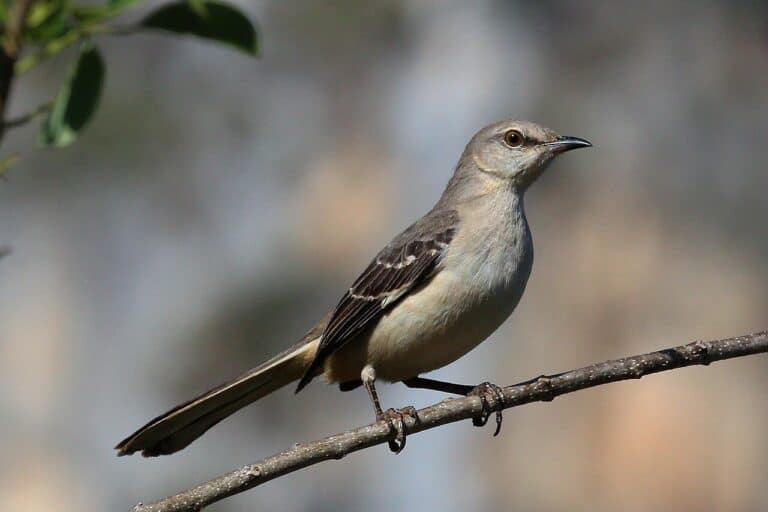
- Tail. Short, long, forked, notched, square-tipped? A long tail compared to body length often points to mockingbirds, thrashers, or doves. A forked or notched tail suggests finches or buntings.
- Bill. Thick and conical (seed-eaters: finches, cardinals, sparrows)? Thin and pointed (insect-eaters: warblers, kinglets)? Long and chisel-like (woodpeckers)? Hooked (raptors, shrikes)?
- Posture. Upright (flycatchers, robins, thrushes)? Horizontal (warblers)? Hunched (sparrows)?
Many experienced birders eventually identify species at distance from silhouette alone. A tiny upright bird with a long tail on a wire is almost certainly a mockingbird, regardless of how the color looks.
Step 3: Behavior
What is the bird doing? Behavior often narrows the family, sometimes even the species, before you need any visual details. Behavior is the most overlooked beginner filter, and it’s the one experienced birders rely on most heavily, because behavior is observable even when the bird is in deep shadow or backlit.
Quick behavioral cues that nearly identify species on their own:
- Walking up a tree trunk in spirals. Brown Creeper.
- Walking on a tree trunk headfirst down. Nuthatch (no other backyard bird does this).
- Hopping along branches and hanging upside-down at feeders. Chickadee or titmouse.
- Hopping on the ground in short bursts, then pausing. Sparrow or thrush.
- Running on the ground rather than hopping. Robin (and other thrushes).
- Pecking the trunk of a tree. Woodpecker family.
- Sallying out from a perch to catch insects mid-air, returning to the same perch. Flycatcher.
- Bobbing the tail constantly. Phoebe, Palm Warbler, or waterthrush.
- Hovering at a flower. Hummingbird (or, less often, a Sphinx Moth, surprisingly easy to confuse at first glance).
The power of behavior as a filter is that birds repeat behavior. A given species behaves predictably across individuals. Once you learn that nuthatches walk down trees headfirst, you’ll recognize the next nuthatch you see in two seconds, even if it’s in shadow.
Step 4: Color and Field Marks
Now you look at color, but not as a whole impression, at specific field marks. Field marks are the distinctive plumage features that distinguish similar species: wing bars, eye rings, eyebrow stripes, crown patches, breast spots, undertail coverts. Look at each in sequence rather than trying to absorb the whole bird at once.
The order to scan a bird’s plumage:
- Overall color of upperparts (back, wings, head from above). Brown, gray, olive, blue, black?
- Overall color of underparts (belly, chest, throat). White, buffy, streaked, plain?
- Head pattern. Plain, striped, capped? Color of crown? Stripe through or above the eye? Eye ring?
- Wings. Wing bars (one, two, none)? Patch of color on the wing?
- Tail. Color, pattern, white outer tail feathers (visible in flight)?
- Bill color. Black, yellow, orange, pink?
By this point, with size + shape + behavior + field marks, you’ve usually narrowed it to two or three candidate species. Now you can flip to your field guide or app and confirm.
A note on female and juvenile plumage: many male songbirds are colorful (cardinals, finches, buntings, orioles), while females and juveniles are duller and often confused with sparrows. If a bird looks “brownish and streaky,” it’s worth checking whether it might be a female of a more colorful species, not just defaulting to “some sparrow.” See our guide to telling male and female birds apart for the species where this matters most.
Step 5: Habitat, Range, and Season
A bird in the wrong habitat or wrong region at the wrong time of year almost certainly isn’t the species you think it is. Range and habitat are the final filter, they eliminate the species your visual identification fits but that simply don’t occur at your location. A Vermilion Flycatcher matches a checklist of features perfectly for someone in southern Arizona but is essentially impossible in Maine.
Three habitat layers to consider:
- Region. What state, and what part of the state? A robin in Florida in January is more likely a winter migrant than a resident. A junco in your yard in July is unusual almost anywhere except high elevations.
- Local habitat. Edge of forest, deep forest, open field, marsh, residential yard, urban park? Many species are strongly tied to specific habitat types.
- Season. Was the bird present in winter? Spring migration? Summer breeding? Fall? Many species are present in your area only part of the year.
This is where regional guides like the Florida backyard birds guide and the Texas backyard birds guide earn their keep, they tell you what’s actually present, not what could theoretically be. Cornell’s eBird database (free, at ebird.org) is the gold standard for “what’s been seen near me this week” data.
The Tools That Make Identification Easier
Three free or low-cost tools handle most identification work for backyard birders: the Merlin Bird ID app from the Cornell Lab of Ornithology, eBird for regional sighting data, and a printed field guide for understanding bird families. Together they cover sight identification, sound identification, regional reality-checks, and the structural learning that makes future identifications faster.
Merlin Bird ID (Free)
Merlin Bird ID, from Cornell Lab, is the most useful single tool for beginners. It identifies birds three ways:
- Step-by-step ID. Answer five short questions about what you saw (size, color, location, behavior) and Merlin shows likely matches.
- Photo ID. Upload or take a photo and Merlin identifies the species.
- Sound ID. Record a bird singing through your window and Merlin labels the species in real time, even when multiple species sing simultaneously.
It works offline once you’ve downloaded regional bird packs (typically free). The app is built and maintained by Cornell, the leading ornithology institution in North America, and it draws on hundreds of millions of observations submitted through eBird.
Our breakdown of the best bird identification apps compares Merlin to alternatives like Audubon Bird Guide, Seek, and iNaturalist. For most beginners, the recommendation is straightforward: just install Merlin.
eBird (Free)
eBird is the world’s largest bird observation database, also maintained by Cornell Lab. As an identification tool, it’s most useful for the “What’s likely in my yard right now?” filter, you can pull up regional bar charts showing what species are reported at your location by month, which dramatically narrows the candidate list.
Beyond identification, eBird is where serious birders log their sightings. We cover habit-building with eBird in the complete guide to attracting birds and building a birding practice.
Field Guides (Print)
A printed field guide still matters, despite the app revolution. Apps tell you what a bird is. A field guide helps you understand how birds are organized, which families exist, which species are related, what features distinguish related species. That structural knowledge is the foundation of fast identification.
The three standard field guides for North America:
- The Sibley Guide to Birds (2nd Edition). The most detailed illustrations and the standard for serious birders.
- Peterson Field Guide to Birds. The original. Features the “Peterson identification system” of arrows pointing to key field marks.
- National Geographic Field Guide to the Birds of North America. The most beginner-friendly, with strong range maps.
Get one. Don’t worry too much about which. Even leaving it on your coffee table and browsing it occasionally accelerates how fast you recognize bird families. Specialized regional guides (Sibley’s regional editions, Stokes guides for specific states) are excellent additions once you’ve identified your area’s regular species.
Sound Identification (Often Faster Than Sight)
Most birds are heard before they’re seen. For an established birder, sound identification accounts for the majority of birds they detect on a typical walk. Once you can identify the calls and songs of your five most common backyard birds, you’ll know what’s in your yard before you even look up.
Merlin’s Sound ID is the fastest learning shortcut. Beyond that, the Macaulay Library at Cornell has thousands of bird sound recordings you can browse and learn from.
We cover sound-based identification in depth in the guide to identifying birds by their sounds.
Identification by Color (Quick Reference)
Color isn’t the strongest first filter, but once you’ve already narrowed by size and shape, color becomes a fast way to land on the species. Our color-based identification guides cover the most-searched color groups:
- Yellow birds: 25 common species
- Red birds: complete identification guide
- Small brown birds: how to tell them apart
- Birds with red heads
- Red birds with black wings (often Scarlet Tanagers)
- Blue birds in North America
- Black birds: identification splits
Use these as starting points when color is the strongest feature you can observe, particularly useful when you only got a fleeting look at a bird and color was the dominant impression.
Ten Backyard Identifications That Trip Up Beginners
Some species look superficially similar and account for a disproportionate share of beginner misidentifications. Learning these “look-alike” splits early will sharpen your eye fast.
1. Downy vs Hairy Woodpecker. Almost identical patterning. The Downy is sparrow-sized with a stubby bill; the Hairy is robin-sized with a longer bill (about as long as the head). Full comparison here.
2. House Finch vs Purple Finch. Males of both have red on the head and chest. House Finches have brown streaking on the belly; Purple Finches don’t. Purple Finches also have a more raspberry-red color that extends further down the back. Full breakdown here.
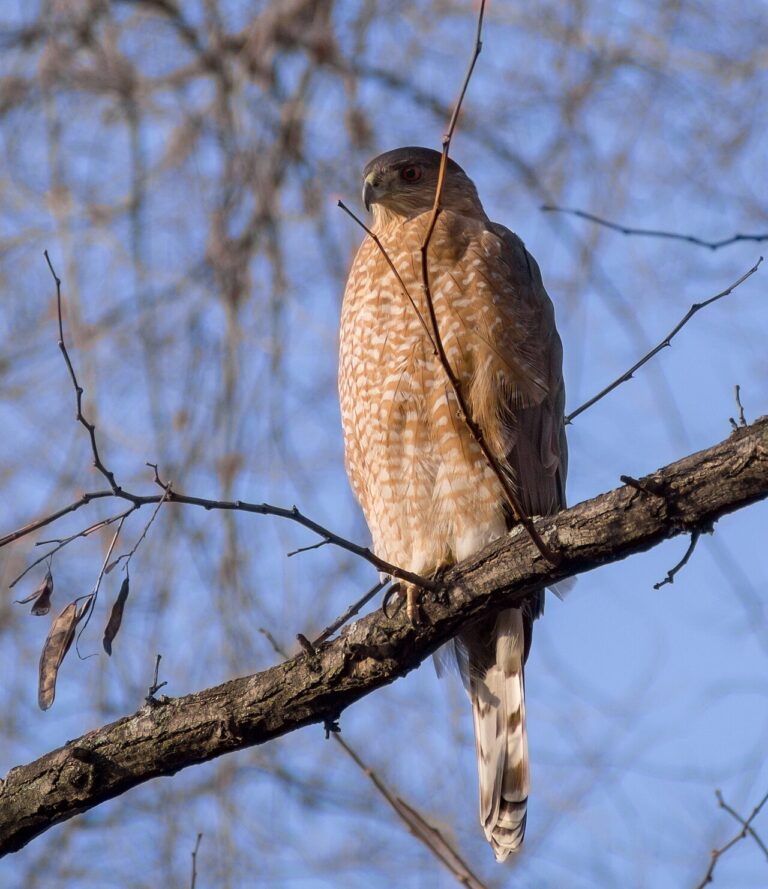
3. Cooper’s Hawk vs Sharp-Shinned Hawk. Both are bird-hunting accipiters that visit backyards with feeders. Sharp-shinned is smaller (about jay-sized), Cooper’s is larger (about crow-sized). Tail tip is square on Sharp-shinned, rounded on Cooper’s. Notoriously difficult even for experts.
4. American Crow vs Common Raven. Crows are smaller, with a fan-shaped tail when spread in flight; ravens have a wedge-shaped tail and a heavier bill. Ravens “croak”; crows “caw.” In most suburbs, it’s a crow.
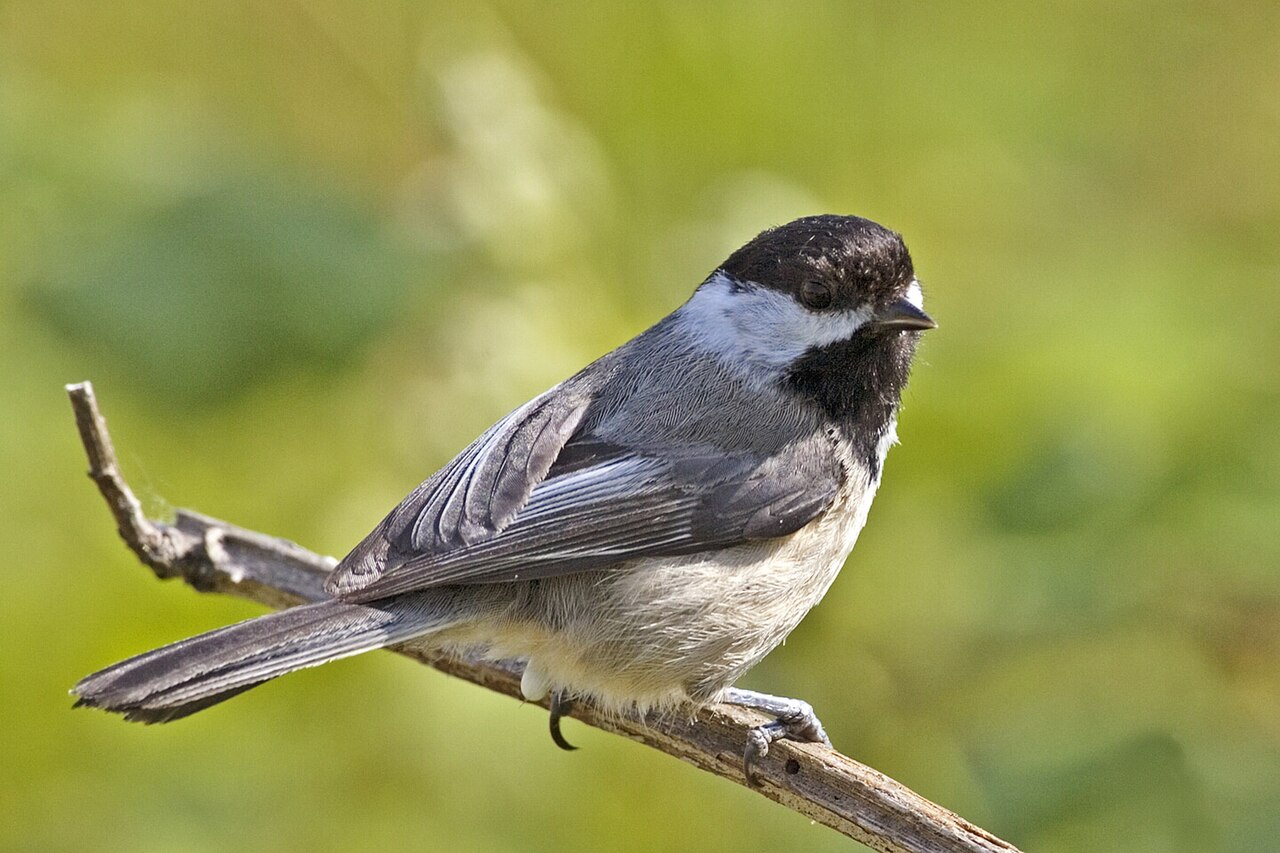
5. Carolina Chickadee vs Black-Capped Chickadee. Nearly identical visually. Range is the key, Carolinas are southeastern, Black-Capped are northern. Where they overlap (a thin band across the mid-Atlantic and Midwest), they hybridize and identification gets genuinely difficult.
6. House Sparrow vs Native Sparrows. House Sparrows are non-native (introduced from Europe) and very common in urban areas. Males have a black bib; females are plain brown. Most native sparrows have more streaking and intricate head patterns.
7. Eastern Bluebird vs Indigo Bunting (males). Both are vividly blue. Bluebirds have a rusty-orange breast; Indigo Buntings are all blue. Bluebirds perch upright on fence posts; Indigo Buntings are smaller and often sing from treetops.
8. American Goldfinch in summer vs winter. Same species, but the male’s bright yellow breeding plumage in summer transforms to dull olive-tan in winter. Many beginners think they’re seeing two different species.
9. Female Cardinal vs Cedar Waxwing. Both have crested heads. Female Cardinals are warm brown with red bills; Cedar Waxwings have a black mask, yellow tail tip, and a sleek pointed crest.
10. Mourning Dove vs Eurasian Collared-Dove. Mourning Doves are slightly smaller, pointed-tailed, and have black spots on the wing. Eurasian Collared-Doves (an invasive species now widespread in the US) are larger, with a square tail and a thin black collar on the back of the neck.
How to Identify Birds You Can’t See Clearly
Many backyard observations are imperfect: the bird flashes by in a second, sits backlit, is too distant for field marks. Most experienced birders identify birds in non-ideal conditions more often than not, it’s part of the skill, not a failure of it.
A few techniques that help when the view isn’t ideal:
- Use posture and silhouette over detail. When you can’t see color or marks, run identification by shape and behavior alone. You’ll be surprised how often it works.
- Use the elimination filter aggressively. “It’s small, in winter, at my feeder, in New England.” That alone narrows the species list to maybe ten candidates. Now ask what’s most likely given your region and habitat.
- Use the “second look” strategy. Most backyard birds stay around for minutes, not seconds. Even if the first look was bad, the bird often comes back. Stand still, watch the same area, and you’ll usually get a better view within five minutes.
- Listen. If you didn’t catch the visual, did the bird call? Audio identification can salvage observations where the visual missed.
For birds that genuinely got away unidentified, write down what you saw anyway. An incomplete observation is still useful data, sometimes the species reveals itself weeks later when you see a similar bird and the pieces click. If the feeder didn’t seem to attract that visitor reliably, see the troubleshooting guide for feeders not attracting birds.
Identifying Baby Birds, Eggs, and Nests
Backyard birding eventually expands beyond adults to include baby birds, eggs, and nests. These have their own identification challenges. Juvenile birds often look quite different from adults, usually duller, more streaked, with shorter tails. Identification typically requires watching them with a parent bird present.
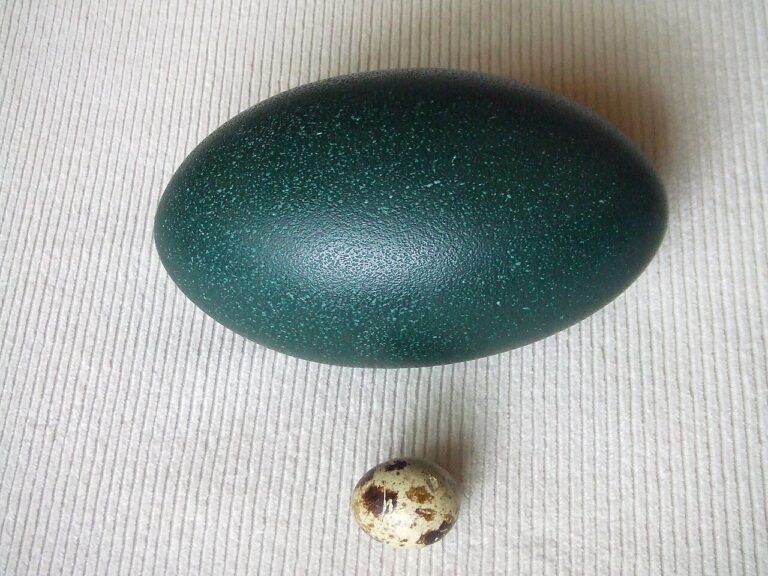
For eggs, color, size, and markings narrow the species, though many backyard birds (Mourning Doves, House Finches, robins) lay distinctive eggs:
- Bird egg identification: visual guide by color and markings
- Baby bird identification guide for common backyard species
A note on found baby birds and eggs: most “abandoned” baby birds are actually being watched by parents from a distance. Unless the bird is visibly injured or in immediate danger, the best action is usually to leave it alone. Your local Audubon chapter or state wildlife rehabilitation directory has specific guidance for your area.
Building Identification Skill Over Months
The progression most birders experience is predictable. You learn five species in the first week, twenty within a month, fifty within a year. The plateau hits around year two, when you realize how many species look similar and how much regional knowledge you still lack. Then progress slows but deepens.
A few practices that accelerate the curve:
- Spend time with the same yard. Familiarity with your local birds is the single biggest factor. You’ll learn what’s normal, then notice the unusual.
- Submit eBird checklists. Forcing yourself to identify every bird you see (or admit you couldn’t) builds discipline and creates a personal record.
- Watch the same species across seasons. Goldfinches change color twice a year. Cardinals are present year-round but behave differently in winter than during breeding season. The temporal dimension is invisible if you only birdwatch sporadically.
- Walk the same route weekly. A consistent route reveals migration timing in ways one-off observations don’t.
For new birders, our complete guide to backyard birding for beginners covers gear setup and habit-building alongside identification. Once you’ve gotten comfortable with common species, deep-dive species profiles like the Northern Cardinal guide or the Blue Jay guide help you understand each species’ biology in depth.
Frequently Asked Questions
Can I really identify birds just by sound?
Yes, with practice. Most birds vocalize regularly, and many species can be identified by call alone. Merlin Bird ID’s Sound ID feature lets beginners use sound for identification immediately. Experienced birders identify the majority of birds on a typical walk by ear before they see them.
What if the bird flies away before I can identify it?
Write down everything you remember: size, posture, color impressions, where in the yard, what time, what it was doing. Even partial observations are useful, many birds return to favorite spots, and your notes will help you confirm identification on the next sighting.
Are bird identification apps accurate?
Merlin Bird ID has very high accuracy for common species in regions where you’ve downloaded the relevant bird pack. It’s less reliable for unusual species or vagrants from outside your region. Cross-check unusual identifications with a field guide or eBird before reporting them.
How do I identify birds I can’t see clearly?
Rely on size, shape, behavior, and habitat. Color and field marks aren’t necessary for many identifications. With practice, silhouette and behavior alone can identify the majority of common backyard species.
Why do female birds often look so different from males?
Many songbird species have evolved with bright male plumage for breeding display and duller female plumage for camouflage during nesting. The technical term is sexual dimorphism. Female cardinals, finches, buntings, and orioles often look nothing like their colorful mates. Always check whether a “drab brown bird” might be the female of a brighter species.
What’s the most commonly misidentified backyard bird?
For most beginners in eastern North America, the House Finch / Purple Finch confusion is the most frequent. In the South, Carolina vs Black-Capped Chickadees in the overlap zone. Across the country, female sparrows and Old World House Sparrows account for many beginner errors.
Should I worry about identifying every bird I see?
No. Some birds simply won’t cooperate, and that’s normal. Even ornithologists log unidentified observations as “passerine sp.” (unknown songbird). Note what you can, move on, and trust that with enough time the species will reveal themselves.
Where can I learn more about a specific species I’ve identified?
Cornell Lab’s AllAboutBirds.org has free, detailed profiles for nearly every North American species. We’re also building deep-dive species guides, see the Northern Cardinal complete guide as an example.
Related reading: How to Identify Backyard Birds.
Related reading: What Eats What.
Backyard birds by state: backyard birds in Ohio, backyard birds in Georgia, backyard birds in North Carolina, backyard birds in Washington, backyard birds in Arizona, backyard birds in Massachusetts, backyard birds in Virginia, backyard birds in Indiana, backyard birds in Missouri.