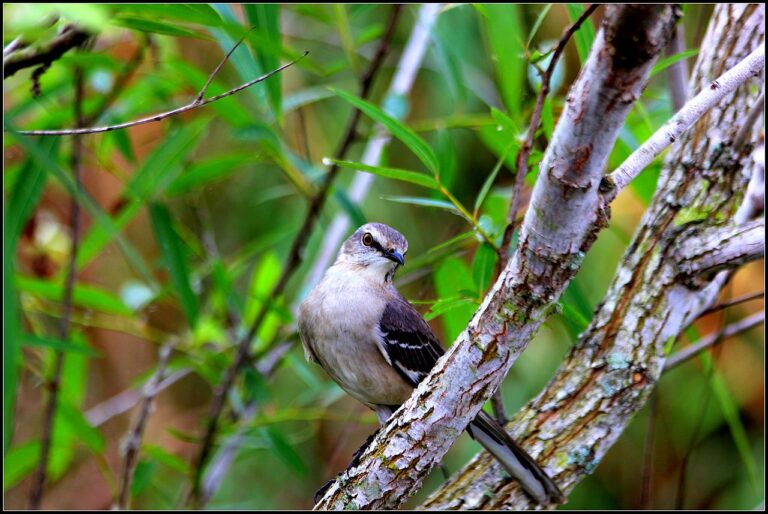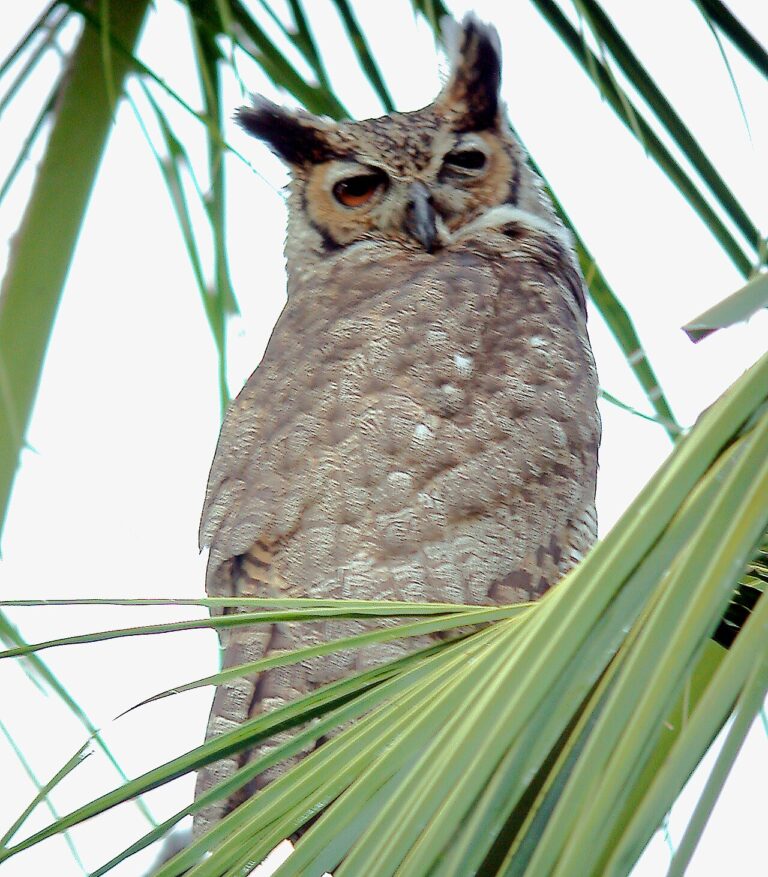
Backyard Birding for Beginners: How to Start (Complete Guide)
Backyard birding is the practice of observing, identifying, and enjoying wild birds that visit your yard or neighborhood. It’s the most accessible form of wildlife watching in North America, requires almost no special equipment to start, and pays back in observation skills, calm focus, and a deeper connection to the small ecosystem outside your window. Most beginners overthink it. You don’t need expensive binoculars, a remote cabin, or a biology degree to start. What follows is the complete guide to going from “there’s a bird out there” to confidently identifying ten or twenty species you see regularly, setting up your yard to attract more birds, and building a habit that quietly becomes one of the most rewarding things you do.
What Backyard Birding Actually Means
Backyard birding refers to observing wild birds in or near your home, typically with the naked eye or binoculars, often paired with bird feeders, baths, or native plants that attract more species. It differs from formal birding trips or “twitching” (chasing rare birds across regions) in that it’s done from where you live. According to the U.S. Fish and Wildlife Service, around 96 million Americans engage in wildlife watching annually, and birds are by far the most-observed group. Whether you have a five-acre property or a single apartment balcony, you can do this.
The appeal is partly practical and partly something harder to name. Practically, you’ll start noticing species you walked past every day for years. You’ll begin hearing the difference between a chickadee and a titmouse before you see either. And over time, your calendar starts to map to bird events, not just human ones: when warblers move through, when goldfinches turn bright yellow in April, when juncos arrive for winter.
That’s the hidden reward, and most beginner guides skip it because it sounds soft. Seasoned birders will tell you the same thing in different words: the longer you do this, the more you see, and the more present you become in your own yard.
What You Need to Get Started (Less Than You Think)
The three essentials for backyard birding are a basic pair of binoculars (8×42 is the standard), a bird identification app or pocket field guide, and somewhere to take notes. That’s the entire starting kit, and you can assemble all three for under $150. Feeders, baths, and houses come later.
Most beginners overspend on gear before they know what they actually want, then lose momentum before the gear pays back. The better approach: buy minimum-viable, use it for three months, then upgrade only what’s actually limiting you.
A Pair of Binoculars (Don’t Overspend Yet)
For backyard birding, 8×42 binoculars are the standard recommendation: 8x magnification, 42mm objective lens. The 8x is wide enough to track moving birds without shake, the 42mm gathers enough light for early morning and dusk (when birds are most active), and the combination balances weight, comfort, and image quality.
You’ll find expensive options at every price point, but for starting out, decent pairs exist in the $80 to 150 range. They’ll show you everything you need to see in a typical backyard. If after three months you’re reaching for them daily and want more brightness, sharper focus, or longer eye relief, then upgrade. Read our complete guide to binoculars under $200 for beginners when you’re ready to choose a specific pair.
What you do not need at the start: anything over $500, zoom binoculars (the field of view is too narrow for fast birds), compact “travel” binoculars like 10×25 (too dim, hard to hold steady), or high-magnification spotting scopes (great for shorebirds at distance, useless for chickadees ten feet away).
A Field Guide or Identification App
For identification, you have two solid paths: a printed regional field guide (Sibley, Peterson, or Kaufman are the standards), or a free app like Merlin Bird ID from the Cornell Lab of Ornithology. Both work. The app wins for most beginners because it includes audio identification, photo identification, and a question-based wizard.
Merlin Bird ID is free, works offline once you download regional bird packs, and identifies birds three ways: by answering five short questions about what you saw, by uploading a photo, or by recording a sound. The sound feature alone has changed how beginners learn, you can record a bird singing through your window and watch the app name it in real time. It’s a remarkable piece of citizen-science infrastructure.
For deeper learning, a printed field guide still has its place. Apps tell you what something is. A field guide helps you understand bird families and how species relate to each other, which is the foundation for recognizing birds you’ve never seen before. Most birders eventually use both. We compare the major apps in our breakdown of the best bird identification apps, if you’re unsure where to start, just install Merlin.
A Place to Take Notes
A simple notebook or note-taking app where you log species, dates, weather, and behaviors will quietly become the most valuable part of your kit. You don’t need anything fancy. The point is committing to writing things down, because memory of birds fades faster than memory of almost anything else. Three days after you saw a “small brown bird with yellow on its wings,” you won’t be able to reconstruct enough detail to identify it. Written notes solve that.
At minimum, log: date, time, weather, species (or best-guess description), behavior (feeding, perched, singing, scolding?), and location in the yard. Over a year this becomes a personal field record that’s surprisingly informative, you’ll see your own patterns of which species arrive when, who replaces whom, when the unusual visitors show up.
Many birders eventually graduate to eBird, the global bird-observation database maintained by the Cornell Lab. We cover that progression in the complete guide to attracting birds to your yard. For now, a notebook is enough.
Setting Up Your Yard to Welcome Birds
The three elements that attract birds to any yard are food, water, and shelter. Provide any one of them and birds will come; provide all three and you’ll have measurably more species in measurably less time. Most beginners start with food (a feeder), which is fine, but adding water typically doubles the variety of birds you’ll see within weeks.
Yard setup is a separate skill from observation. You can be a successful backyard birder by just watching whatever flies through. But the moment you provide reliable food and water, you stop being a passive observer and start curating a small habitat. That’s where the hobby becomes deeply rewarding.
Food: The Fastest Way to Attract Birds
A bird feeder filled with black oil sunflower seed will attract more species, faster, than any other single setup choice. Black oil sunflower is the universal seed: chickadees, finches, cardinals, jays, nuthatches, woodpeckers, and titmice all eat it. Buy a 20-pound bag (around $25 to 35), fill any basic tube or hopper feeder, and hang it within sight of a window. Birds typically find it within days.
From there, you can add specialized feeders and seed types for specific species, thistle (nyjer) seed for goldfinches, suet for woodpeckers, mealworms for bluebirds. We cover everything in the complete bird feeders guide and the bird seed guide. For your first month, just use black oil sunflower in one feeder. Don’t complicate it.
Two things to plan for: squirrels and waste. Squirrels will find your feeder within 24 hours and figure out how to access it within a week. A pole-mounted feeder with a baffle solves this for almost all setups, see our guide to bird feeder poles. Waste under the feeder (hulls, dropped seed) will attract ground-feeding species like juncos, sparrows, and doves, but it can also attract rodents if it accumulates. Sweeping or raking weekly handles it.
Water: The Most Overlooked Attractant
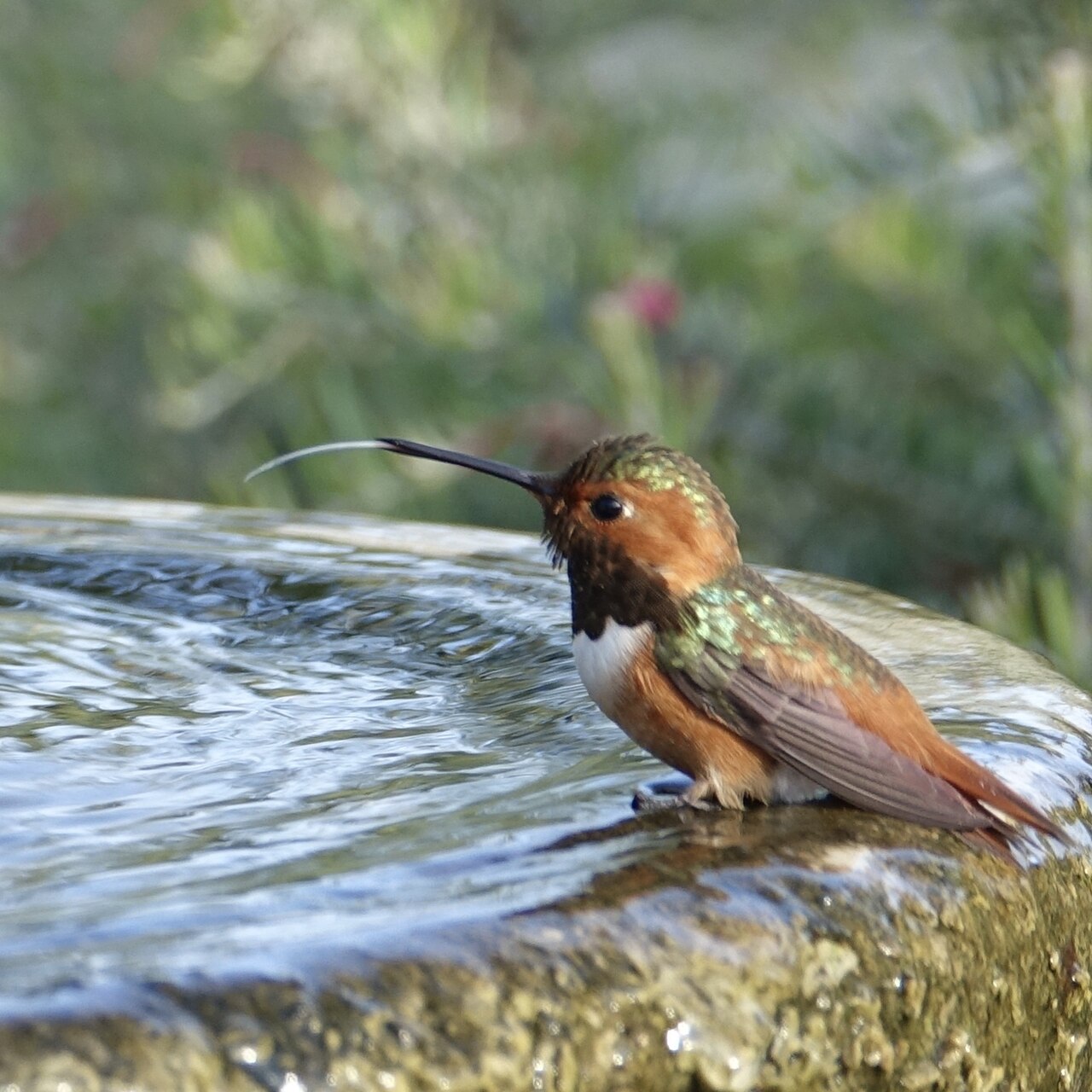
A shallow water source, a bird bath, a saucer of clean water, even a slow-drip hose, will attract birds that ignore feeders entirely. Birds need water year-round for drinking and feather maintenance, and they’ll travel notable distances to find a reliable source. The shallower the water and the more it sounds like moving water, the more effective it is. Two inches of depth is plenty; deeper than that and small songbirds won’t use it.
The cheapest effective water source is a $15 ceramic saucer placed on the ground or on a low stump. Add a few stones to give birds a place to perch and a sense of safety, refresh the water every day or two, and you’ll see species you never saw at the feeder. Robins, thrushes, warblers, and orioles often visit water but not seed.
A heated bird bath in winter is the single biggest upgrade for cold-climate yards. In sub-freezing weather, open water becomes scarce, and birds will travel from neighborhoods around to reach a single unfrozen bath. We cover heated baths, pedestal designs, solar fountains, and DIY options in the complete bird baths guide.
Shelter: Where Birds Feel Safe
Birds avoid open yards and gravitate to yards with cover, shrubs, trees, brush piles, even untrimmed edges. Shelter serves three purposes: refuge from predators (especially hawks and cats), nesting sites, and protection from weather. Without shelter near your feeder, even the food won’t bring birds for long; they need a place to dart to when threatened.
If your yard is currently turfgrass-dominated, you don’t need to landscape it overnight. A single dense shrub planted 10 to 15 feet from a feeder dramatically changes the equation. Native shrubs, region-specific options like eastern serviceberry, western elderberry, or southern wax myrtle, earn their keep twice over because they also produce berries that feed birds directly. We list region-appropriate options in the guide to plants that attract birds.
Nest boxes (also called bird houses) are the other layer of shelter. They’re species-specific: a bluebird box is sized and placed differently than a wren box or a chickadee box. The right box for the right species in the right spot can yield successful nests year after year. See the complete bird houses guide for species-specific specifications.
How to Start Identifying What You See
The fastest way to learn bird identification is to start with size, then shape, then behavior, then color and field marks, then habitat. That sequence is how experienced birders narrow things down in the field. Beginners often go straight to color, which is actually the weakest first filter because of lighting, juvenile and female plumage, and the fact that many backyard birds are mostly brown.
When a bird lands in view, run this sequence:
- Size. Sparrow-sized, robin-sized, crow-sized, or larger? Compare to a familiar reference bird, not to inches. Most birders never learn to estimate inches accurately, but they get very good at “smaller than a robin, bigger than a chickadee.”
- Shape. Long-tailed? Stout body, short neck? Hooked bill? Slim warbler-like silhouette? Shape is a faster filter than color and works in poor light.
- Behavior. Pecking the trunk of a tree (woodpecker family)? Hanging upside-down at the feeder (nuthatch, chickadee)? Hopping on the ground (sparrow, thrush, robin)? Sallying out to catch insects mid-air (flycatcher)? Behavior often narrows the family before you even need field marks.
- Color and field marks. Now look at color, eyebrow stripe, wing bars, breast pattern, bill color. By this point, you’ve usually narrowed it to two or three candidate species.
- Habitat and location. A bird in the right habitat in the right state at the right time of year is the identification. The same species can be common in Florida and impossible in Maine in the same week.
We go into detailed walkthroughs of each filter in the bird identification pillar guide. For now, the takeaway: don’t skip straight to color. Build the habit of running the full sequence.
The First Ten Birds Most Beginners Learn
Across most of North America, the species beginners typically learn first are: Northern Cardinal, Blue Jay, American Robin, Mourning Dove, House Sparrow, American Goldfinch, Black-Capped Chickadee (or Carolina Chickadee in the south), Tufted Titmouse, House Finch, and Downy Woodpecker. They’re common, distinctive, and they visit feeders.
These aren’t necessarily the most beautiful or impressive species you’ll see, they’re the workhorses. You’ll see them daily, learn their calls, learn their behaviors, and over time you’ll start noticing the moments when something different shows up among them. That’s the trigger that turns observation into a skill: noticing the bird that doesn’t fit.
For region-specific starter lists, see the Florida backyard birds guide or the Texas backyard birds guide, we’re building out the full state-by-state series. Many of these starter species also have their own deep-dive profiles; the Northern Cardinal species guide is a good place to start.
Five Mistakes Almost Every Beginner Makes
Five recurring mistakes slow down most beginners. Avoid them and you’ll see more birds, faster, with less frustration.
1. Buying too much gear too early. Expensive binoculars, a smart feeder with camera, four feeder types, seed buffet, heated bath, suet, mealworms, all on day one. Two months later, half of it sits unused because nobody figured out what the yard actually wanted. Buy minimum-viable, run it for 60 days, then upgrade what’s limiting you.
2. Going by color first. As covered above, color is the weakest first filter. Lighting fools you, female and juvenile plumage differ from adult-male plumage, and many birds are essentially brown-and-tan with subtle distinctions. Start with size and shape.
3. Expecting birds within 48 hours of putting up a feeder. New feeders typically take one to three weeks for birds to find and trust. Birds are cautious about new objects, especially in yards without established bird traffic. If nothing’s coming by week four, the issue is usually placement (too exposed, no cover within 10 feet) or seed type, see the troubleshooting guide for feeders not attracting birds.
4. Letting feeders get filthy. Mold, wet seed, and droppings can spread disease through bird populations, particularly the salmonellosis that has hit American Goldfinches in recent years. Clean feeders every two weeks with a 10% bleach solution, rinse thoroughly, dry completely, refill. Take feeders down entirely during local disease outbreaks if your state wildlife agency advises it.
5. Not learning sounds. You will identify far more birds with your ears than your eyes. Most species call constantly, and most species you’ll see are first heard. Once you can identify the five most common backyard birds by sound, your awareness of the yard transforms. Merlin’s Sound ID feature is the fastest way in, see our guide to identifying birds by sound.
Building a Birding Practice (The Habit Part)
Backyard birding rewards consistency more than intensity. Ten minutes a day, at the same time, will teach you more about your yard’s birds than three hours on a Saturday. The reason is patterns: bird activity changes by hour, weather, season, and short-term events like a hawk passing through. Daily observation lets you see the pattern. Weekend-only observation just shows isolated snapshots.
Most consistent birders settle into one of two routines: morning coffee at a window with binoculars nearby, or afternoon yard walks with a notebook. Either works. The point is making it ambient. You’re not setting aside “birding time” as a separate event; you’re making sure your binoculars and notebook are in the rooms where you already spend time, so you can grab them in the 30 seconds between when a bird appears and when it moves on.
A few habits that compound over months:
- Note first arrivals each season. When did you first see a junco in fall? An oriole in spring? These dates become your personal ornithological calendar.
- Submit checklists to eBird. Free, takes 60 seconds per session, and your data contributes to a global research database used by ornithologists worldwide.
- Participate in citizen science events. The Great Backyard Bird Count in February and the Audubon Christmas Bird Count in winter are both beginner-friendly and connect you to the broader birding community.
Where to Go From Here
Once you’ve got the basics, gear, yard setup, identification of common visitors, the natural next steps are typically these three. Most beginners pick one and go deep before adding the others.
Specialize by group. Some birders fall into hummingbirds (covered in detail in the complete hummingbird guide), others into woodpeckers, others into warbler migration. Specialization deepens your eye and gives you a reason to travel locally for new species.
Expand beyond the yard. Local parks, wetlands, and forest edges hold species your yard won’t. State parks usually have bird checklists at their visitor centers, they’re a goldmine. Your nearest Audubon chapter likely runs free guided walks for beginners.
Photography. Adding photography to birding is the most common next step and the one that costs the most. Even a starter mirrorless camera with a 70 to 300mm lens is a $700 to 1,000 investment. It also tends to transform you from observer to documentarian, which has its own rewards. We cover gear and technique in the backyard bird photography guide.
Whichever direction you go, the core practice stays the same: pay attention to what’s in front of you, write down what you see, learn the patterns of your own yard. Backyard birding doesn’t really have an endgame, which is part of why people stay with it for decades.
Frequently Asked Questions
How much does it cost to start backyard birding?
You can start for around $80 to 150 total: basic 8×42 binoculars ($80 to 100), a free identification app like Merlin Bird ID, a $20 feeder, and a 20-pound bag of black oil sunflower seed (~$25 to 35). Everything else is optional. You can also start with no gear at all and use your phone for identification.
Do I need expensive binoculars?
No. For backyard distances (typically under 30 feet), even budget binoculars in the $80 to 150 range will show you everything you need. Upgrade to higher-end optics only after you’ve used your starter pair for several months and identified specific limitations like low-light performance or eye relief for glasses-wearers.
What’s the best time of day to watch birds?
The first two hours after sunrise are the most active period, birds are feeding heavily after a long night. Late afternoon, especially the hour before sunset, is the second-best window. Mid-day activity is typically much lower except at feeders, where birds visit throughout daylight hours.
How long does it take to attract birds to a new feeder?
Most new feeders are discovered within one to three weeks, though location matters significantly. Feeders within 10 to 15 feet of shrubs or trees (which provide cover) attract birds faster than feeders in open lawn. If your feeder still isn’t being visited after four weeks, see our troubleshooting guide on bird feeders not attracting birds.
Can I do backyard birding from an apartment balcony?
Yes. A small window feeder with a suction cup, a shallow dish of water, and binoculars are all you need. Some apartment balconies attract surprising species, especially during migration. You can also balcony-watch passing flocks and learn the species that move through your neighborhood.
Is bird watching the same as birding?
The terms are used interchangeably by most people, but “birding” tends to imply more active identification, list-keeping, and travel, while “bird watching” sometimes describes more passive backyard observation. Don’t worry about the distinction, they describe the same practice.
Should I take my feeders down in summer?
In most regions, no. Birds still visit feeders heavily during nesting season, especially when feeding fledglings. The exception is during local disease outbreaks, when your state wildlife agency may advise temporarily removing feeders to prevent transmission.
What’s the single most important thing for a beginner?
Consistency over gear. Ten minutes a day looking out the same window with cheap binoculars will teach you more in three months than expensive gear used twice a month. Make it ambient, take notes, and let the patterns reveal themselves.
Related reading: Crested Caracara.
Related reading: What Eats What.
Backyard birds by state: backyard birds in Ohio, backyard birds in Georgia, backyard birds in North Carolina, backyard birds in Washington, backyard birds in Arizona, backyard birds in Massachusetts, backyard birds in Virginia, backyard birds in Indiana, backyard birds in Missouri.