Baby Fox: What It’s Called, Facts, and Care
A baby fox is called a kit, though the terms cub and pup are also used, and it is born blind, deaf, and helpless in an underground den in early spring. Over just a few months a baby fox transforms from a tiny dark gray newborn into a slender, red-coated young fox ready to hunt on its own. Foxes usually raise four to six kits in a litter, and both parents help feed and guard them until they are old enough to leave.
This guide covers what a baby fox is called, what it looks like, how it grows from birth to independence, what it eats, where it lives, how the different fox species compare, and what you should do if you ever find one alone. It also explains how to tell a baby fox from a baby coyote.
| Fact | Detail |
|---|---|
| Name for a baby fox | Kit (also cub or pup) |
| Litter size | Usually 4 to 6 |
| Born | Blind and deaf, in a den, in spring |
| Eyes open | Around 2 weeks |
| Leave the den | Around 4 to 5 weeks |
| Independent | By fall, about 6 to 7 months old |
| Mother | Called a vixen |
What Is a Baby Fox Called?
A baby fox is most often called a kit. The words cub and pup are also widely used and are perfectly correct, since foxes are members of the dog family and share much of their vocabulary with other canines. You will hear all three terms depending on the region and the species, but kit is the classic and most common name for a young fox.
The family words are worth knowing too. A mother fox is called a vixen, and the father is often called a dog fox or a tod. A group of foxes, which is uncommon since adults are mostly solitary, is called a skulk or a leash, while the young of a single birth are simply a litter of kits.
These names come up constantly because so many people search for what a baby fox is called after spotting one in the yard or a nature documentary. Whether you say kit, cub, or pup, you are describing the same thing, a young fox still dependent on its parents during its first months of life.
Foxes are not the only young wild mammal that turns up alone in a backyard. If you find a small grey animal instead, it may be a baby possum, which has its own size-based rule for knowing whether it needs help.
What a Baby Fox Looks Like
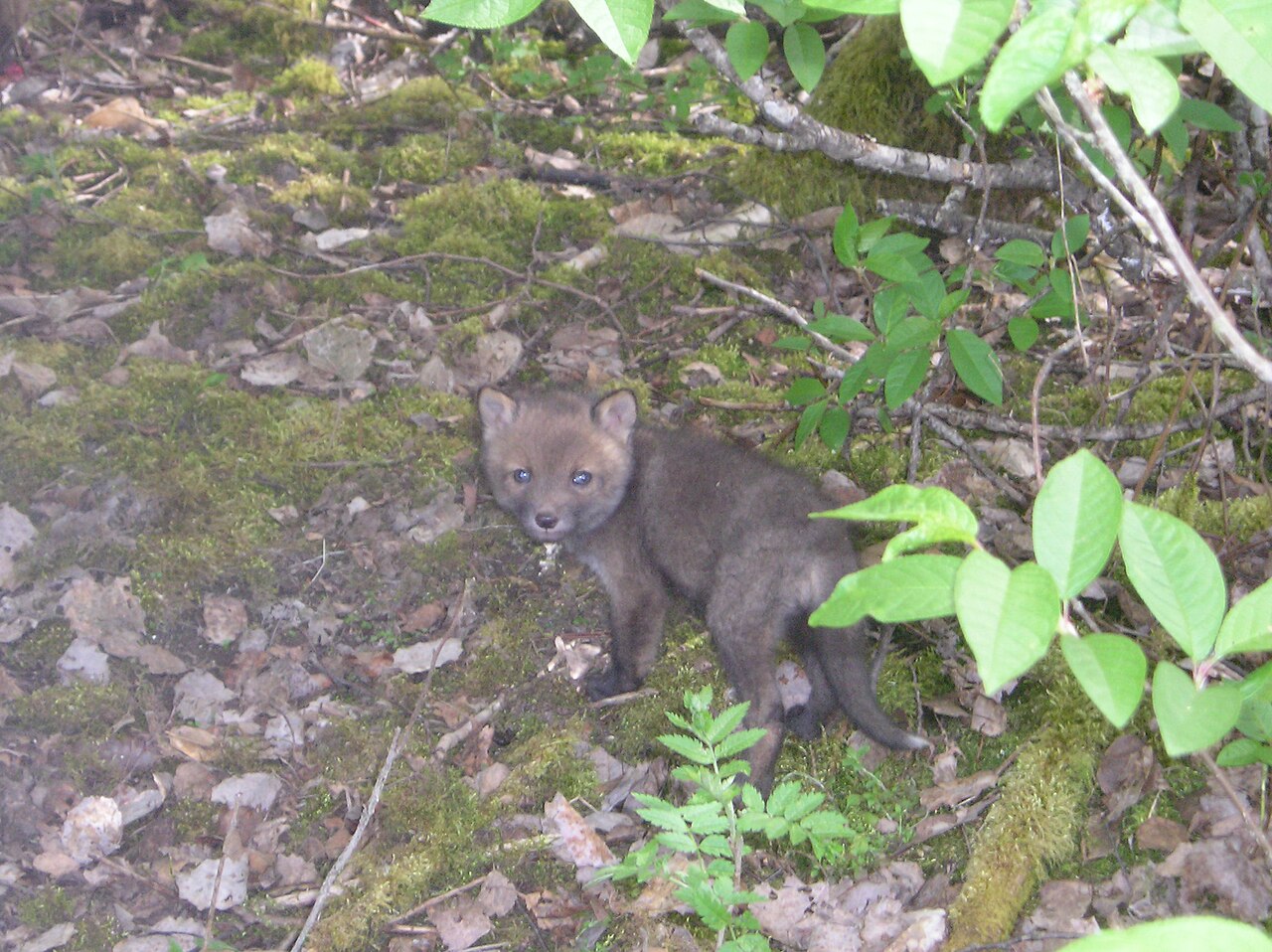
Newborn fox kits look almost nothing like the sleek adults they will become. At birth a red fox kit is covered in short, charcoal gray fur, with a rounded face, closed eyes, and floppy ears. It weighs only about a quarter of a pound and depends entirely on its mother for warmth, since it cannot yet regulate its own body temperature.
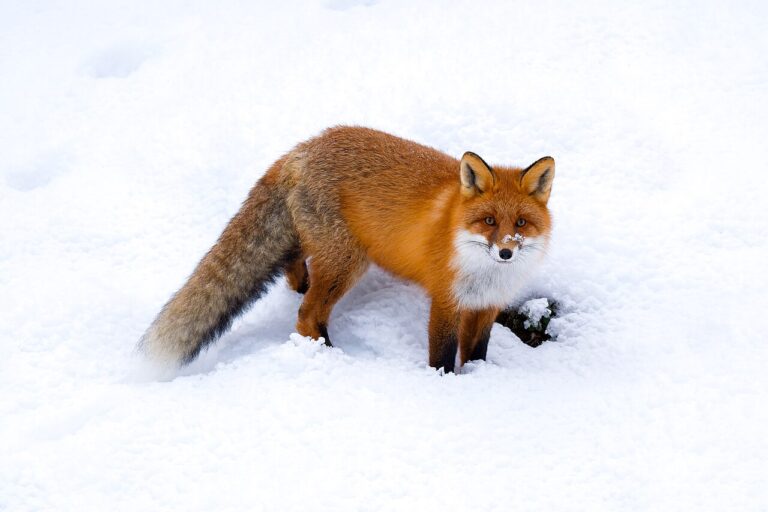
Over the following weeks the coat begins to change. The gray baby fur gives way to a sandy, tawny color, and in red foxes the famous rusty coat, black legs, and white-tipped tail develop as the kit matures. The ears grow larger and become erect, and the muzzle lengthens into the pointed fox face people recognize.
By the time a kit is a few months old it looks like a small, slender version of an adult fox, though its proportions can seem slightly gangly. Different species show different colors at this stage, but all fox kits share the same general path from a dark, round-faced newborn to a lean, sharp-featured young fox.
Baby Fox Development: From Birth to Independence
Fox kits develop quickly. They are born in spring, usually between March and May, in a den after a gestation of around seven to eight weeks. For the first two weeks they are blind and deaf, staying warm in a huddle while the vixen remains with them almost constantly and the male brings her food.
At around two weeks the eyes open, and by four to five weeks the kits begin to venture out of the den entrance to play, wrestle, and explore under close supervision. This early play is serious business, since the pouncing and chasing that looks like fun is really practice for the hunting skills they will soon need to survive.
Weaning happens gradually over the following weeks, and by late summer the young foxes are hunting alongside or near their parents. By fall, at about six to seven months old, most young foxes disperse to find their own territories, according to wildlife biologists and university extension programs that study fox behavior.
What Do Baby Foxes Eat?
For the first weeks of life a baby fox drinks only its mother’s milk. The vixen nurses the kits in the den, and this rich milk fuels their rapid early growth. During this period the male fox and sometimes older siblings supply the vixen with food so she can stay close to the newborns.
As the kits grow, the parents begin bringing solid food to the den. At first this may be partly digested or torn into small pieces, and later the adults deliver whole prey such as mice, voles, insects, and small birds. The kits learn to handle food by playing with these items, which doubles as practice for hunting.
Foxes are omnivores, so a young fox’s diet soon broadens to include a wide mix of foods. Insects are an easy early target, and a curious kit will pounce on beetles, grasshoppers, and other bugs much like the insects that fill a garden and the spiders in the shrubs. As they mature they add rodents, rabbits, birds, eggs, earthworms, and fruit, and they will investigate the same soil insects that turn up when digging.
Where Do Baby Foxes Live?
Baby foxes are born and raised in a den, sometimes called an earth. The den is usually an underground burrow, often one dug by another animal and enlarged by the foxes, but it can also be tucked under a shed, a porch, a log pile, or a rock crevice. The vixen chooses a sheltered, hidden spot with more than one entrance for safety.
Foxes have adapted remarkably well to living near people, so dens frequently turn up in suburban yards, parks, and golf courses. A family of foxes may use a den under a deck or in an overgrown corner of a garden, which is why homeowners sometimes discover kits playing on the lawn on a spring morning.
The den is only a temporary nursery. Once the kits are mobile and weaned, the family relies on it less, and by late summer they often abandon it entirely as the young foxes range more widely. Because foxes are common backyard visitors, learning to share space with them is part of enjoying local backyard wildlife, alongside the birds that share the yard, rather than a cause for alarm.
Baby Foxes of Different Species
The red fox is the most widespread species, and its kits are the ones most people picture, growing into the classic rusty coat with black legs and a white-tipped tail. Red fox kits are found across North America, Europe, and Asia, and they adapt easily to farmland, forest, and suburb alike.
Other species raise very different looking young. Arctic fox kits are born in tundra dens and may be dark brown or gray before developing the thick white or blue-gray winter coat that protects them from extreme cold. Gray fox kits grow into a salt-and-pepper coat and, unusually for canines, can climb trees with ease.
The fennec fox of North Africa produces tiny, pale kits with the oversized ears that make the species famous, ears that help them shed heat and detect prey in the desert. Despite these differences in size, color, and habitat, all fox kits follow the same basic pattern of den life, rapid growth, and dispersal in their first year.
Baby Fox vs Baby Coyote
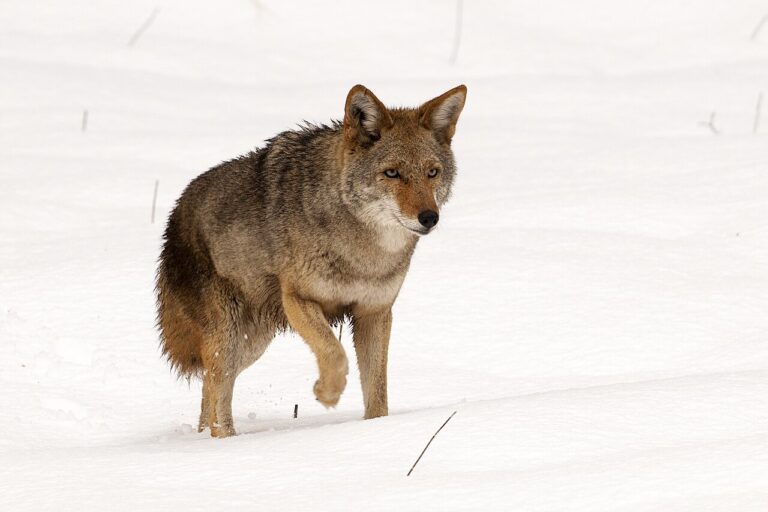
Baby foxes and baby coyotes are easy to confuse, since both are wild canine pups born in spring dens. Size is the first clue. A coyote pup is generally larger and stockier, growing into a lanky, dog-sized adult, while a fox kit stays small and slight, with more delicate features even as it matures.
Color and shape help too. Red fox kits develop reddish fur, black stockings, and a white-tipped tail, while coyote pups are usually grayer and more uniformly colored, with a bushy tail that lacks the bright white tip. The fox’s face is narrow and pointed, and its ears look large for its head, giving it a sharper, more delicate profile.
Behavior and habitat provide the final hints. Coyotes often travel and den in more open country and can form family packs, while foxes are more solitary and secretive. If you are unsure, the safest approach is to keep your distance and let a local wildlife expert confirm the identification rather than approaching the animal.
What to Do If You Find a Baby Fox
The most important rule is that a lone kit is usually not abandoned. Vixens routinely leave kits alone while hunting, and they often move their young between dens one at a time, so a single kit sitting quietly is almost always being watched and cared for. Watching from a distance for several hours is the right first step.
Do not try to feed a baby fox or take it inside. Feeding wild animals can make them sick, cause them to lose their natural fear of people, and interfere with the parents’ care. Handling a healthy kit can also cause the vixen to move the whole litter and can expose you to bites and parasites, so hands off is the safe choice.
Only step in if a kit is clearly injured, is covered in flies, is crying nonstop for many hours, or you know the mother is dead. In those cases, contact a licensed wildlife rehabilitator or your local animal control, as recommended by the Humane Society and wildlife agencies. Trained rehabbers can assess the kit and give it the best chance while keeping you and the animal safe.
Related reading: how to get rid of gnats.
Related reading: how to get rid of gnats.
Related reading: how to get rid of gnats.
Related reading: how to get rid of gnats.
Related reading: Cheetah vs Leopard.
Related reading: Baby Wolf.
Related reading: Baby Mole.
Related reading: Fox vs Coyote.
Related reading: Baby Beaver.
Related reading: are possums dangerous.
Related reading: Baby Hedgehog.
Related reading: are foxes dangerous.
Related reading: are foxes nocturnal.
Related reading: Baby Skunk.
Related reading: Mule Deer vs Whitetail.
Related reading: Baby Chipmunk.
Related reading: Baby Bat.
Related reading: Fox Sounds.
Related reading: Baby Groundhog.
Related reading: Baby Arctic Fox.
Related reading: Baby Fennec Fox.
Related reading: Baby Mole Rat.
Related reading: Jaguar vs Leopard.
Frequently Asked Questions
What is a baby fox called?
A baby fox is called a kit, and the terms cub and pup are also used. Foxes are part of the dog family, so they share much of their vocabulary with other canines. A mother fox is called a vixen and a father is a dog fox or tod.
What do baby foxes eat?
Baby foxes drink their mother’s milk for the first few weeks, then move on to solid food the parents bring, such as insects, mice, voles, birds, and eggs. As omnivores, growing foxes also eat earthworms, fruit, and other small prey they learn to catch.
How big is a baby fox?
A newborn red fox kit weighs only about a quarter of a pound and fits in the palm of your hand. It grows quickly, and by a few months old it looks like a small, slender version of an adult fox, reaching near adult size by its first fall.
Where do baby foxes live?
Baby foxes live in a den, often an underground burrow but sometimes under a shed, deck, log pile, or rock crevice. The vixen picks a hidden, sheltered spot with more than one entrance, and foxes commonly den in suburban yards and parks.
What should I do if I find a baby fox?
Usually leave it alone, since a lone kit is rarely abandoned and the vixen is likely nearby. Do not feed or handle it. Only contact a licensed wildlife rehabilitator if the kit is clearly injured, covered in flies, crying for many hours, or you know the mother is dead.
When do baby foxes leave their mother?
Young foxes usually become independent and disperse in the fall, at about six to seven months old. They start venturing from the den around four to five weeks, learn to hunt over the summer, and then leave to find their own territories.
What is a group of baby foxes called?
The young from a single birth are called a litter of kits. A group of foxes more generally is called a skulk or a leash, though adult foxes are mostly solitary and are rarely seen together outside of a family raising kits.