Baby Mole
A baby mole, called a pup, is born completely hairless, blind, and helpless inside an underground nest chamber that its parents dig and line with dry grass and leaves. A typical litter contains two to six pups, and despite their fragile start, mole pups grow remarkably fast, growing fur within about two weeks and leaving the nest for good by five to six weeks old.
Contrary to popular garden lore, baby moles have zero interest in plant roots; their entire world revolves around hunting earthworms and grubs, and the damage moles cause to lawns is really just the side effect of tunneling in search of that prey, not evidence of the animal feeding directly on grass or garden plants at all.
| Quick Reference | Detail |
|---|---|
| Name | Pup |
| Litter Size | 2 to 6 pups (commonly 3 to 4) |
| Gestation | About 4 to 6 weeks |
| Birth Condition | Hairless, blind, fully dependent on mother |
| Weaning Age | 4 to 6 weeks |
| Leaves Nest | Around 5 to 6 weeks old |
| Adult Lifespan | 3 to 6 years |
What Is a Baby Mole Called?
A baby mole is called a pup, and a group born together is called a litter. Before pups arrive, both the mother and father typically work together to dig out a spherical underground chamber, sometimes called a fortress, and line it with dry grass, leaves, or other soft plant material to create a warm, protected nursery.
Litters usually contain two to six pups, though three to four is most common, and mole reproduction is generally limited to a single litter per year, timed to take advantage of the increased food availability that comes with spring. This tight breeding window means the vast majority of mole activity homeowners notice in a given year traces back to a single reproductive event rather than ongoing, year-round breeding.
What Do Baby Moles Look Like?
Newborn mole pups are entirely hairless and pink at birth, completely dependent on their mother for warmth and nutrition. Despite popular belief that moles are eyeless, pups actually do have eyes, just tiny ones tucked behind the snout and covered by a thin membrane, an adaptation suited to a life spent almost entirely underground in complete darkness.
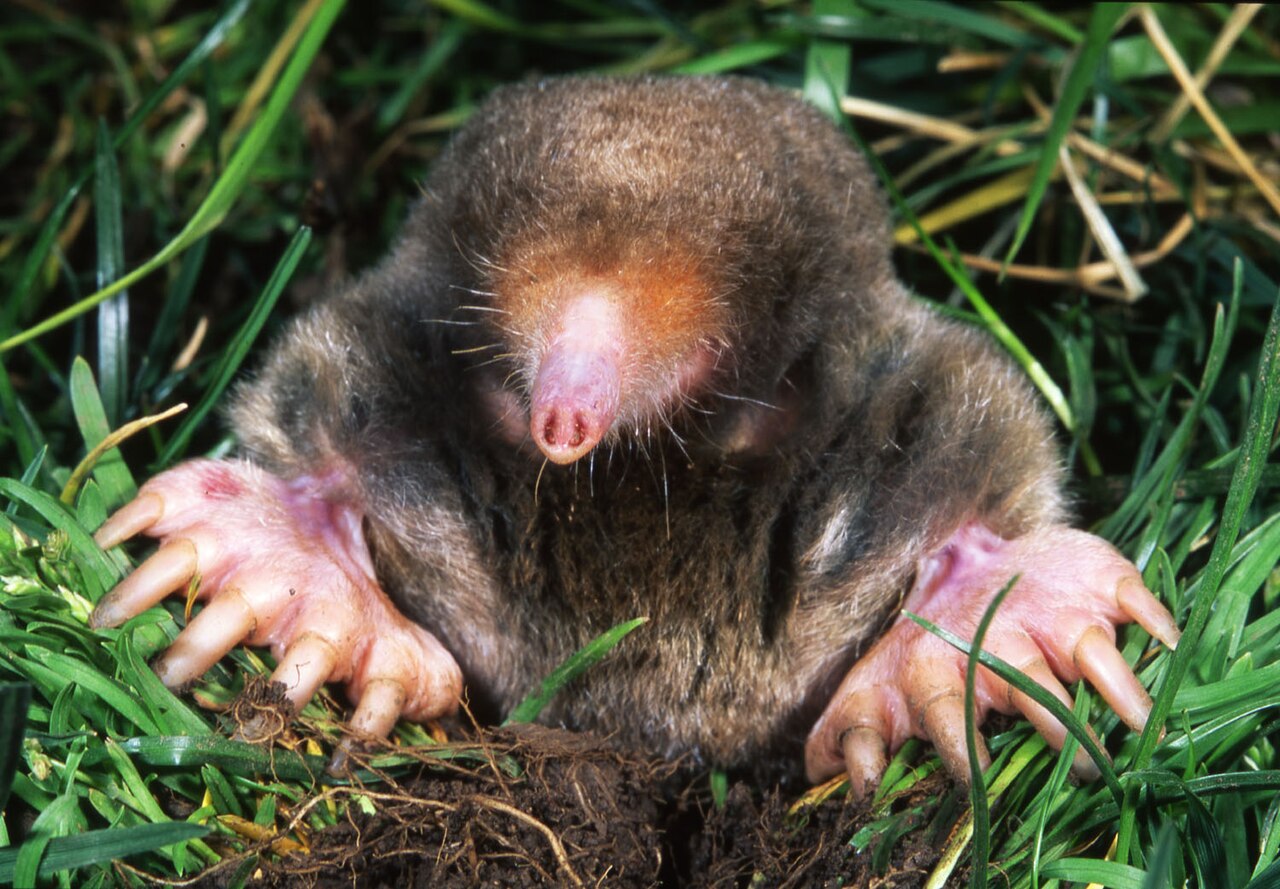
This unusual eye placement, combined with their genuinely poor eyesight even as adults, is part of why moles rely so heavily on other senses. Sensitive whiskers and a highly tactile snout detect the faintest vibrations from nearby prey, while an exceptional sense of smell does most of the actual hunting work, more than making up for eyes that were never built for seeing much in the first place. The mole’s large, paddle-shaped front feet, already visible even on very young pups, hint at the powerful digging machine each one will grow into within just a few weeks.
How Do Mole Pups Develop?
Growth happens quickly by mammal standards, following a pace not unlike the rapid early development seen in a baby rabbit or other small mammal litter. Fur begins coming in around two weeks of age, and within a few more weeks pups have grown enough to begin exploring the edges of the nest chamber under close parental supervision. Weaning from the mother’s milk typically wraps up somewhere between four and six weeks old.
By the time they are roughly five to six weeks old, young moles are fully independent and ready to leave the nest entirely, heading out to find their own territory. This entire journey, from hairless, blind newborn to an independent young mole capable of digging its own tunnels, takes place in a little over a month, a remarkably compressed timeline compared to many similarly sized mammals that stay dependent on a parent for several months or longer before striking out on their own.
What Do Baby Moles Eat?
While nursing, pups rely completely on their mother’s milk, but once weaned they shift immediately to the same prey adult moles depend on: earthworms, grubs, and other soil-dwelling invertebrates, not plant roots or bulbs as many gardeners assume. Earthworms in particular make up the bulk of a mole’s diet, and a hungry adult can consume close to its own body weight in worms in a single day, an appetite driven by the sheer amount of energy needed to constantly dig through soil.
This voracious appetite for earthworms is exactly why moles gravitate toward well-watered lawns and gardens in the first place: healthy soil full of worms and grubs is simply an irresistible buffet, and the visible tunnel damage homeowners notice is a byproduct of relentless hunting, not a food source of its own. Moles will also opportunistically eat other small invertebrates and occasionally seeds if they happen to encounter them while tunneling, though this makes up only a minor part of an otherwise worm-and-grub-dominated diet. Some mole species even cache live, partially immobilized earthworms in dedicated underground “pantries” for later, a behavior that lets them stockpile food during times when prey is temporarily abundant.
Where Are Baby Moles Born?
Mole pups are born in a specially constructed nest chamber deep underground, often built within or beneath an especially large mound of soil. The nest itself is lined with dry grass, leaves, or hay, materials that not only insulate the pups but generate a small amount of extra warmth as they slowly decompose, functioning almost like a natural compost heater tucked beneath the yard and requiring no additional effort from the parents once it is built.
Nest chambers are frequently oriented to take advantage of natural warmth, and a particularly attentive mother mole may relocate her litter to a new nest chamber several times if she senses a disturbance or threat nearby, a level of protective effort that highlights just how vulnerable pups are during these earliest weeks. Each move requires the mother to carry pups one at a time through connecting tunnels, a slow and risky process she nonetheless repeats without hesitation whenever she judges the current nest unsafe for her litter.
Do Baby Moles Have Predators?
Once young moles leave the nest and begin dispersing to find their own territory, they become considerably more vulnerable, since they haven’t yet developed the strength or skill to dig deep, secure tunnels of their own. Owls, foxes, and domestic cats are among the predators most likely to catch a young mole caught above ground or in a shallow, hastily dug tunnel during this transition, the same general predator pressure that a young deer faces before it can outrun danger on its own, though the mole has far fewer options for escape once it is caught in the open.
Survival odds during this dispersal period are genuinely rough: by some estimates, only about half of young moles make it through this vulnerable stretch to establish a territory of their own, a steep cost for independence that helps explain why mole populations, despite the frustration they cause homeowners, do not explode uncontrollably year over year even with a healthy breeding season behind them.
When Do Baby Moles Leave Home?
Most young moles leave their mother’s home tunnel system for good between five and six weeks of age, striking out to find abandoned tunnels or dig shallow new ones of their own while they build up the strength for more substantial burrowing. This period of dispersal, when juvenile moles wander in search of unclaimed territory, is when homeowners are most likely to suddenly notice new molehills appearing in a previously mole-free lawn, sometimes seemingly overnight.
Because adult moles are solitary and fiercely territorial, a young mole successfully establishing its own range effectively means one more independent tunnel system to manage, which is part of why a “mole problem” so often persists even after a single resident mole is removed, similar to how a vacated territory belonging to a fox or other solitary mammal tends to get reclaimed by the next disperser passing through. A single acre of suitable habitat may ultimately end up supporting one established adult mole long-term, even though several young moles might pass through and test that same territory before one settles in permanently.
Are Baby Moles Dangerous or Harmful?
Baby moles pose no danger to people at all, and even adult moles present no direct health risk, since University of Arkansas Extension wildlife specialists note that moles are not associated with any particular disease transmission concerns to humans. Adult moles do have surprisingly strong claws and a firm bite for their size, so handling one directly still calls for thick gloves, similar to the precaution worth taking around other small, unfamiliar wild mammals such as a baby raccoon or baby otter.
The real frustration moles cause homeowners is entirely cosmetic and structural rather than dangerous: raised tunnel ridges and surface mounds can make mowing difficult and leave a lawn looking uneven, but the moles themselves are not damaging plants directly and are not a threat to pets or people beyond a defensive nip if handled carelessly. In fact, a resident mole quietly aerating the soil and controlling grub populations can arguably be doing a garden a small favor, even while its tunnels are driving a homeowner to distraction above ground, a genuine trade-off worth keeping in mind before resorting to aggressive removal methods.
Related reading: Baby Mole Rat.
Frequently Asked Questions
What is a baby mole called?
A baby mole is called a pup, and a group of pups born together is called a litter.
How many babies do moles have at once?
Mole litters typically contain two to six pups, with three to four being the most common litter size.
Are baby moles born blind?
Yes, mole pups are born hairless and with their eyes still undeveloped, though they do have tiny eyes hidden behind their snout that open as they mature.
What do baby moles eat?
They nurse on their mother’s milk at first, then transition fully to earthworms, grubs, and other soil-dwelling invertebrates once weaned, the same basic diet adult moles rely on their entire lives.
When do baby moles leave the nest?
Most young moles leave the nest and their mother’s territory for good around five to six weeks of age to find their own range.
Do moles eat plant roots in gardens?
No, moles are not interested in plant roots at all. They tunnel through gardens hunting earthworms and grubs, and any plant damage is an indirect result of that digging rather than the moles feeding on the plants themselves.
How long do moles live?
Wild moles typically live around three to six years, though the transition period after leaving the nest as a young pup is by far the most dangerous and uncertain stretch of their entire lives.