Brown Snake: Identification, Range, and Whether It’s Dangerous
A brown snake found in a US yard or garden is almost always Storeria dekayi, commonly called the Dekay’s brown snake, a small and completely harmless species that rarely exceeds a foot in length. Despite the alarming name overlap with Australia’s highly venomous brown snakes, the US species is unrelated and poses no danger to people or pets. Confirming the identification comes down to size, pattern, and habitat rather than color alone.
Several other small brown snake species overlap in range and cause confusion, including the red-bellied snake and the ring-necked snake in its brown color phase. All are nonvenomous, secretive, and beneficial in gardens for their role in controlling slugs, earthworms, and small insects. The sections below break down how to tell Dekay’s brown snake apart from lookalikes and what to do if you find one.
A brown snake in the US is typically Storeria dekayi, a small nonvenomous species under 13 inches long with a light stripe down the back and two rows of dark spots. It is harmless to humans and pets and feeds mainly on earthworms and slugs in gardens and leaf litter.
| Species | Length | Pattern | Venom | Habitat |
|---|---|---|---|---|
| Dekay’s Brown Snake | 9 to 13 in | Two rows of dark spots | None | Gardens, leaf litter |
| Red-Bellied Snake | 8 to 10 in | Uniform brown, red belly | None | Woodlands, moist soil |
| Ring-Necked Snake | 10 to 15 in | Solid brown with neck ring | Mild, rear-fanged | Under logs, rocks |
| Northern Water Snake | 24 to 42 in | Banded brown blotches | None | Ponds, streams |
Identifying a Brown Snake by Pattern
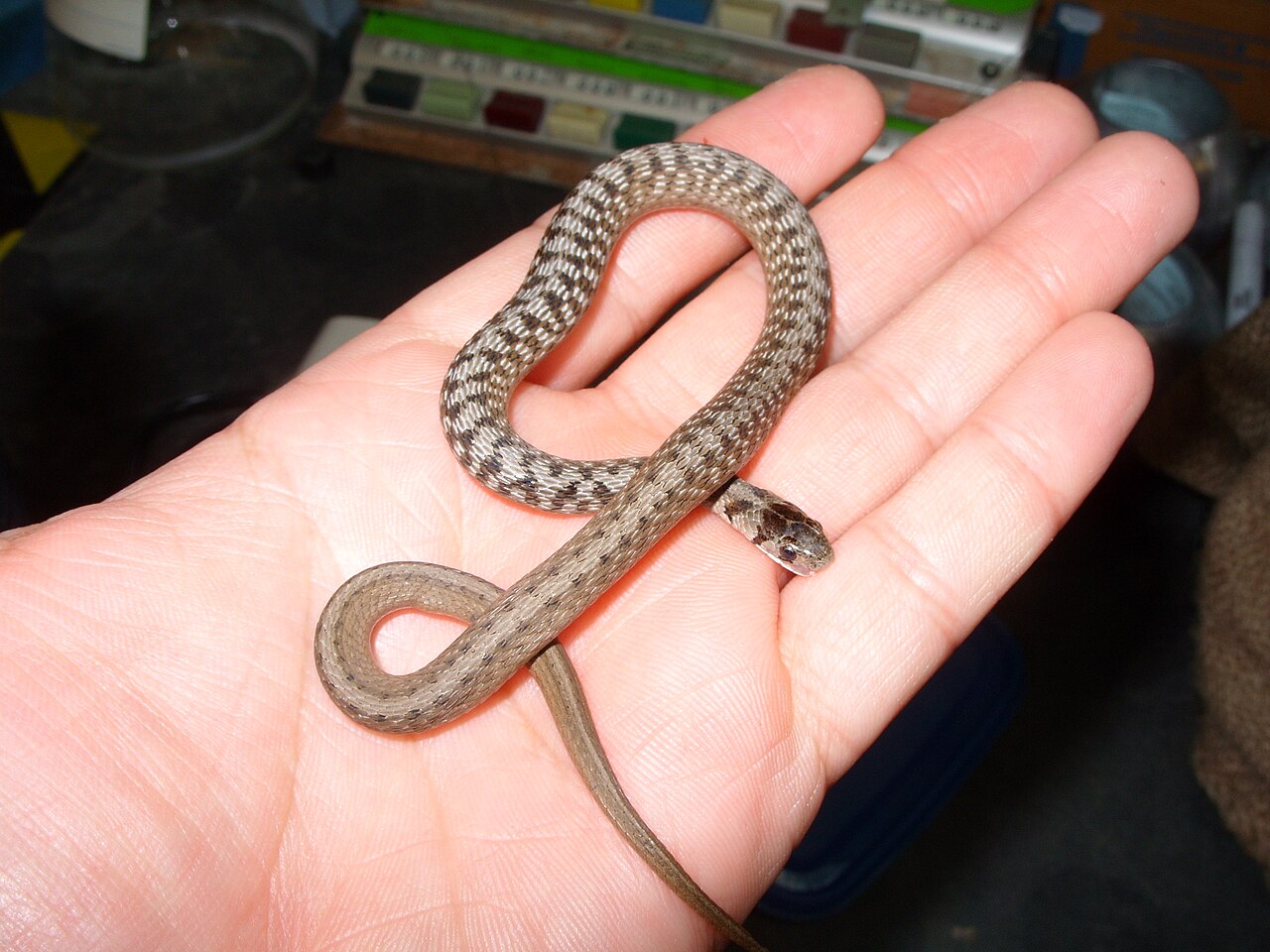
Dekay’s brown snake shows a light tan to gray-brown body with a pale stripe running down the center of the back, bordered on each side by a row of small dark spots. This double row of spots is the clearest field mark separating it from similar small brown snakes. The belly is usually pale pink or cream without strong markings.
Young Dekay’s brown snakes are darker than adults and can appear almost black around the neck, which sometimes leads to confusion with young ring-necked snakes. As the snake matures, the coloring lightens into the typical tan or gray-brown seen in adults. The spot pattern remains visible at all life stages under close inspection.
Scale texture offers a secondary clue, since Dekay’s brown snake has keeled scales that give the body a slightly rough texture rather than the smooth, glossy look of some other small snakes. This is easiest to notice by looking closely rather than by touch, since handling wild snakes unnecessarily is best avoided.
Are Brown Snakes in the US Venomous
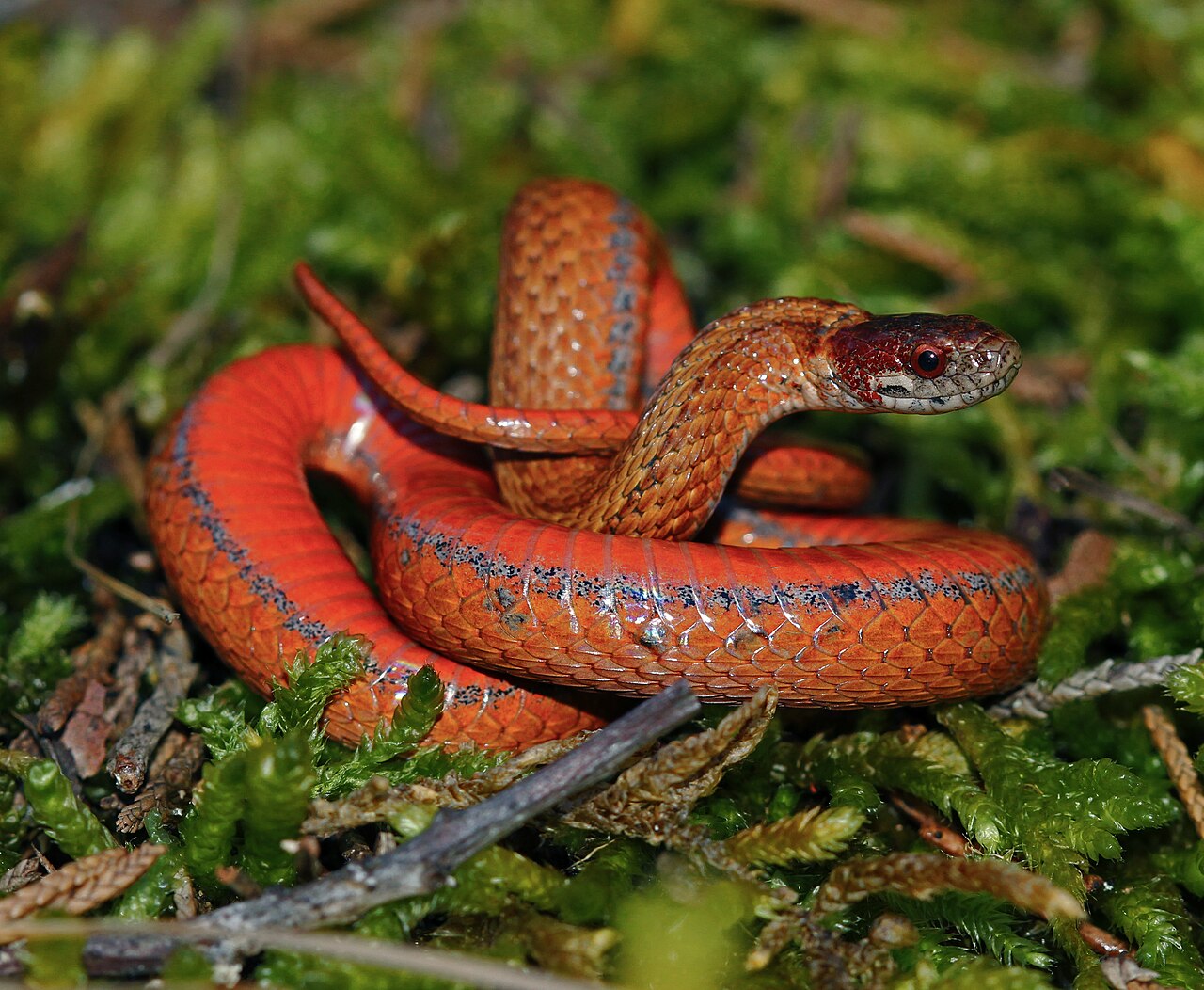
Dekay’s brown snake and the other small brown-colored snakes found across most of the US are completely nonvenomous and pose no bite risk worth worrying about. The venomous brown snakes people often think of belong to the genus Pseudonaja, found only in Australia and parts of New Guinea, and are not related to any snake species native to North America.
This naming overlap causes real confusion online, since search results for brown snake safety often surface Australian content that has no bearing on a snake found in a US backyard. Dekay’s brown snake lacks fangs capable of delivering venom and instead relies entirely on camouflage and rapid retreat when threatened.
Even a defensive bite from an adult Dekay’s brown snake, which is uncommon, produces nothing more than a minor scratch, since the mouth is small and the teeth are not designed for anything beyond gripping soft-bodied prey like earthworms and slugs.
What Can Be Mistaken for a Brown Snake
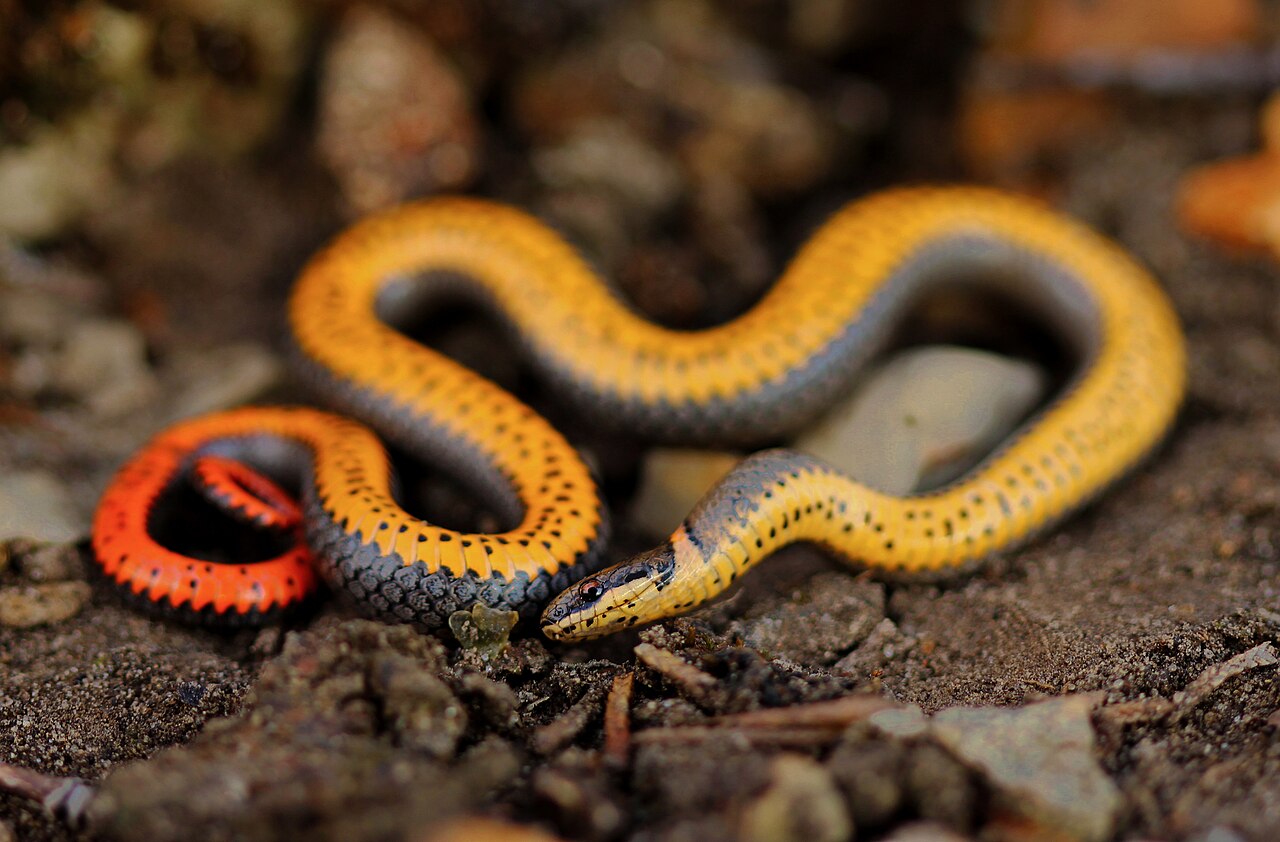
Juvenile rat snakes are the most frequent case of mistaken identity, since young rat snakes show a blotched brown and gray pattern that fades to solid black or gray as they mature. Size is the fastest way to tell them apart, since a young rat snake already exceeds the maximum adult length of a Dekay’s brown snake.
The eastern hognose snake in its brown color phase also causes confusion, particularly because both species share a similar habitat and defensive behavior of staying still when threatened. Hognose snakes have a distinctly upturned snout and a thicker body, both visible even at a glance, which separates them from the slimmer Dekay’s brown snake.
Red-bellied snakes overlap heavily in range and size with Dekay’s brown snake and are sometimes confused when the bright red belly color is not visible from above. Flipping over a shed skin or briefly viewing the underside, without handling a live snake unnecessarily, usually resolves the confusion quickly.
Where Brown Snakes Live
Dekay’s brown snake favors moist, sheltered environments including garden mulch, leaf litter, compost piles, and the space under flat rocks or logs. Urban and suburban areas support surprisingly dense populations of this species, since gardens and landscaped yards provide both cover and a steady food supply of earthworms and slugs.
This snake is found across most of the eastern and central United States, with its range extending from the Gulf Coast up into southern Canada in some areas. It is largely absent from the arid Southwest and much of the interior West, where the moist microhabitats it depends on are less common.
Because Dekay’s brown snake spends most of its time hidden under debris, actual sightings are less frequent than the population density would suggest. Gardening activities like turning compost or moving mulch are the most common way people encounter one directly.
How to Tell If a Snake Is Actually a Brown Snake
Confirming a Dekay’s brown snake identification starts with size, since an adult rarely exceeds 13 inches, ruling out most larger brown-toned snakes immediately. The double row of dark spots along the back combined with a pale central stripe is the next check, visible on a still or slow-moving snake without needing to handle it.
Behavior adds a final layer of confirmation, since Dekay’s brown snake is slow-moving, secretive, and tends to freeze or attempt to burrow rather than flee quickly or strike defensively. This calm, low-energy response is consistent with its role as a small invertebrate hunter rather than an active predator of larger prey.
Photographing the snake from a safe distance and comparing against reference images from a state wildlife agency or extension service is the most reliable way to confirm identification without physical contact, especially for anyone unfamiliar with local snake species.
What Brown Snakes Eat
Earthworms make up the majority of a Dekay’s brown snake’s diet, supplemented by slugs, snails, and occasionally soft-bodied insect larvae. This diet places the species firmly in the category of garden-beneficial wildlife, since it helps control slug and snail populations that can otherwise damage vegetable plots and ornamental plants.
The snake’s small size and slender build are well suited to hunting in tight spaces like leaf litter and loose soil, where earthworms and slugs are most abundant. Unlike larger snake species, Dekay’s brown snake does not prey on rodents, birds, or amphibians in any meaningful way.
Feeding activity increases after rain, when earthworms move closer to the soil surface and become easier to locate. Gardeners sometimes notice more brown snake activity during and immediately after wet weather for exactly this reason.
Brown Snakes and Garden Safety
Dekay’s brown snake poses no safety risk to people, pets, or garden plants, making removal unnecessary in nearly every situation. Its diet of slugs and earthworms provides a mild pest control benefit, and its small size and secretive habits mean it rarely interacts with humans beyond brief, incidental sightings. Faunalist Tip: if you want to discourage brown snakes from a specific area like a doorway or patio, reducing leaf litter and mulch depth removes cover without resorting to any chemical repellent.
Pets occasionally investigate a brown snake out of curiosity, but bites are essentially harmless given the snake’s tiny mouth and lack of venom. A snake that feels threatened by a curious dog or cat will almost always attempt to flee or freeze rather than strike aggressively.
Relocating a Dekay’s brown snake found in an inconvenient spot, such as inside a garage, can be done safely with a container and a piece of cardboard, releasing it into a nearby garden bed or wooded area with adequate ground cover.
Brown Snake Reproduction and Life Cycle
Dekay’s brown snake gives birth to live young rather than laying eggs, typically producing litters of 3 to 20 offspring in mid to late summer. Newborns measure only 3 to 4 inches at birth and are darker than adults, which sometimes leads to them being mistaken for a different species entirely.
Growth to sexual maturity takes roughly two years under typical conditions, during which juveniles remain hidden in leaf litter and other sheltered microhabitats to avoid predators. Lifespan in the wild is estimated at several years, though exact figures are difficult to confirm given the species’ secretive nature.
Populations tend to be stable in areas with consistent moisture and ground cover, but habitat loss from paving, lawn monoculture, and excessive yard cleanup can reduce local numbers over time even where the species was previously common.
Seasonal Activity Patterns
Dekay’s brown snake is most active from spring through early fall, with activity dropping sharply as temperatures cool in late autumn. Warm, humid evenings after rainfall tend to bring the highest surface activity, since these conditions also drive earthworm movement closer to the surface.
Winter is spent in underground retreats below the frost line, often in old rodent burrows, rock crevices, or deep leaf litter that does not freeze solid. Multiple individuals sometimes share the same overwintering site, a behavior documented in several small snake species across temperate climates.
Emergence in spring typically coincides with the first consistently warm days, and mating activity follows shortly after, timed to align birth of live young with the height of summer insect and earthworm abundance.
Regional Variation Across the US
Dekay’s brown snake shows some regional variation in color intensity and spot pattern clarity, with populations in humid southeastern states often appearing darker overall than those in drier parts of its range. This variation is gradual rather than sharply defined between subspecies boundaries.
Coastal populations sometimes show slightly different scale counts and proportions compared to inland populations, differences that are more relevant to researchers than to casual identification. For most people, the core field marks of size, spot pattern, and behavior remain consistent regardless of region.
Local field guides and state herpetological society resources are the most reliable source for regional specifics, since range maps and subspecies boundaries can shift as new research is published.
Similar Small Snakes Worth Knowing
The ring-necked snake and garter snake are two other small, commonly encountered species that occasionally get lumped in with brown snake sightings due to overlapping habitat and general size range. Both are also harmless and beneficial in garden settings.
Learning to distinguish these species by their more distinctive features, a bright neck ring in one case and longitudinal stripes in the other, makes future identification faster and reduces reliance on color alone, which is often the least reliable identifying feature among small brown or brown-toned snakes.
Building general familiarity with the small, harmless snake species common in a specific region pays off over time, since most unexpected snake encounters in yards and gardens across the US involve one of this same small group of species.
Frequently Asked Questions
Are brown snakes poisonous to humans?
Dekay’s brown snake, the common brown snake in the US, is completely nonvenomous and poses no danger to humans. It is unrelated to Australia’s venomous brown snakes despite the shared common name.
Are there brown snakes in the US?
Yes, Dekay’s brown snake is found across most of the eastern and central United States. It is a small, harmless species commonly encountered in gardens and leaf litter.
What can be mistaken for a brown snake?
Juvenile rat snakes, hognose snakes in brown phase, and red-bellied snakes are the most common lookalikes. Size and behavior usually settle the identification quickly.
How to tell if it’s a brown snake?
Look for a body under 13 inches, a pale central stripe, and two rows of small dark spots along the back. Slow, secretive movement is another supporting clue.
What do snakes absolutely hate?
Open, exposed ground with no leaf litter, mulch, or debris discourages most small snakes, since it removes both cover and the invertebrate prey they depend on.
Which snake is there no antivenom for?
This question applies to certain rare or regionally isolated venomous species elsewhere in the world, not to any snake found in the US, and has no relevance to Dekay’s brown snake or its lookalikes.
For range and identification data on native reptiles, state wildlife agencies and university extension programs maintain detailed regional guides, and the National Wildlife Federation publishes general species information for backyard wildlife.
Related reading: baby Dekay’s brown snakes, what eats snakes, and snake poop identification.