What Eats Snakes? Every Animal That Hunts Them
Snakes are eaten by birds of prey, mammalian carnivores, other snakes, large reptiles, and even some fish and invertebrates. The most consistent predators across North America are raptors, particularly red-tailed hawks and great horned owls, followed by mesocarnivores such as foxes, coyotes, bobcats, and badgers. Kingsnakes and eastern indigo snakes hunt other snakes as a dietary specialty, and free-ranging guinea fowl, chickens, and domestic cats kill large numbers of small snakes around properties.
Snakes occupy an unusual position in the food web because they are both effective predators and heavily preyed upon at every life stage. Hatchlings and eggs are vulnerable to almost anything with a mouth, including ants, while adults are large enough that only committed specialists take them. That split explains why the answer to what eats snakes changes completely depending on the size of the snake in question.
| Predator Group | Main Examples |
|---|---|
| Birds of prey | Red-tailed hawk, great horned owl, roadrunner |
| Mammals | Fox, coyote, bobcat, badger, raccoon, opossum |
| Other snakes | Kingsnake, indigo snake, coral snake, king cobra |
| Domestic and farm animals | Guinea fowl, chickens, turkeys, pigs, cats, dogs |
| Egg and hatchling predators | Ants, shrews, crows, skunks, armadillos |
| Most snakes killed by | Humans and vehicles |
| Venom-resistant predators | Kingsnake, opossum, mongoose, hedgehog |
What Eats Snakes: The Main Predator Groups
Snake predators sort into five broad categories. Raptors are the most widespread and take snakes across essentially every habitat where both occur. Mammalian carnivores in the fox, coyote, bobcat, and badger range take them opportunistically and, in some regions, regularly. Other snakes form the third group, and their predation is the most specialised of all.
The fourth category is the one people encounter most directly: domestic and semi-domestic animals around homes and farms, including guinea fowl, chickens, turkeys, pigs, cats, and dogs. The fifth covers everything that takes eggs and hatchlings rather than adults, and it is by far the largest group numerically, encompassing shrews, crows, skunks, armadillos, and even fire ants.
Body size sorts these groups more reliably than anything else. A 20 cm hatchling ringneck snake is prey for a robin. A 2 m rat snake is prey only for a great horned owl, a large hawk, a coyote, or an indigo snake. Our guides to the ringneck snake and the rat snake cover both ends of that size range.
Birds of Prey: The Most Consistent Snake Predators
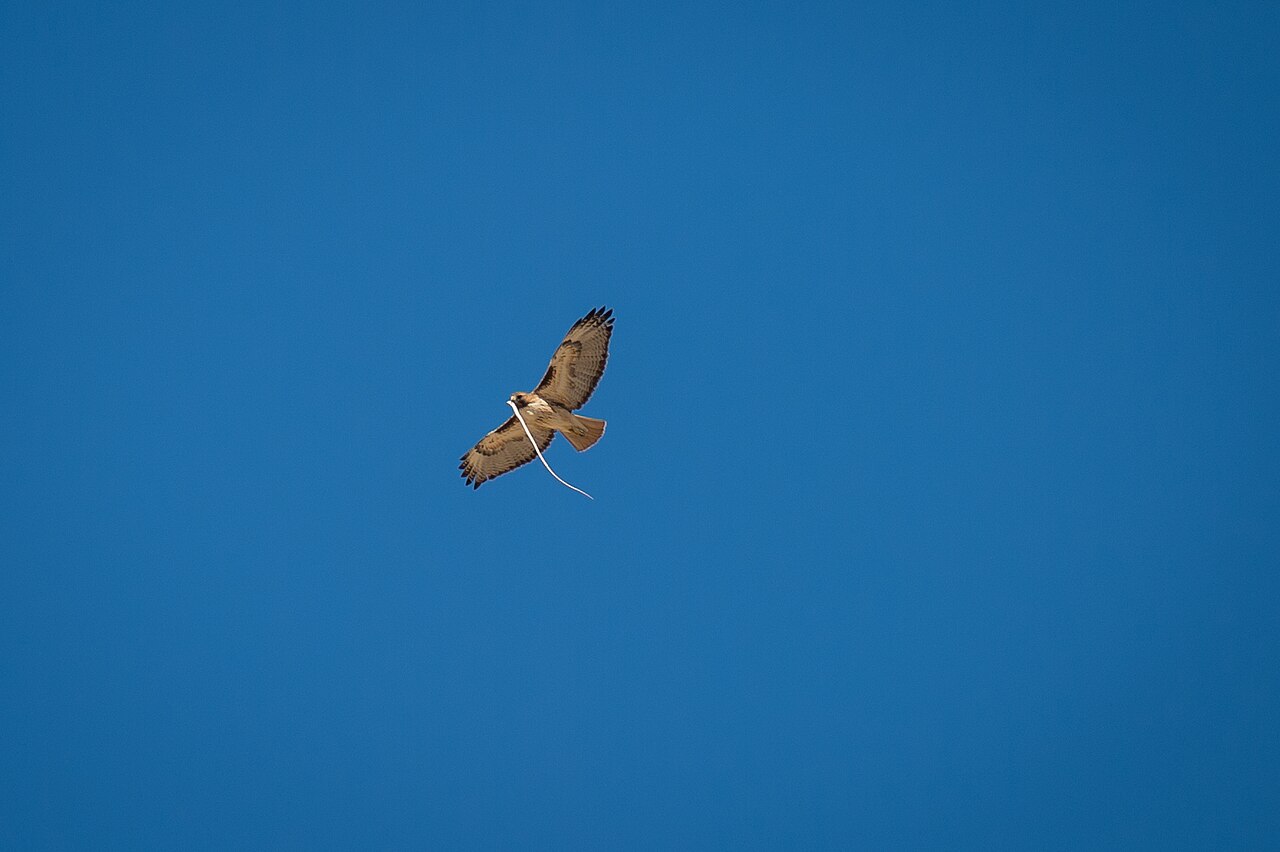
Raptors are the single most important group of snake predators in North America. Red-tailed hawks take snakes throughout their range and in some regions snakes make up a meaningful share of the summer diet. Great horned owls take them at night, red-shouldered hawks take them in wetland margins, and Mississippi kites and Swainson’s hawks take them in open country.
Hunting technique is consistent across species. The bird strikes from above, pins the snake with its talons, and kills it either by crushing or by severing the spine with the bill. Feathered legs and thick scaled feet provide substantial protection against bites, and raptors regularly take venomous species including rattlesnakes and copperheads without apparent harm.
Several birds outside the raptor group are also serious snake predators. Greater roadrunners kill and eat rattlesnakes and are among the most effective snake hunters in the desert Southwest. Herons, egrets, and secretarybirds elsewhere in the world all take snakes regularly, and wild turkeys will kill and eat small ones. Our guide to birds that eat snakes covers the avian side in depth.
Mammals That Hunt Snakes
Foxes, coyotes, and bobcats all take snakes, mostly opportunistically rather than as a preferred prey item. All three rely on speed and a killing bite behind the head, and all three occasionally suffer venomous bites in the process. Badgers are more committed snake hunters, and their thick skin and loose hide give them a real advantage in a fight.
Raccoons and opossums are significant predators of eggs and small snakes rather than adults. Opossums are particularly notable because their blood contains a peptide that neutralises snake venom, giving them a genuine biochemical resistance rather than merely behavioural protection. Our guide to what possums eat covers their broader diet.
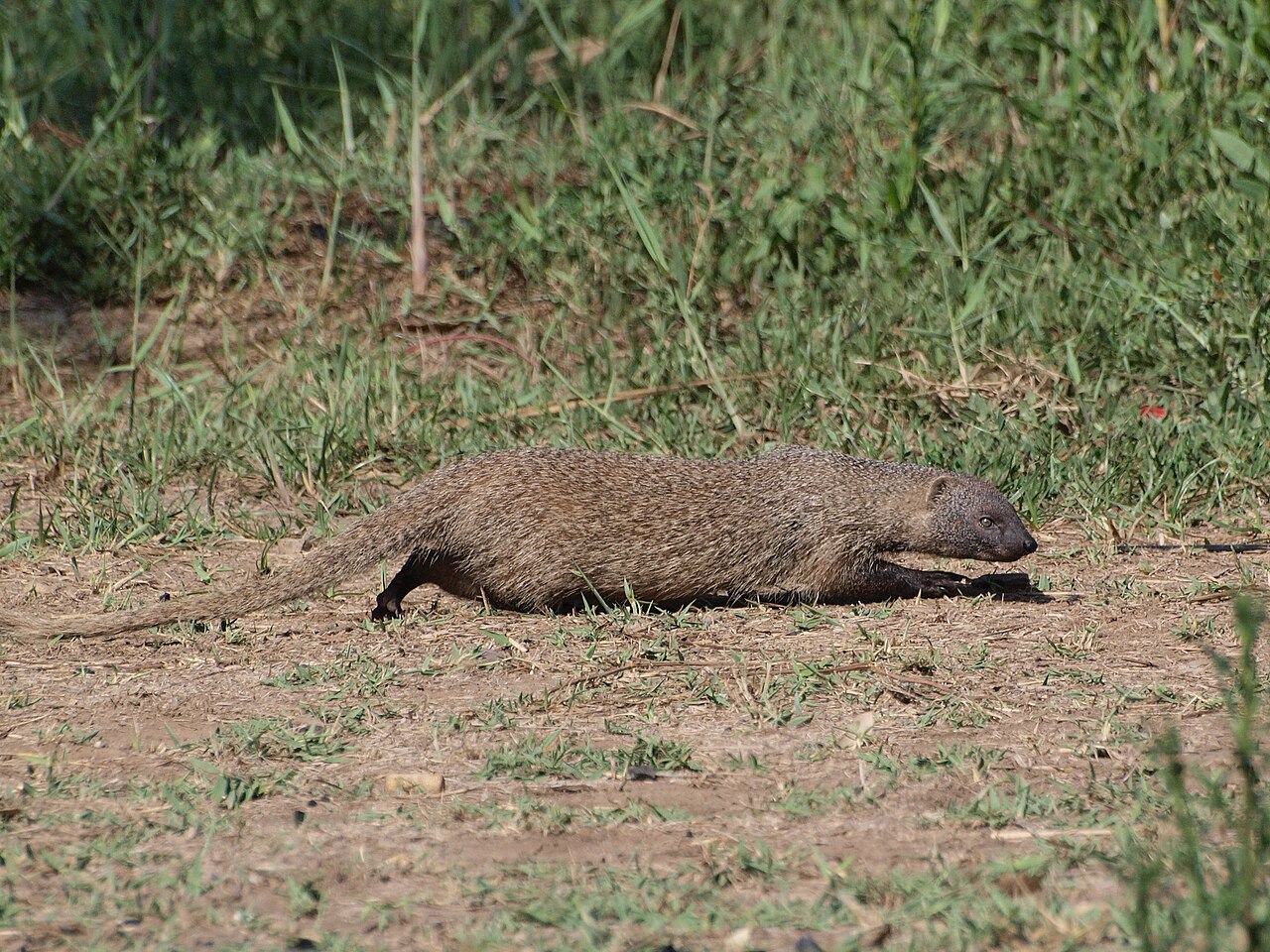
Outside North America, mongooses are the best-known mammalian snake specialists. Their resistance comes from a modified acetylcholine receptor that venom neurotoxins cannot bind to effectively, combined with speed and thick fur. Hedgehogs and honey badgers show partial resistance through similar mechanisms, and all of them still rely heavily on avoiding the bite rather than on surviving it.
Snakes That Eat Other Snakes
Ophiophagy, the eating of snakes by snakes, is widespread and in several species is the primary feeding strategy. Kingsnakes are the classic North American example and will kill and consume rattlesnakes, copperheads, and cottonmouths considerably longer than themselves, subduing them by constriction and swallowing them whole.
Eastern indigo snakes are the largest native North American snake and among the most effective snake predators, overpowering prey by force rather than constriction. Coral snakes feed largely on other small snakes and lizards. Globally, the king cobra is named for the habit rather than for size alone, feeding almost exclusively on other snakes including other cobras.
Kingsnakes are the most interesting case because their resistance is genuine. They carry a physiological tolerance to pit viper venom that lets them survive bites during the fight, which is why a kingsnake will engage a rattlesnake directly. Our comparison of the coral snake and the king snake covers how to tell the mimic species apart, and our king snake guide covers the species itself.
Cannibalism within a species is rarer but documented in several snakes, and in captivity it is a genuine risk when two snakes of unequal size are housed together. In the wild, size disparity within a species is usually large enough only between adults and hatchlings, which is one more reason juvenile snakes disperse quickly from the nest site rather than remaining near siblings.
What Eats Venomous Snakes and How They Survive
Venomous snakes are eaten by broadly the same predators as non-venomous ones, which surprises people who assume venom provides comprehensive protection. Red-tailed hawks, great horned owls, roadrunners, kingsnakes, and coyotes all take rattlesnakes. Venom evolved primarily for subduing prey, and its defensive value against a predator striking from above or behind is limited.
Three separate strategies allow this. The first is behavioural: strike from a position the snake cannot reach, as raptors do from above. The second is physical: thick hide, dense fur, or feathered legs that a fang cannot penetrate reliably, as in badgers and hawks. The third is biochemical resistance, found in kingsnakes, opossums, mongooses, and hedgehogs.
Researchers at UF/IFAS have documented that in Florida several native predators including kingsnakes, indigo snakes, and raptors regularly consume venomous species, which makes them a genuine component of local venomous snake control. Killing kingsnakes on sight, a common reaction from people who mistake them for coral snakes, actively increases the local venomous snake population.
Farm Animals and Pets That Kill Snakes
Guinea fowl have a well-earned reputation for killing snakes, and the behaviour is real: a flock will mob a snake, harass it continuously, and peck it to death. Their effectiveness is limited to small snakes, and the claim that they clear a property of venomous species is overstated. A guinea fowl flock also drives away far more snakes than it kills, since the constant harassment makes an occupied yard an unattractive place to hunt rodents.
Chickens and turkeys kill small snakes readily, particularly juveniles and slender species that resemble worms or large insects. Pigs are genuinely effective against larger snakes because of their bulk, thick fat layer, and willingness to attack, and free-ranging hogs are documented predators of substantial snakes in the southeastern United States.
Domestic cats kill enormous numbers of small snakes and are among the most significant predators of juvenile snakes in suburban areas. Dogs kill snakes too but suffer far more envenomations doing it, because dogs typically engage head on while cats bat from the side and retreat. Neither should be treated as a snake control method given the veterinary risk involved.
What Eats Baby Snakes and Snake Eggs
Hatchling snakes are prey for an extremely wide range of animals, and mortality in the first year is severe across almost all species. Robins, blue jays, crows, shrikes, and grackles all take small snakes. Shrews, moles, and chipmunks take them underground. Bullfrogs, large fish, and even large spiders take hatchlings near water.
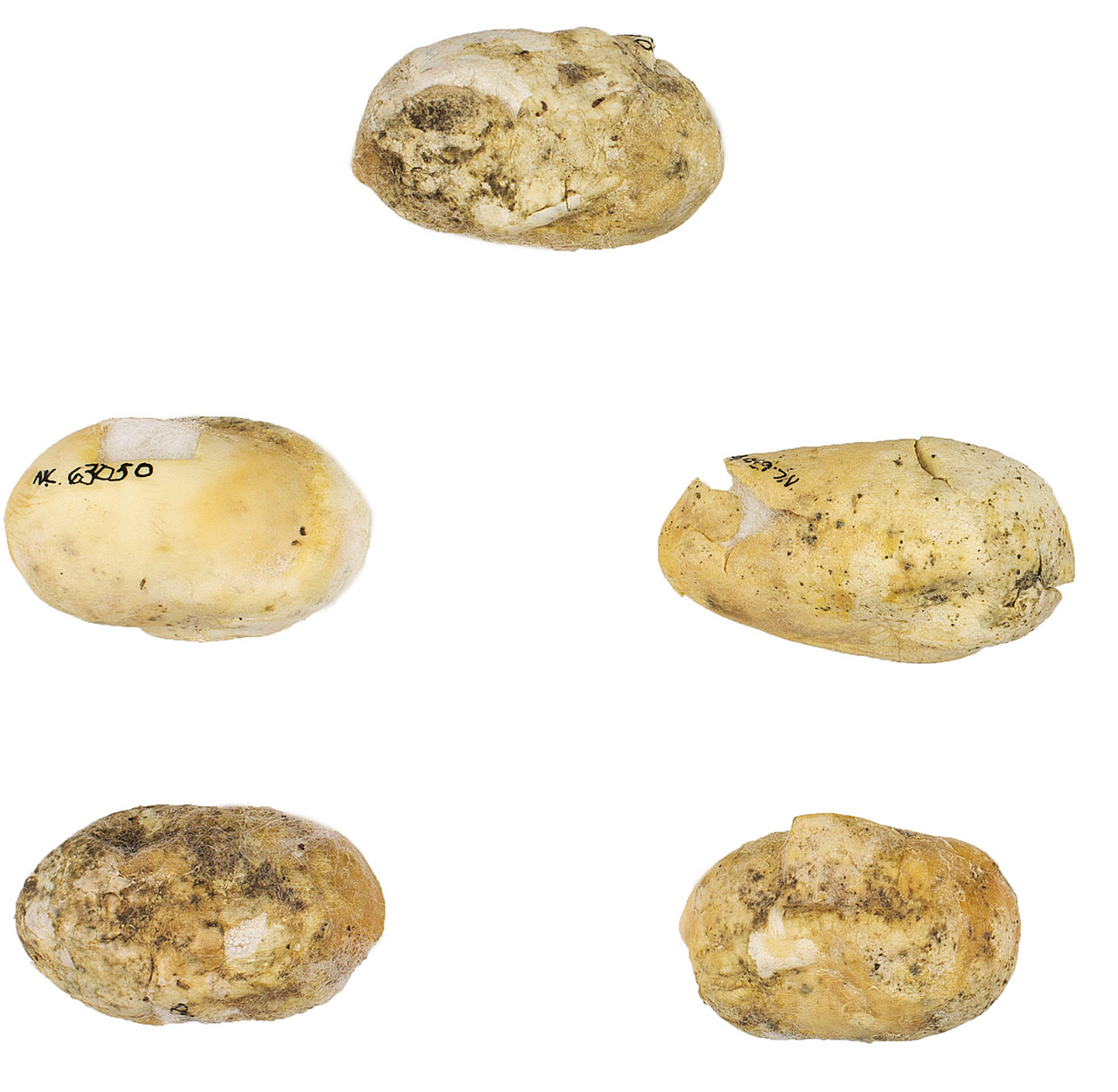
Snake eggs face a different set of predators. Skunks, raccoons, armadillos, opossums, and foxes all dig up buried clutches, and monitor lizards do the same in their range. Fire ants are a serious and underappreciated egg predator in the southern United States, capable of destroying an entire clutch.
This heavy early predation is why most snake species lay large clutches and provide no parental care. Survival to adulthood is often in the low single digits as a percentage, and the animals that eat adult snakes are a small subset of those that eat the young. Our guide to the baby snake covers identification of the vulnerable stage.
Which Animal Kills the Most Snakes
The honest answer is humans, by a wide margin, and mostly not deliberately. Vehicle strikes kill enormous numbers of snakes annually, particularly on roads that cross between wetland and upland habitat during seasonal movements. Habitat conversion removes far more snakes than any predator does, and deliberate killing on sight accounts for a large additional share.
Among wild predators, raptors almost certainly kill the most adult snakes across North America simply because of their range and the number of individual birds involved. Among predators of hatchlings and eggs, ants and small mammals likely take the highest raw numbers, though the data is far harder to gather.
Regionally the answer shifts. In the desert Southwest roadrunners and kingsnakes are disproportionately important. In the Southeast indigo snakes historically played that role before their decline. On farmland with free-ranging poultry, domestic birds may account for most small snake mortality on the property itself.
Frequently Asked Questions
What animal eats the most snakes?
Among wild predators, birds of prey almost certainly account for the most adult snakes across North America because of their range and numbers. Counting all causes of death rather than predation alone, humans kill far more through vehicle strikes, habitat loss, and deliberate killing.
What is a snake’s biggest predator?
It depends on the snake’s size. For hatchlings, birds, shrews, and even ants are the main threats. For adults, large raptors such as red-tailed hawks and great horned owls are the most consistent predators, along with kingsnakes and indigo snakes among other snakes.
What animal kills snakes naturally?
Kingsnakes, indigo snakes, red-tailed hawks, great horned owls, roadrunners, foxes, coyotes, badgers, and opossums all kill snakes as part of normal foraging. On farms, guinea fowl, chickens, turkeys, and pigs kill small snakes regularly.
What eats venomous snakes?
The same predators that eat non-venomous ones. Raptors strike from above where fangs cannot reach, badgers and hogs rely on thick hide, and kingsnakes, opossums, mongooses, and hedgehogs carry genuine biochemical resistance to venom. Venom evolved mainly for catching prey rather than for defence against predators.
Do kingsnakes really eat rattlesnakes?
Yes. Kingsnakes kill rattlesnakes, copperheads, and cottonmouths by constriction and swallow them whole, sometimes taking prey longer than themselves. They tolerate pit viper venom well enough to survive bites received during the struggle, which is why they engage venomous snakes directly.
Do guinea fowl really kill snakes?
They kill small snakes reliably by mobbing and pecking, and their loud alarm calling draws attention to any snake on the property. The claim that a flock will clear a property of venomous snakes is exaggerated, since guinea fowl are not effective against large adult vipers.
What eats snake eggs?
Skunks, raccoons, opossums, armadillos, and foxes dig up buried clutches, and crows and other corvids take exposed eggs. Fire ants destroy entire clutches in the southern United States and are a more significant egg predator than most people realise.