Pink Beetle Identification: 6 Pink Bugs Found in the US
A pink beetle in the United States is almost always one of four insects: the pink spotted lady beetle, the parenthesis lady beetle, a rose chafer, or a Pyrota blister beetle. None of them sting, and only the blister beetles can injure your skin. If the pink insect has fuzzy yellow wings and feathery antennae, it is not a beetle at all.
True pink is rare in beetles because most hard wing covers get their color from dark pigments rather than from the red and white scales that make a pink surface. That is why the handful of genuinely rose colored species stand out so sharply in a photo, and why so many sightings turn out to be moths, nymphs or freshly molted adults that have not darkened yet. Below are the species worth checking, listed by how often they turn up in US yards, with size, markings, range and the only real safety question that matters.
Pink beetles in the US are mostly lady beetles in the genera Coleomegilla and Hippodamia, plus rose chafers and Pyrota blister beetles in the south. Lady beetles and rose chafers are harmless to handle. Blister beetles release cantharidin and can raise a blister, so move them with a leaf rather than your fingers.
| Species | Size | Pink shade and marks | US range | Risk to you |
|---|---|---|---|---|
| Pink spotted lady beetle | 0.2 to 0.3 in (5 to 7 mm) | Rose pink, 12 black spots | East and central US | None |
| Parenthesis lady beetle | 0.15 to 0.2 in (4 to 5 mm) | Orange pink, curved side marks | Most of the US | None |
| Rose chafer | 0.3 to 0.5 in (8 to 12 mm) | Dull pink tan, long legs | East of the Rockies | None to you, toxic to poultry |
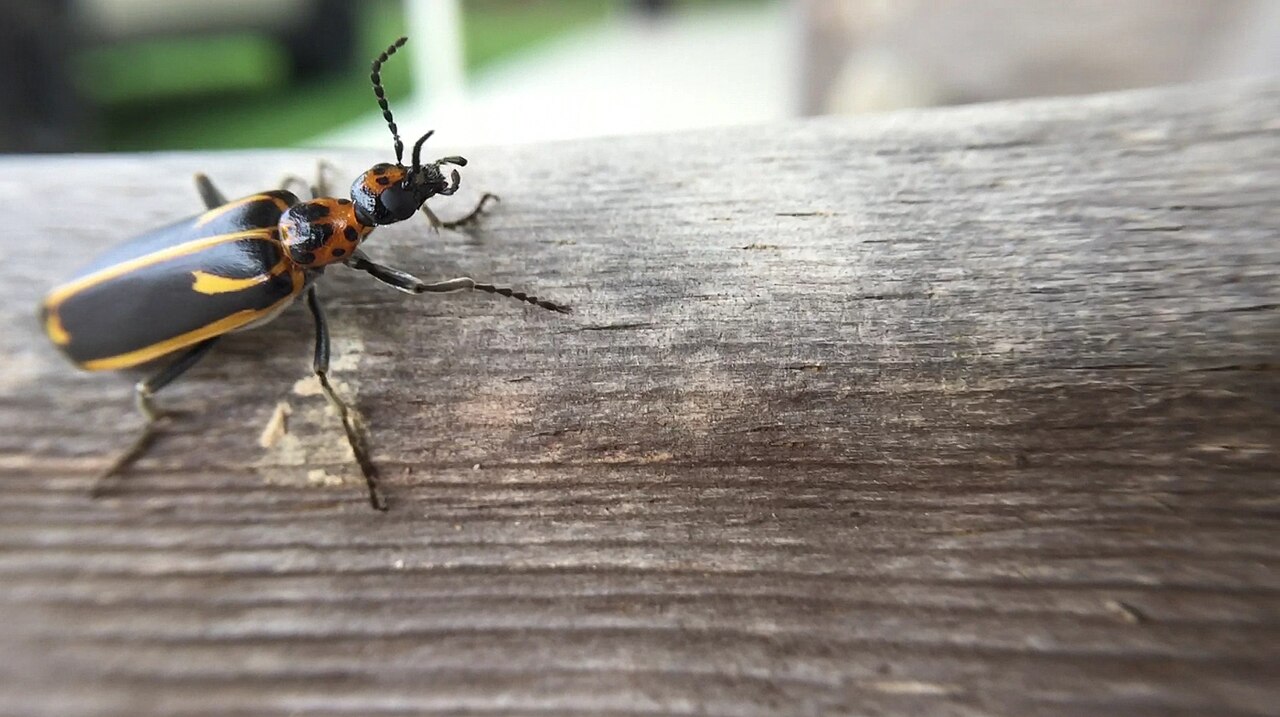
| Pyrota blister beetle | 0.4 to 0.6 in (10 to 16 mm) | Salmon pink with black bands | Texas and the Southwest | Blisters bare skin |
| Citrus root weevil | 0.4 to 0.75 in (10 to 19 mm) | Pink, orange or white scales | Florida, Gulf Coast | None |
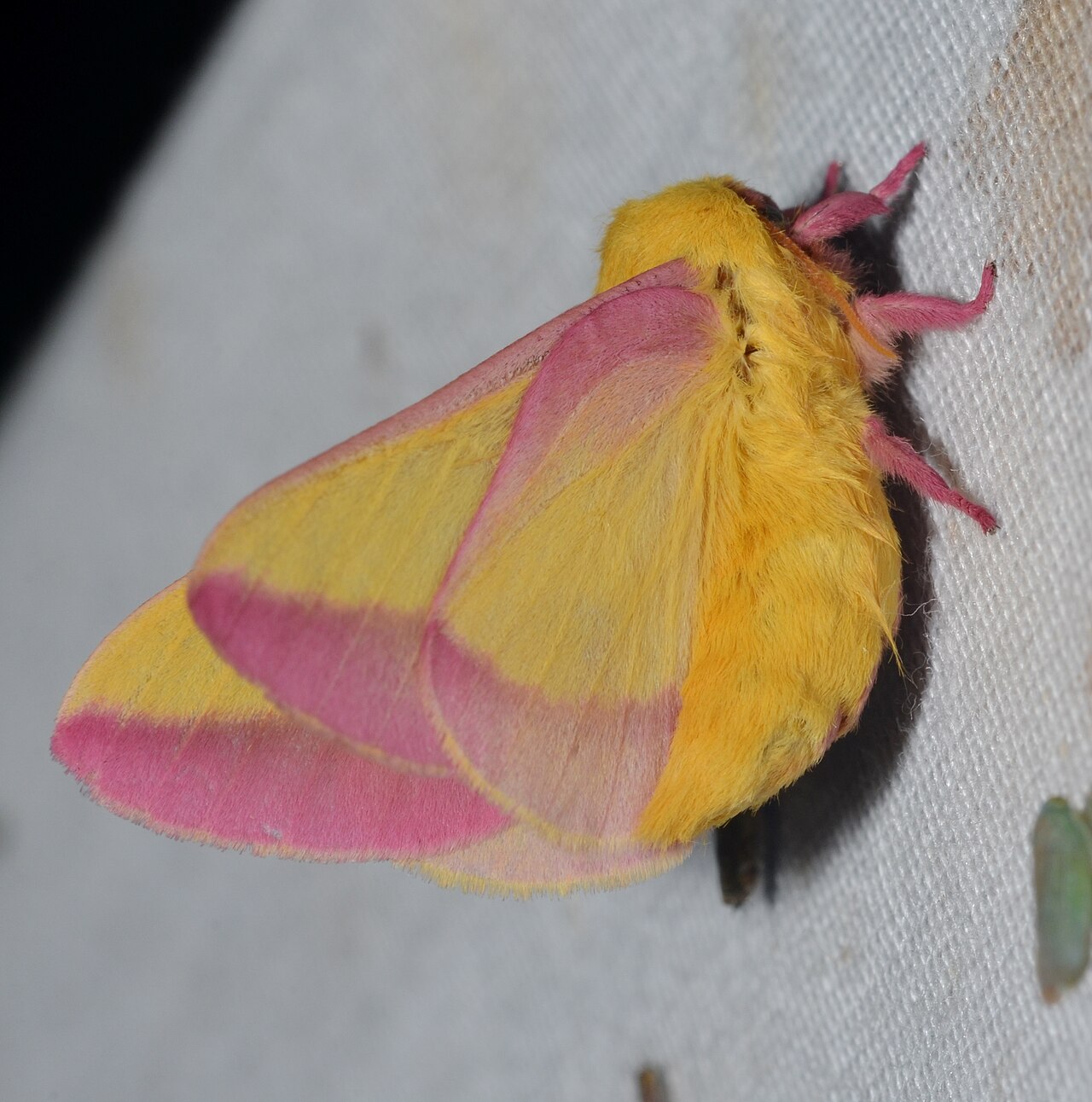
| Rosy maple moth (not a beetle) | 1.25 to 2 in wingspan | Hot pink and yellow, furry | Eastern US | None |
Do pink beetles exist?
Yes, pink beetles exist, but far fewer species than photos online suggest. Of roughly 25,000 beetle species in North America, only a few dozen are pink as adults, and most of those are lady beetles whose red pigment is diluted to rose. Entomologists usually call the shade “pink” only when it sits clearly between orange and lilac.
Two other situations produce a pink beetle that is not a pink species. A beetle that has just molted stays pale pink for several hours before its cuticle hardens and darkens, which is why gardeners find pink June beetles under bark. And some beetles pick up pink pollen or plant sap that coats the wing covers until the next rain.
The third source of pink sightings is mistaken identity. Pink katydid nymphs, rosy maple moths and a few pink true bugs all get reported as beetles. The test is simple: a beetle has a hard straight seam down the middle of its back where the two wing covers meet. If you cannot see that seam, you are looking at something else.
Are pink beetles dangerous, and do they bite?
Most pink beetles are harmless. Lady beetles can pinch with their jaws if you squeeze them, and the pinch feels like a pinprick and breaks no skin. They also bleed a yellow, foul smelling fluid from their leg joints when alarmed, which stains fabric but does nothing worse. Compare this with the Asian lady beetle, which bites more readily than a native ladybug.
The one pink group to respect is the blister beetles. Pyrota species carry cantharidin, a defensive chemical that raises a painful blister on bare skin within a few hours of contact. The blister is shallow and heals on its own, but it hurts, and the same chemical is genuinely dangerous to horses that eat beetles baled into alfalfa hay.
No pink beetle in the US stings, and none is poisonous to touch in the sense of a toxin crossing intact skin. Rose chafers are a separate hazard for anyone with birds: the beetles contain a toxin that has killed chickens and young poultry that ate them in quantity. Keep rose chafer swarms away from runs during their short June flight.
Pink spotted lady beetle (Coleomegilla maculata)
This is the pink beetle most people find. The pink spotted lady beetle is 0.2 to 0.3 in (5 to 7 mm) long, clearly longer than it is wide, and rose pink rather than red. It carries 12 black spots, six on each wing cover, with the pair nearest the head often joined into a single dash.
It lives across the eastern and central US and is one of the few lady beetles that eats pollen as well as aphids, so it shows up in corn, sweet corn and sunflower fields in large numbers through midsummer. Farmers treat it as a beneficial insect and growers of sweet corn count it as a free aphid control.
You will usually see it on leaves rather than on walls. If a pink, spotted, oval insect is crawling on your window frame in October instead, it is more likely an Asian lady beetle gone orange pink before overwintering. The full range of rose and rust shades is covered in our guide to the pink ladybug.
Parenthesis lady beetle (Hippodamia parenthesis)
The parenthesis lady beetle is smaller, 0.15 to 0.2 in (4 to 5 mm), and leans more orange pink than rose. Its name comes from the two curved black marks near the back edge of the wing covers, which together look like a closing parenthesis. The rest of the pattern is a scatter of small black spots on a pale, almost salmon ground.
It is native and widespread, reported from nearly every state, with the highest numbers in alfalfa, soybeans and roadside weeds. Like most Hippodamia species it is a pure aphid predator and gets washed out of its color in cool seasons, so spring individuals look pinker than summer ones.
This species is the reason pink lady beetle identifications so often disagree. Color alone does not settle it. Count the spots and look for the curved marks, because the pink spotted lady beetle never has them.
Rose chafer (Macrodactylus subspinosus)
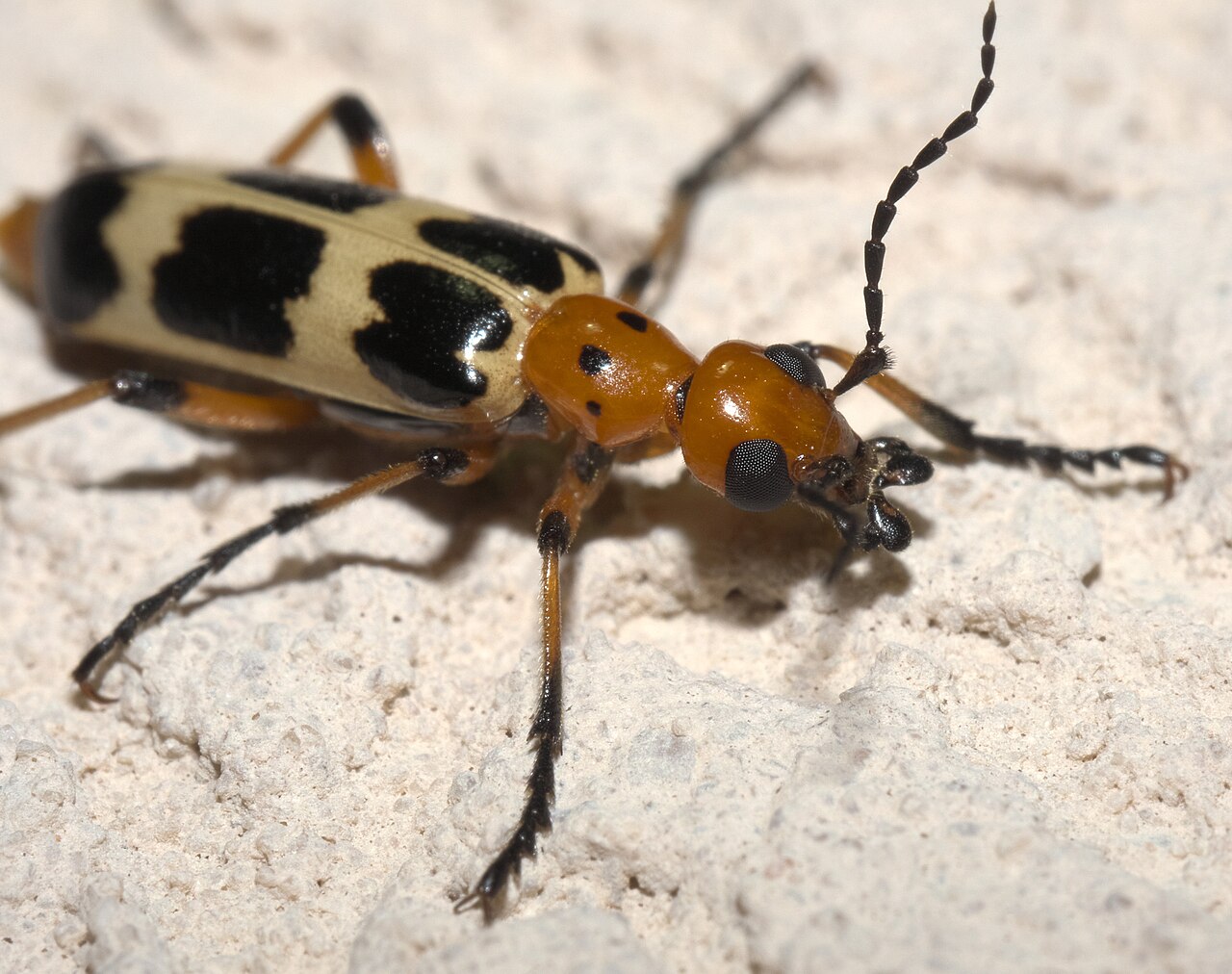
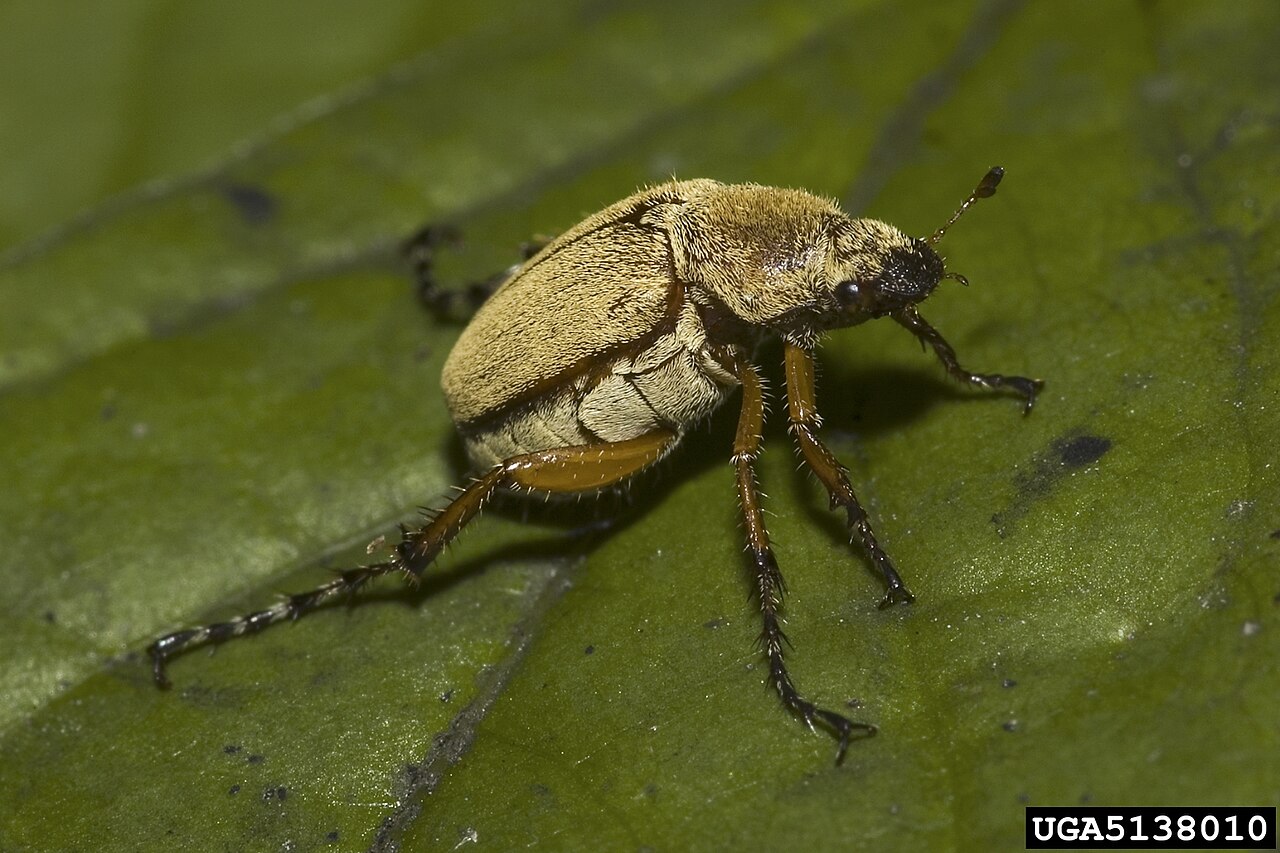
Rose chafers are a dull pink tan rather than bright pink, 0.3 to 0.5 in (8 to 12 mm) long, with a narrow body and conspicuously long, spiny, reddish legs that look too big for the insect. In strong light the fine scales on the wing covers give a rosy cast that photographs much pinker than the beetle looks in hand.
They emerge for about four weeks in late May and June, overwhelmingly on sandy soils, and feed on rose, grape, peony and apple blossoms. Hundreds can hit a single shrub, skeletonizing petals and leaves in days. They do not bite, and handpicking into soapy water is still the standard control on small plantings.
The one serious caution is for poultry keepers. Rose chafers are toxic when eaten in quantity, and losses of chicks and young birds that gorged on a swarm are well documented by extension entomologists at University of Minnesota Extension.
Pyrota blister beetles
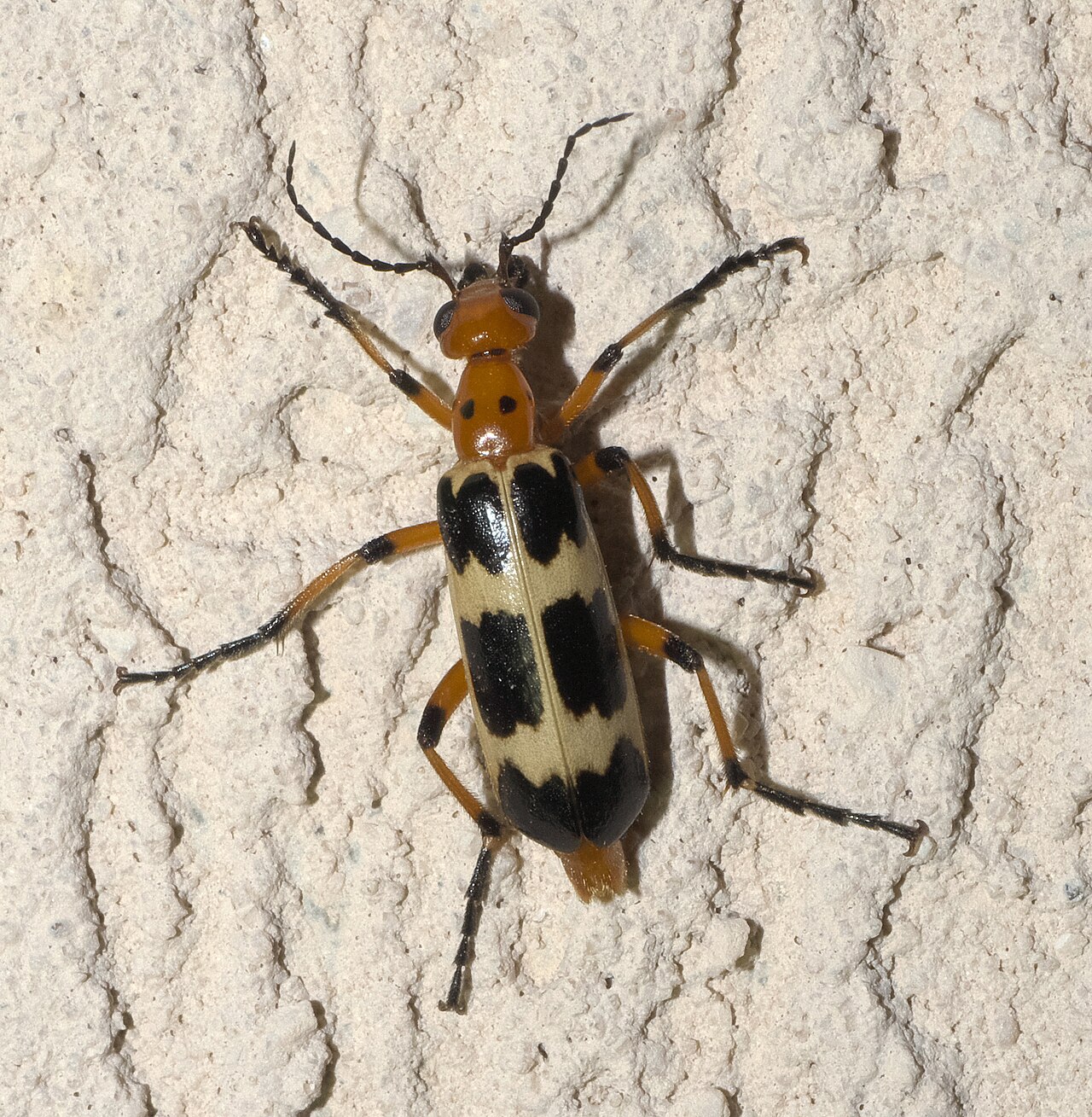
Pyrota is the pinkest beetle genus in the United States. Species such as Pyrota insulata and Pyrota palpalis run 0.4 to 0.6 in (10 to 16 mm), with a soft, almost leathery salmon pink body crossed by black bands or rows of spots and a narrow neck behind the head. The soft body and pinched neck separate blister beetles from every lady beetle at a glance.
They are concentrated in Texas, New Mexico, Arizona and the southern plains, where adults gather on flowering mesquite, alfalfa and desert legumes from June through September. Numbers swing wildly from year to year because the larvae develop on grasshopper eggs.
Handle them with a leaf or a cup. Cantharidin from a crushed beetle raises a blister within two to eight hours. If it happens, wash the area with soap and water and leave the blister intact. For the look alike dark species, see our guide to red and black beetles.
Citrus root weevil (Diaprepes abbreviatus)
This Florida and Gulf Coast weevil is covered in tiny colored scales that can be pink, orange, white, yellow or pale green, often in bold lengthwise stripes. Adults are 0.4 to 0.75 in (10 to 19 mm) with the long snout typical of weevils, which no lady beetle has.
It is an introduced citrus pest rather than a native, and the damage is done underground by the larvae chewing roots. The adults notch the edges of leaves in a distinctive scalloped pattern. They do not bite or sting and are harmless to handle.
If you find a striped pink weevil in a Florida dooryard citrus tree, it is worth reporting to your county extension office, because the species is still under active monitoring.
Rosy maple moth: the pink beetle that is not a beetle
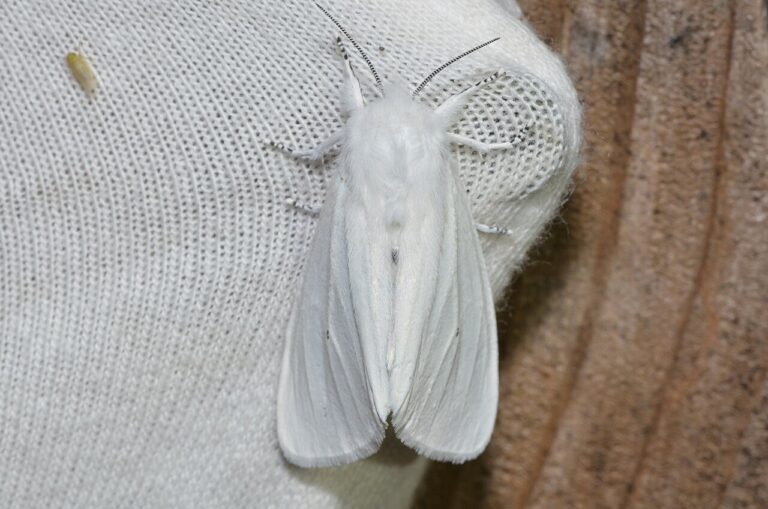
More “pink beetle” photographs show a rosy maple moth than show any actual beetle. Dryocampa rubicunda is bright pink and lemon yellow, with a wingspan of 1.25 to 2 in, a thick woolly body and feathery antennae. At rest with the wings folded it reads as a compact pink lump, which is exactly what people photograph on a porch light.
It ranges across the eastern US wherever maples grow, flies from late spring into summer, and the adults have no functional mouthparts, so they cannot bite, sting or feed. The green caterpillars eat maple leaves and occasionally defoliate young trees, but they are not a pest of concern.
Nothing about it is a beetle. It has no hard wing covers, no straight seam down the back, and scales instead of a smooth shell. The same confusion drives sightings of pink flies and pink bees, where the pink is wing scale dust or pollen.
Pink spotted lady beetle vs rosy maple moth
These two account for most of the arguments in identification groups. The table below gives the features that settle it without needing a close up photo.
| Feature | Pink spotted lady beetle | Rosy maple moth |
|---|---|---|
| Back surface | Hard shell, straight central seam | Furry scales, no seam |
| Size | 0.2 to 0.3 in (5 to 7 mm) | 1.25 to 2 in wingspan |
| Antennae | Short and clubbed | Feathery, especially in males |
| Marks | 12 black spots | Yellow bands, no spots |
| Where seen | Leaves, crops, aphid colonies | Porch lights, maple trunks |
Where and when you see pink beetles in the US
Timing separates the species almost as well as markings do. Rose chafers appear in a tight four week window in late May and June on sandy ground. Pink spotted lady beetles run from April to October with a peak during the midsummer aphid build up in field crops. Pyrota blister beetles are a high summer insect of the southern plains, strongest from June to September.
Region narrows it further. Anything pink in Florida citrus is probably a citrus root weevil. Anything soft bodied, pink and banded in Texas is probably Pyrota. In the Midwest and Northeast, a small, hard, spotted pink insect is almost certainly a pink spotted or parenthesis lady beetle.
Indoors, pink sightings cluster in autumn, when lady beetles look for overwintering sites. Those are usually Asian lady beetles in a pale phase, not a true pink species. The habit of entering houses is a reliable clue in itself, because native pink lady beetles overwinter in leaf litter.
What to do when you find a pink beetle
For lady beetles, rose chafers and weevils, leave them alone or move them outside with a sheet of paper. Lady beetles are worth protecting outright: a single pink spotted lady beetle eats dozens of aphids a day and costs you nothing. Rose chafers only need action if they are swarming a prized shrub, and handpicking beats spraying on a small planting.
For anything soft bodied, banded and pink in the Southwest, assume blister beetle and do not pick it up. Slide a cup over it. Keep the same habit when cutting or feeding alfalfa hay to horses, because crushed beetles in a bale are a far bigger risk than one beetle on a flower.
If the insect turns out not to be a beetle after all, our guides to pink spiders and other rose colored yard animals will usually place it.
Frequently Asked Questions
What is the small pink beetle with black spots?
Almost always the pink spotted lady beetle, Coleomegilla maculata. It is 0.2 to 0.3 in (5 to 7 mm) long, noticeably oval rather than round, rose pink, and carries 12 black spots. It is a native aphid predator, common in gardens and corn fields across the eastern and central United States, and completely harmless.
Are pink beetles poisonous to touch?
Only blister beetles. Pyrota species in Texas and the Southwest release cantharidin, which can raise a blister on bare skin within a few hours. Lady beetles, rose chafers and citrus root weevils are safe to handle. No pink beetle in the United States is poisonous in the sense of a toxin passing through unbroken skin.
Is the rosy maple moth a pink beetle?
No. The rosy maple moth is a moth, not a beetle, even though it is the pinkest insect most people ever find. It has furry scaled wings, feathery antennae and no hard wing covers. Adults cannot bite or sting because they have no working mouthparts, and they live only a few days.
Are pink lady beetles good for the garden?
Yes. Pink spotted and parenthesis lady beetles eat aphids, mites and insect eggs, and the pink spotted species also eats pollen, so it stays in a garden after the aphids are gone. Both are native, neither damages plants, and neither invades houses the way the imported orange species does.
What pink beetle is in Texas?
In Texas, a pink beetle with black bands and a soft body is a Pyrota blister beetle, most often Pyrota insulata or Pyrota palpalis. They gather on flowering mesquite and alfalfa from June to September. Do not handle them with bare hands. Pink spotted lady beetles also occur statewide but are much smaller and hard shelled.
Why do pink beetles appear in my house?
Autumn house invaders are overwintering lady beetles, usually Asian lady beetles in a pale orange pink phase rather than a true pink species. They enter through gaps around windows and soffits on warm days in October. Sealing those gaps works; insecticides inside do not, because the beetles keep arriving from outside.