Pink Ladybug: Are They Real? 6 Species and How to ID Them
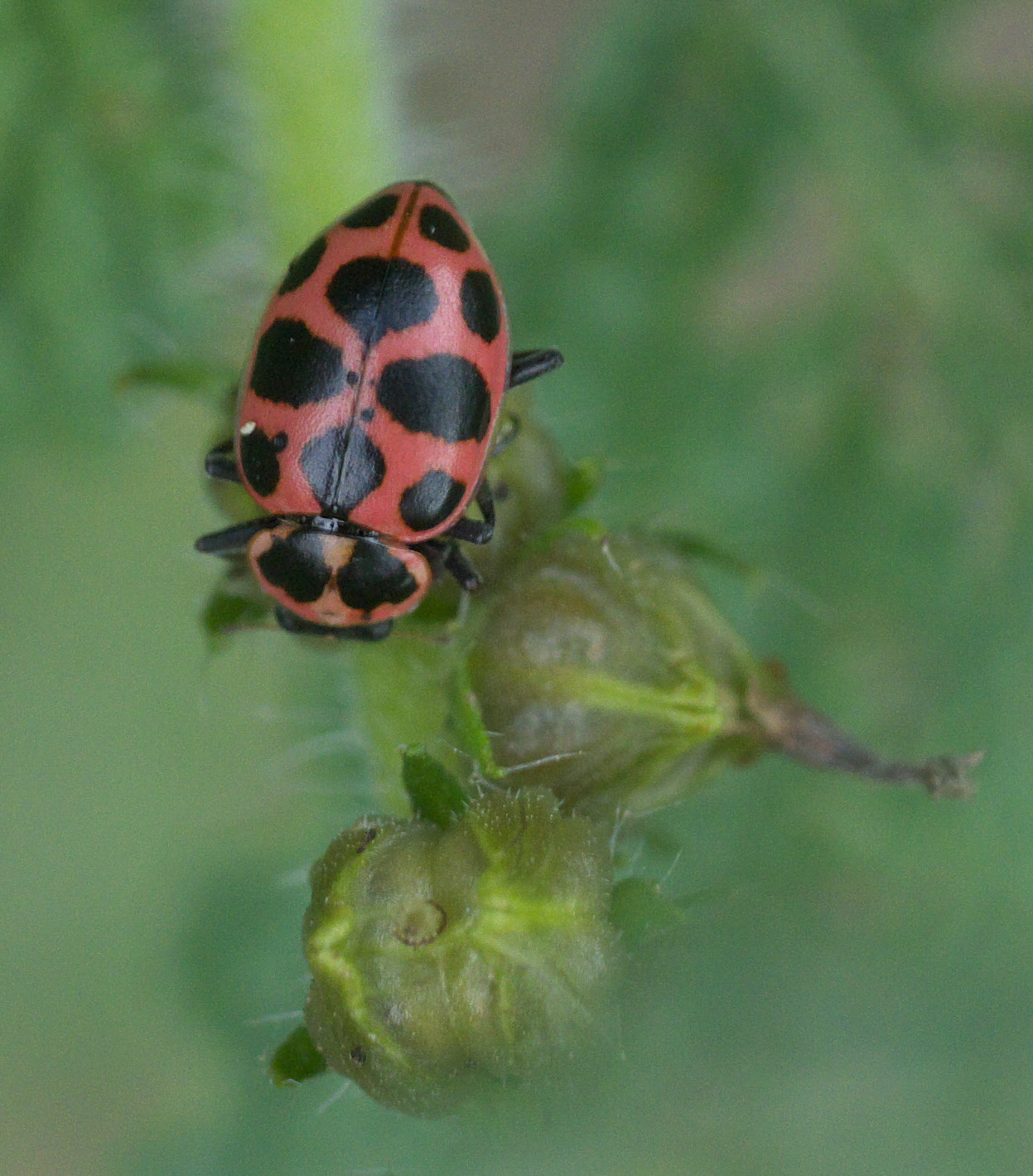
A pink ladybug is real, and in North America it is almost always the spotted pink lady beetle (Coleomegilla maculata), a common native species with a salmon to rose colored body and twelve black spots. The rest of the pink beetles people photograph fall into three groups: a freshly emerged ladybug whose shell has not darkened yet, a species that fades toward mauve with age, or an insect that is not a ladybug at all. None of them are rare in the way social media suggests.
Color alone is a weak identification tool in this family. Lady beetle shell color shifts with age, temperature during development and even diet, and spot counts vary within a single species. This guide starts with the safety questions people ask first, then works through the species you can realistically find pink in the United States, with size, range and the marks that separate them.
Pink ladybugs are real. The spotted pink lady beetle (Coleomegilla maculata) is a widespread native species with a pink to salmon body and twelve black spots. Other pink beetles are usually newly emerged ladybugs whose color has not set, or aging fifteen spotted lady beetles that fade to mauve. All are harmless to people.
Are pink ladybugs poisonous, and do they bite?
Pink ladybugs are not poisonous to humans and are not venomous. They can pinch with their mandibles, which feels like a faint prick and does not break skin in most cases, and they bleed a yellow defensive fluid from their leg joints when threatened. That fluid, called reflex blood, tastes bitter and contains alkaloids, which is why a dog that eats a mouthful may drool or vomit.
The one species that causes real trouble is not pink at its brightest. Asian lady beetles (Harmonia axyridis) bite more readily than native species and their reflex blood stains fabric, and in rare cases dozens have adhered inside a dog’s mouth and caused ulcers. Native pink species do not gather indoors in those numbers. For the full picture on pinching and skin reactions, see whether ladybugs bite.
Spotted pink lady beetle (Coleomegilla maculata)
This is the genuine pink ladybug and the one behind nearly every viral photograph. Adults run 0.16 to 0.3 in (4 to 7 mm), with an elongated, slightly flattened oval shell in pink, salmon or dusty rose, and twelve black spots arranged six per side. The spots are often oval or comma shaped rather than round, which is a quick giveaway against the circular spots of most red species.
It is common from southern Canada through the eastern and central United States into Texas and the Southwest, and it is heavily used in agriculture because it eats aphids, mites, insect eggs and a large amount of pollen. Corn pollen can make up much of its summer diet, so it turns up in field crops where red species are scarce. Its elongated outline and the pale pinkish pronotum with two black marks are the features to photograph.
Fifteen-spotted lady beetle (Anatis labiculata)
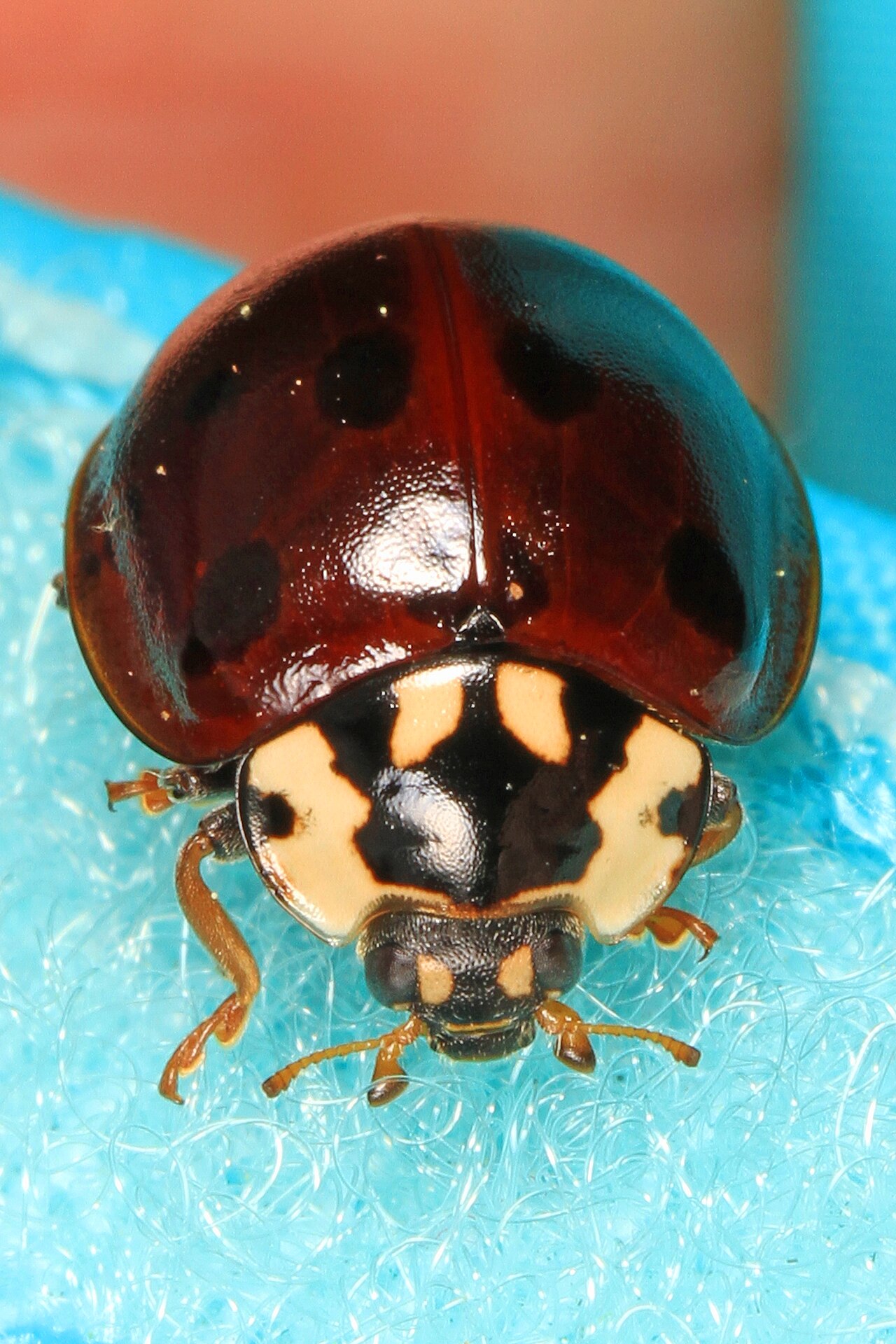
The fifteen spotted lady beetle is the species responsible for most pink and purple sightings in the Northeast. It emerges pale cream or tan with fifteen black spots and darkens with age toward mauve, dusty purple or near black, so a middle aged individual photographs as a convincingly pink ladybug. At 0.2 to 0.33 in (5 to 8.5 mm) it is also noticeably larger than the common garden species.
Its range covers the Northeast, upper Midwest and southern Canada, usually in deciduous and mixed forest rather than open gardens. It hunts aphids on trees, particularly on oak and maple, which means it is found by people walking wooded trails more often than by gardeners. The combination of large size, fifteen spots and a chalky rather than glossy finish separates it from everything else on this list.
| Species | Shell color | Spots | Size | Where |
|---|---|---|---|---|
| Spotted pink lady beetle (Coleomegilla maculata) | Pink to salmon, matte | 12, often oval | 0.16 to 0.3 in | East and central US, crops and gardens |
| Fifteen-spotted lady beetle (Anatis labiculata) | Cream aging to mauve or purple | 15 | 0.2 to 0.33 in | Northeast and upper Midwest forests |
| Convergent lady beetle (Hippodamia convergens) | Salmon to orange red | 12 plus white dashes | 0.16 to 0.28 in | Continent wide, open habitat |
| Asian lady beetle (Harmonia axyridis) | Pale pink to deep red, variable | 0 to 19 | 0.2 to 0.3 in | Continent wide, often indoors in fall |
| Ashy gray lady beetle (Olla v-nigrum) | Pinkish gray or cream | Many small, or none | 0.14 to 0.24 in | South and West, trees and shrubs |
| Newly emerged adult, any species | Pale pink or peach, soft | Faint or absent | Varies | Beside the pupal case |
Convergent lady beetle (Hippodamia convergens)
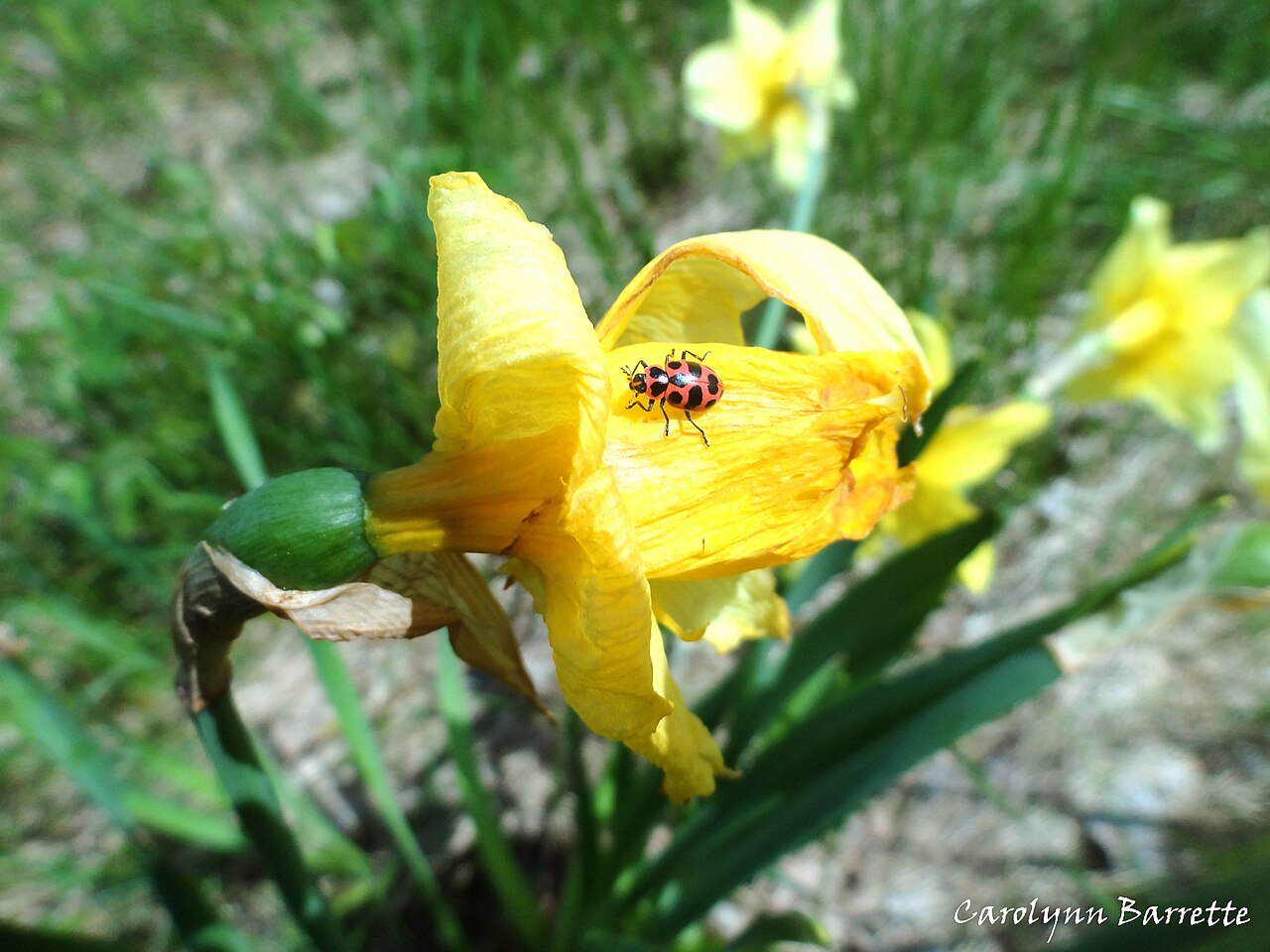
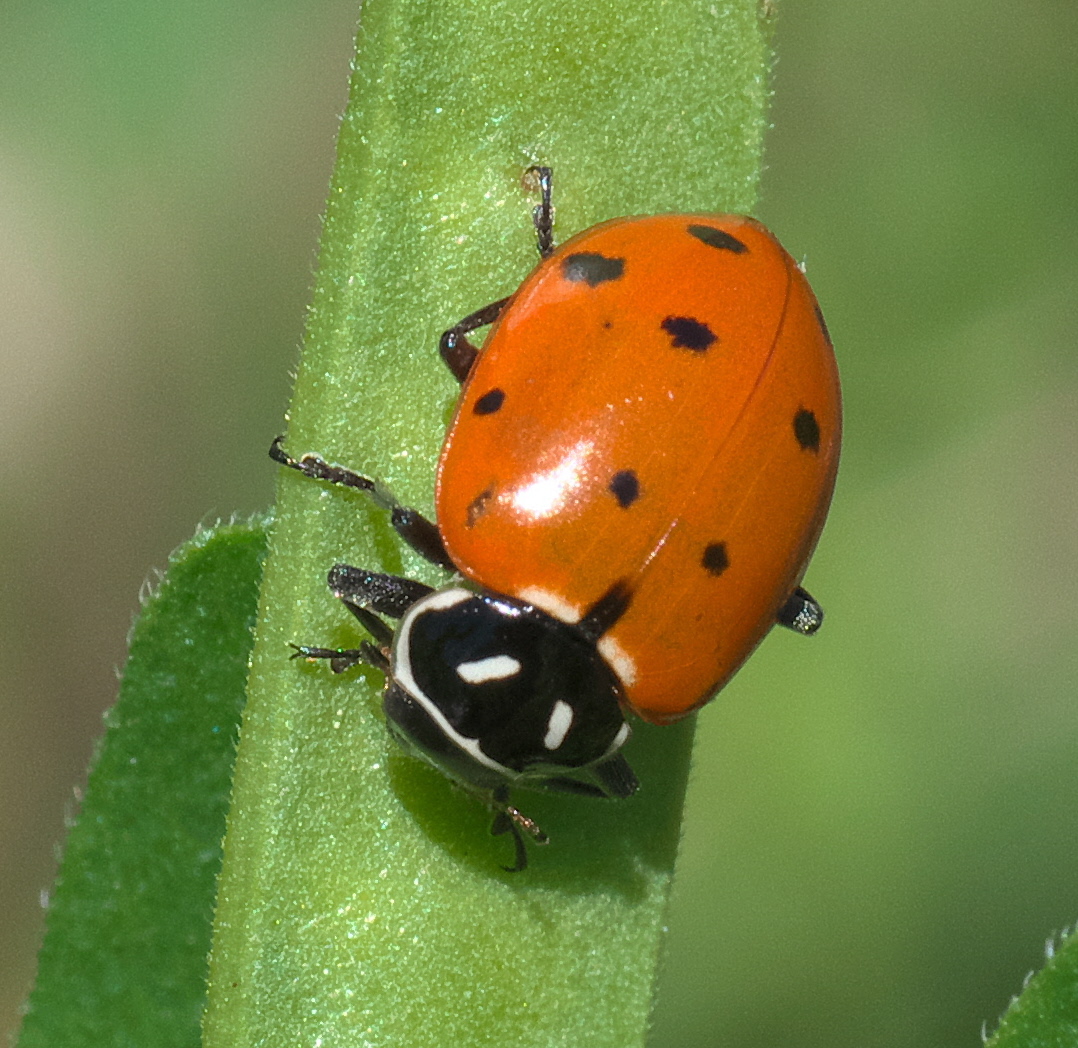
The convergent lady beetle is the species most often misreported as pink, because fresh individuals and overwintering adults can look distinctly salmon rather than red. Adults measure 0.16 to 0.28 in (4 to 7 mm), carry twelve black spots, and are identified by two converging white dashes on the black pronotum, the feature that gives the species its name.
It occurs across the whole continent and is the beetle sold in mesh bags at garden centers, collected from mountain aggregations in the West. Those released adults usually disperse within a day or two, which is worth knowing before buying them. If the beetle in your photograph is clearly orange rather than rose, check our guide to the orange ladybug instead.
Asian lady beetle (Harmonia axyridis), pale forms
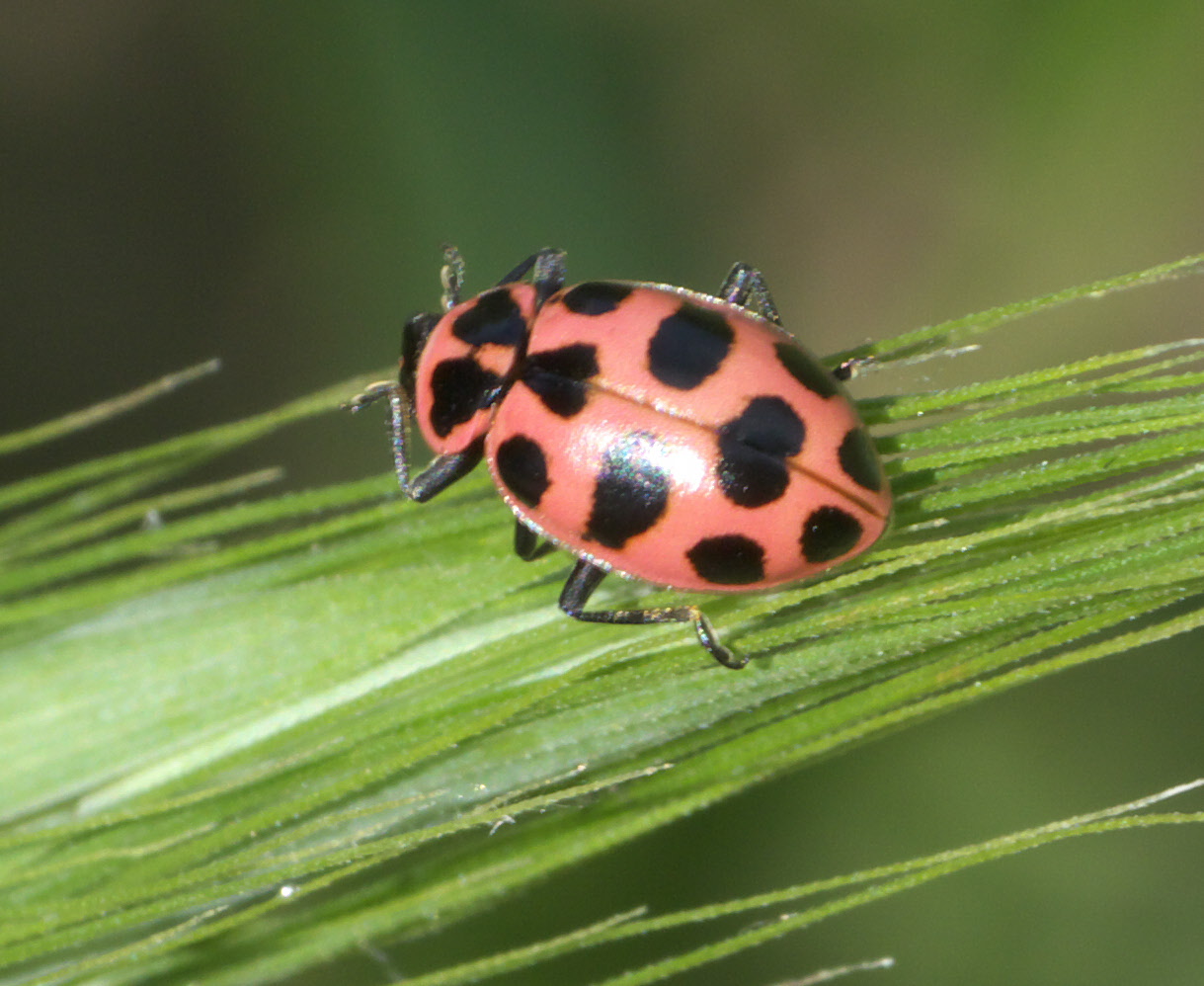
Asian lady beetles are the most variable lady beetle in North America, ranging from pale cream and soft pink through orange to deep red, with anywhere from zero to nineteen spots. The pale pink forms are common enough that they account for a sizeable share of pink ladybug reports, especially in autumn when the beetles move to buildings in large numbers.
Two marks settle it. There is a black M or W shape on the white pronotum behind the head, and there is usually a small raised ridge along the rear edge of the shell that native species lack. Size runs 0.2 to 0.3 in (5 to 7.5 mm), larger and more domed than most natives. Our side by side comparison of the Asian lady beetle and native ladybugs covers the differences in detail.
Ashy gray lady beetle (Olla v-nigrum)
The ashy gray lady beetle has two color forms, and the pale one reads as pinkish gray or dirty cream speckled with small black dots. It is a smaller beetle at 0.14 to 0.24 in (3.5 to 6 mm), slightly flattened, and found through the South, Southwest and California, mostly on trees and shrubs where it hunts psyllids and aphids.
The dark form is black with two red spots and looks like an entirely different insect, which causes confusion in its own right. If your beetle is pale with many small specks rather than a few bold spots, this is a strong candidate. A speckled black and pale shell is also worth checking against the black ladybug forms.
Why a newly emerged ladybug looks pink
A lady beetle that has just left its pupal case is pale pink, peach or yellow with a soft shell and no visible spots. The pigment and the hardening of the cuticle both take hours to a couple of days, and the spots darken last. This teneral stage produces a large share of the pink ladybug photographs taken in summer, usually with the discarded pupal shell still attached nearby.
You can confirm it in two ways. The shell looks slightly translucent and the beetle moves sluggishly without flying, and there is often a spiny black and orange pupa or an empty case within an inch of it. If you are seeing the earlier stages, our guide to ladybug eggs explains the yellow clusters that precede them.
Pink insects that are not ladybugs
Boxelder bug nymphs are the leading impostor. They are bright pinkish red, round bodied and found in dense groups on boxelder and maple seeds, but they have no hard domed shell and they move with the flat, deliberate walk of a true bug rather than a beetle. Clustering in large numbers on a trunk is almost always a true bug, not a lady beetle.
Other candidates include pink spotted ladybird mimics among the leaf beetles, red velvet mites with their eight legs and fuzzy texture, and nymphs of various plant bugs. The test is the shell: a lady beetle has two hard wing covers meeting in a straight line down the center with a visible seam. Pink arachnids are a separate category, covered in our guide to the pink spider.
Where are there pink ladybugs?
Pink ladybugs are found across most of the United States, with the highest concentration of true pink individuals in the agricultural Midwest and the eastern states where Coleomegilla maculata is abundant. The species favors corn, alfalfa, soybeans, asparagus and weedy field edges, so roadside vegetation next to cropland is the most reliable place to look.
The mauve fifteen spotted lady beetle is concentrated in the Northeast and upper Midwest in hardwood forest, and pale Asian lady beetles turn up anywhere, including inside houses from September onward. In the arid Southwest and California, pale pinkish gray Olla v-nigrum is the likelier find. Regional species accounts for all of these are maintained at the University of Florida’s Featured Creatures database.
How rare is a pink ladybug?
A pink ladybug is not rare. Coleomegilla maculata is one of the most abundant lady beetles in North American field crops, and entomologists sample it by the hundreds in a single afternoon. The impression of rarity comes from the fact that most people only ever look closely at ladybugs on garden roses, where the red species dominate.
What is genuinely uncommon is a strongly pink individual of a normally red species, which happens when development runs cold or when the beetle is photographed while still teneral. That is a stage, not a variety, and the same beetle will be red within two days. There is no recognized pink mutation being traded or collected.
What does a pink ladybug mean?
Folk interpretation treats a pink ladybug as a sign about affection and gentleness rather than the general luck attached to red ones, a reading built on the modern color association rather than on any older tradition. European ladybug folklore does not distinguish by color, and the pink meaning appears only in contemporary sources.
The older belief is worth knowing anyway. Across much of Europe the ladybug was linked to the Virgin Mary, which is where the name comes from, and killing one was thought to bring bad luck. Counting spots to predict months of good fortune is the most persistent version. For the broader background, see our main page on the ladybug.
Is lady bug one word or two?
Both are in use, and neither is wrong in general writing. North American dictionaries list ladybug as one word, British usage prefers ladybird, and the entomological convention splits it as lady beetle because the insect is a beetle and not a bug. Scientific papers and extension publications use lady beetle for that reason.
The distinction matters when you are searching for identification help. Searching lady beetle plus a state name pulls up university extension material, while ladybug pulls up general interest pages. If you want a determination from entomologists, the technical spelling gets you there faster.
Frequently Asked Questions
Are pink ladybugs poisonous to touch?
No. There is nothing on a pink ladybug’s shell that harms human skin, and it cannot sting. The yellow fluid it releases from its leg joints when handled is bitter and can stain fabric, and a small number of people react to Asian lady beetle secretions with mild skin irritation. Wash your hands and nothing further happens.
Can a pink ladybug bite you?
It can pinch, which most people would describe as a bite. A lady beetle chewing at skin produces a brief prick and occasionally a tiny red mark, and it is exploratory rather than defensive. Native pink species rarely do it. Asian lady beetles, including their pale pink forms, are the ones that pinch readily when they land on people.
What is the real name of the pink ladybug?
The spotted pink lady beetle, Coleomegilla maculata, also called the pink spotted lady beetle or twelve spotted lady beetle. It belongs to the family Coccinellidae like all lady beetles. Pink individuals of other species are not separate varieties and have no distinct name, since their color is a developmental stage or an age related fade.
Where do pink ladybugs live?
Field crops, weedy margins, gardens and woodland edges across the eastern and central United States, with the species reaching southern Canada, Texas and parts of the Southwest. They overwinter in leaf litter, under bark and at the base of grass clumps, often in groups, then move into corn and alfalfa as aphid numbers build in late spring.
Is a pink ladybug good luck?
In folk belief any ladybug landing on you is good luck, and the pink version is read in modern sources as a sign tied to love and kindness rather than general fortune. That color specific meaning is recent. The older European tradition treats all ladybugs as protected and lucky without reference to color.
Do pink ladybugs eat aphids?
Yes, and they also eat a great deal of pollen. Coleomegilla maculata takes aphids, spider mites, insect eggs and small larvae, including corn earworm and European corn borer eggs, but pollen can make up half or more of its diet in midsummer. That flexibility is why it survives in crops after the aphids are gone, making it a steadier biological control than strict predators.