Turkey Symbolism: What a Turkey Sighting Means in Each Tradition
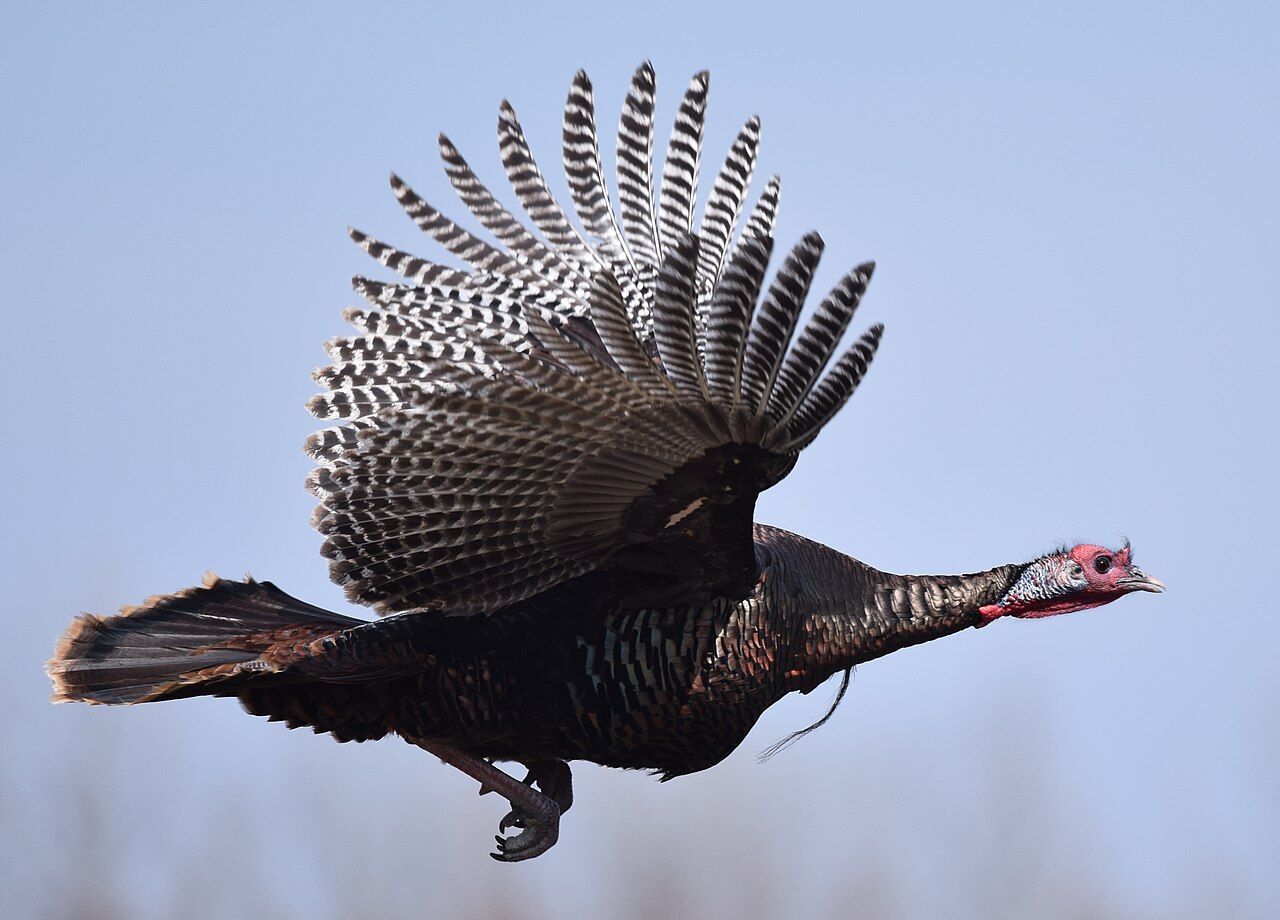
Seeing a turkey is read almost everywhere as a sign of abundance that has already arrived, not one you still have to chase. Across Native American traditions, Christian folk belief and modern spirit animal writing, turkey symbolism circles the same three ideas: harvest, generosity and the willingness to give something away. That makes the wild turkey (Meleagris gallopavo) one of the few birds whose omen is read as reassurance rather than warning.
What a sighting means in practice depends on where and when it happened. A tom strutting through your yard in spring carries a different reading than a lone hen crossing the road at dusk, and finding a turkey feather is treated as its own kind of message. The sections below separate the traditions, then work through the specific situations people actually search for.
Turkey symbolism centers on abundance, gratitude and sacrifice. In most Native American traditions the turkey is the give-away bird, a symbol of sharing what you have. Seeing one is usually taken as a good omen signaling that nourishment, fertility or a return of generosity is near, rather than a warning of loss.
| Sighting | Common reading |
|---|---|
| Turkey in your yard or garden | Abundance settling into the home, a season of enough |
| Turkey crossing your path | A prompt to give something away before asking for more |
| Turkey at your window | News about family, food or hospitality |
| Turkey heard or seen at night | Unusual timing, read as an urgent message rather than a bad one |
| Repeated sightings or three turkeys | Confirmation of a decision already half made |
| Dead turkey found | A cycle closing, often a harvest ending rather than a death omen |
| Turkey feather found | A token of blessing, traditionally kept and not sold |
What Is the Spiritual Meaning of a Turkey?
The spiritual meaning of a turkey is abundance that is meant to be shared. Where the eagle stands for vision and the crow for knowledge, the turkey stands for the full table and the hands that pass the plate. Writers on animal symbolism call it the give-away bird, and that phrase explains almost every reading attached to it.
Behind the symbol sits a real bird worth knowing. Wild turkeys are ground feeders that scratch through leaf litter for acorns, seeds and insects, and a flock can strip a patch of oak woodland clean in an afternoon. People who read the bird as a sign of plenty are reading an animal that genuinely thrives where food is plentiful, which is part of why the association stuck.
Turkeys also became the center of a national meal, and that has reshaped the modern symbolism. In the United States the bird now carries gratitude as strongly as fertility, which is a recent layer rather than an ancient one. If you want the broader frame that holds all bird omens together, our overview of what birds symbolize across traditions sets out the pattern.
Turkey Symbolism in Native American Traditions
What is the symbolism of a turkey in Native American culture? It is first and foremost the bird of the give-away. In many Plains and Eastern Woodlands traditions the turkey is linked to the harvest and to ceremonies where a family’s wealth is distributed rather than hoarded, and the bird’s willingness to be eaten is read as the model for that generosity.
The readings are not uniform, and they should not be flattened into one. In some Lakota accounts the turkey is associated with fertility and with the fat of the land. Among Pueblo peoples turkey feathers have long been used in prayer sticks and blankets, and archaeological work in the Southwest shows turkeys were kept for feathers centuries before they were kept for meat. Apache and Navajo stories place the turkey as the bringer of seed corn after a flood.
That last detail matters for anyone reading an omen. If the turkey is the animal that carried corn to the people, a sighting is a sighting of the messenger who brought the staple crop, which is why it is so consistently taken as benevolent. The same logic attaches to other harvest-linked animals whose arrival meant food was coming.
Are Turkeys Mentioned in the Bible?
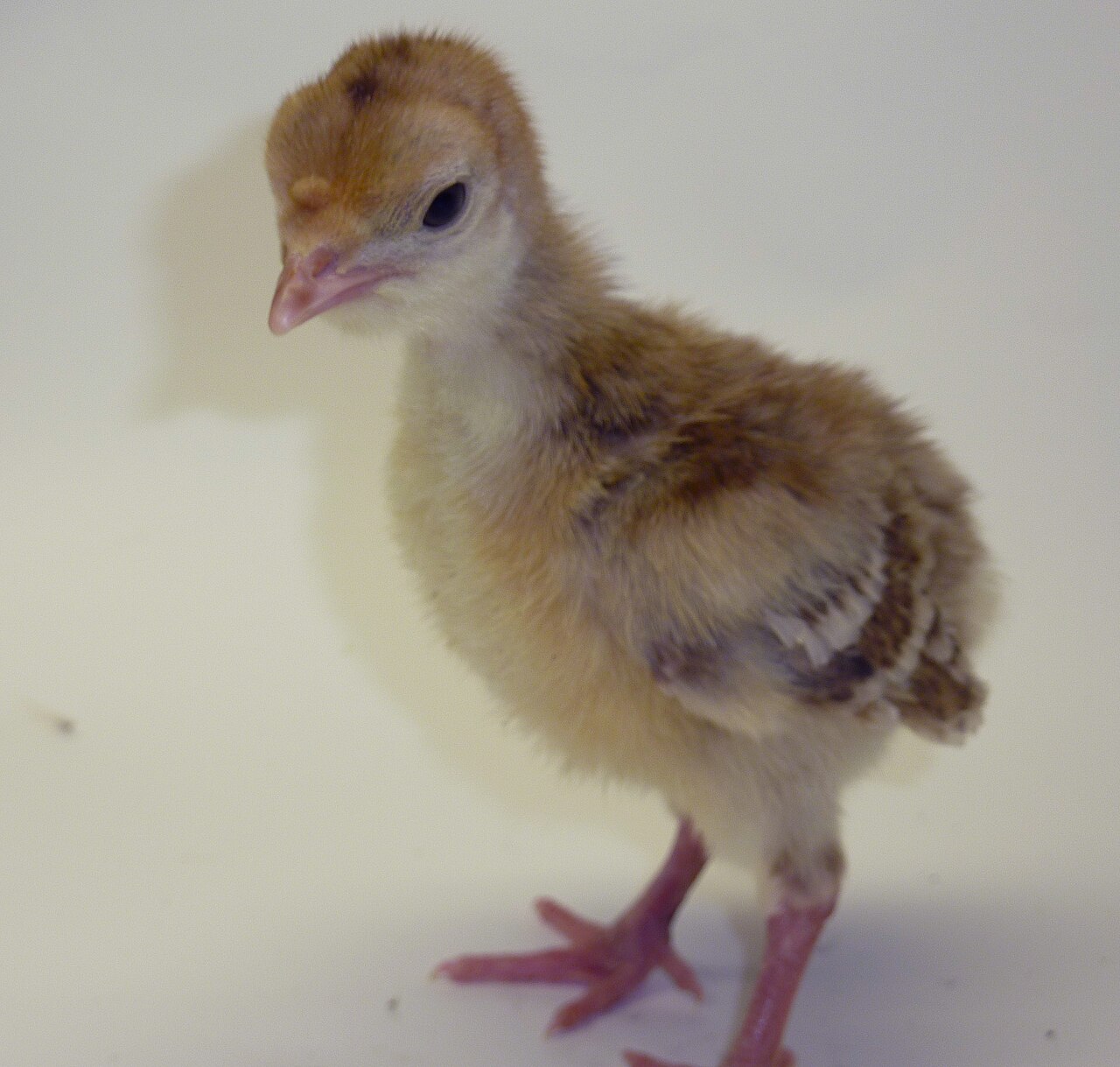
Are turkeys mentioned in the Bible? No. The turkey is a bird of the Americas, and it reached Europe only after 1500, so no biblical text could refer to it. Any source quoting a Bible verse about turkeys is either mistranslating a word for a different fowl or inventing the reference outright.
That has not stopped a Christian folk reading from forming. Because Scripture treats the harvest and the shared meal as signs of divine provision, English and American Christian writers folded the turkey into that imagery once the bird became the centerpiece of a thanksgiving table. The symbolism here is honest but late: it borrows the theology of provision and attaches it to a bird the text never knew.
Some Christian commentary goes further and reads the turkey as an emblem of humility, since the bird is plain, earthbound and easily caught compared with the eagle. Treat that as devotional interpretation rather than doctrine. For a bird with genuine biblical footing, see how the readings around finding a dead bird draw on much older scriptural material.
Celtic, European and East Asian Views
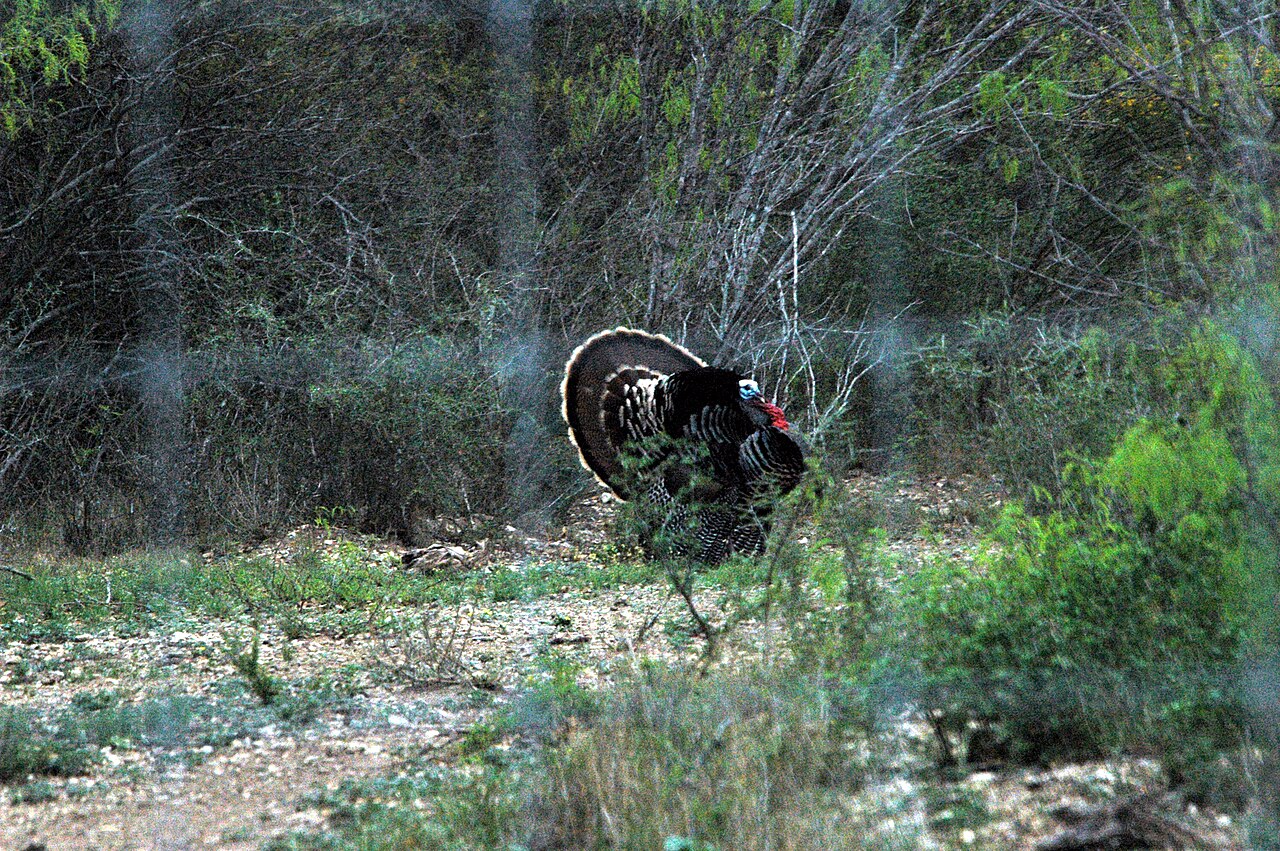
Celtic tradition has no native turkey symbolism for the same reason the Bible does not. The bird arrived in Britain and Ireland in the sixteenth century, long after the Celtic symbolic vocabulary was set, so any list claiming an ancient Celtic turkey meaning is filling a gap with guesswork. Modern Celtic-inspired writers sometimes place the turkey alongside the boar as a feast animal, which is a reasonable extension but not a historical one.
Continental Europe gave the bird a different character. It was a luxury import, kept on estates and served at courts, and its early names reflected confusion about where it came from. The English word turkey records a false trade route, and the French and Turkish names point at India and America respectively. The bird became a symbol of imported wealth and, in satire, of pompous display.
East Asian symbolism largely passed the turkey by. Chinese and Japanese bird symbolism was already built around the crane, rooster and pheasant, and the turkey entered as livestock rather than as an emblem. Where it does appear in modern Asian pop culture, it carries the American holiday meaning rather than a local one.
Turkey as a Spirit Animal, Totem and Power Animal
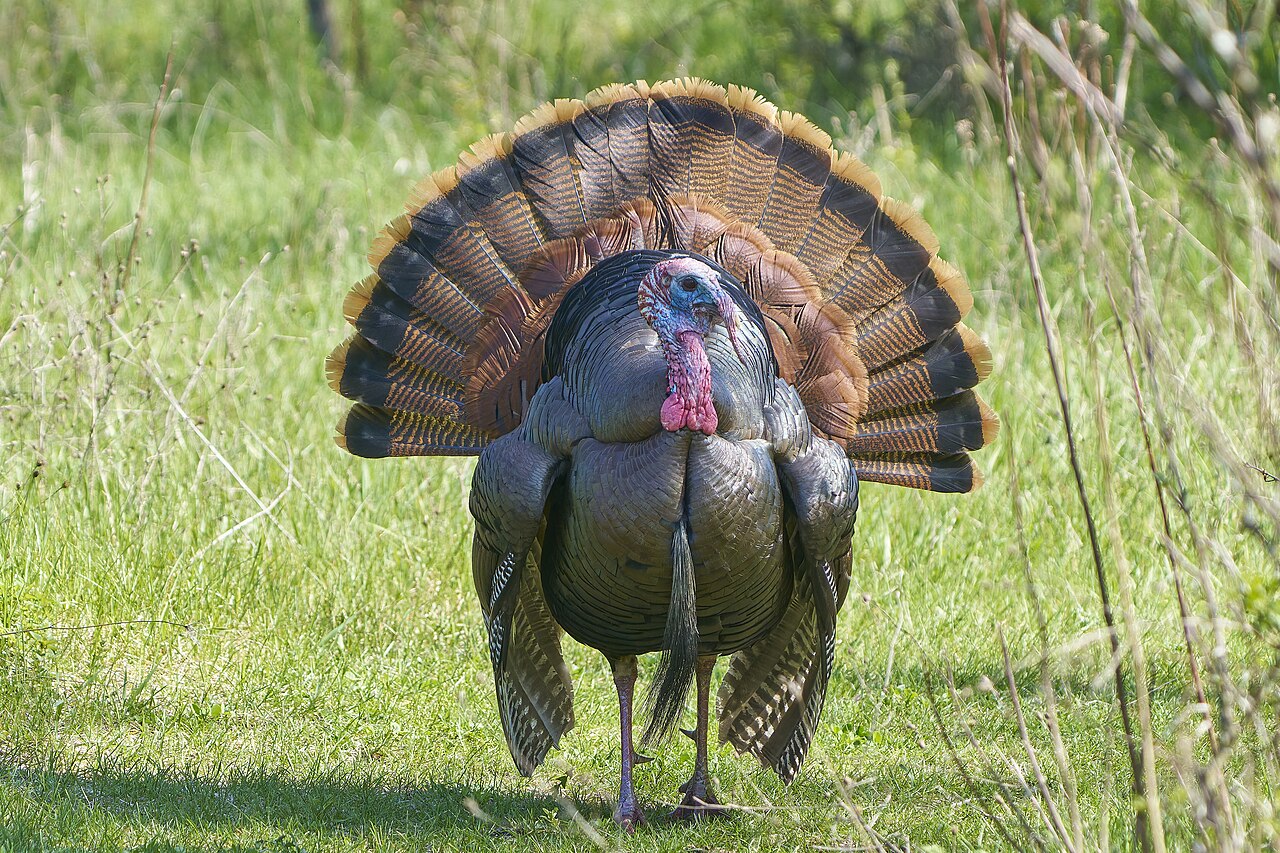
What is turkey’s spirit animal meaning? As a spirit animal the turkey asks whether you are taking more than you return. People who identify with the turkey totem are usually described as generous hosts, strong providers and poor receivers, better at feeding others than at accepting help themselves. The lesson attached to the totem is to let someone else serve you.
The three terms get used loosely and it helps to separate them. A spirit animal is the guide that appears for a season or a question. A totem is a lifelong emblem, often inherited through family or clan. A power animal is the strength you call on deliberately. The turkey works as all three, but its power animal form is specific: the courage to be the one who gives first.
Seeing a Turkey in Your Yard or Garden
A turkey in the yard is the most commonly reported sighting and the most consistently positive reading: abundance arriving at the house rather than passing by. Because the yard is domestic space, the omen is usually taken to concern the household, food, family finances and hospitality, not career or travel.
Season sharpens the reading. A tom displaying in March or April is a fertility sign in almost every tradition that mentions it, since that is the peak of the breeding display. A hen with poults in June shifts the meaning toward family protection, and a mixed winter flock scratching under a feeder is read as community and shared survival.
There is a prosaic layer too. Wild turkey populations across the United States have recovered so strongly since the 1970s that suburban flocks are now routine, and a yard sighting may simply mean someone nearby is feeding birds. If you want to know what draws them in, see what turkeys actually eat through the year.
A Turkey Crossing Your Path or at Your Window
A turkey crossing your path is read as an interruption with a purpose: stop, take stock of what you already have, and give some of it away before you ask for more. The crossing is treated as a deliberate block in the road, which is why the reading is a prompt to act rather than a passive blessing.
A turkey at the window is read more intimately. Window sightings in bird folklore generally concern news, and with the turkey that news is about family, a meal, a gathering or an invitation. Where a cardinal at the window is read as a visit from the dead, a turkey at the window is read as a message from the living about something practical.
Both readings come with a caution worth stating plainly. Toms in breeding season will attack reflections and will approach people who have fed them, and a bird pecking at your glass in April is defending a territory rather than delivering a message. Interpret the omen if you like, but do not corner the bird.
Turkeys at Night and Repeated Sightings
Turkeys are not nocturnal, so a turkey seen or heard at night is unusual enough that folk reading treats it as urgent rather than ominous. Turkeys roost in trees after sunset and will gobble from the roost at first light or when startled, so a night gobble usually means something disturbed the roost. As an omen it is read as a message that cannot wait for morning.
Repeated sightings carry a different weight. In most animal omen traditions a repeat is confirmation, not a new message, and with the turkey it is read as approval of a decision you have already mostly made, especially one involving money, family or moving house. Three turkeys together is a popular variant, read as past, present and future provision, though the number is just as likely to be a hen with two yearlings.
Finding a Dead Turkey or a Turkey Feather
Finding a dead turkey is read as a cycle closing rather than a warning of death. Because the bird symbolizes harvest, its body is interpreted as the end of a season of plenty and a reminder that provision is not permanent. Some traditions read it as a call to settle a debt or return a favor before the cycle turns again.
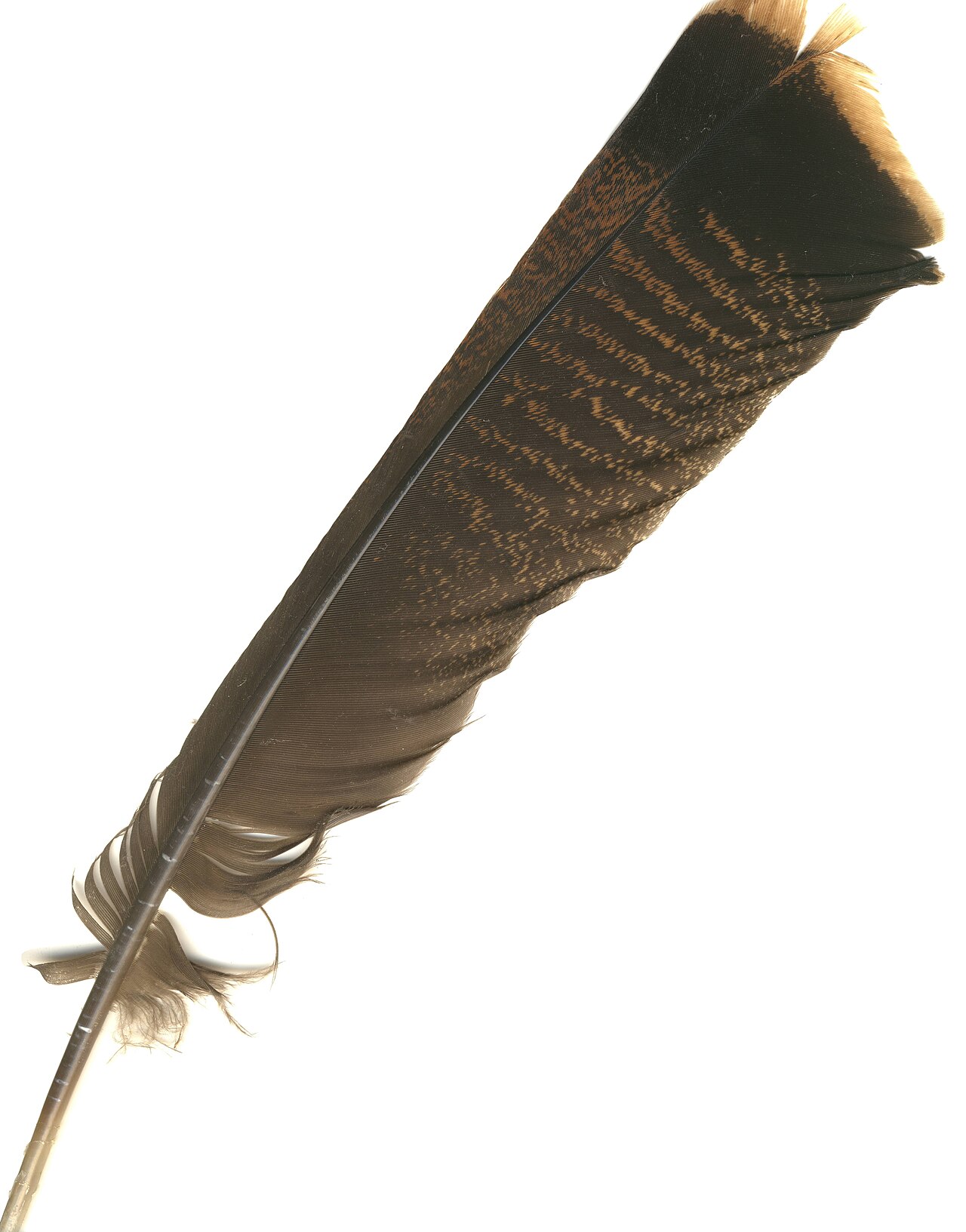
A turkey feather is the better omen and the more common find. Turkey feathers were used in Pueblo prayer sticks, feather blankets and ceremonial dress, and the modern folk reading treats a found feather as a token of blessing that should be kept or given, never sold. The iridescent bronze tail and wing feathers are the ones most often picked up along field edges in late summer, when adults molt.
One legal point applies in the United States. Wild turkeys are game birds rather than songbirds, so their feathers are not protected the way most native bird feathers are under the Migratory Bird Treaty Act, but state game laws still vary. For the biology behind the plumage differences people notice, see our guide to the hen turkey and how she differs from the tom.
Dreaming About Turkeys
A turkey in a dream is usually read as a question about resources. Dream interpreters working in the folk tradition treat a live turkey as approaching abundance, a cooked turkey as a gathering or obligation you cannot avoid, and a turkey chasing you as a responsibility you have been dodging. A flock is read as community support.
Context does more work than the bird. Dreaming of serving a turkey points at your role as provider, while dreaming of being served points at the harder lesson of the turkey totem, which is accepting help. If the dream centers on a turkey you cannot catch, the standard reading is a provision you are chasing that would arrive on its own. Birds carry warnings in other dream traditions, as the crow and its omens show, but the turkey rarely does.
Treat all of this as symbolic vocabulary, not prediction. A coastal bird with a far more mixed reputation is covered in seagull spiritual meaning.
Related reading: Blackbird Symbolism.
Related reading: Magpie Symbolism.
Related reading: Turkey Vulture Spiritual Meaning.
Related reading: Osprey Spiritual Meaning.
Frequently Asked Questions
Are turkeys good luck or bad luck?
Turkeys are read as good luck in nearly every tradition that mentions them. The bird symbolizes harvest, fertility and generosity, so a sighting is taken as a sign of provision rather than warning. The only negative reading is a satirical European one in which the strutting tom stands for vanity.
Are turkeys good omens?
Yes. Turkeys are among the most reliably positive bird omens in American folk belief, usually interpreted as abundance already on its way. Even a dead turkey is read as a cycle completing rather than a death sign, which sets it apart from most birds found dead.
What did Benjamin Franklin say about the turkey?
Franklin never proposed the turkey as the national bird. In a 1784 letter to his daughter he criticized the bald eagle as a bird of bad moral character and called the turkey a much more respectable bird and a bird of courage. The national bird story grew out of that private letter.
What deity is associated with turkeys?
No major deity is specifically a turkey god, but the bird appears in Mesoamerican religion. The Maya associated the ocellated turkey with ritual sacrifice and offering, and Aztec sources link the domesticated turkey to Tezcatlipoca in his guise as Chalchiuhtotolin, the jeweled fowl, a bringer of plague and of absolution.
What are some things that symbolize turkey?
Harvest and the shared meal, fertility and the fullness of the land, generosity and the give-away, sacrifice, and in modern American usage gratitude itself. The feather carries blessing, the strutting tom carries display and pride, and the hen with poults carries family protection.
What does it mean when three turkeys appear together?
Three turkeys together is popularly read as past, present and future provision, or as confirmation repeated three times. Ornithologically it is most often a hen with two surviving yearlings, since brood sizes drop sharply over a bird’s first summer. Both readings can sit side by side.
Wild turkey behavior, calls and range are documented in detail by the Cornell Lab of Ornithology at All About Birds, which is the best check on any claim about what the bird is actually doing when it appears. Read the sighting against the bird’s calendar first, then against the tradition that interests you.