How to Get Rid of Hawks at Bird Feeders
To get rid of hawks at a bird feeder, move feeders closer to dense shrubs for escape cover, temporarily take feeders down for a few days to break the hunting pattern, and add visual barriers or feeder cages, since hawks are protected by federal law and cannot legally be trapped, harmed, or killed. A hawk hanging around a feeder is not there for the seed, it is there because a busy feeding station reliably concentrates songbirds in one place. This guide covers legal, effective ways to make your yard less appealing to a hunting hawk, what the law actually allows, and when it may be better to simply let the hawk be.
| Method | How It Helps | Effort |
|---|---|---|
| Move feeders near shrubs | Gives songbirds an escape route | Low |
| Pause feeding briefly | Breaks the hawk’s hunting pattern | Low |
| Add visual barriers | Blocks a clear approach path | Medium |
| Scare devices or decoys | Short-term deterrent only | Low |
| Feeder cages | Physically blocks a hawk’s strike | Medium |
Why Are Hawks Coming to Your Bird Feeder?
Hawks visit bird feeders because the feeder does the hard part of hunting for them, drawing a reliable, predictable cluster of small birds into one open area at consistent times of day, especially in the early morning. Accipiters like Cooper’s hawk and the sharp-shinned hawk are the most frequent feeder visitors thanks to their speed and agility through tight cover, and a hawk that finds an easy feeding station will often return to it repeatedly, sometimes striking within feet of the feeder pole while the homeowner watches from indoors. This is completely normal predator behavior rather than a sign anything is wrong with your yard, and according to the Cornell Lab of Ornithology, it actually means your feeding station is functioning as a healthy part of the local food web, even if it can be unsettling to witness up close.
Is It Legal to Get Rid of Hawks?
In the United States, all native hawk species are protected under the Migratory Bird Treaty Act, which makes it illegal to kill, trap, harm, or possess a hawk, or its nest or eggs, without a special federal permit, regardless of how much of a nuisance it becomes at a feeder or with backyard chickens. This applies nationwide and covers every hawk species discussed in this guide, so every method below focuses on making the area less attractive rather than removing or harming the bird directly. Violating the Migratory Bird Treaty Act can carry significant fines running into the thousands of dollars, so lethal control or trapping is never a legal option for a hawk at a bird feeder, no matter how frustrating the losses feel in the moment.
How to Make Your Feeder Area Less Attractive to Hawks
The single most effective change is giving songbirds better escape cover, since a hawk relies on catching birds out in the open with no nearby refuge to duck into. Placing feeders within a few feet of dense shrubs or brush piles gives small birds somewhere to dive for safety the moment a hawk appears, which can meaningfully cut down on successful strikes even without removing the hawk from the area entirely. Taking feeders down completely for three to five days also disrupts the pattern a hawk has learned, often causing it to move on to hunt elsewhere, after which feeders can be reintroduced gradually along with the added cover described above.
Best Feeder Types and Placement to Deter Hawks
Feeder cages, wire enclosures with openings large enough for small songbirds but too small for a hawk to reach through, physically prevent a hawk from grabbing birds at the feeder itself while still allowing normal feeding to continue undisturbed. Spacing multiple smaller feeders around the yard rather than concentrating birds at one large station also reduces the reward a hawk gets from staking out a single spot, forcing it to cover more ground for the same amount of food. Avoid placing feeders in wide-open lawn areas with no nearby cover, since that setup gives a hunting hawk the clearest possible approach and the least escape opportunity for songbirds caught feeding there.
What to Do During an Active Hawk Attack
If a hawk is actively hunting at your feeder, the safest and most effective response is usually to do nothing and let the interaction play out naturally, since intervening rarely changes the outcome and can startle other birds into worse decisions mid-flight. Clapping loudly or stepping outside can sometimes interrupt an attack in progress and give a targeted bird a chance to escape, but this only works if you are already present and should never involve throwing objects at the hawk, which is both illegal under federal law and largely ineffective anyway. After a successful hawk strike, it is normal and not a cause for concern; feeder birds are a natural part of a hawk’s diet, and losses are typically a small fraction of the local songbird population over the course of a season.
When to Just Let the Hawk Be
Because hawks are federally protected and hunting at a feeder is entirely natural behavior, many backyard birders choose not to actively deter a visiting hawk at all, treating the sighting as a bonus rather than a nuisance to solve. A hawk typically will not stay in one yard indefinitely, since local prey numbers naturally decline the longer it hunts the same spot, causing most hawks to move on within a few days to a couple of weeks entirely on their own. If chickens rather than feeder birds are the concern, covering runs with netting or wire and providing overhead shelter is a more targeted and effective fix than trying to discourage the hawk from the broader yard altogether.
Will Removing Feeders Get Rid of the Hawk for Good?
Removing feeders permanently will eventually cause a hawk to stop visiting, since the songbird concentration it relies on for easy hunting disappears along with the food source, but this also removes the benefit of feeding birds in the first place for the sake of one predator. A better middle ground for most backyard birders is a temporary pause combined with better cover once feeding resumes, which addresses the immediate hunting pattern without giving up feeding birds entirely. It is also worth remembering that a new hawk, or the same individual, can always discover a feeding station again later, since hawks routinely patrol large territories that may include multiple yards with feeders.
Which Hawks Are Most Likely to Hunt at Feeders?
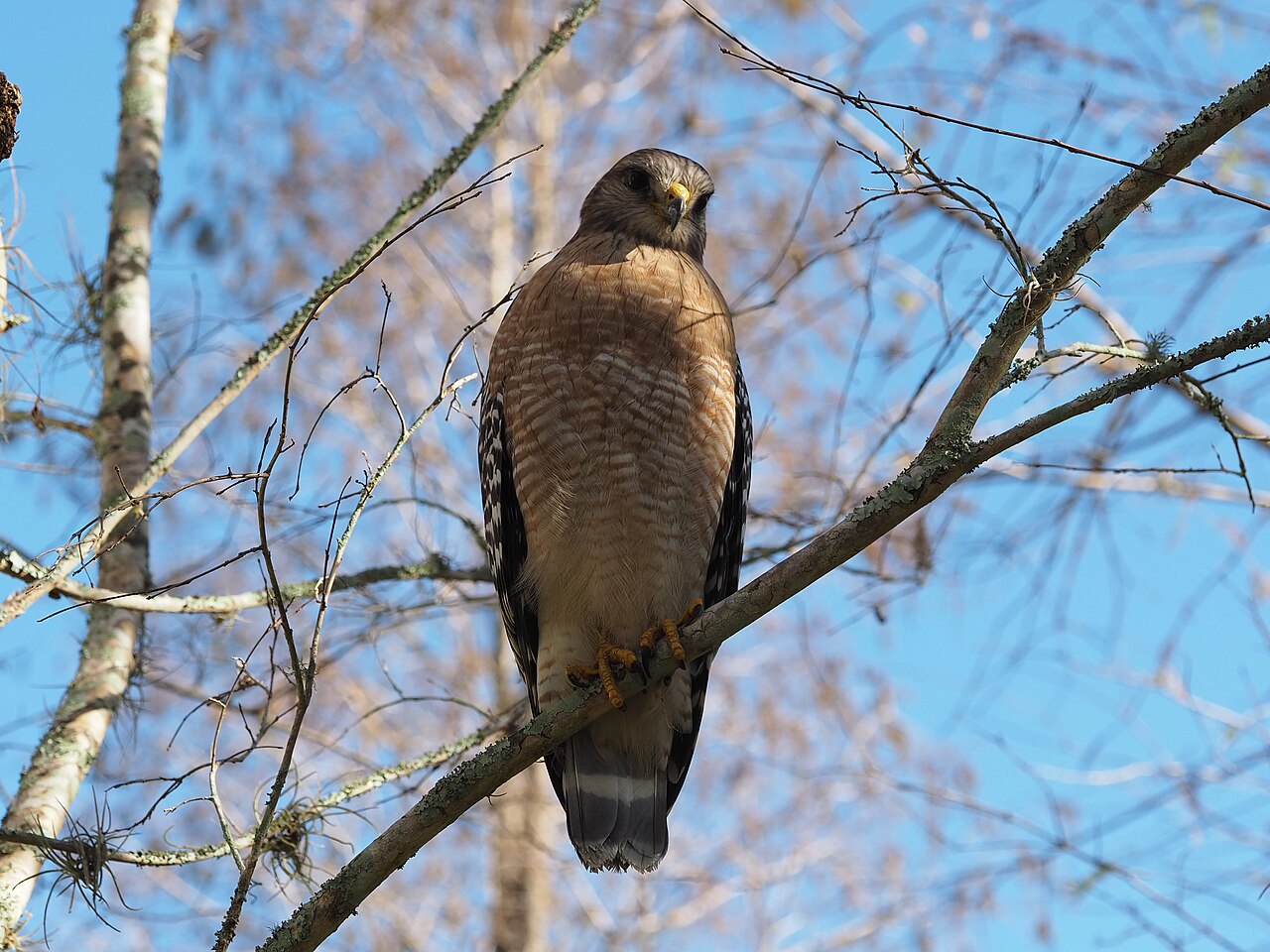
Not every hawk species is a regular feeder visitor, and knowing which ones are helps set realistic expectations for how long a problem might last. Accipiters, especially Cooper’s hawk and the sharp-shinned hawk, are by far the most common culprits, since their short, rounded wings and long tails are built for exactly the kind of tight, agile chase a backyard feeding station requires. Larger buteos like the red-tailed hawk occasionally hunt near feeders too, but they generally prefer open ground and are far more likely to be seen perched on a nearby pole or soaring overhead than diving directly at a feeder pole. If you want to confirm which species is visiting before deciding how to respond, our guide to types of hawks covers the field marks that separate accipiters from buteos at a glance.
Related reading: what do hawks eat.
Related reading: how to get rid of gnats.
Related reading: how to get rid of gnats.
Related reading: how to get rid of gnats.
Related reading: how to get rid of gnats.
Related reading: how to get rid of gnats.
Related reading: how to get rid of gnats.
Related reading: how to get rid of gnats.
Related reading: how to get rid of gnats.
Related reading: how to get rid of gnats.
Related reading: how to get rid of gnats.
Related reading: how to get rid of gnats.
Related reading: how to get rid of gnats.
Related reading: how to get rid of gnats.
Related reading: how to get rid of gnats.
Related reading: how to get rid of gnats.
Related reading: how to get rid of gnats.
Related reading: how to get rid of gnats.
Related reading: how to get rid of gnats.
Related reading: how to get rid of earwigs.
Related reading: how to get rid of japanese beetles.
Frequently Asked Questions
Is it legal to kill a hawk that is eating my feeder birds?
No. All native hawks are protected under the Migratory Bird Treaty Act, making it illegal to kill, trap, or harm a hawk without a federal permit, regardless of feeder losses.
How long will a hawk keep coming back to my feeder?
Most hawks move on within days to a couple of weeks once local prey becomes harder to find, though a persistent hawk may return periodically over a season.
Do fake owls or decoys keep hawks away?
Decoys offer only a short-term deterrent at best, since hawks quickly learn a stationary decoy poses no real threat and will ignore it within days.
Should I stop feeding birds if a hawk is hunting at my feeder?
Pausing feeders for three to five days can break a hawk’s hunting pattern, but permanently stopping is not necessary since hawk predation at feeders is a normal, low-impact part of backyard bird activity.
Can I scare a hawk away myself?
Loud noise or your presence can interrupt an attack in progress, but throwing objects or attempting to trap or harm the hawk is both illegal and ineffective.
Why did a hawk suddenly start visiting my yard?
A hawk usually starts visiting once it discovers your feeder reliably attracts songbirds, essentially treating a well-stocked feeding station as an easy, low-effort hunting ground worth returning to.