Raven Tattoo Meaning: Mystery, Odin, and Design Ideas
A raven tattoo means mystery, knowledge, and fate, carried by the most mythologized bird in the Northern Hemisphere. The raven sits at the center of three towering traditions: Norse mythology, where Odin’s ravens Huginn and Muninn fly the world as Thought and Memory; Edgar Allan Poe’s “The Raven,” which made the bird literature’s permanent midnight visitor; and the Pacific Northwest, where Raven is the trickster who stole the light and made the world. Wearing a raven means wearing one of those stories, or the whole brooding weight of them at once.
This guide unpacks what a raven tattoo means and how each tradition changes it: the Viking raven and Odin’s messengers, the Nevermore design, the trickster-creator of Indigenous Northwest Coast art and why that style deserves care, what the bird signals for men and for women, the skull and Morrigan readings, and the styles, from photorealism to minimalist linework, and placements where a raven earns its darkness. If your bird is actually the smaller, cleverer cousin, our companion guide to crow tattoo meaning covers that road.
| Core meaning | Mystery, knowledge, prophecy, fate |
| Viking raven | Odin’s Huginn and Muninn: thought and memory |
| Poe’s raven | Grief, obsession, the word Nevermore |
| Northwest Coast Raven | Trickster and creator who stole the light |
| Dark pairings | Skull, moon, Morrigan, full-moon silhouettes |
| Popular styles | Realism, traditional, blackwork, small linework |
What a Raven Tattoo Means
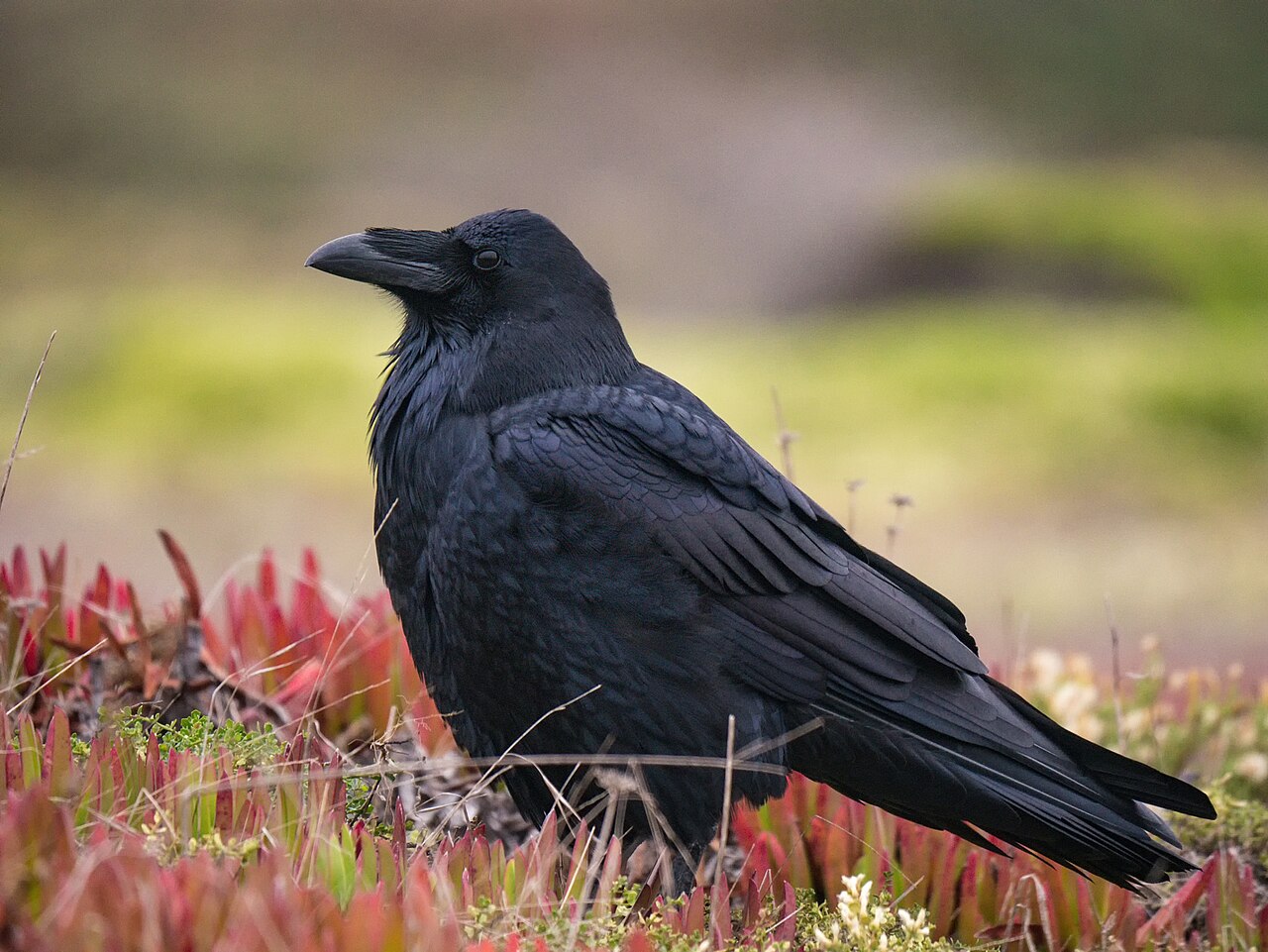
The raven’s core tattoo meaning is knowledge with an edge: the bird that knows things, sees what is hidden, and arrives at turning points. Where its cousin the crow symbolizes quick street intelligence, the raven’s wisdom is older and stranger, prophecy, memory, the keeping of secrets. Folklore across Europe, Asia, and North America independently cast the raven as messenger between worlds, and that between-ness is the thread every raven tattoo pulls: the wearer claims citizenship on both sides of some border, seen and unseen, past and present, loss and survival.
Real raven biology backs the mystique surprisingly well. Common ravens are among the largest songbirds on Earth and among the smartest animals ever tested, planning for future events, using tools, and even appearing to console each other after conflicts. According to the Smithsonian’s National Museum of Natural History, ravens demonstrate problem-solving and planning abilities that rival those of great apes. A raven on your skin is not just gothic set dressing; the actual animal earns the “knower” reputation every time researchers test it.
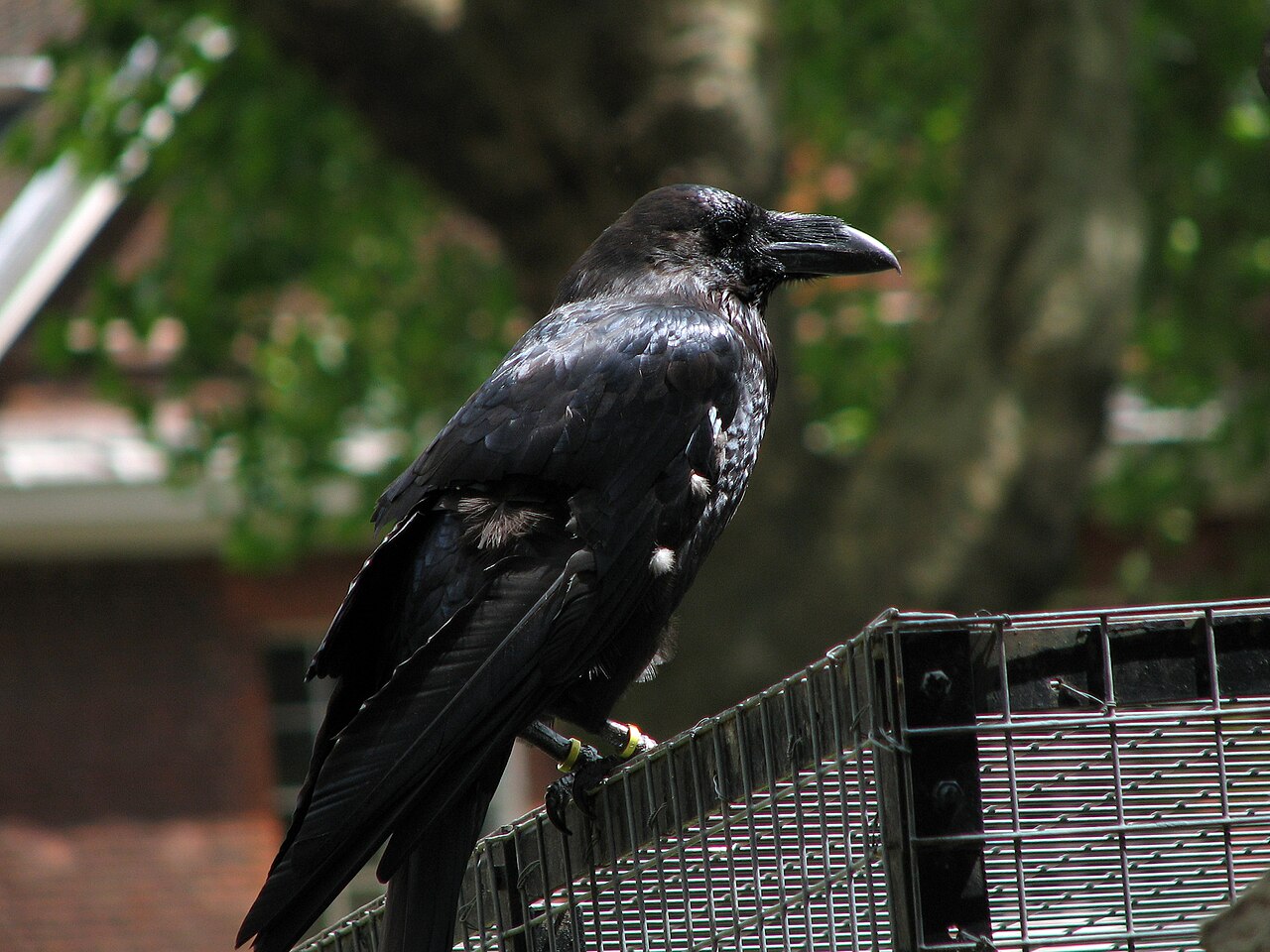
The raven also carries protective weight that surprises people who expect only doom. Britain has kept ravens at the Tower of London for centuries under the legend that the kingdom stands as long as they remain, working guardian birds with names, ranks, and a Ravenmaster. Many wearers use the raven exactly that way: a black sentinel on the shoulder or chest, keeping what matters. The darkness in raven ink is rarely about menace; it is about standing watch at the edge where things end and begin, the same threshold explored in our dead bird symbolism guide, where the black bird marks transition rather than doom.
The Viking Raven: Odin, Huginn, and Muninn
The Viking raven is the most requested raven tattoo tradition, and its source material is magnificent. Odin, the Allfather, keeps two ravens, Huginn (Thought) and Muninn (Memory), who fly across the world each day and return at evening to whisper everything they have seen into his ears. Odin himself is called Hrafnaguð, the raven god, and in the Eddic verses he confesses a fear: that Thought may not come back, and that he fears even more for Memory. Twelve centuries later, that line still lands, and it is the emotional engine of the design.
A Huginn and Muninn tattoo, two ravens mirrored on the shoulder blades, flanking the neck, or circling a chest piece, means thought and memory as guardians: the resolve to see clearly and forget nothing. It is a natural veterans’ and survivors’ design, and a common memorial, one bird for the thinker, one for the remembered. Historical grounding helps it: Norse warriors genuinely flew raven banners, and the sagas treated ravens on the battlefield as Odin’s presence, so the design carries documented Viking iconography rather than movie invention.
Style conventions have settled around the tradition. Norse raven pieces lean on knotwork and Jelling-style interlacing, Elder Futhark runes (often Odin’s name or “huginn” and “muninn” themselves), Vegvisir or valknut symbols, and dotwork shading that evokes carved stone. Two cautions earn mention: rune spelling mistakes are permanent, so verify against scholarly sources rather than Pinterest, and a handful of Norse symbols have been appropriated by hate groups, so a reputable artist will steer compositions, authentic, mythological, clearly Odinic, that read as heritage and mythology rather than politics.
Poe’s Raven: The Nevermore Tattoo
In 1845 Edgar Allan Poe nailed the raven to Western culture permanently. “The Raven” gives the bird one word, Nevermore, and a single scene: a grieving man demanding answers from a black bird perched above his chamber door, receiving the same annihilating answer to every question. The poem made the raven the official bird of grief and obsession, and the Nevermore tattoo, a raven with the word in script, perched on a bust, a book, or bare branch, remains one of the most literary designs in all of tattooing.
The meaning people actually carry with it is more useful than despair. Nevermore ink is overwhelmingly chosen as a boundary stone: never again the addiction, the relationship, the version of me that tolerated it. The poem’s raven answers absolutely, and wearers borrow that absoluteness for their own doors. Memorial versions honor a loss that will not return, pairing the bird with dates or a line from the poem, “quoth the raven” doing the work of a headstone that travels with you.
Design language follows the poem’s furniture: the pallid bust of Pallas (Athena’s bust, wisdom mocked by grief), the chamber door, lamplight and shadow, December midnight, a scattered manuscript. Black and grey realism suits it best, and typewriter or Victorian script fonts carry the word. Literary adjacents fold in naturally, Poe’s portrait, an inkwell and quill, the raven as living inkblot, and the design pairs surprisingly well with dark botanical frames. Of all raven tattoos, this one is the most instantly legible: one bird, one word, and every reader in the room understands.
Raven the Trickster: Pacific Northwest Traditions and Respect
On the Northwest Coast of North America, Raven is not a symbol but a protagonist: the trickster-transformer of Haida, Tlingit, Tsimshian, and neighboring nations’ oral literature, the being who, in the most famous cycle, steals the sun, moon, and stars from a hoarding chief’s boxes and releases light into the world. Raven is greedy, hilarious, shape-shifting, and creative, breaking rules in ways that accidentally build the world. As a meaning, this Raven stands for transformation through cleverness and the sacred usefulness of rule-breakers.
The visual tradition is equally specific: formline art, the flowing black-and-red system of ovoids and U-forms that renders Raven on poles, boxes, and regalia. Here is where respect enters. Formline is a living artistic language owned by living nations, with family and clan prerogatives attached to particular designs; copying a Haida raven off the internet onto a non-Native shoulder takes something that was never anonymous flash. The honorable routes exist: commissioning an Indigenous Northwest Coast artist who tattoos, buying rights the culturally sanctioned way, or choosing a raven design outside formline entirely.
The trickster meaning itself travels freely, ravens genuinely are playful thieves and problem-solvers on every continent they inhabit, and plenty of designs carry it without borrowing regalia: a raven tugging the moon loose from clouds, stealing a key or a star, mid-shape-shift between bird and man. Siberian, Irish, and Welsh traditions offer parallel raven figures (Bran the Blessed’s ravens still guard Britain in legend). The bird’s cleverness is universal property; specific nations’ sacred art is not, and the distinction is exactly the one covered for eagle feather imagery in our eagle tattoo meaning guide.
Raven Tattoo Meaning for Men and for Women
For men, raven ink most often signals depth over display: the thinker’s dark bird, chosen by readers, veterans, musicians, and men whose self-image centers on seeing more than they say. The Viking tradition supplies the warrior register, Huginn and Muninn across the back, banner ravens with runes, while Poe supplies the brooding one. Large-scale black and grey realism dominates men’s raven work, a single massive bird across chest or shoulder with every throat hackle rendered, and the raven’s actual size (a 4 ft wingspan) justifies the acreage.
For women, the raven’s center of gravity sits in mystery, sovereignty, and the witch-adjacent: the familiar, the moon companion, the keeper of one’s own counsel. The Morrigan, the Irish goddess of war and fate who takes raven form, anchors a growing share of women’s raven tattoos, meaning sovereignty and the refusal to be prey, and pairs with crescent moons, triple-goddess symbols, or a raven-haired female figure mid-transformation. Fine-line ravens, dotwork moons, and spine or shoulder-blade placements carry the same weight at more personal scale.
Both registers share the memorial use, a raven for the dead who still speak, and both benefit from the bird’s genuine natural history: ravens mate for life, defend vast territories in pairs, and play, sliding down snowbanks and barrel-rolling in flight for no reason researchers can find but joy. That last fact quietly subverts the gloom: the most gothic bird in the lexicon is also one of the few animals that demonstrably plays in the snow. Wearers who know it tend to smile at their own tattoo, which may be the healthiest relationship with dark ink there is.
Ravens, Skulls, and the Morrigan: The Dark Readings
The raven-and-skull tattoo is the heavier sibling of the crow version, and myth justifies the weight. Ravens attended Northern European battlefields so reliably that poetry named them the swans of blood, and “feeding the ravens” was a skaldic euphemism for dying in battle. A raven on a skull therefore reads as fate witnessed: mortality acknowledged by the bird that has watched it longest. Wearers choose it as memento mori, as a survivor’s marker after war or illness, and as remembrance with the raven standing guard over a specific loss.
The Morrigan deepens the design for those who want mythology under the gothic surface. In Irish tradition she is the great queen who prophesies doom, shapes battle, and settles on the shoulder of the dying hero Cu Chulainn in raven form, the moment his enemies finally believe he is dead. Morrigan-inspired pieces, a raven with a triple spiral, three ravens for her triple aspect, a woman dissolving into wings, mean fate faced rather than feared, and they carry a specifically feminine register of power that plain skull work lacks.
A question shadows all the dark designs: is a raven tattoo evil or bad luck? The traditions answer no with unusual consistency. Odin’s ravens are wisdom, the Tower ravens protect the realm, Raven of the Northwest Coast creates the world, and even Poe’s bird is grief personified, not malice. The raven witnesses darkness; it does not cause it. Folklore’s actual omens attach to behavior (a raven circling, a raven at the window) and read as messages, the same logic covered across corvids in our raven symbolism guide, where the ledger runs far more protective than sinister.
Design Styles: Realistic, Traditional, Small, and Minimalist
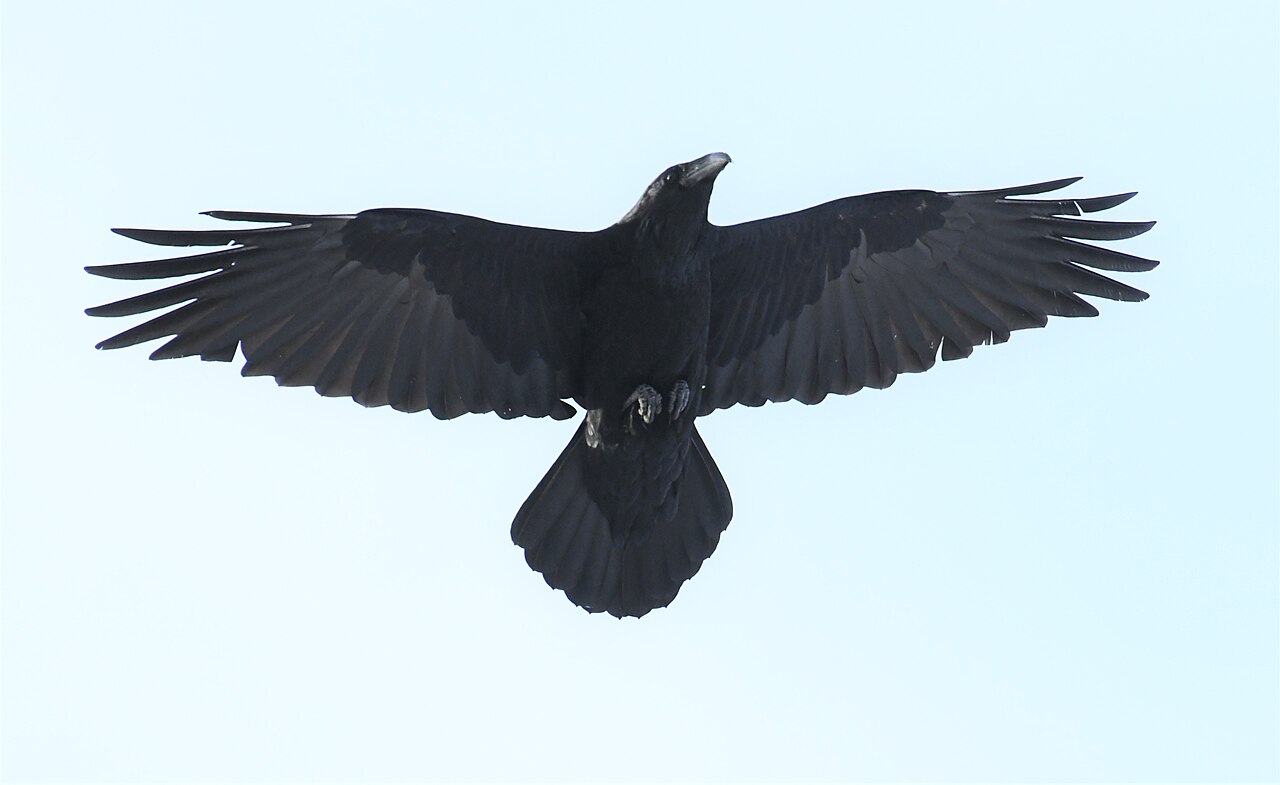
Black and grey realism is the raven’s home style, and the bird rewards it like few subjects: iridescent black plumage renders as layered greys with white highlights, the shaggy throat hackles give texture, and the heavy Roman-nosed bill anchors the profile. Realistic ravens dominate large-scale work, full chest and shoulder pieces, and the style’s brooding finish matches the bird’s register. The trade-off is detail’s lifespan; fine grey work softens over decades, so realism wants size and an artist with a black and grey portfolio.
American traditional ravens flip the mood: bold outlines, solid black with blue-white shine, a red moon or dagger, built to age like iron. Neo-traditional adds ornament, keys, lanterns, florals, Victorian frames, and suits the Poe register especially. Blackwork silhouettes turn the raven into pure symbol, wings spread across shoulder blades or diving down a forearm, and dotwork or engraving-style pieces evoke woodcuts and old book plates, a natural fit for the most literary bird in tattooing.
Small and minimalist ravens work because, like the crow, the silhouette is unmistakable at any scale: a one-inch linework raven behind the ear, on the wrist, or at the collarbone still reads instantly. Popular small compositions include a raven carrying a tiny moon or key, a five-line abstract raven, and the flying silhouette trailing a single word. The wedge tail is the make-or-break detail at small scale, it is what says raven rather than generic bird, and it costs one extra line. Every corvid design decision, size, posture, pairing, follows the same grammar laid out in our bird tattoo meanings overview.
Placements: Where a Raven Works Best
The raven’s natural poses assign its real estate. The upper back and shoulder blades host the definitive compositions: Huginn and Muninn mirrored, or a single raven with wings spread along the bone lines, the guardian position that placement was invented for. The chest carries the perched sentinel over the heart, and the full sleeve suits narrative work, Poe’s chamber fading into Norse knotwork is a genuinely popular hybrid. Forearms take single perched or diving birds at high visibility.
Scale strategy matters more with ravens than most birds because the animal itself is huge, and undersized “big” ravens read as crows. A realistic raven wants at least a palm’s worth of skin; below that, switch deliberately to linework or silhouette, where small scale is a style rather than a compromise. Vertical spaces, spine, calf, outer forearm, suit the diving pose; horizontal spaces, chest, upper back, suit spread wings; and the neck-adjacent spots (behind ear, collarbone) belong to the minimalist birds.
Frequently Asked Questions
What does a raven tattoo symbolize?
Mystery, knowledge, prophecy, and fate, with protective and memorial registers. Specific traditions steer it: Odin’s ravens mean thought and memory, Poe’s raven grief and boundaries, the Northwest Coast Raven transformation and creative rule-breaking.
What does an Odin’s ravens tattoo mean?
Huginn and Muninn, Thought and Memory, who fly the world and report to Odin. As ink they stand for clear seeing and unforgetting, often worn mirrored on the shoulder blades, and carry documented Viking iconography.
Is a raven tattoo evil or bad luck?
No. Across the source traditions the raven is wisdom (Odin), protection (Tower of London), creation (Northwest Coast), or grief witnessed (Poe), never malice. Tattoo tradition carries no curse on the bird.
What is the difference between a raven and a crow tattoo?
Raven ink leans mythic: fate, mystery, Odin, Poe. Crow ink leans clever: intelligence, adaptation, survival. Visually, ravens get the heavy arched bill, shaggy throat, and wedge tail; crows the straight bill and fan tail.
What does Nevermore mean in a raven tattoo?
It quotes Poe’s poem, where the raven answers every plea with “Nevermore.” Wearers use it as a boundary or memorial: never again the old life, or a loss acknowledged as permanent, grief converted into resolve.
What does the Morrigan raven mean?
The Irish goddess of fate and battle takes raven form, famously landing on the dying hero Cu Chulainn. Morrigan raven tattoos mean sovereignty, prophecy, and fate faced without flinching, a specifically feminine register of raven power.
What does a small raven tattoo mean?
The same core meanings at private scale: mystery, memory, watchfulness. The wedge tail keeps even a one-inch silhouette legible as raven, and small linework birds behind the ear or on the wrist are the fastest-growing raven format.