Red Dye in Hummingbird Food: Is It Safe or Necessary?
Red dye in hummingbird food is neither safe nor necessary, despite being a common ingredient in many commercial pre-made nectar mixes sold at garden centers and pet stores. Hummingbirds are drawn to feeders primarily by the color and shape of the feeder itself, not by any coloring added to the liquid inside, since most modern feeders already incorporate bright red plastic into their base, ports, or decorative flower shapes. Wildlife experts, including the Cornell Lab of Ornithology and Audubon, consistently recommend clear, homemade sugar water instead of dyed alternatives, a simple precaution that costs nothing extra and removes any uncertainty about a substance these tiny, fast-metabolizing birds would otherwise be ingesting in significant relative quantities compared to their own tiny body weight each and every day.
| Question | Answer |
|---|---|
| Is red dye necessary? | No |
| Do feeders already attract birds without it? | Yes, through red plastic parts |
| Common dye used commercially | Red 40 |
| Expert recommendation | Use clear, undyed sugar water |
| Correct base recipe | 1 part sugar to 4 parts water |
Why Feeders Do Not Need Dyed Nectar
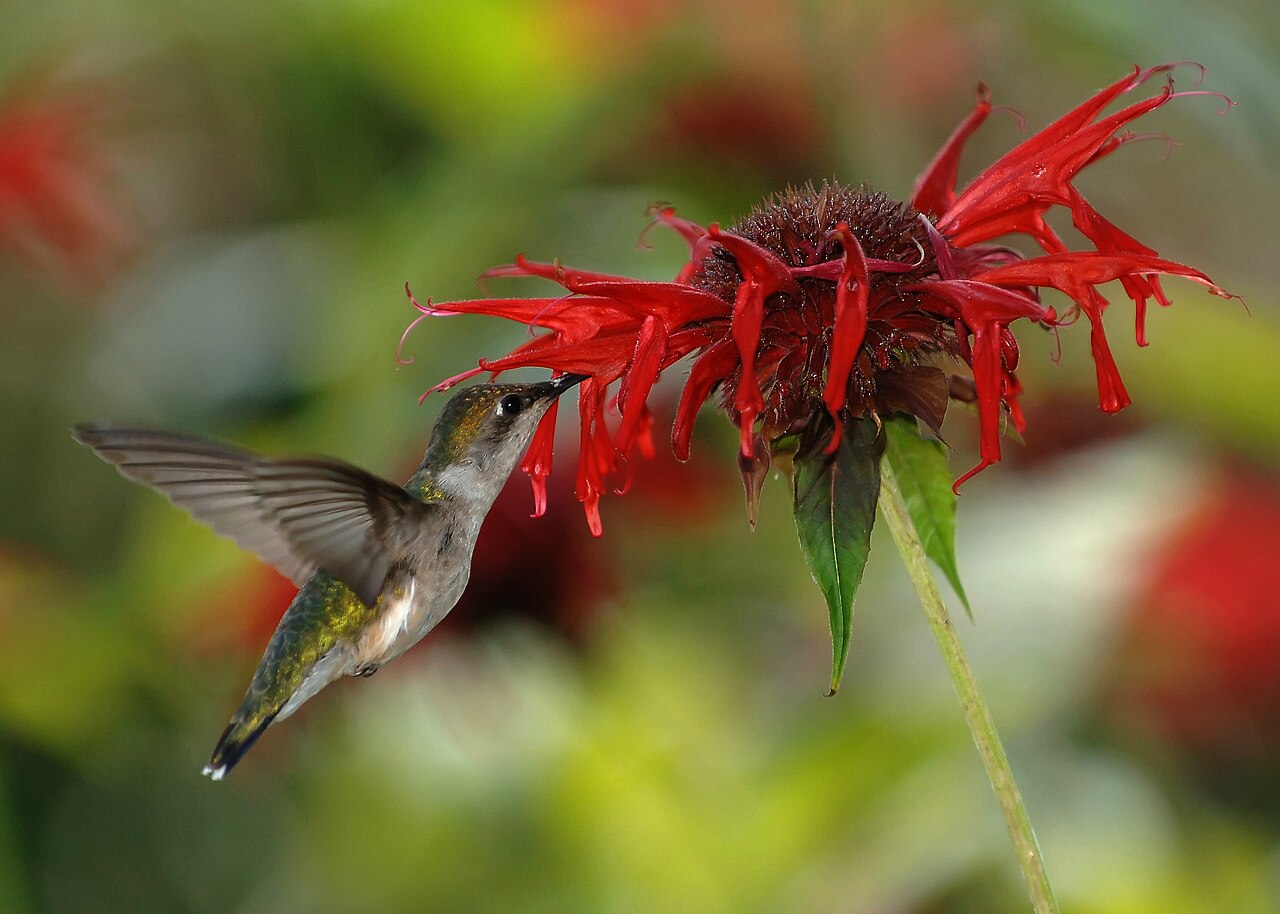
Hummingbirds locate feeders primarily through visual attraction to the color red, along with movement and, over time, learned association with a reliable food source, not through any coloring dissolved in the liquid itself. The vast majority of feeders sold today are manufactured with bright red bases, ports, or decorative accents specifically to draw the attention of passing hummingbirds from a distance, whether the visitor is a ruby throated hummingbird in the East or a rufous hummingbird in the West.
Because this visual attraction happens at the feeder level rather than requiring colored liquid, adding red dye to the nectar provides no meaningful improvement in how quickly or reliably hummingbirds find and use a feeder. Any perceived benefit from dyed nectar is essentially redundant with the color already built into the feeder design.
Even feeders with only modest red accents, such as a small red ring around the base rather than a fully red reservoir, have been shown to attract hummingbirds effectively, further underscoring that the dye itself is not doing meaningful work in drawing birds to a feeding station, whether it is an Anna’s hummingbird in a California garden or a black chinned hummingbird in a desert canyon.
Some birders report that hummingbirds already familiar with a particular feeder location will continue visiting reliably even after switching from a dyed to an undyed nectar mixture, additional informal evidence that the birds are responding to feeder location, shape, and color rather than to the liquid’s own appearance. For the full mixing instructions, see our guide to the correct hummingbird sugar water ratio.
What Is in Red Dyed Nectar
Commercial pre-made hummingbird nectar mixes that include red coloring most commonly use Red 40, also known as Allura Red, a synthetic dye widely used in the human food industry as well. While Red 40 has undergone safety testing for human consumption at typical dietary levels, it has not been specifically studied for long term safety in hummingbirds, animals with an exceptionally high metabolic rate and correspondingly high relative food intake compared to body size, which makes direct extrapolation from human safety data genuinely uncertain.
This gap in dedicated research, rather than any confirmed evidence of harm, is the primary reason wildlife organizations recommend caution and suggest avoiding dyed nectar altogether as a simple precautionary measure rather than waiting for definitive long term studies that may never be conducted given the practical difficulty of researching such a small, wild, fast-moving subject.
Because a hummingbird may consume a volume of nectar equivalent to several times its own body weight in sugar water across a single day, even a dye considered safe at typical human dietary concentrations could represent a proportionally much larger relative exposure for such a tiny animal, a difference in scale that standard human safety testing was never designed to address.
Why Experts Recommend Avoiding Dye
According to the Cornell Lab of Ornithology, the safest and simplest approach is to avoid any additive, dye included, that is not a proven, well studied component of a hummingbird’s natural diet. Since hummingbirds consume nectar in proportions to their body weight far exceeding typical human dietary intake of any comparable substance, even a dye considered broadly safe for humans deserves extra caution when introduced into a wild animal’s primary food and water source, especially one it depends on every single day of its active life.
Audubon takes a similarly cautious position, noting that because dyed nectar offers no functional benefit over clear nectar, there is no compelling reason to accept even a small, uncertain risk when a completely safe and equally effective alternative, plain sugar water, is just as easy to prepare.
This precautionary reasoning does not require proof of harm to justify caution. When an additive provides zero functional benefit and carries even a small amount of scientific uncertainty, the simplest and most responsible choice is to leave it out entirely rather than assume it is harmless by default.
This same precautionary logic already guides several other widely accepted hummingbird feeding practices, such as avoiding honey due to fermentation risk and avoiding artificial sweeteners due to lack of caloric value, both cases where the recommendation exists independent of definitive proof of direct harm in every documented case.
How to Make Safe, Clear Hummingbird Nectar
The correct and fully safe recipe is 1 part plain white granulated sugar to 4 parts water, stirred or gently heated until fully dissolved, with no dye, honey, or artificial sweeteners added at any point in the process. This simple mixture closely matches the natural sugar concentration found in many hummingbird-pollinated flowers.
For complete step by step instructions, including how often to change the mixture and how to clean a feeder properly, see our full guide to the correct hummingbird sugar water ratio.
Choosing a Feeder That Does Not Need Dye
When shopping for a new hummingbird feeder, look for a model with prominent red coloring built into the plastic itself, whether that means a fully red base, red flower shaped ports, or a red ring around the feeding stations. This built-in coloring accomplishes the same visual attraction that dyed nectar was traditionally meant to provide, without introducing anything into the liquid the birds actually drink, giving you full confidence in the safety of what you are offering.
Clear glass or plastic feeders paired with a few small red accents, such as red plastic flowers inserted into feeding ports, work just as well as a fully red reservoir, giving buyers flexibility in feeder style without any need to compromise on nectar safety.
Common Misconceptions About Red Dye
A persistent myth holds that hummingbirds specifically prefer red-colored liquid over clear liquid at the same feeder, but controlled observations have not supported this idea once the feeder itself already includes red coloring in its design. The color of the nectar inside appears to make no measurable difference to feeding rates once birds have already been drawn to a visually red feeder.
Another common misconception is that commercial nectar mixes are somehow nutritionally superior to homemade sugar water because they are marketed specifically for hummingbirds. In reality, most commercial mixes are simply sugar, water, and often unnecessary dye or preservatives, offering no nutritional advantage over a correctly mixed homemade batch at a fraction of the cost.
A third misconception holds that dyed nectar somehow helps first time feeder owners attract hummingbirds faster than an undyed mixture would. In practice, feeder placement, proximity to flowering plants, and simple patience during the first days after installing a new feeder matter far more than any coloring added to the nectar itself.
Frequently Asked Questions
Is red dye safe for hummingbirds?
It has not been specifically studied for long term safety in hummingbirds, so wildlife experts recommend avoiding it as a simple precaution rather than assuming it is harmless.
Do I need red dye to attract hummingbirds?
No, most feeders already include red coloring in their plastic base or ports, which provides all the visual attraction needed without adding dye to the nectar.
What dye is used in commercial hummingbird nectar?
Most commercial red hummingbird nectar mixes use Red 40, also known as Allura Red, a synthetic dye common in the human food industry as well.
What do experts recommend instead of red dye?
The Cornell Lab of Ornithology and Audubon both recommend plain, clear sugar water made from 1 part white sugar to 4 parts water, with no dye added.
Will hummingbirds avoid a feeder without red dye in the nectar?
No, as long as the feeder itself has red coloring built into its design, hummingbirds will find and use it just as readily as one filled with dyed nectar.
Are commercial hummingbird nectar mixes better than homemade sugar water?
Not nutritionally. Most commercial mixes are simply sugar, water, and often unnecessary dye, offering no advantage over a correctly mixed homemade batch.
Can red dye harm hummingbirds?
There is no confirmed evidence of harm, but the lack of dedicated safety research is reason enough for experts to recommend avoiding it as a precaution.