Female House Finch: Identification Guide
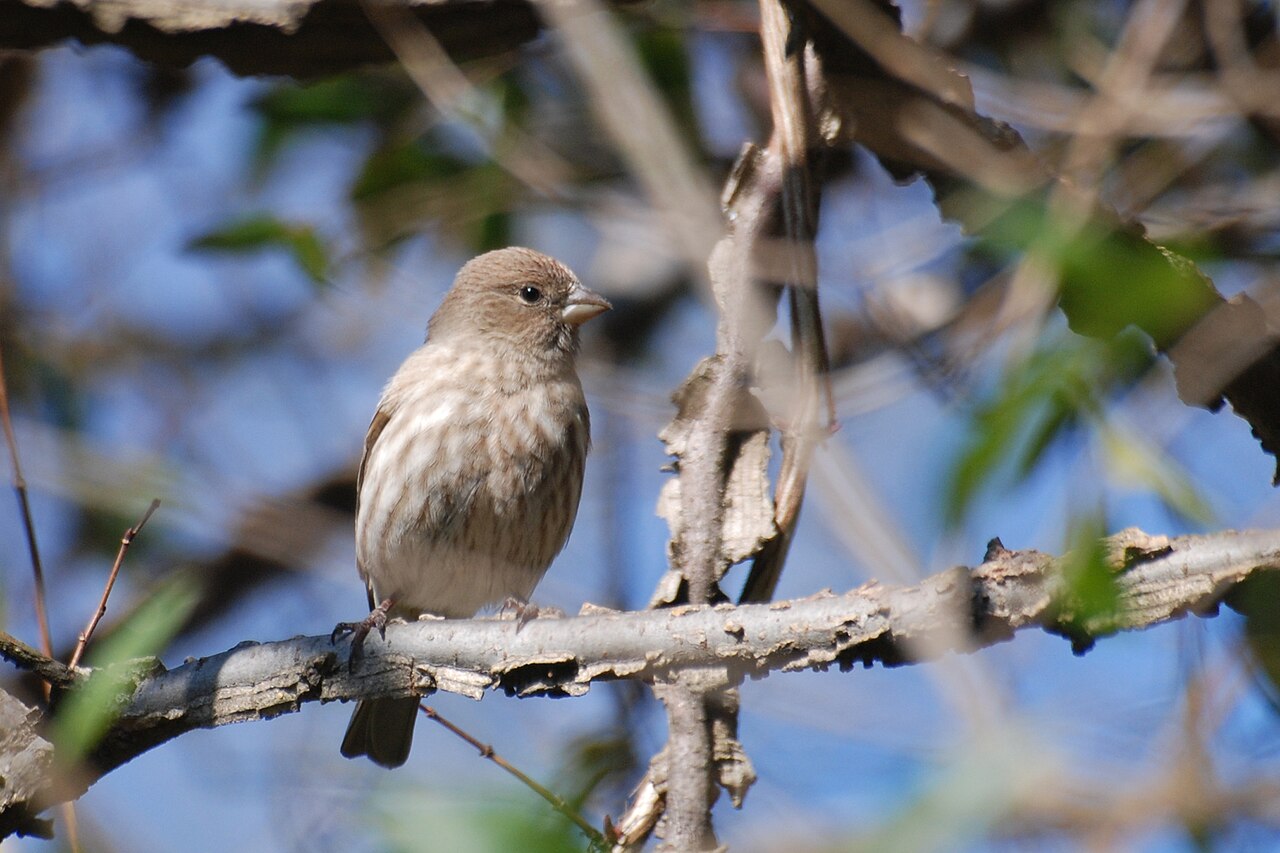
The female house finch is a plain grayish-brown bird with blurry streaks on the underparts and no red, quite different from the rosy-red male. Her muted, streaky look can make her easy to confuse with sparrows and other finches, but a few clues help. This guide covers what a female house finch looks like, how she differs from the male, how to identify her, her behavior and nesting, and where and when to see her.
| Feature | Female House Finch |
|---|---|
| Color | Plain grayish-brown |
| Underparts | Blurry brown streaks |
| Face | Plain, no strong pattern |
| Bill | Short, conical |
| Red | None |
What Does a Female House Finch Look Like?
A female house finch is a fairly plain, grayish-brown bird, lacking the bright red coloring of the male. Her most notable feature is the blurry, indistinct streaking on her pale underparts, which appears soft and smudgy rather than crisp. Her face is relatively plain, without a strong pattern of stripes or a bold eyebrow, giving her a gentle, unmarked look. She has a short, thick, conical bill typical of seed-eating finches, and her overall coloring is brown above and pale with brown streaks below. There is no red anywhere on a typical female house finch, unlike the male. This combination of plain grayish-brown plumage, soft blurry streaking, a plain face, and a stubby conical bill is the key to recognizing her, and it helps separate her from sparrows and other finches, as covered in our guide to types of finches.
Female vs Male House Finch
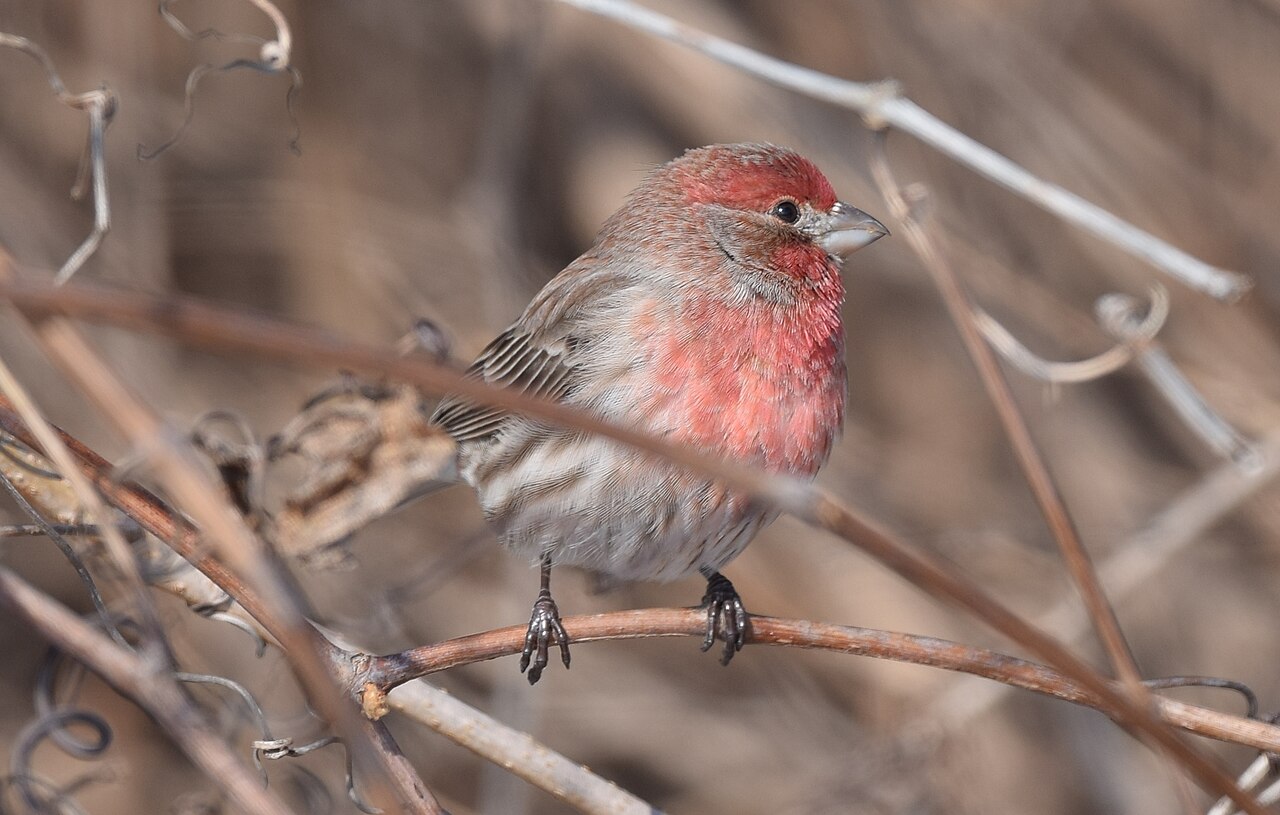
The difference between female and male house finches is easy to see, thanks to the male’s color. The male house finch is washed with rosy red, especially on the head, throat, and chest, though the exact shade can vary from red to orange depending on diet, and he also shows brown streaking on the flanks. The female, by contrast, has no red at all, appearing plain grayish-brown with blurry streaks below and a plain face. This makes the sexes straightforward to tell apart once you look for the presence or absence of red. Both share the same short, conical finch bill and similar size. The male’s red coloring is thought to play a role in attracting mates, while the female’s plain, streaky plumage provides camouflage, especially useful while she is nesting. Spotting the red male alongside the plain female often makes identifying a pair simple.
How to Identify a Female House Finch
Identifying a female house finch means recognizing her plain, streaky look and distinguishing her from similar birds. Look for the grayish-brown coloring, the soft, blurry streaks on the underparts, the plain unmarked face, and the short conical bill. The absence of red and the smudgy rather than crisp streaking are especially helpful. The main identification challenge is the female purple finch, which is similar but has cleaner, bolder streaks and a more strongly patterned face with a distinct pale eyebrow and dark cheek. Sparrows can also cause confusion, but finches have a more notched tail and a different bill shape, and house finches often reveal themselves by associating with red males. Focusing on the plain face and blurry streaks separates the female house finch from these lookalikes, a rewarding skill for anyone watching backyard feeders, as covered in our guide to attracting birds.
Female House Finch Behavior and Nesting
The female house finch is a familiar backyard bird with adaptable nesting habits. House finches are very social and often visit feeders in small flocks, readily eating seeds, and the female looks much like a plain, streaky companion to the colorful males. When nesting, the female builds a cup nest in a wide variety of locations, including trees, shrubs, building ledges, hanging plants, wreaths, and other nooks around homes, showing a remarkable tolerance for human structures. She lays her eggs there and does the incubating, while both parents help feed the young a diet largely of plant material and seeds, unusual among birds that often feed insects to their chicks. This adaptability in nest sites and diet is a big reason house finches have become so common and widespread. Watching a female house finch build a nest in a hanging basket is a common backyard experience, as reflected in our guide to bird symbolism.
Where and When to See Female House Finches
Female house finches are common and easy to see across much of North America, present alongside males year round. Look for them in backyards, gardens, parks, city streets, farms, and other areas near people, since house finches are strongly associated with human settlements and readily visit feeders, especially those offering seeds like black oil sunflower. They are present all year in most of their range and do not undertake long migrations, so you can see females in every season, often in small, chattering flocks. Because house finches are so abundant and comfortable around homes, the plain female is one of the most frequently seen backyard birds, though she is easy to overlook next to the red males. Offering seed at a feeder is the surest way to enjoy close, regular views of female house finches, making them a great bird for learning to identify plain, streaky species, as detailed in our guide to the house finch.
Female House Finch Plumage Explained
The plain, streaky look of a female house finch is well documented by ornithologists. According to the Cornell Lab of Ornithology, female house finches are plain grayish-brown with blurry streaking and lack the male’s red coloring, and house finches are common, social birds that readily visit feeders. Her muted plumage provides camouflage, which is useful while she nests, whereas the male’s red coloring, which comes from pigments in his food, plays a role in attracting a mate. House finches are also unusual in feeding their nestlings a diet made up largely of plant material and seeds, rather than the insects many songbirds provide. Understanding this difference makes the female easier to identify and explains why she looks so different from the colorful male, since her plain, streaky plumage suits her nesting role, a pattern shared with other finches in our guide to types of finches.
Female House Finches at Your Feeder
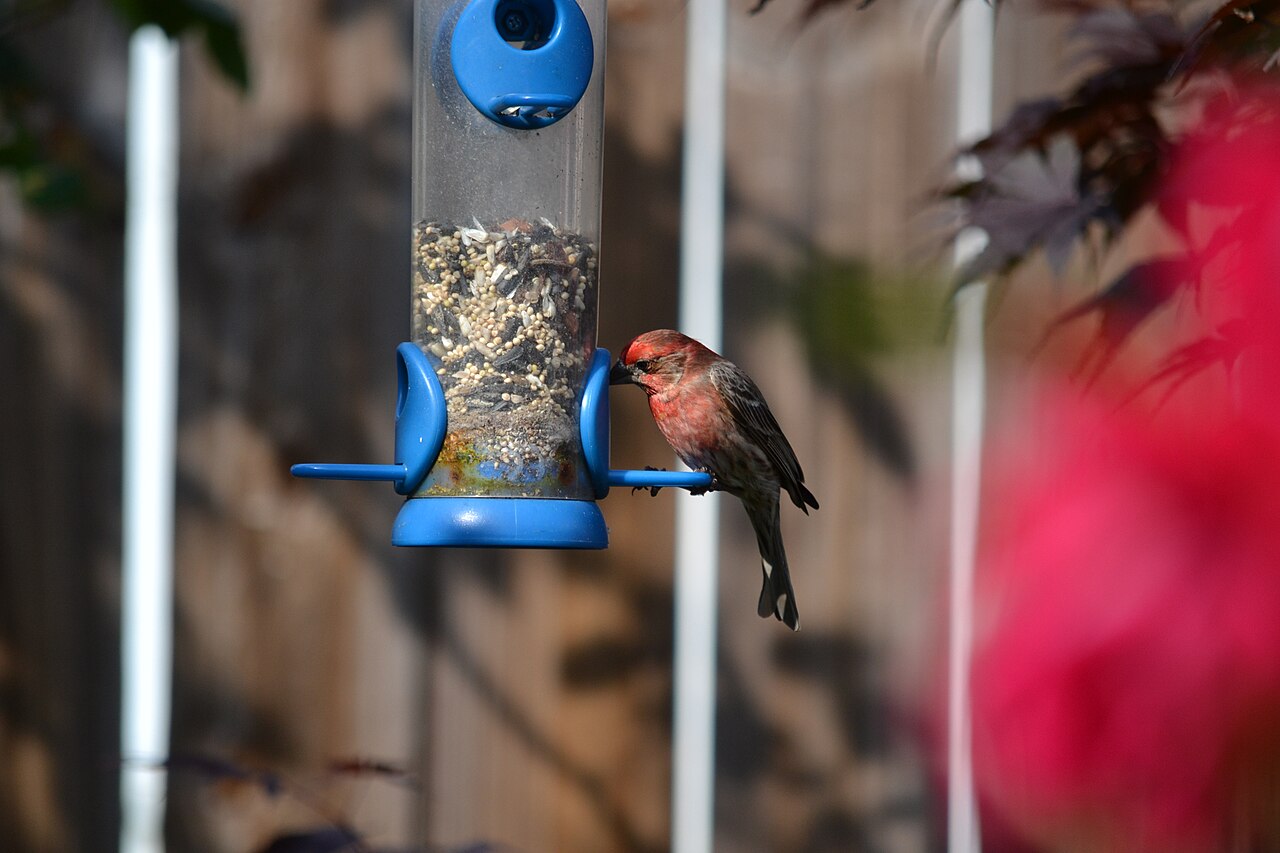
Female house finches are among the most frequent visitors to backyard feeders, offering great chances to study a plain, streaky bird up close. House finches are highly social and often arrive at feeders in small, chattering flocks that include both the red males and the plain females, so seeing them together makes the female easy to place. They are especially fond of black oil sunflower seed and also take other small seeds, feeding calmly at tube and platform feeders. Because they are so common around homes and present all year, you can observe female house finches in every season, giving you plenty of opportunity to learn the subtle features that separate them from sparrows and from the trickier female purple finch. Offering sunflower seed is the surest way to enjoy regular, close views of these adaptable birds, as detailed in our guide to the best bird seed.
Female House Finch Song
Although the male house finch is the more frequent singer, sound can still help you appreciate female house finches. House finches are known for a long, warbling, cheerful song made up of jumbled notes, often ending in a distinctive buzzy or nasal note, and while males sing most persistently, especially in the breeding season, females may sing at times as well. The birds also give simple, sweet chirp calls that are commonly heard around feeders and nesting areas as flocks stay in contact. Hearing these pleasant, chattering calls is often a sign that house finches, including the plain females, are nearby. Learning their cheerful warble and contact chirps adds another way to detect these common backyard birds, complementing the visual clues that separate the streaky female from similar species.
Related reading: the female purple finch, the female belted kingfisher.
Related reading: House Finch Eggs.
Related reading: Female House Finch vs Sparrow.
Frequently Asked Questions
What does a female house finch look like?
A female house finch is a plain grayish-brown bird with blurry brown streaks on the underparts, a plain face, and a short conical bill. She has no red coloring.
How can you tell a female house finch from a male?
The male house finch is washed with rosy red on the head and chest, while the female has no red at all, appearing plain grayish-brown with soft, blurry streaks.
Do female house finches have red on them?
No, female house finches have no red. Only males show the rosy-red coloring. Females are plain grayish-brown with blurry streaking, which aids camouflage while nesting.
How do you tell a female house finch from a female purple finch?
A female house finch is plainer with blurry streaks and an unmarked face, while a female purple finch has crisper, bolder streaks and a stronger face pattern with a pale eyebrow.
Is a female house finch a sparrow?
No, though she is often mistaken for one. Finches have a notched tail and a stubby conical bill, and house finches often associate with the red males, which helps.
Where do female house finches nest?
Female house finches build cup nests in trees, shrubs, ledges, hanging plants, and other nooks around homes, showing great tolerance for human structures.
Where do female house finches live?
Female house finches live in backyards, gardens, parks, and towns across much of North America, present year round and frequently visiting seed feeders.