What Do Chickadees Eat? Year-Round Diet Guide
Chickadees eat a mix of insects and seeds, leaning on caterpillars, spiders, and insects in the warmer months and shifting to seeds and berries in winter. Roughly half their diet is animal food and half is plant food, which makes them both pest-eaters and feeder regulars. At feeders they love sunflower seeds, suet, and peanuts. Chickadees also famously store food for later. This guide covers exactly what chickadees eat by season, their favorite feeder foods, their remarkable food-caching, and what baby chickadees eat.
| Food | Examples | When |
|---|---|---|
| Insects | Caterpillars, spiders, insect eggs | Especially spring and summer |
| Seeds | Sunflower, conifer seeds | Year round, more in winter |
| Berries | Wild berries, small fruit | Fall and winter |
| Suet | Fat and blends | Cold weather |
| Peanuts | Pieces and butter | Year round |
What Do Chickadees Eat?
Chickadees have a balanced, flexible diet that changes with the seasons. In spring and summer, they are enthusiastic insect eaters, gleaning caterpillars, spiders, insects, and their eggs and larvae from leaves, bark, and twigs, which provides the protein needed for breeding and feeding young. In fall and winter, when insects are scarce, they shift toward seeds and berries, including conifer seeds, wild fruits, and whatever they can find, along with feeder foods. According to the Cornell Lab of Ornithology, a chickadee’s diet is roughly half animal matter, such as insects and spiders, and half plant matter, such as seeds and berries, over the course of the year. This balance makes chickadees valuable natural pest controllers in the warm months and dependable feeder visitors in the cold ones. For the birds themselves, see our guide on how to attract chickadees.
What Chickadees Eat at Feeders
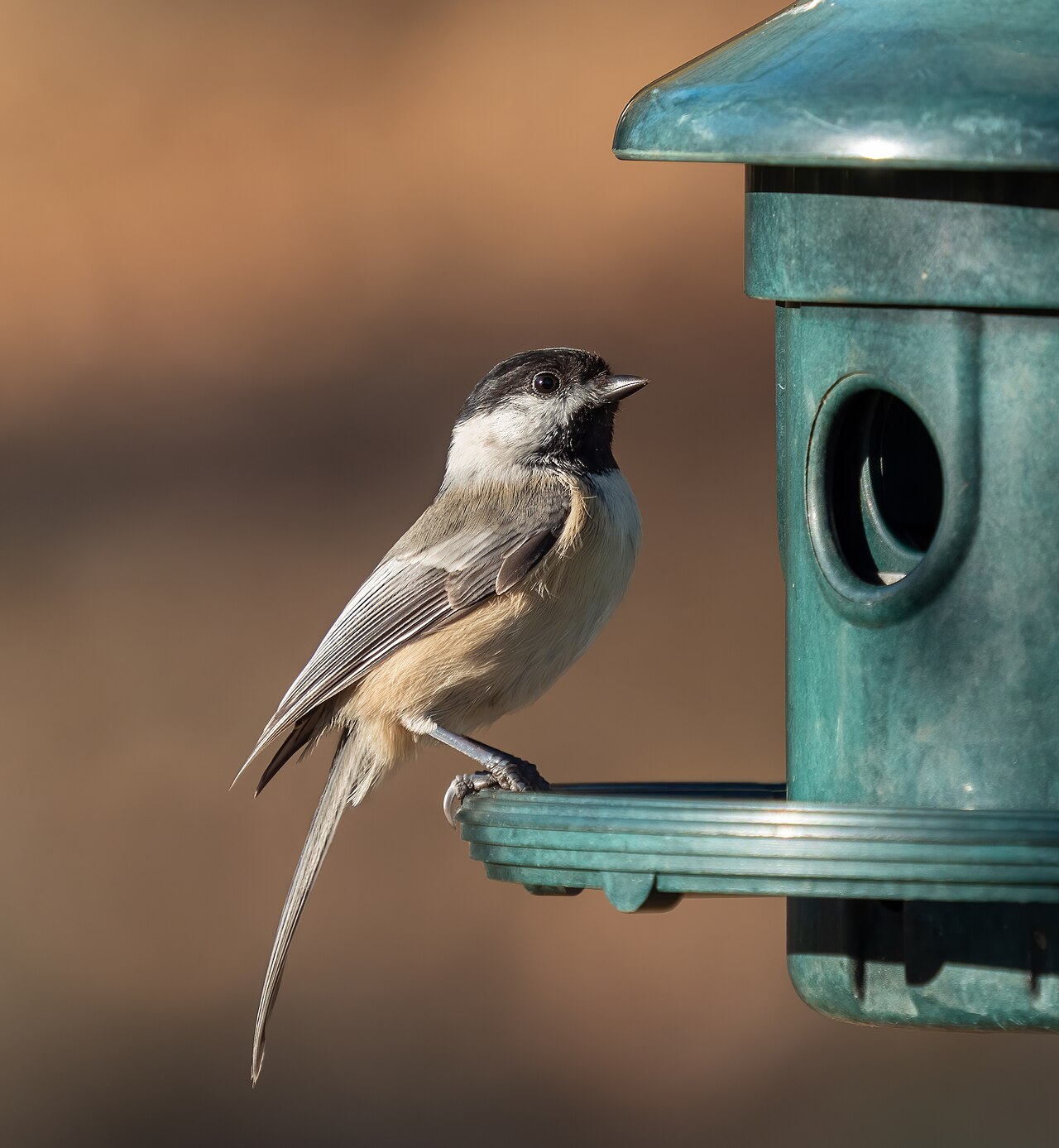
Chickadees are among the most reliable feeder birds, and a few foods draw them consistently. Their favorite is the black oil sunflower seed, whose rich kernel and thin shell suit their small bills, and they also love suet, peanuts, and peanut pieces, along with hulled sunflower and nyjer. Chickadees have a charming habit at feeders of grabbing a single seed, flying to a nearby branch to hammer it open or hide it, and returning for another, rather than lingering. This means they visit often and briefly. Offering sunflower, suet, and peanuts will keep chickadees coming throughout the year, especially in winter when high-fat suet is a lifeline. For seed choices, see our guide to the best bird seed, and for fatty foods, the best suet feeders.
How Chickadees Store Food
One of the most remarkable things about chickadees is that they cache food, hiding thousands of seeds and insects to eat later. Throughout fall, a chickadee stashes individual food items in bark crevices, under lichen, and in other hidden spots across its territory, and astonishingly it can remember thousands of these hiding places. Research has shown that a chickadee’s brain even grows new memory cells in the fall to help store all these locations, an adaptation that helps it survive harsh winters when food is scarce. This incredible spatial memory lets chickadees rely on their hidden stores to get through cold months. It is also why you see them shuttling single seeds away from your feeder, since many of those seeds are being hidden rather than eaten right away, a behavior that fascinates anyone who watches them closely.
Chickadee Diet Through the Seasons
Because chickadees eat so flexibly, their menu shifts noticeably across the year. In spring, insects and caterpillars dominate as the birds fuel up for breeding. In summer, they hunt intensively to feed their protein-hungry young, making them excellent natural controllers of garden pests. In fall, they switch toward seeds and berries and begin caching food in earnest for the months ahead. In winter, they rely on stored food, any dormant insects they can find, and backyard feeders, where high-fat suet and sunflower are especially valuable. This seasonal flexibility, insects in the warm months and seeds, berries, cached food, and feeder fare in the cold ones, is exactly what allows tiny chickadees to survive freezing winters. Keeping feeders stocked through the cold season gives them reliable support when they need it most.
What Do Baby Chickadees Eat?
Baby chickadees eat an almost entirely insect diet, which is why a healthy insect supply is so important during nesting. The parents feed nestlings a steady stream of caterpillars and other soft insects, since the protein is essential for the young birds’ rapid growth, and a single brood can require thousands of caterpillars before the chicks fledge. This heavy reliance on insects for the young is a big reason chickadees need pesticide-free yards with native plants that host caterpillars. It also shows why chickadees are such valuable birds for a garden, quietly removing enormous numbers of insect pests while raising a family. Supporting them with native plantings and avoiding pesticides, as covered in our guide to plants that attract birds, helps ensure a good supply of the caterpillars their chicks depend on.
Do Chickadees Eat Peanut Butter?
Yes, chickadees happily eat peanut butter, and it can be a welcome high-energy treat, especially in cold weather. Because peanut butter is rich in fat and protein, it suits a chickadee’s need for concentrated energy, and they will readily take it smeared into bark crevices, spread on a pinecone, or offered in a specialized feeder. Plain peanut butter is fine, and mixing it with cornmeal can make it easier for birds to manage. Peanuts and peanut pieces are also favorites, offering the same energy benefits. Alongside sunflower seeds and suet, peanut butter rounds out a chickadee-friendly menu, giving these tiny, active birds the calories they burn so quickly, particularly during freezing winter nights when energy is a matter of survival.
Are Chickadees Good for the Garden?
Chickadees are genuinely valuable allies for any garden, thanks to their heavy insect diet in the warm months. Throughout spring and summer they consume enormous numbers of caterpillars, aphids, insect eggs, and other pests, quietly providing natural pest control while feeding themselves and their young. A single chickadee family can remove thousands of caterpillars from trees and shrubs over a nesting season, which benefits your plants and reduces the need for pesticides. This is a strong reason to garden with natives that host insects and to avoid chemical sprays, since a healthy insect population feeds the very birds that keep pests in check. Supporting chickadees, as covered in our guide to plants that attract birds, is a win for both the birds and your garden.
Can You Feed Chickadees Year Round?
Yes, feeding chickadees in every season is both easy and helpful, since they stay in most areas all year and appreciate a reliable food source. In spring and summer they still visit feeders between insect-hunting trips, taking sunflower and suet to supplement their natural diet and help feed their young. In fall they cache extra food from feeders for the months ahead. In winter, feeders become especially valuable, as high-fat suet, peanuts, and sunflower provide the concentrated energy chickadees need to survive freezing nights. Keeping the menu consistent through the seasons rewards you with steady visits and supports the birds when natural food is scarce. Paired with native plantings for insects, year-round feeding makes your yard genuine chickadee habitat rather than just an occasional stop.
Foods to Avoid Giving Chickadees
While chickadees eat a wide range of foods, a few things are best avoided at feeders. Salted or seasoned nuts and seeds are not good for birds, so always offer plain, unsalted options. Bread and processed human foods provide little real nutrition and should be skipped in favor of seeds, suet, and peanuts. Moldy or spoiled seed can be harmful, so keep feeders clean and dry and discard anything that has gone bad. Stick to black oil sunflower, suet, peanuts, and quality seed blends, and your chickadees will get the wholesome, high-energy nutrition they need without any risk from unsuitable foods.
Frequently Asked Questions
What do chickadees eat?
A mix of insects and seeds, roughly half and half over the year. They eat caterpillars, spiders, and insects in the warm months and seeds and berries in winter, plus feeder foods.
What is the best food for chickadees at feeders?
Black oil sunflower seeds are the top favorite, along with suet and peanuts. Chickadees also take hulled sunflower, nyjer, and peanut butter.
Do chickadees eat insects?
Yes, heavily, especially in spring and summer. Caterpillars, spiders, and insects make up about half their yearly diet and nearly all of what they feed their young.
Why do chickadees take one seed and fly away?
Chickadees grab a single seed and leave to open it on a branch or to hide it for later. They cache thousands of food items to survive winter.
Do chickadees store food?
Yes. Chickadees hide thousands of seeds and insects in fall and remember the locations, even growing new brain memory cells to help. Stored food helps them survive winter.
What do baby chickadees eat?
Baby chickadees eat an almost entirely insect diet, especially caterpillars, which provide the protein they need to grow quickly. A brood can require thousands of caterpillars.
What do chickadees eat in winter?
In winter they rely on seeds, berries, stored cached food, any dormant insects, and backyard feeders, where high-fat suet and sunflower are especially valuable.