Baby Cardinal: Identification, Diet & Care
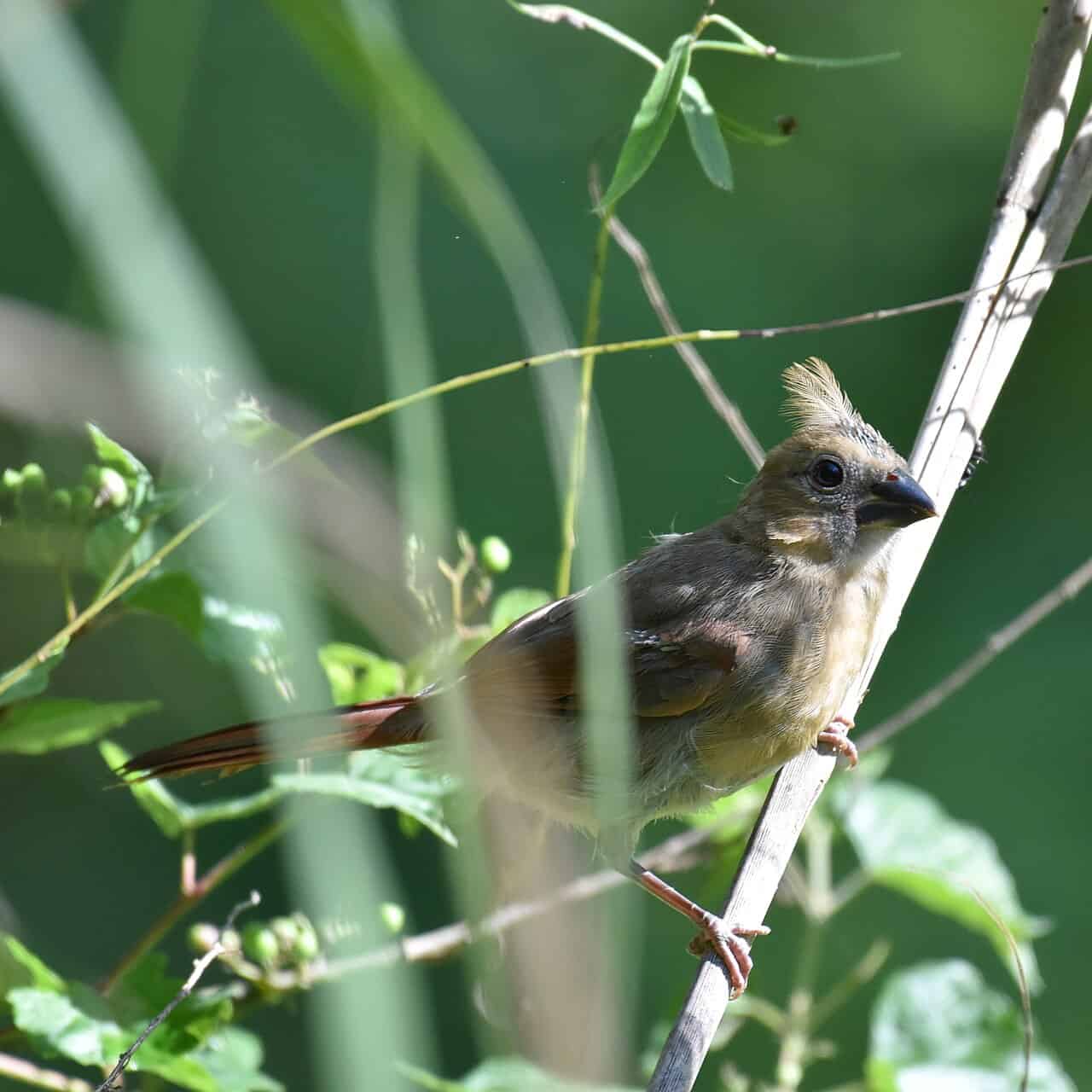
Baby cardinals are grayish-brown, fluffy nestlings with sparse down, eyes that are closed at first, and a dark grayish-black bill rather than the bright orange bill of adults. They hatch blind and helpless, grow with remarkable speed on a diet of insects delivered by both parents, and leave the nest just nine to eleven days after hatching. A fledgling looks like a scruffier, shorter-tailed version of the adult female but keeps that telltale dark bill for weeks. If you find a young cardinal on the ground, it is almost always a healthy fledgling being cared for by its parents nearby, not an orphan that needs rescuing.
| Stage | Age | Key Features |
|---|---|---|
| Hatchling | 0 to 3 days | Blind, nearly naked, pink skin, wispy gray down |
| Nestling | 4 to 9 days | Eyes open, pin feathers emerging, dark bill |
| Fledgling | 9 to 11 days plus | Leaves nest, brown plumage, dark bill, short tail |
| Juvenile | Weeks to months | Female-like, bill turns orange, males redden in fall |
What Does a Baby Cardinal Look Like?
Newly hatched cardinals are almost unrecognizable as the striking bird they will become. They emerge with pink, nearly bare skin, only patchy tufts of grayish down, and eyes sealed shut for the first few days. Within a few days their eyes open and pin feathers begin to push through, giving them a spiky, half-finished look. The single most reliable field mark at every young stage is the bill: baby and juvenile cardinals have a dark grayish-black bill, while adults have a bright orange one. That dark bill is the fastest way to tell a young cardinal from an adult female cardinal, which the fledglings otherwise closely resemble.
By the time they leave the nest, young cardinals wear warm brown plumage much like the female, with faint hints of red in the wings and a stubby tail that is still growing in. Over their first summer and fall, the sexes begin to diverge: males gradually molt in red feathers while females keep their earth tones. According to the Cornell Lab of Ornithology, this slow first-fall molt is when many backyard watchers first notice a “patchy” cardinal that is neither fully brown nor fully red, which is simply a young male in transition.
What Do Baby Cardinals Eat?
Although adult cardinals are famous seed-eaters, nestlings are raised almost entirely on protein-rich insects, caterpillars, beetles, grasshoppers, and spiders, all delivered by both parents. This high-protein insect diet is what fuels their extraordinarily fast growth in the nest, taking them from blind hatchling to feathered fledgling in only about ten days. As the young mature into fledglings, the parents gradually introduce seeds and the birds learn to crack them with their strengthening bills.
If you want to support a nesting pair through this demanding stretch, offering high-protein foods like mealworms alongside black oil sunflower seed genuinely helps the adults keep up with hungry chicks. For the full picture of the adult diet and how it shifts across the seasons, see our guide to what cardinals eat, and our bird seed guide covers the best feeder options for a family of cardinals.
When Do Baby Cardinals Turn Red?
Baby and juvenile cardinals are not red. Both sexes start out a mottled gray-brown with a dark, blackish bill, which is the fastest way to tell a juvenile from an adult female, since adult females are a warmer brown with an orange bill. The red arrives with the first fall molt.
A young male begins showing patches of red as he molts out of juvenile plumage in the late summer and fall of his first year, roughly two to three months after fledging. By late fall, usually around October or November, he has replaced the gray-brown feathers with the familiar bright red, and his bill has turned from black to orange. Young females molt into their adult warm-brown plumage over the same period and never turn red.
How Long Do Baby Cardinals Stay in the Nest?
Cardinal nestlings develop rapidly and leave the nest just nine to eleven days after hatching, often before they can fly well. This early departure is a survival strategy, because a nest full of loud, growing chicks is a magnet for predators, so getting the young dispersed into surrounding cover quickly improves their odds. After fledging, the young stay dependent on their parents for another two to three weeks while they learn to feed themselves and fly strongly.
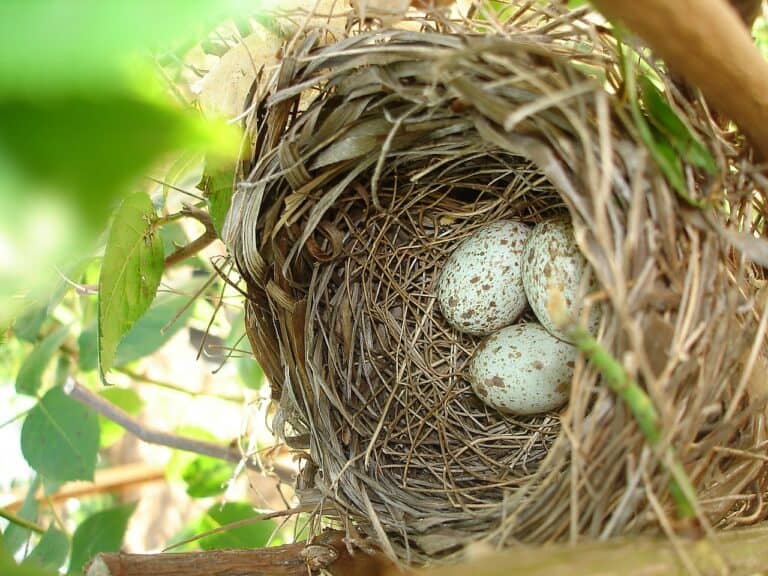
During this stretch the male frequently takes over feeding the first brood’s fledglings while the female starts building a second nest, which is how cardinals manage to raise two or even three broods in a single season. The whole cycle, from nest building through fledging, is covered step by step in our guide to the cardinal nest.
How Can You Tell a Baby Male From a Baby Female Cardinal?
This is one of the trickiest questions in cardinal watching, and the honest answer is that you often cannot tell with certainty until the birds begin to molt. Both baby males and baby females start out in the same warm brown plumage with a dark bill, so at the nestling and early fledgling stage they look essentially identical. As the weeks pass, the difference reveals itself: young males start showing patches of red, first often in the wings, face, or breast, until they reach full adult red by their first winter, while young females stay brown. Watching a mixed brood at a late-summer feeder is one of the best ways to see this divergence play out in real time.
How Do Cardinal Parents Feed Their Babies?
Watching a pair provision a nest reveals just how intense early cardinal life is. Both parents make dozens of feeding trips a day, arriving with beakfuls of soft insects that they place directly into the gaping, brightly colored mouths of the chicks. That vivid mouth lining is not random, it acts as a target that guides the adults to drop food in the right place, especially in a dim, shaded nest. The chicks respond to the parents’ arrival with frantic begging, and the loudest, most insistent gapers often get fed first.
The pace is relentless because the nestlings double and redouble in size in a matter of days. This is also why the adults switch almost entirely to hunting insects during the breeding season even though they are seed specialists the rest of the year, only insects pack enough protein to power that explosive growth. Once the young fledge, the feeding continues away from the nest, with parents delivering food to fledglings hidden in nearby shrubs until the youngsters can forage on their own.
How Many Baby Cardinals Survive?
Nest life is dangerous, and being honest about survival helps put backyard sightings in perspective. Like most songbirds, cardinals lose a significant share of eggs and chicks to predators such as snakes, jays, squirrels, and outdoor cats, which is exactly why the young leave the nest so early and why the parents build in such dense cover. Research compiled by the Cornell Lab of Ornithology shows that raising multiple broods each season is the cardinal’s answer to these losses: by nesting two or three times, a pair improves the odds that at least some young make it to independence.
The fledgling stage is the most perilous stretch of all, because the young birds are on or near the ground and still clumsy fliers. This is the biggest reason keeping cats indoors during late spring and summer makes such a measurable difference for your local cardinals, and it is the most useful single thing a backyard host can do to help more chicks survive.
Found a Baby Cardinal? What to Do
Most “orphaned” baby birds are not orphans at all. A feathered fledgling hopping and fluttering on the ground is going through a completely normal, days-long stage where it learns to fly while its parents feed it from nearby. In these cases the best help is usually no help: keep pets indoors, give the area some space, and let the parents do their work. If a genuinely naked, pink hatchling has fallen from the nest, you can gently place it back if the nest is safe to reach, and contrary to a common myth, parent birds will not abandon a chick because a human touched it. Their sense of smell is far too weak for that to matter.
If a young bird is clearly injured, or if you know the parents are dead, contact a licensed wildlife rehabilitator rather than trying to raise it yourself, since cardinals have specialized dietary needs and hand-rearing is both difficult and, in the US, regulated. To make your whole yard safer for nesting families, our guide on how to attract birds to your yard covers dense cover and cat-safe feeder setups.
Related reading: Cardinal Symbolism.
Related reading: Baby Fox.
Related reading: Baby Possum Guide.
Related reading: Baby Cockatiel.
Frequently Asked Questions
What does a baby cardinal look like?
Baby cardinals are grayish-brown and fluffy with a dark grayish-black bill. Hatchlings are nearly naked with closed eyes, while fledglings resemble a scruffy adult female but keep the dark bill and have a short tail.
What do baby cardinals eat?
Nestling cardinals eat mostly insects, caterpillars, beetles, and spiders, brought by both parents. They gradually shift toward seeds as they mature into fledglings.
How long do baby cardinals stay in the nest?
Cardinal nestlings leave the nest about nine to eleven days after hatching, then depend on their parents for another two to three weeks.
How can I tell a baby cardinal from an adult female?
The bill is the giveaway. Young cardinals have a dark grayish-black bill, while adult females have a bright orange bill.
How do you tell a baby male from a baby female cardinal?
You usually cannot until they molt. Both start brown with a dark bill; young males then develop red patches through their first fall while females stay brown.
Should I help a baby cardinal on the ground?
Usually no. A feathered fledgling on the ground is normal and its parents are nearby. Only return a naked hatchling to the nest, and contact a licensed rehabilitator if a bird is injured.
When do baby male cardinals turn red?
Young males gradually molt from brown juvenile plumage into red feathers during their first fall, reaching full red by their first winter.
How many baby cardinals survive?
Many eggs and chicks are lost to predators, which is why cardinals nest in dense cover, fledge early, and raise two or three broods a season to improve the odds that some young reach independence.
When do baby cardinals turn red?
Young male cardinals turn red during their first fall molt, roughly two to three months after leaving the nest, usually completing the change by October or November of their first year. Juveniles of both sexes start out gray-brown with a dark bill; only males develop the bright red adult plumage, and their bill also shifts from black to orange as they mature.