Male Cardinal Song: What It Sounds Like and Why He Sings
The male cardinal song is a loud, clear series of slurred whistles, written as “cheer, cheer, cheer” or “birdy, birdy, birdy”, from the highest perch in his territory. A male northern cardinal (Cardinalis cardinalis) sings to claim ground and to court, and he starts in late winter.
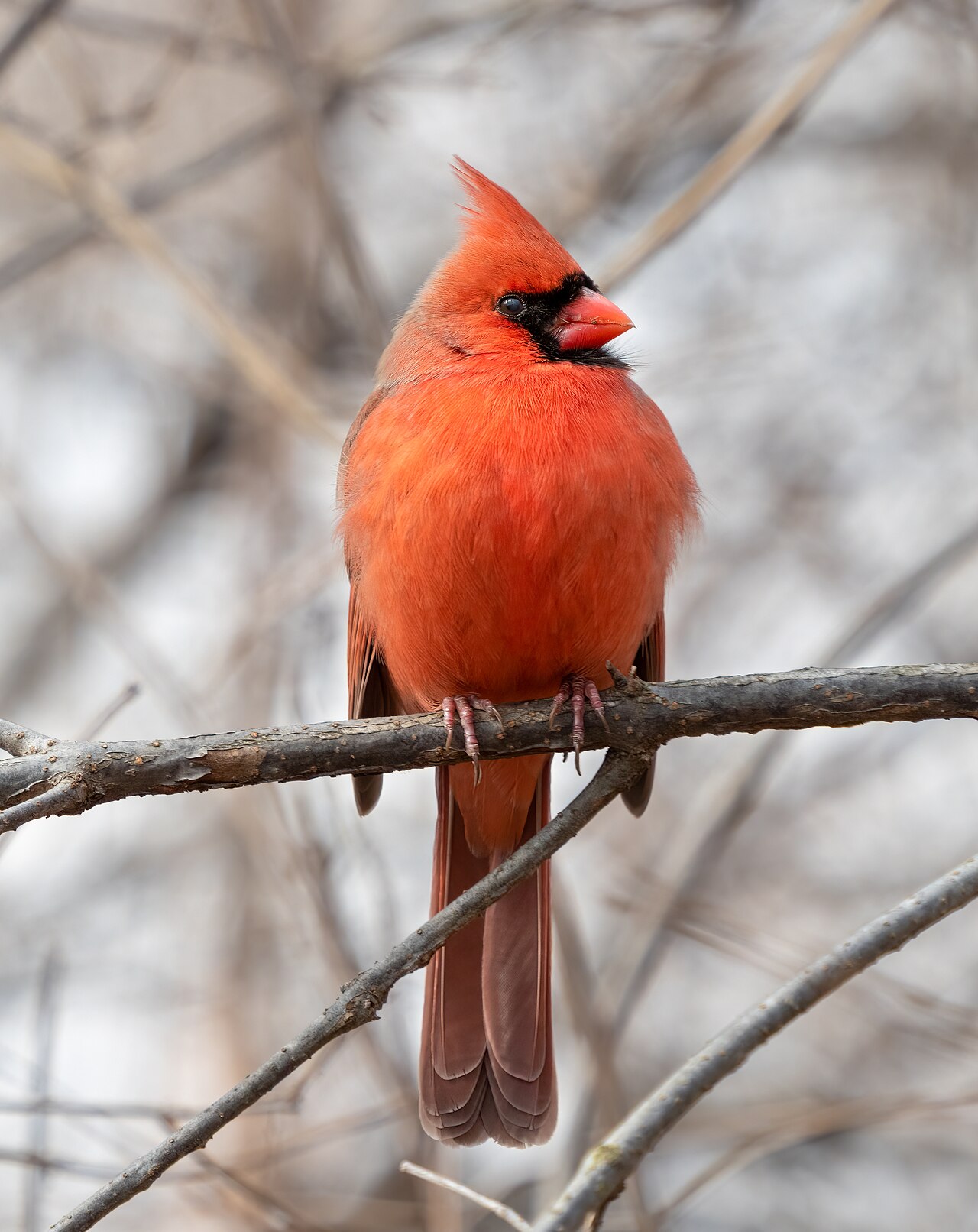
Females sing the same songs, so song alone does not reveal the sex. The red bird on the bare branch does. The full set of calls, including the chip and the alarm, is covered under cardinal sounds.
The male cardinal song is a loud whistle with slurred, repeated notes, written as cheer cheer cheer or birdy birdy birdy. He sings from an exposed perch to defend territory and attract a mate, beginning in late winter. Females sing the same phrases, so a singing cardinal is male only if its plumage is red.
| Song or call | Sounds like | When | Who |
|---|---|---|---|
| Cheer song | cheer, cheer, cheer, each note sliding down | Late winter through summer, dawn | Male, also female |
| Birdy song | birdy, birdy, birdy or purty, purty, purty | Spring, all day | Male, also female |
| What-cheer song | A rising what followed by cheer | Spring, territorial bouts | Male |
| Countersong | Neighbor repeats the same phrase back | Spring, boundary disputes | Rival males |
| Nest song | Softer version of the cheer song | Nesting season | Female on the nest |
| Chip call | A sharp metallic chip | Year-round | Both sexes |
What Does a Male Cardinal Sound Like?
A male cardinal sounds like a loud, pure whistle that slides at the end of each note. The cheer song drops in pitch on every note, the birdy song bounces, and the what-cheer song rises then falls. He repeats one phrase in a bout, pauses, and switches to another.
The closest confusion is the tufted titmouse, whose “peter, peter, peter” is a whistle of similar shape but thinner and faster.
Why He Sings: Territory, Courtship, and Countersinging
A male cardinal sings to hold a territory and to keep a mate. In late winter, before leaves are out, he picks an exposed perch and sings toward his neighbors, and a rival answers by matching the phrase until the boundary is settled.
During pair formation the male and female trade songs, and she answers his phrase with the same one from cover. The young leave the cardinal nest brown and quiet, which is one reason fledglings go unnoticed.
Male Cardinal Song vs Female Cardinal Song

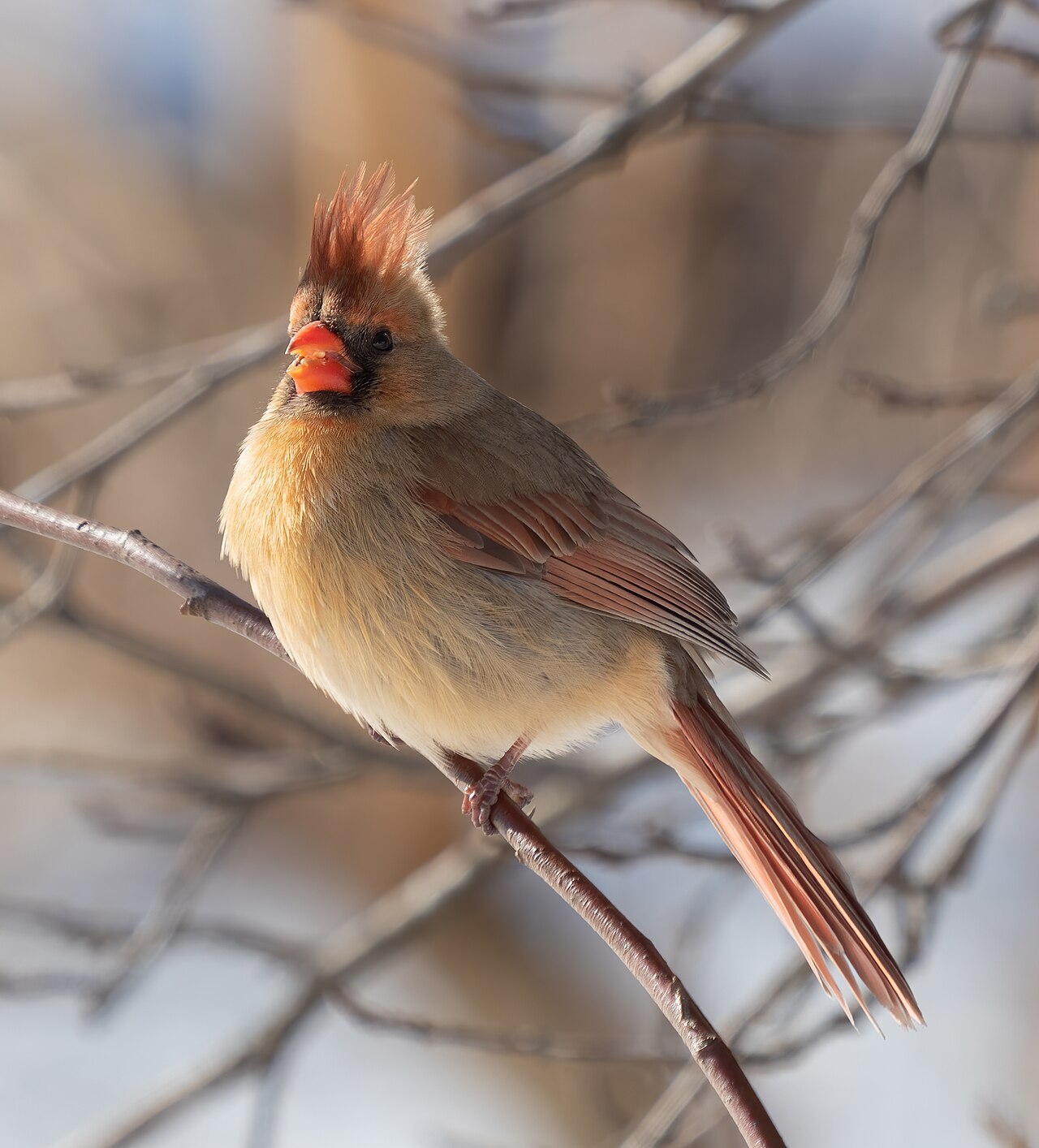
Which cardinal is the male, the red or the brown? The red one. A female cardinal is warm brown, and she sings the same cheer and birdy phrases. Her song tends to be softer and comes from the nest or dense cover rather than from an open perch.
Field researchers link female song at the nest with signaling to the male, for instance to bring food. Hearing a cardinal song from inside a shrub in May is as likely to be her as him.
Next question: Baby Cardinal: Identification, Diet & Care
When and Where to Hear the Male Cardinal Song

The best time to hear a male cardinal is the first hour after dawn from March through June. Cardinals do not migrate, so a mild January day can bring a short bout of song. A cardinal that stays around your house is defending a year-round territory, and cardinal visits carry folklore on top of that.
A red bird singing a robin-like warble instead of a whistle is a summer tanager, one of several birds that look like cardinals. Northern cardinals are protected under the Migratory Bird Treaty Act, so a feeder near a window, not a cage, is the way to hear the song up close.
Frequently Asked Questions
Is a cardinal considered a song bird?
Yes, the northern cardinal is a songbird in the family Cardinalidae. Like other true songbirds, a young cardinal learns its phrases by listening to adults during its first year, which is why neighboring cardinals share song types.
What bird gets mistaken for a cardinal?
The pyrrhuloxia of the desert Southwest, a gray bird with a red face, crest, and belly and a whistled song close to the cardinal’s. Its stubby yellow bill separates it.
What birds are cardinals scared of?
Cooper’s hawks and sharp-shinned hawks, the two accipiters that hunt backyard feeders. When one appears, the male stops singing and switches to a rapid chip alarm, and every cardinal in earshot drops into cover.
Do cardinals get attached to humans?
No, not in the way a pet does, but they learn routines. A pair that feeds in your yard arrives at the same time each morning and evening, and the male sings from the same perch for years.