Cooper’s Hawk: Backyard Predator Guide
A Cooper’s Hawk is a medium-sized, forest-adapted hawk with short, rounded wings, a long, rounded tail with dark bands, a blue-gray back, and rust-barred underparts in adults, built for fast, agile pursuit through trees rather than open-sky soaring. It is best known to backyard birders as the hawk that occasionally ambushes songbirds at a feeder, a habit that has made it one of the most commonly reported hawks in suburban yards across North America.
| Fact | Detail |
| Length | 14 to 20 inches |
| Wingspan | 24 to 35 inches |
| Weight | 7.8 to 24 ounces, females larger |
| Tail shape | Long, rounded at the tip, dark bands |
| Head shape | Larger, blockier head than Sharp-Shinned Hawk |
| Diet | Mostly birds, especially medium-sized songbirds |
| Habitat | Woodland edges, suburban yards, parks |
How to Identify a Cooper’s Hawk
Adult Cooper’s Hawks show a slate blue-gray back, a rust-barred chest, and a dark cap that contrasts with a paler nape, giving the head a distinctly capped look. The tail is long and rounded at the tip with several dark bands and a wide, pale terminal band. In flight, the species shows the classic accipiter pattern of a few quick, stiff wingbeats followed by a short glide, very different from the extended soaring typical of a buteo like the Red-Tailed Hawk. Juveniles are brown above with heavy vertical streaking below rather than the barred pattern of adults, and take about a year to molt into adult plumage.
Cooper’s Hawk vs Sharp-Shinned Hawk: The Classic Mix-Up
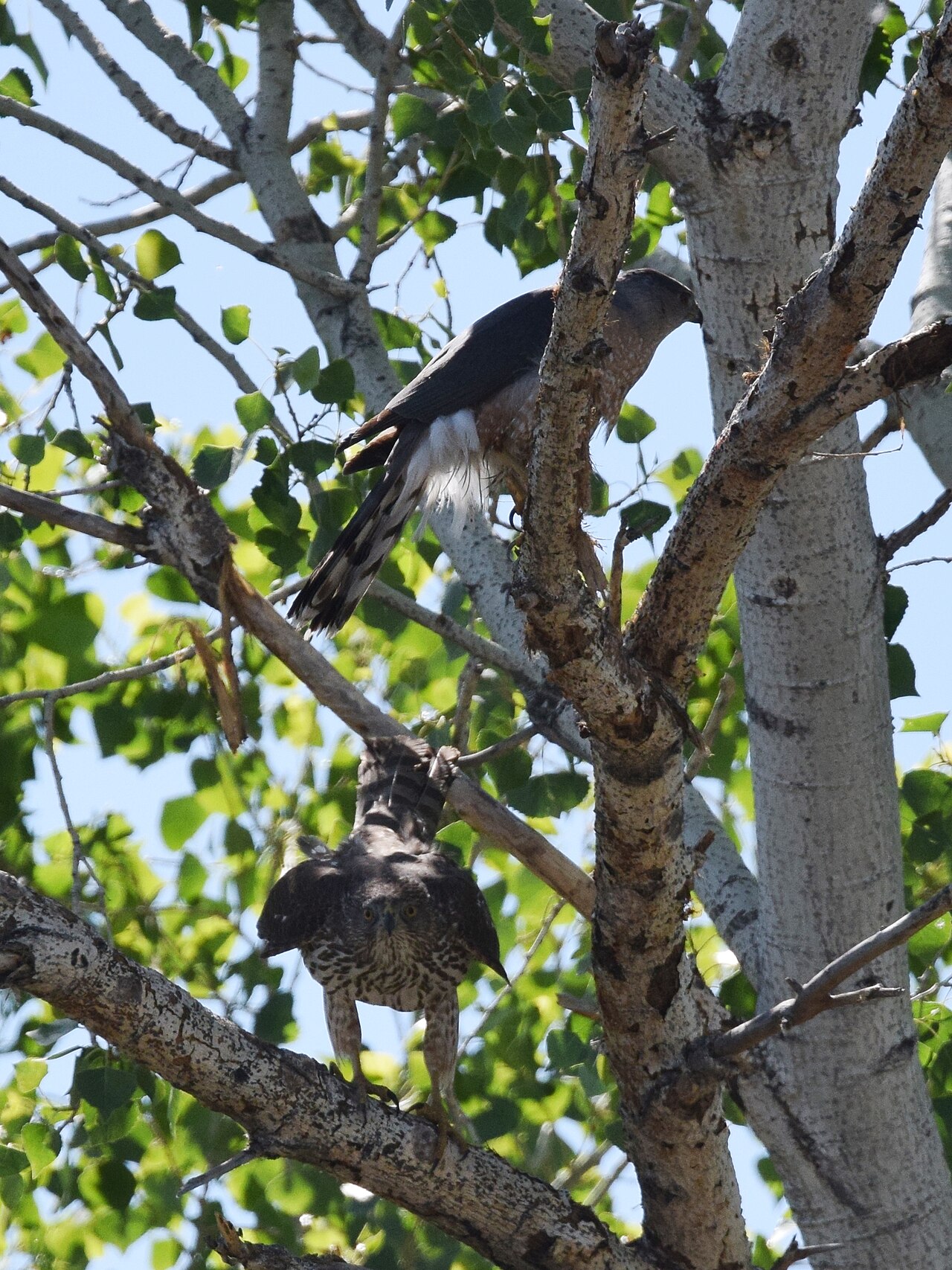
Telling a Cooper’s Hawk from a Sharp-Shinned Hawk is one of the most debated identification challenges in North American birding, since the two species share nearly identical coloring and hunting style. Size is the most obvious clue, though it overlaps: a male Cooper’s Hawk is close in size to a female Sharp-Shinned Hawk, so size alone can mislead. Head and tail shape are more reliable. A Cooper’s Hawk has a proportionally larger, more square or blocky head that projects noticeably in front of the wings in flight, and a tail that looks rounded at the tip. A Sharp-Shinned Hawk has a smaller, more rounded head that barely projects past the wrist, and a tail that looks squared off or only slightly notched at the tip.
Hunting Style and Diet
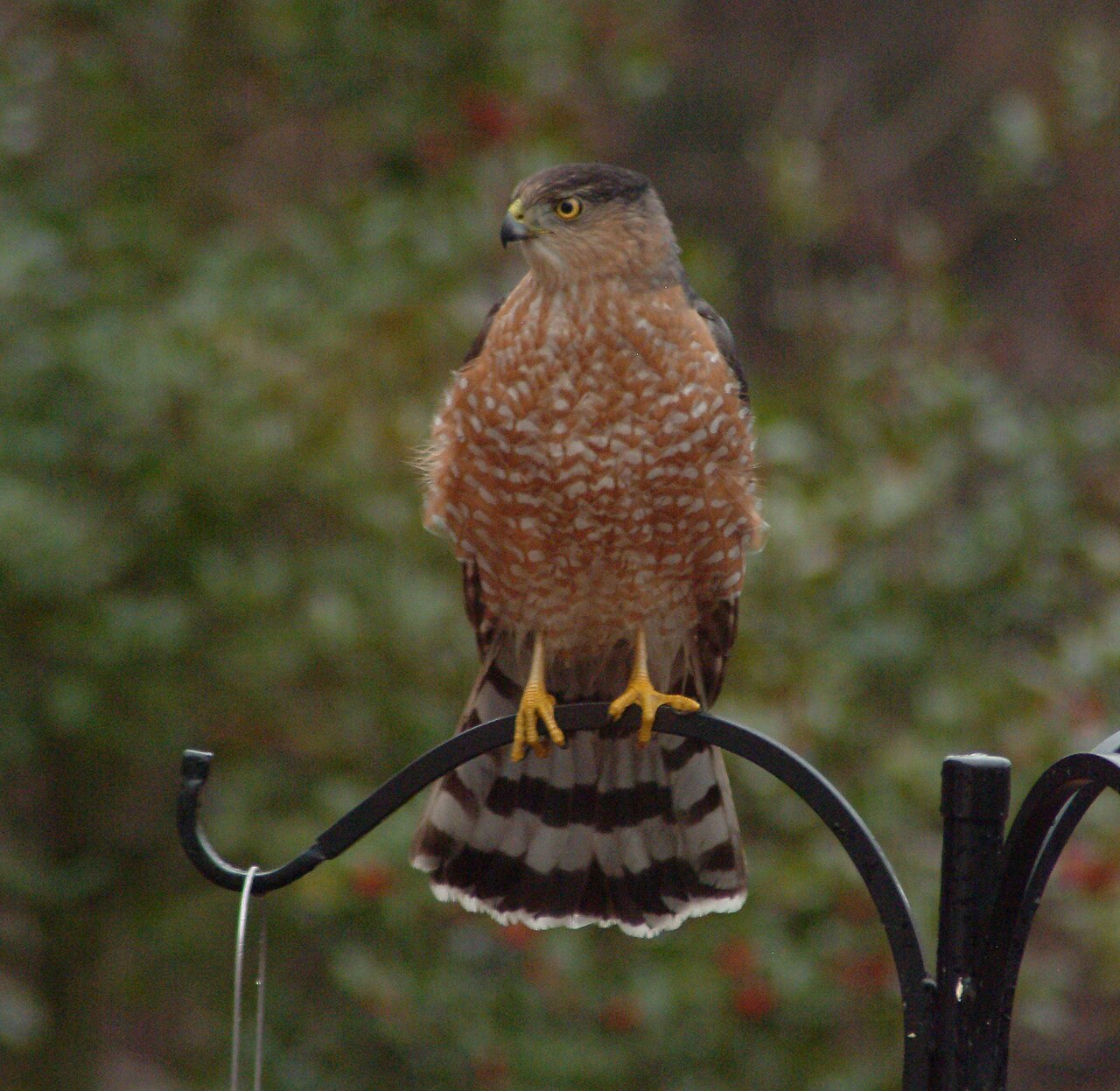
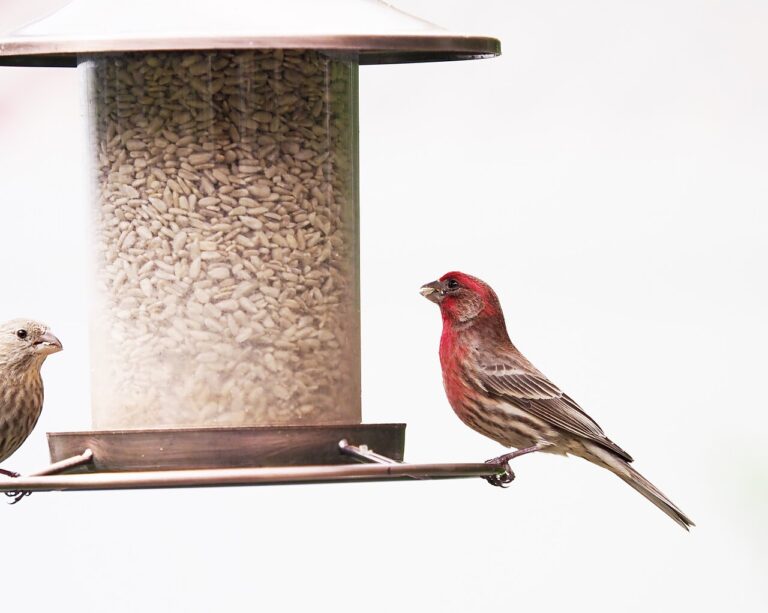
Cooper’s Hawks are bird specialists, and medium-sized songbirds such as robins, doves, and jays make up the bulk of their diet, supplemented by small mammals like chipmunks and occasionally reptiles. Their hunting method relies on speed and surprise rather than soaring search, threading through dense cover at high speed to ambush prey that has little time to react. This is exactly why a Cooper’s Hawk shows up at a backyard feeder: a feeder concentrates songbirds in a predictable spot, which the hawk quickly learns to check on a regular circuit.
Why Cooper’s Hawks Show Up at Feeders
A Cooper’s Hawk at a feeder is not a sign of anything wrong with the yard; it is a sign the yard is successfully supporting a healthy songbird population large enough to be worth a predator’s attention. Removing feeders for a week or two can encourage a hunting hawk to move on to another territory temporarily, but for most backyard birders the periodic presence of a Cooper’s Hawk is simply part of a functioning, balanced backyard ecosystem rather than a problem to be solved.
Nesting and Family Life
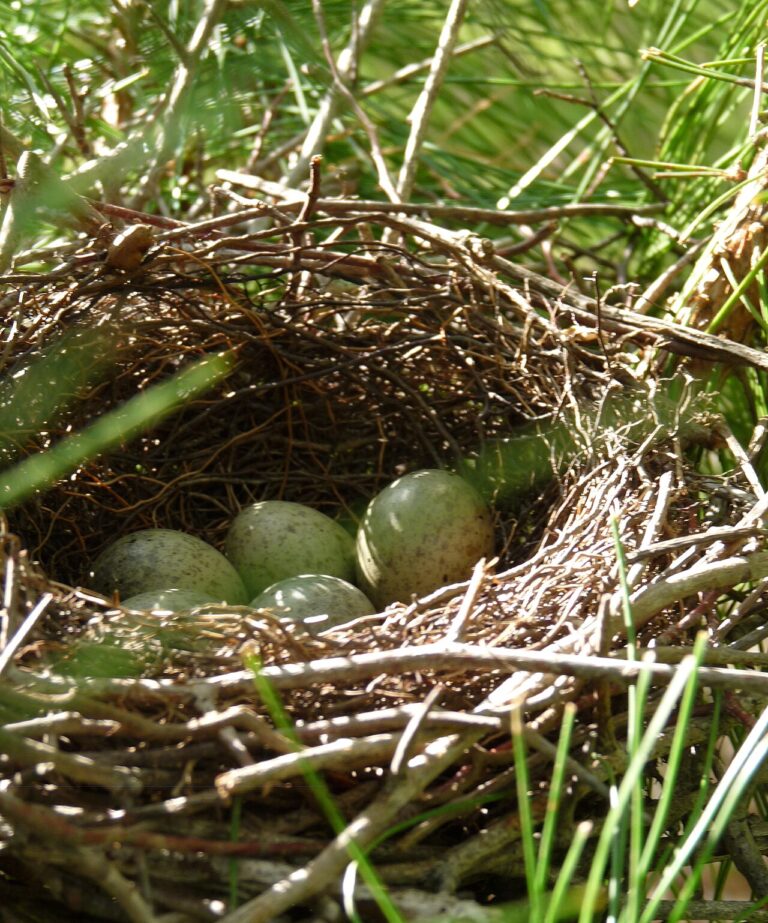
Cooper’s Hawks build a bulky stick nest in the crotch of a tree, often in mixed woodland or increasingly in suburban parks and neighborhoods with a good tree canopy, and typically raise three to five young per year. According to the Cornell Lab of Ornithology, Cooper’s Hawk populations have actually increased in many urban and suburban areas over recent decades, a notable exception to the general pattern of raptors declining as development expands, likely thanks to the reliable prey base that backyard feeders and ornamental plantings provide. Pairs often return to the same general nesting area year after year, sometimes reusing an old nest built by crows or squirrels as the foundation for their own.
Range and Habitat
Cooper’s Hawks are found across nearly all of the continental United States and southern Canada, in habitat ranging from mature forest to suburban neighborhoods with mature trees, and increasingly in city parks. Northern populations migrate south for winter, while much of the range holds year-round resident birds, meaning many backyard sightings are of the same resident pair returning to a familiar hunting territory season after season. This adaptability to human-modified landscapes sets the Cooper’s Hawk apart from many other forest raptors that struggle to persist once large tracts of continuous woodland are broken up by development.
Cooper’s Hawk vs Other Backyard Hawks
Beyond the classic mix-up with the Sharp-Shinned Hawk, a Cooper’s Hawk is sometimes confused with the Red-Shouldered Hawk, a buteo with a completely different shape: broader wings, a shorter tail, and a habit of soaring in open circles rather than threading through cover. The clearest giveaway is flight style. A Cooper’s Hawk moves with a distinctive flap-flap-glide rhythm low through trees and yards, while soaring buteos like the Red-Shouldered Hawk and Red-Tailed Hawk circle high overhead on flat, outstretched wings. Learning this rhythm is often faster than trying to judge plumage details on a fast-moving bird.
Is a Cooper’s Hawk Dangerous to Pets or People?
Cooper’s Hawks pose no realistic threat to people and only a very limited threat to pets, since their prey base is built around birds roughly songbird-sized or smaller. Small pet birds kept outdoors in open cages are the real risk, not cats or dogs, which are far too large to be viewed as prey by a hawk this size. A Cooper’s Hawk defending an active nest may dive at a person who gets too close, but this is a brief warning behavior rather than a genuine attack, and it stops once the person moves away from the nest area.
Juvenile Plumage and Aging
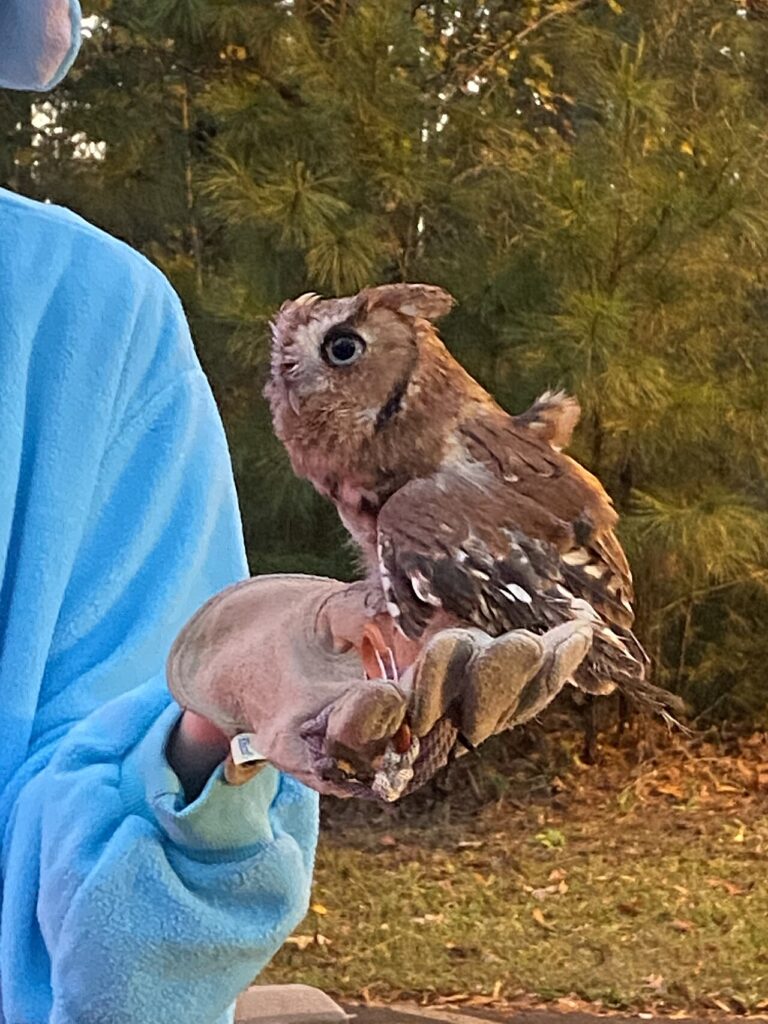
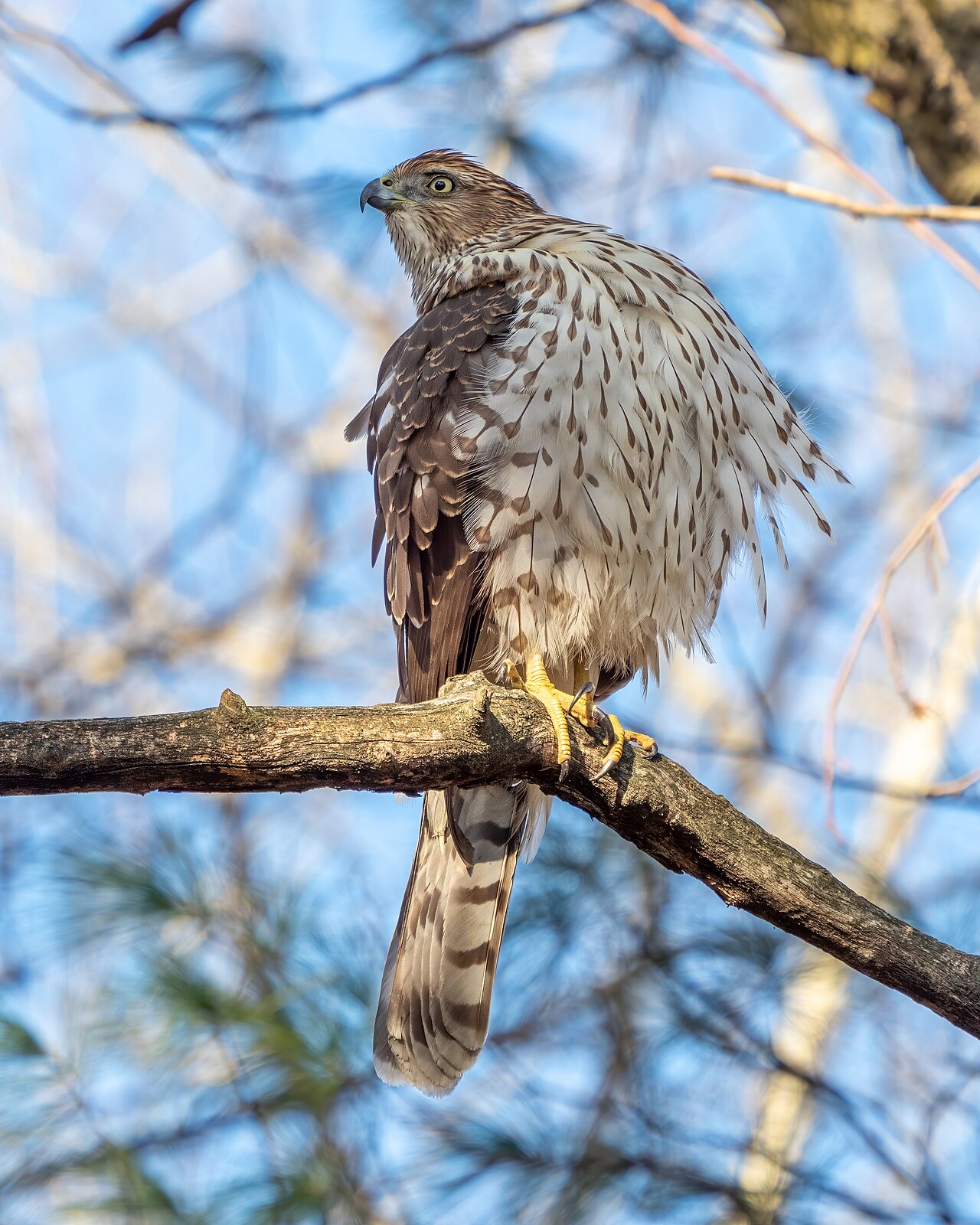
A young Cooper’s Hawk in its first year looks quite different from an adult, showing a brown back rather than blue-gray, and heavy vertical brown streaking on a whitish chest rather than the fine horizontal rust barring adults display. This juvenile plumage is held through the bird’s first year until a complete molt the following year brings in the adult blue-gray and rust coloring, similar to the delayed plumage maturation seen in the closely related Sharp-Shinned Hawk. Eye color also shifts with age, moving from a pale yellow in young birds to a deeper orange or red in older adults, a subtle clue experienced hawk watchers sometimes use to estimate a bird’s approximate age at a glance, in a pattern roughly comparable to the barring changes birders track in an aging Snowy Owl. Taken together, plumage, eye color, and structure give a fairly complete picture of a bird’s approximate age even without a bander’s hand-held reference.
A Success Story Among Backyard Raptors
Few North American hawks illustrate coexistence with suburban development as clearly as the Cooper’s Hawk, a species that historically suffered from pesticide-related declines in the mid-twentieth century but has since rebounded strongly enough to become a routine sight in cities and towns across the country. Its willingness to nest in parks, cemeteries, and residential neighborhoods with mature tree cover, combined with a steady food supply from backyard bird feeders, has turned what was once considered primarily a forest interior species into one of the more adaptable and visible hawks many people will ever encounter close to home.
Related reading: White-Tailed Hawk.
Frequently Asked Questions
How do you identify a Cooper’s Hawk?
Look for a medium-sized hawk with a blue-gray back, rust-barred chest, a darker cap contrasting with a paler nape, and a long, rounded tail, typically seen flying with quick wingbeats followed by a glide.
How big is a Cooper’s Hawk?
Cooper’s Hawks measure 14 to 20 inches long with a wingspan of 24 to 35 inches, and weigh roughly 8 ounces to 1.5 pounds, with females noticeably larger than males.
How do you tell a Cooper’s Hawk from a Sharp-Shinned Hawk?
Look at the head and tail. A Cooper’s Hawk has a larger head that projects clearly forward of the wings and a rounded tail tip, while a Sharp-Shinned Hawk has a smaller head that barely projects past the wrist and a squared-off tail.
What does a Cooper’s Hawk eat?
Mostly medium-sized birds such as robins, doves, and jays, supplemented by small mammals like chipmunks, caught through fast, surprise attacks rather than extended soaring searches.
Why is a Cooper’s Hawk hunting at my bird feeder?
A feeder concentrates songbirds in a predictable location, which a Cooper’s Hawk quickly learns to check regularly. Its presence is generally a sign of a healthy local songbird population rather than a problem.
Are Cooper’s Hawks becoming more common?
Yes, in many urban and suburban areas. Populations have increased over recent decades, likely helped by the steady prey supply that backyard feeders and mature landscaping provide.
Do Cooper’s Hawks migrate?
Northern populations migrate south for the winter, while hawks across much of the United States are year-round residents that hold the same territory throughout the year.