Common Grackle: Identification and Behavior Guide
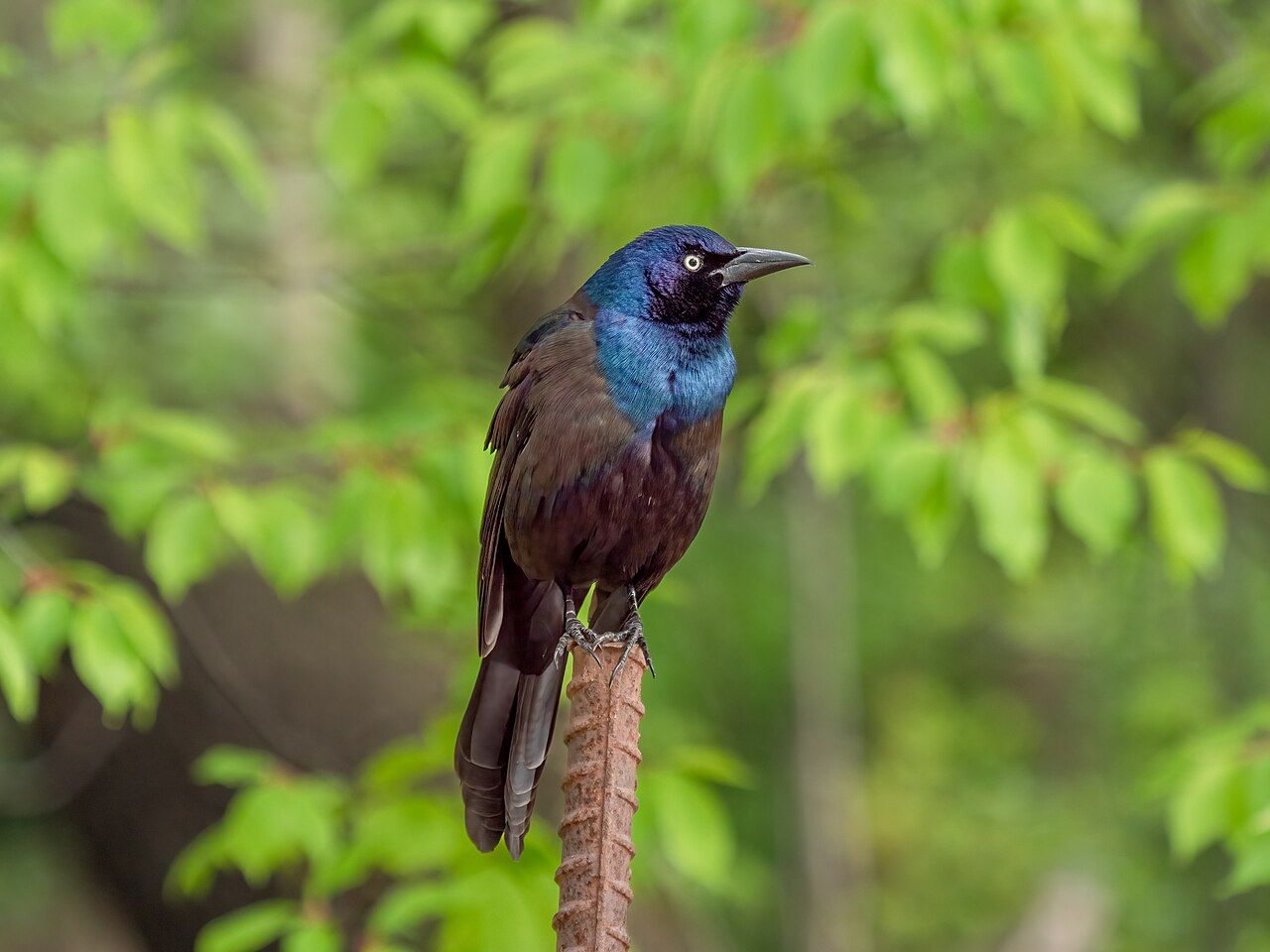
The common grackle (Quiscalus quiscula) is a large, glossy blackbird with a striking iridescent purple-blue head, bronze body sheen, piercing pale yellow eyes, and a long tail that folds into a distinctive keel or V-shape in flight. Common across lawns, farm fields, and parking lots throughout the eastern and central United States, grackles are often dismissed as “just another blackbird” despite their striking iridescence up close and their surprisingly complex social behavior in large communal flocks that can number in the hundreds of thousands during the fall and winter months.
| Quick Reference | Detail |
|---|---|
| Length | 11 to 13.4 inches |
| Wingspan | 14 to 18 inches |
| Eye color | Pale yellow |
| Head color | Iridescent purple-blue (males) |
| Tail shape | Long, keel-shaped in flight |
| Diet | Insects, seeds, grain, small vertebrates, garbage |
| Lifespan | Up to 22 years recorded, typically 4 to 5 years |
How to Identify a Common Grackle
Common grackles appear solid black from a distance, but at close range or in good light, males show a glossy iridescent purple-blue sheen on the head and neck that contrasts with a bronzy, brownish body. The pale yellow eye stands out sharply against the dark plumage and is one of the fastest ways to confirm a grackle identification versus other blackbirds. The tail is the other key field mark: long and wedge-shaped, folding into a deep V or keel shape when the bird is in flight, which is unique among common North American blackbirds and visible even at a fair distance once you know what to look for.
Male vs Female Common Grackle
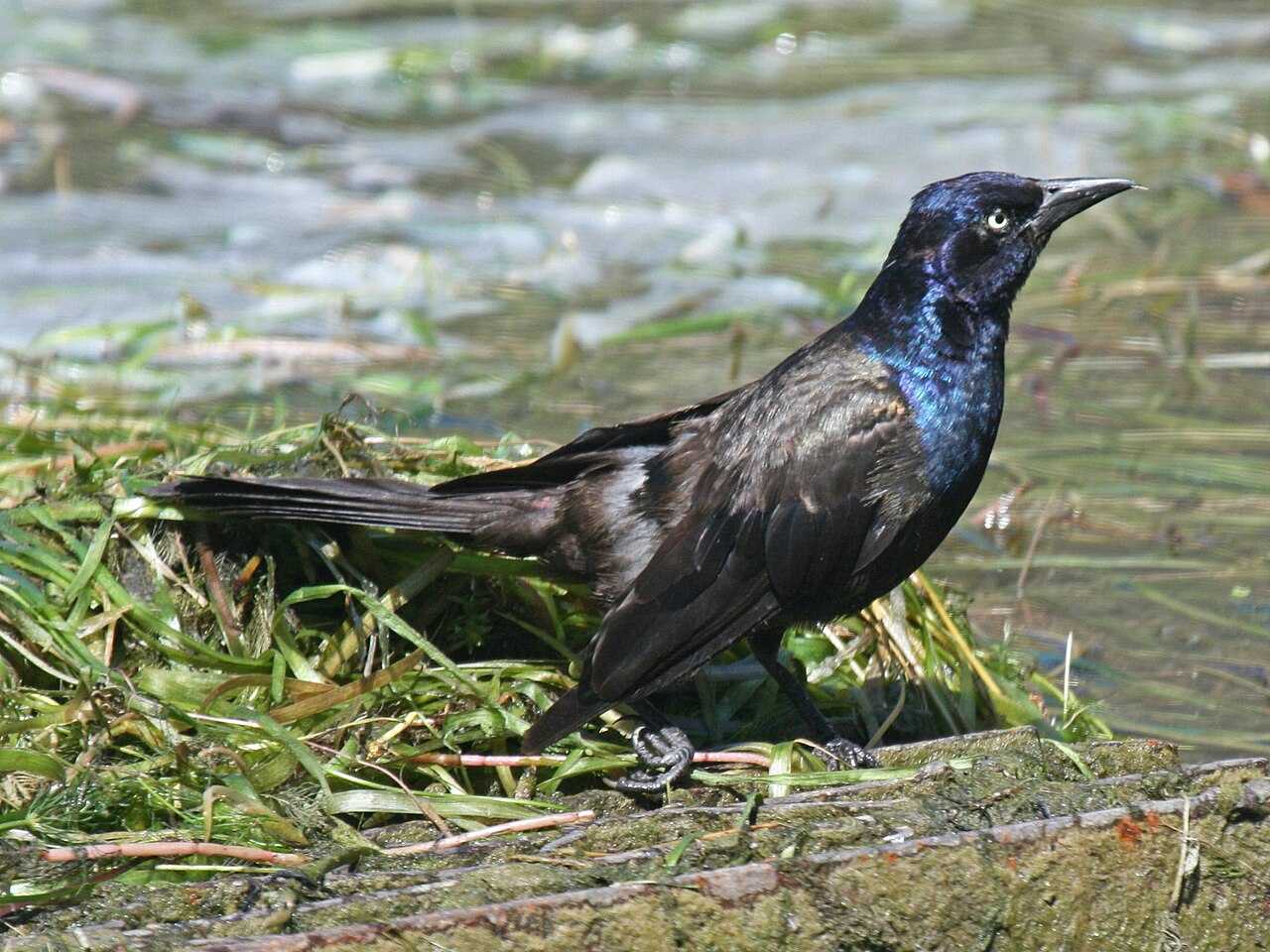
Male common grackles are larger and display the full iridescent purple-blue head and bronze body sheen described above. Female grackles are noticeably smaller, duller overall, with less pronounced iridescence and a shorter tail relative to body size. Both sexes share the pale yellow eye, making eye color a reliable field mark regardless of sex, while size and iridescence intensity are the main clues for telling males and females apart in mixed flocks, especially in fall when large numbers of birds gather together and direct comparison becomes much easier than trying to judge size alone from a single individual.
Diet and Foraging Behavior
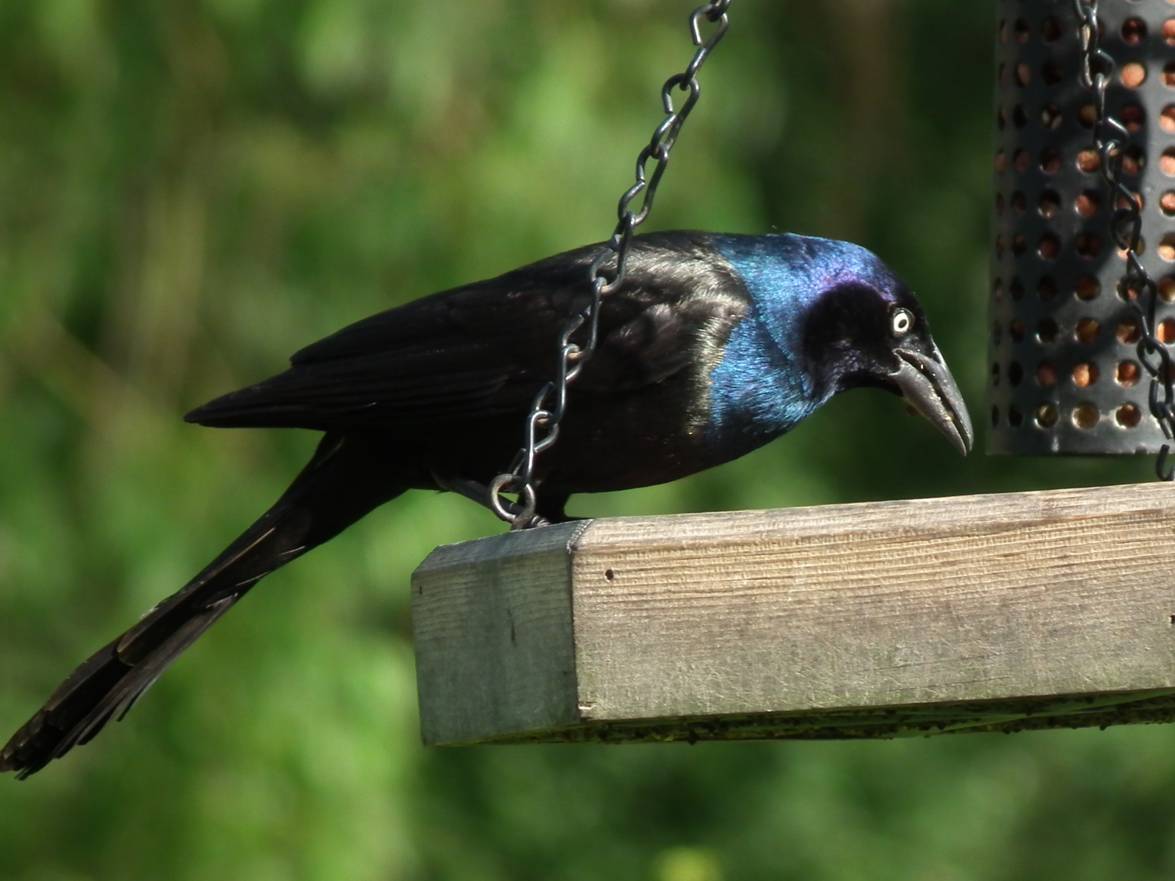
Common grackles are opportunistic omnivores with one of the most varied diets among North American songbirds, eating insects, seeds, grain, fruit, small fish, frogs, mice, and even the eggs and nestlings of other birds, a predatory habit shared by relatively few other common backyard species besides some larger corvids and jays. They are also known to raid garbage and scavenge at parking lots and fast food areas, a behavior that has fueled their reputation as a nuisance bird in agricultural and urban settings alike, not unlike the opportunistic foraging seen in urban-adapted flocks of Canada geese on golf courses and retention ponds. Grackles sometimes practice “anting,” rubbing ants on their feathers, possibly to use the formic acid ants produce as a natural pesticide against parasites.
Why Grackles Gather in Massive Flocks
Common grackles are highly social, especially outside breeding season, when they form enormous mixed-species flocks with red-winged blackbirds, European starlings, and brown-headed cowbirds that can number in the hundreds of thousands at communal winter roosts, a scale of flocking rarely seen in smaller, less colonial songbirds like the gray catbird. These massive flocks, sometimes called blackbird roosts, offer safety in numbers against predators and access to shared foraging grounds, though they can also create real nuisance and noise problems for property owners near roost sites, which is why grackles are frequently the target of bird control efforts in fall and winter. Flocks this size can strip a farm field or defoliate a roost tree within days, which is part of why municipalities and farmers alike invest in deterrent programs such as pyrotechnics, distress call broadcasts, and habitat modification around known roost sites rather than relying on any single control method.
Vocalizations
The common grackle’s call is often described as a harsh, rusty-hinge-like “readle-eak” sound, unlike the more melodic songs of many other blackbirds. They also produce a variety of chattering notes and sharp chuck calls used to communicate within the flock, particularly when foraging together on open lawns or fields. Because the call is so distinctly harsh and unmusical compared to typical songbird repertoires, it’s often one of the fastest ways for beginning birders to confirm a grackle sighting even before getting a clear look at the bird’s iridescent head or long, keeled tail.
Breeding and Nesting
Common grackles nest in loose colonies, often in conifers or dense shrubs near water, with females building a bulky cup nest of twigs, grass, and mud, sometimes reinforced with string or paper scavenged from human areas. A clutch typically contains 4 to 5 eggs, incubated by the female alone for about 11 to 15 days, though both parents help feed the nestlings once hatched. Colonial nesting provides some protection from predators through collective vigilance and mobbing behavior against intruders, a defensive strategy also used by nesting red-winged blackbirds sharing the same marsh edges.
Habitat and Range
Common grackles are widespread across the eastern two-thirds of the United States, thriving in open woodlands, farmland, suburban lawns, and city parks. They are highly adaptable to human-altered landscapes and often outcompete native cavity-nesting species for resources in suburban settings, which is part of why grackle populations have remained stable or increased in many areas even as some other grassland and farmland bird species have declined. Suburban lawns in particular provide close to ideal grackle habitat, combining short grass for easy foraging, scattered mature trees for nesting and roosting, and a general absence of the larger predators that would otherwise limit flock size in more natural, undeveloped landscapes. For other blackbirds you might see alongside grackles, see our guide to identifying common blackbird species.
Grackles and Agricultural Conflict
Because common grackles feed heavily on corn and other grain crops, especially in fall when large flocks descend on harvested and standing fields alike, the species is frequently at the center of agricultural bird control efforts across the Midwest and South. According to the Cornell Lab of Ornithology, grackle populations have actually declined significantly since the mid-20th century despite their reputation as a widespread nuisance, a trend shared by several other common grassland and farmland species as agricultural practices and habitat availability have shifted across North America. This decline is a useful reminder that even abundant, sometimes unpopular birds can face genuine long-term population pressure, distinct from the year-to-year nuisance complaints tied to local flock size.
Grackles Compared to Other Common Blackbirds
Common grackles are frequently seen mixed into the same flocks as red-winged blackbirds, European starlings, and brown-headed cowbirds, and distinguishing between them takes a bit of practice. Grackles are noticeably larger and longer-tailed than red-winged blackbirds, and lack the male red-winged blackbird’s obvious red shoulder patches entirely. Compared to the boat-tailed grackle and great-tailed grackle found in the South, common grackles are smaller overall with a proportionally shorter tail, though all three species share the same glossy, iridescent sheen and pale eye. Learning to sort mixed flackbird flocks by size and tail length first, then checking for red shoulder patches or an iridescent purple head, resolves most identification questions quickly even from a distance.
Related reading: Grackle vs Starling.
Frequently Asked Questions
How do you identify a common grackle?
Look for an iridescent purple-blue head, bronze body sheen, pale yellow eyes, and a long tail that folds into a keel or V-shape in flight, distinguishing it from other blackbirds.
What is the difference between a male and female common grackle?
Males are larger with more vivid iridescent purple-blue heads and stronger bronze body sheen, while females are smaller and duller, though both sexes share the same pale yellow eye.
What do common grackles eat?
Common grackles eat a highly varied diet of insects, seeds, grain, fruit, small fish, frogs, mice, and occasionally the eggs and nestlings of other birds.
Why do grackles form such large flocks?
Grackles form massive mixed-species flocks outside breeding season for safety in numbers against predators and shared access to foraging grounds, sometimes numbering in the hundreds of thousands at winter roosts.
What does a common grackle sound like?
Common grackles produce a harsh, rusty-hinge-like call often written as “readle-eak,” along with various chattering and chuck notes used within flocks, quite different from the smoother whistled songs of many other backyard songbirds.
How long do common grackles live?
Common grackles typically live 4 to 5 years in the wild, though the oldest banded individual on record lived over 22 years.
Are common grackles considered pests?
Yes, large grackle flocks can cause noise and property issues near roost sites and crop damage in agricultural areas, making them a frequent target of bird control efforts, though they remain a native, protected species and their numbers have actually declined over recent decades despite this reputation.