Types of Grouse: A Complete Guide
North America is home to several types of grouse, including the ruffed grouse, greater sage-grouse, sharp-tailed grouse, spruce grouse, and the ptarmigans. These hardy ground birds are known for the males’ dramatic courtship displays, from drumming to elaborate dances on communal grounds. This guide covers how many types of grouse there are, common species, how to tell them apart, where they live, and facts about grouse.
| Grouse | Key Features |
|---|---|
| Ruffed Grouse | Woodland, drums with wings |
| Greater Sage-Grouse | Largest, sagebrush, lekking |
| Sharp-tailed Grouse | Prairies, pointed tail |
| Spruce Grouse | Northern forests, tame |
| Dusky Grouse | Western mountains, dark |
| Greater Prairie-Chicken | Grasslands, booming display |
| Willow Ptarmigan | Arctic, turns white in winter |
| White-tailed Ptarmigan | Alpine, smallest, white tail |
How Many Types of Grouse Are There?
There are several species of grouse in North America, part of a group of plump, ground-dwelling gamebirds well adapted to cold climates. Familiar species include the woodland ruffed grouse, the large greater sage-grouse of the sagebrush country, the sharp-tailed grouse and prairie-chickens of the grasslands, the spruce and dusky grouse of the forests, and the ptarmigans of the arctic and alpine zones. Grouse are generally chunky, chicken-like birds with feathered legs and, in some species, feathered feet for walking on snow, and they are noted for the males’ spectacular courtship displays. These displays range from the ruffed grouse’s drumming, made by beating its wings, to the elaborate communal dances of prairie-chickens and sage-grouse on special display grounds called leks. Grouse feed on buds, leaves, seeds, insects, and other plant matter, and many are year-round residents of harsh environments. This variety of grouse, from woodland to tundra, makes them a hardy and fascinating group, related to the birds in our guide to types of quail.
Common Types of Grouse
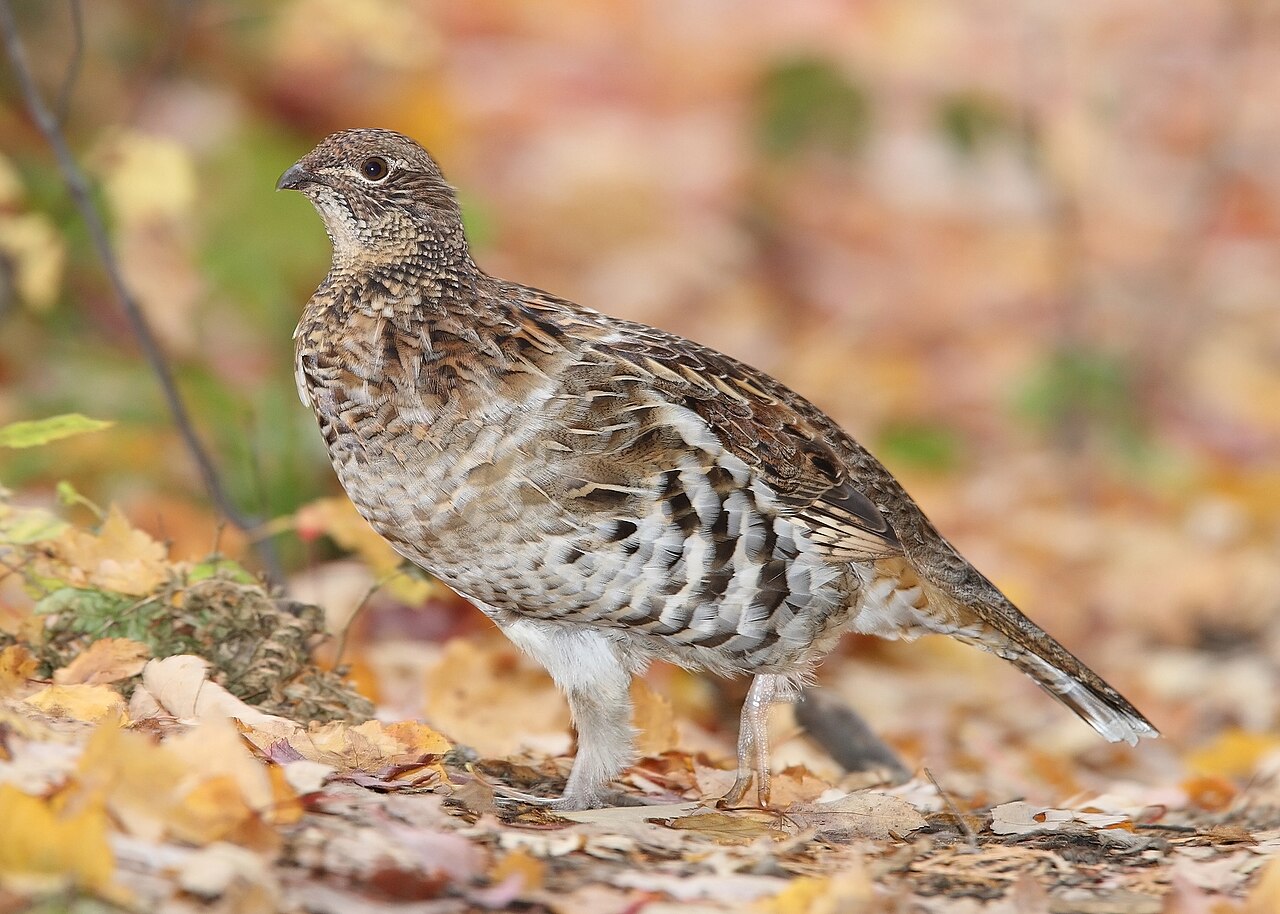
Several types of grouse are especially notable. The ruffed grouse is a woodland bird famous for the male’s drumming display, a deep, accelerating thumping sound made by rapidly beating its wings, and it is a popular gamebird of forests. The greater sage-grouse is the largest North American grouse, tied to sagebrush country, where males gather on leks and inflate air sacs on their chests in a remarkable booming display. The sharp-tailed grouse of the prairies has a pointed tail and performs dancing displays, as do the prairie-chickens, which are famous for their booming courtship on the grasslands. The spruce grouse and dusky grouse are darker birds of northern and western forests, the spruce grouse being notably tame. The ptarmigans, including the willow, rock, and white-tailed ptarmigans, live in the arctic and high mountains and famously turn white in winter for camouflage in the snow. Each has its own display and habitat, as explored in our guide to types of pheasants.
How to Tell Grouse Apart
Telling grouse apart is easier when you use habitat, size, and distinctive features. Habitat is a major clue, since the ruffed grouse is a woodland bird, the sage-grouse lives in sagebrush, the sharp-tailed grouse and prairie-chickens inhabit grasslands, the spruce and dusky grouse favor forests, and the ptarmigans live in the arctic and alpine zones. Size helps too, as the sage-grouse is the largest and the white-tailed ptarmigan is the smallest. Look at distinctive features, such as the ruffed grouse’s crest and dark ruff, the sharp-tailed grouse’s pointed tail, the prairie-chicken’s rounded shape and neck sacs, and the ptarmigans’ seasonal white plumage. Behavior and displays are very telling, from drumming to lekking dances. The ptarmigans are especially distinctive for turning white in winter, unlike other grouse. By combining habitat, size, features, and behavior, you can identify grouse, a rewarding challenge for these hardy birds, as explored in our guide to state birds, since several grouse are state birds.
Where Grouse Live
Grouse live in a wide range of habitats across North America, each species adapted to particular environments, many of them harsh. The ruffed grouse inhabits deciduous and mixed forests across the northern United States, Canada, and mountain regions, favoring young woodlands with dense cover. The greater sage-grouse depends on vast sagebrush landscapes of the West, and its decline reflects the loss of that habitat. Sharp-tailed grouse and prairie-chickens live in grasslands and prairies, while the spruce grouse occupies northern coniferous forests and the dusky and sooty grouse inhabit western mountain forests. The ptarmigans are birds of the far north and high mountains, with the willow and rock ptarmigans in arctic tundra and the white-tailed ptarmigan in alpine zones above treeline. Many grouse are year-round residents that endure severe winters, aided by adaptations like feathered feet. Because grouse are tied to specific habitats, protecting those environments is important for them, as detailed in our guide to plants that attract birds.
Facts About Grouse
Grouse are remarkable birds with many fascinating adaptations. Perhaps most striking are the males’ courtship displays, among the most elaborate in the bird world, including the ruffed grouse’s wing-drumming, the sage-grouse’s chest-inflating boom, and the communal dancing of prairie-chickens and sharp-tailed grouse on leks, where males compete to attract females. Grouse are also well adapted to cold, with feathered legs and, in some species, feathered feet or comb-like growths on the toes that act like snowshoes for walking on snow, and ptarmigans grow white winter plumage for camouflage. Many grouse can burrow into snow to stay warm during harsh weather. They feed on buds, needles, leaves, seeds, and insects, with some, like the spruce grouse, eating conifer needles in winter. Grouse have long been valued as gamebirds and hold cultural significance for many peoples. These adaptations and behaviors make grouse extraordinary birds of challenging landscapes, as reflected in our guide to bird symbolism.
The Ruffed Grouse and Its Famous Drumming
The ruffed grouse deserves special attention for one of the most distinctive displays in the bird world. According to the Cornell Lab of Ornithology, the male ruffed grouse performs a drumming display by rapidly beating its wings to create a deep, thumping sound, and grouse are well adapted to cold, snowy environments. Standing on a log or rock, the male ruffed grouse beats its wings forward and back so rapidly that it produces a deep, accelerating drumming sound, almost like a distant engine starting up, which carries through the spring woods to attract females and advertise his territory. This drumming is often heard before the well-camouflaged bird is seen, and it is one of the classic sounds of northern and mountain forests in spring. The ruffed grouse is also well adapted to winter, growing comb-like projections on its toes that act like snowshoes and sometimes burrowing into snow for warmth. This remarkable drumming display and cold-weather adaptation make the ruffed grouse a fascinating bird, as explored in our guide to state birds, since it is one.
The Spectacular Courtship Displays of Grouse
Among the most extraordinary behaviors in the bird world are the courtship displays of certain grouse, particularly those that gather on communal display grounds called leks. On these leks, which are traditional sites used year after year, male sage-grouse and prairie-chickens gather at dawn in spring to compete for the attention of females through elaborate performances. Male greater sage-grouse inflate large air sacs on their chests, fan their spiky tails, and produce deep, bubbling, popping sounds in a truly bizarre and impressive display, while male prairie-chickens inflate colorful neck sacs, raise feather tufts, stamp their feet, and give booming calls that carry across the grasslands. Sharp-tailed grouse perform energetic dances, rattling their tails and stamping in place. Females visit the leks to watch and choose mates, with the most impressive males doing most of the breeding. These lekking displays are among the most remarkable spectacles in nature, showcasing the drama of grouse courtship, as reflected in our guide to bird symbolism.
Frequently Asked Questions
How many types of grouse are there?
North America has several grouse species, including the ruffed grouse, greater sage-grouse, sharp-tailed grouse, spruce grouse, dusky grouse, prairie-chickens, and ptarmigans.
What is the most common grouse?
The ruffed grouse is one of the most widespread and familiar grouse, a woodland bird famous for the male’s drumming display made by beating its wings.
What is the largest grouse?
The greater sage-grouse is the largest grouse in North America, tied to sagebrush country, where males perform a remarkable booming display on communal leks.
What grouse turns white in winter?
The ptarmigans, including the willow, rock, and white-tailed ptarmigans, turn white in winter for camouflage in the snow of arctic and alpine environments.
What is a lek?
A lek is a communal display ground where male grouse, such as sage-grouse and prairie-chickens, gather to perform courtship dances and compete to attract females.
What is drumming in grouse?
Drumming is the deep, accelerating thumping sound made by a male ruffed grouse rapidly beating its wings, used to attract mates and defend territory in spring.
Where do grouse live?
Grouse live in forests, sagebrush, grasslands, and arctic and alpine zones across North America, with each species adapted to its particular habitat.