Types of Pheasants: A Complete Guide
The main pheasant in North America is the introduced ring-necked pheasant, while ornamental species like the golden, silver, and Lady Amherst’s pheasants are kept in captivity. These colorful gamebirds are known for the males’ spectacular plumage and long, sweeping tails. This guide covers how many types of pheasants there are, common species, how to tell them apart, where they live, and facts about pheasants.
| Pheasant | Key Features |
|---|---|
| Ring-necked Pheasant | Wild in US, white neck ring |
| Golden Pheasant | Ornamental, golden crest |
| Silver Pheasant | Ornamental, white and black |
| Lady Amherst’s Pheasant | Ornamental, black and white ruff |
| Green Pheasant | Green plumage, from Japan |
| Reeves’s Pheasant | Extremely long tail |
How Many Types of Pheasants Are There?
Pheasants are a group of large, colorful gamebirds native to Asia, and worldwide there are many species. In North America, however, only one pheasant is established in the wild: the ring-necked pheasant, an introduced species originally from Asia that has become a popular gamebird across parts of the continent. Other pheasant species, such as the golden pheasant, silver pheasant, Lady Amherst’s pheasant, green pheasant, and Reeves’s pheasant, are kept in captivity in aviaries, farms, and private collections, prized for their spectacular beauty, but they do not generally live wild in North America. Pheasants are known for striking sexual differences, with the males sporting brilliant, iridescent plumage and long, elegant tails, while the females are camouflaged in mottled brown. They are ground-dwelling birds that forage for seeds, grains, insects, and plants, and the males often give loud crowing calls. Understanding that the ring-necked is the wild North American pheasant, alongside the ornamental species, is the key to knowing pheasants, gamebirds related to those in our guide to types of turkeys.
Common Types of Pheasants
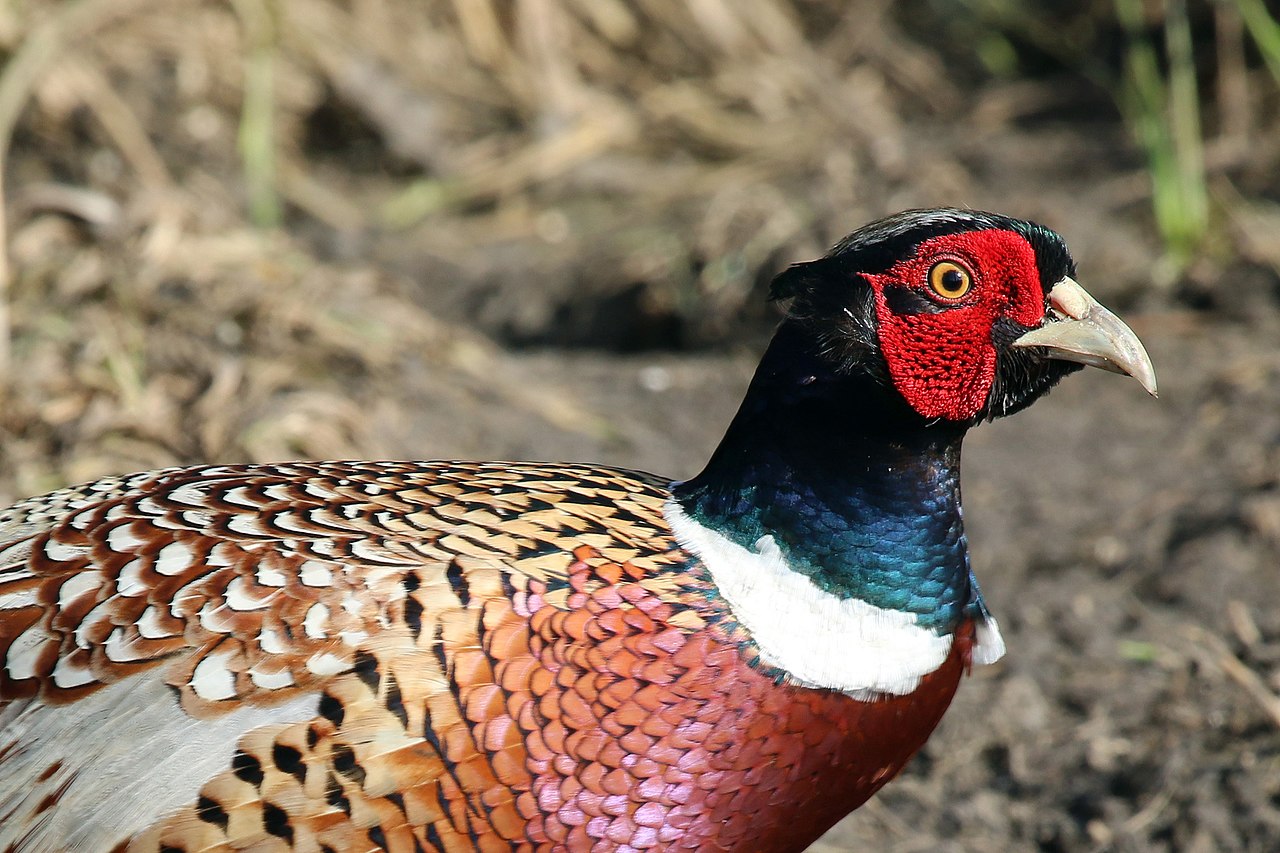
Several types of pheasants are especially notable. The ring-necked pheasant is the one most people in North America know, the male a gorgeous bird with an iridescent green head, red facial wattles, a distinctive white neck ring, a coppery body, and a very long, barred tail, while the female is mottled brown. It is a popular gamebird of farmland and grasslands. Among ornamental species, the golden pheasant is dazzling, the male with a golden-yellow crest, bright red underparts, and intricate patterning. The silver pheasant male is boldly white above and black below, and Lady Amherst’s pheasant is spectacular, with a black-and-white ruff and long patterned tail. The green pheasant, native to Japan, has beautiful green plumage, and Reeves’s pheasant is famous for its extraordinarily long tail. While the ornamental species are usually seen in captivity, the ring-necked pheasant is the wild pheasant of North America, as explored in our guide to types of grouse.
How to Tell Pheasants Apart
Telling pheasants apart is mostly about the males’ distinctive plumage, since the species differ dramatically. The ring-necked pheasant male is recognized by his iridescent green head, red face, white neck ring, coppery body, and long barred tail, a combination unlike any other. The golden pheasant male is unmistakable with his golden crest and red body, while the silver pheasant male is white above and black below. Lady Amherst’s pheasant has a striking black-and-white ruff, the green pheasant is largely green, and Reeves’s pheasant has an exceptionally long tail. Female pheasants of all species are much harder to tell apart, being mottled brown for camouflage, so identification of females relies more on context and range. Since the ring-necked is the only wild pheasant in North America, a wild pheasant is nearly always this species, while the others are seen in captivity. By focusing on the males’ unique coloring, you can readily identify pheasant species, as explored in our guide to state birds, since the ring-necked pheasant is one.
Where Pheasants Live
The ring-necked pheasant, as the wild pheasant of North America, lives in open and agricultural landscapes across parts of the continent. It favors farmland, grasslands, hedgerows, brushy fields, and wetland edges, where it finds food and cover, and it is especially associated with agricultural areas in the northern and central United States and southern Canada. Ring-necked pheasants forage on the ground for waste grain, seeds, insects, and plants, and they rely on dense vegetation for nesting and shelter from predators and weather. Their populations are tied to suitable habitat, and they are a major gamebird, supported in many areas by habitat management and stocking. The ornamental pheasant species, by contrast, are native to various parts of Asia and are kept in captivity in North America rather than living wild. Because ring-necked pheasants depend on farmland with good cover, changes in agriculture strongly affect their numbers, as detailed in our guide to plants that attract birds.
Facts About Pheasants
Pheasants are fascinating birds with several notable traits. The dramatic difference between the sexes is striking, with the brilliantly colored, long-tailed males contrasting sharply with the camouflaged brown females, an arrangement that helps males attract mates while females stay hidden while nesting. Male pheasants are known for their loud crowing calls and for displaying to attract females and defend territory. Despite spending most of their time on the ground, running to escape danger, pheasants can burst into fast, noisy flight when startled, though only for short distances. The ring-necked pheasant, though introduced from Asia, has become an iconic bird of American farmland and is even the state bird of South Dakota. Pheasants have a long history of association with people, valued as gamebirds and, in the case of the ornamental species, admired for their beauty in collections. These qualities make pheasants remarkable and beautiful birds, as reflected in our guide to bird symbolism.
The Ring-necked Pheasant, an Icon of American Farmland
The ring-necked pheasant deserves special attention as the wild pheasant of North America. According to the Cornell Lab of Ornithology, the ring-necked pheasant was introduced to North America from Asia and has become established as a popular game bird of open farmland. Since its introduction, this colorful bird has thrived across agricultural regions of the northern and central United States and southern Canada, becoming so iconic that it is the state bird of South Dakota, despite not being native. The male’s striking appearance, with an iridescent green head, red face wattles, a white neck ring, a coppery body, and a long, barred tail, makes it one of the most recognizable birds of the countryside, while the mottled brown female is well camouflaged for nesting. Ring-necked pheasants depend on farmland with good cover, and their populations are closely tied to agricultural practices and habitat management. This bird has become a beloved fixture of American farmland, illustrating how an introduced species can become deeply established, as explored in our guide to state birds.
Pheasants in Captivity and Ornamental Collections
Beyond the wild ring-necked pheasant, many pheasant species are kept in captivity, and understanding this adds to the picture of these birds. Species such as the golden pheasant, silver pheasant, Lady Amherst’s pheasant, green pheasant, and Reeves’s pheasant are native to various parts of Asia and are prized around the world for their spectacular beauty, making them popular in aviaries, private collections, game farms, and zoos. The males of these ornamental species are among the most dazzling of all birds, with the golden pheasant’s brilliant crest and red body and Lady Amherst’s striking black-and-white ruff being particularly admired. While these birds do not generally live wild in North America, they may occasionally escape from captivity, though they rarely establish self-sustaining wild populations. Their presence in collections means that people in North America can still enjoy the beauty of many pheasant species, even though only the ring-necked lives wild. This tradition of keeping ornamental pheasants reflects the enduring appeal of these gorgeous birds, as reflected in our guide to bird symbolism.
Frequently Asked Questions
How many types of pheasants are there?
Only the ring-necked pheasant lives wild in North America, while ornamental species like the golden, silver, and Lady Amherst’s pheasants are kept in captivity.
What is the most common pheasant?
The ring-necked pheasant is the common wild pheasant in North America, the male recognized by his green head, white neck ring, coppery body, and long tail.
What is the most colorful pheasant?
The golden pheasant is among the most colorful, the male with a golden crest and bright red underparts. It is an ornamental species usually kept in captivity.
How do you tell pheasants apart?
Focus on the males’ distinctive plumage. The ring-necked pheasant has a white neck ring and long tail, while ornamental species have their own dramatic colors.
Are pheasants native to North America?
No, the ring-necked pheasant was introduced from Asia. It has become established in the wild and is a popular gamebird, even the state bird of South Dakota.
Can pheasants fly?
Yes, pheasants can burst into fast, noisy flight when startled, though only for short distances. They spend most of their time on the ground, running from danger.
Where do pheasants live?
Ring-necked pheasants live in farmland, grasslands, and brushy fields across parts of North America, while ornamental pheasant species are kept in captivity.