Types of Gulls: A Complete Guide
North America is home to many types of gulls, including the widespread herring gull and ring-billed gull, along with the laughing gull, great black-backed gull, and California gull. Often called seagulls, these adaptable birds are found not just at the coast but far inland, and they are famous for being challenging to identify. This guide covers how many types of gulls there are, common species you can see, how to tell them apart, where they live, and why gulls are hard to identify.
| Gull | Key Features |
|---|---|
| Herring Gull | Large, pink legs, red bill spot |
| Ring-billed Gull | Yellow bill with black ring |
| Laughing Gull | Black head, laughing call |
| Great Black-backed Gull | Largest, black back |
| California Gull | Medium, greenish legs |
| Western Gull | Dark back, Pacific coast |
| Bonaparte’s Gull | Small, delicate, black head |
| Glaucous Gull | Large, very pale, arctic |
How Many Types of Gulls Are There?
There are many species of gulls in North America, part of a large and widespread family of waterbirds. Familiar species include the herring gull, the ring-billed gull, the laughing gull, the great black-backed gull, the California gull, the western gull, the small Bonaparte’s gull, and the pale glaucous gull, among many others. Gulls are generally sturdy, web-footed birds, most of them gray and white as adults, with strong bills and a reputation for being bold, adaptable, and opportunistic. Although they are commonly called seagulls, this name is a bit misleading, since many gulls live far from the sea, including around lakes, rivers, farmland, and cities well inland. Gulls are highly intelligent and will eat a wide variety of foods, from fish and invertebrates to scraps and garbage. One of the most challenging aspects of gulls is that their appearance changes greatly as they age. This diversity and adaptability make gulls a fascinating, if tricky, group, quite different from the birds in our guide to types of ducks.
Common Types of Gulls
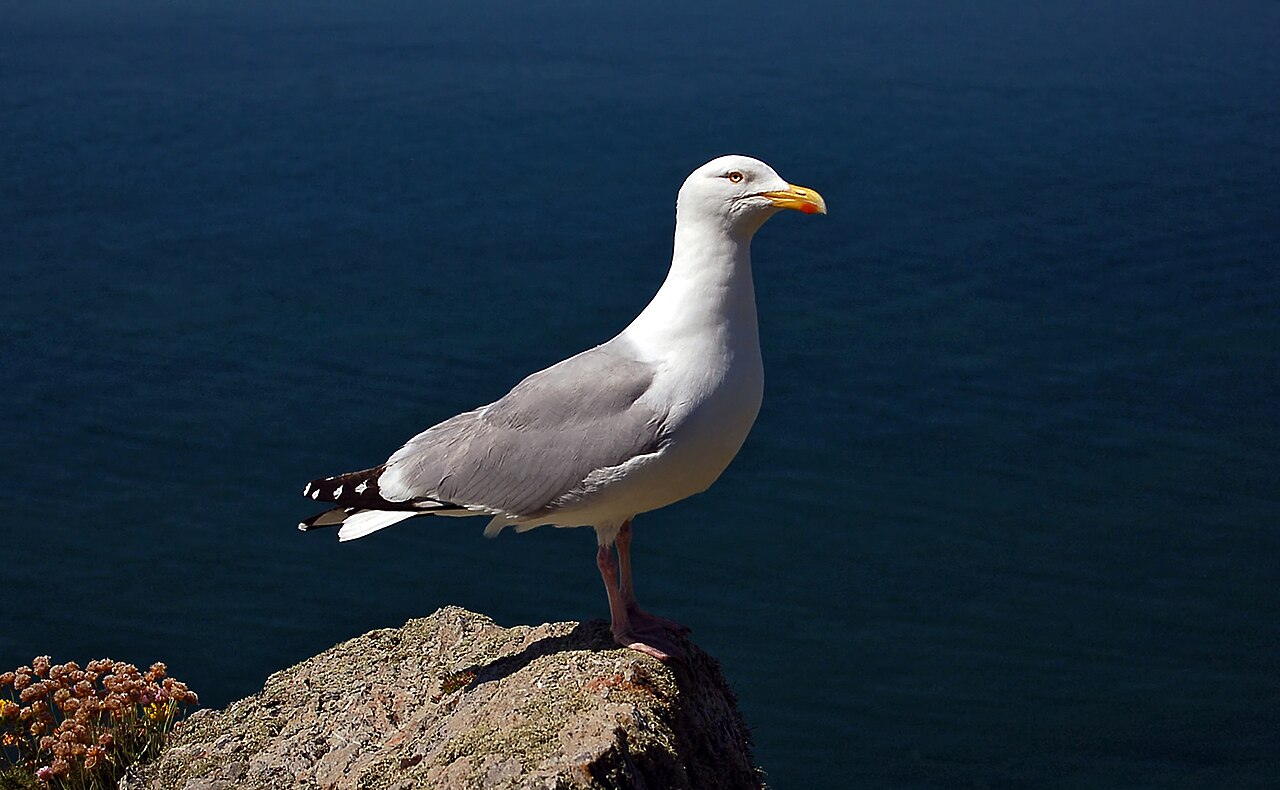
Several types of gulls are especially common and worth knowing. The herring gull is a large, familiar gull with a gray back, pink legs, and a yellow bill marked with a red spot, common along coasts and inland. The ring-billed gull is a smaller, very common gull recognized by the black ring around its yellow bill, often seen in parking lots, parks, and farmland far from the sea. The laughing gull is a coastal gull with a black head in breeding plumage and a distinctive laughing call. The great black-backed gull is the largest gull in the world, with a striking black back, found along the Atlantic. The California gull is a medium gull with greenish legs, famous for saving crops in Utah and honored as that state’s bird. The western gull has a dark gray back and lives along the Pacific coast, while the small, delicate Bonaparte’s gull has a black head in breeding season. Each has its own features, though many look similar.
How to Tell Gulls Apart
Telling gulls apart is notoriously challenging, but focusing on a few features helps, especially with adults. Start with size, since gulls range from the small Bonaparte’s gull up to the huge great black-backed gull. Look at the color of the back and wingtips, as the shade of gray on the back, from pale to dark, and the pattern of the wingtips are important clues. Check the bill and legs, since bill color and markings, such as the ring-billed gull’s black ring or the herring gull’s red spot, and leg color, such as pink, yellow, or greenish, are very useful for identification. Note the head pattern, especially in breeding season when some gulls have black or dark heads. Age is crucial, because gulls take two to four years to reach adult plumage, passing through confusing brown and mottled immature stages, so it helps to focus on adults. By combining size, back and wingtip color, bill and leg color, and head pattern, you can identify many gulls, a rewarding challenge, as explored in our guide to types of white birds.
Where Gulls Live
Gulls live in a wide variety of habitats across North America, and contrary to the seagull name, many are found far from the ocean. Coastal species are common along beaches, harbors, bays, and estuaries, where they forage in the surf and scavenge along the shore. But many gulls also thrive inland, around lakes, rivers, reservoirs, farmland, landfills, parking lots, and city parks, taking advantage of the food that human activity provides. The ring-billed gull in particular is often seen in inland areas well away from the coast. Some gulls breed in the far north, including the arctic, and migrate south for winter, while others are present year-round in milder areas. Gulls often gather in large flocks, especially where food is abundant, and they nest in colonies on islands, cliffs, beaches, or rooftops. Because gulls are so adaptable and often live near people, they are among the most frequently encountered waterbirds, both at the coast and far inland, as detailed in our guide to state birds, since the California gull is one.
Why Gulls Are Hard to Identify
Gulls have a well-earned reputation as one of the most difficult bird groups to identify, and understanding why can make the challenge less frustrating. The biggest reason is that gulls take several years, typically two to four, to reach their full adult plumage, passing through a series of immature stages that look quite different from adults and from one another. This means a single species can appear in multiple plumages depending on its age, from mottled brown youngsters to cleaner gray-and-white adults, greatly multiplying the number of appearances to learn. On top of this, many gull species look broadly similar as adults, differing only in subtle features like the exact shade of the back, wingtip pattern, and bill and leg color, and some gulls hybridize, producing intermediate birds. Variation within species adds further complication. For all these reasons, gull identification is a genuine challenge even for experts, which is part of what makes mastering it so rewarding, a fascinating puzzle among the birds in our guide to bird symbolism.
Why Gulls Are Not Really Seagulls
The common name seagull is so widespread that it is worth clarifying. According to the Cornell Lab of Ornithology, there is no species officially called a seagull, and gulls are highly adaptable birds found far inland as well as along the coast. This means the familiar term seagull is really just a general nickname for the many species of gulls, and it is somewhat misleading, since a great many gulls live nowhere near the sea. The ring-billed gull, for example, is extremely common inland, frequenting parking lots, parks, farmland, and lakes far from any ocean, and many other gulls thrive around inland waters and human settlements. Gulls are opportunistic and intelligent, taking advantage of the food that both natural and human environments provide, which has allowed them to spread widely. So while some gulls are indeed coastal, calling them all seagulls overlooks how adaptable and widespread the group truly is. Recognizing that gulls are birds of many habitats, not just the sea, gives a fuller picture of these clever birds, as explored in our guide to attracting birds.
The Changing Plumage of Gulls
One of the defining features of gulls, and the biggest reason they are hard to identify, is the way their plumage changes as they grow up. Unlike many birds that reach adult plumage within their first year, gulls take several years, often two to four depending on the species, to develop their full adult appearance. During this time, young gulls pass through a series of immature plumages, typically starting out mottled brown and gradually becoming cleaner gray and white as they mature. This means that at any given time, a flock of a single gull species can contain birds of very different appearances, from brown youngsters to crisp adults, which greatly complicates identification. Learning to recognize these age-related plumages is a key part of mastering gull identification, and focusing first on the cleaner-looking adults is a good strategy for beginners. This gradual maturation is a fascinating aspect of gull biology, adding both challenge and interest to studying these adaptable birds, as reflected in our guide to types of white birds.
Frequently Asked Questions
How many types of gulls are there?
North America has many gull species, including the herring gull, ring-billed gull, laughing gull, great black-backed gull, California gull, western gull, and Bonaparte’s gull.
Is a seagull a real bird?
There is no single species called a seagull. Seagull is a general nickname for gulls, and it is misleading since many gulls live far inland, not just at the sea.
What is the most common gull?
The ring-billed gull and herring gull are among the most common and widespread gulls. The ring-billed gull is often seen inland in parking lots, parks, and farmland.
What is the largest gull?
The great black-backed gull is the largest gull in the world, with a striking black back. It is found along the Atlantic coast and is a powerful predator and scavenger.
Why are gulls so hard to identify?
Gulls take two to four years to reach adult plumage, passing through many immature stages, and many species look similar as adults, making identification very challenging.
Do gulls live inland?
Yes, despite the seagull name, many gulls live far inland around lakes, rivers, farmland, landfills, and city parks. The ring-billed gull is especially common inland.
Where do gulls live?
Gulls live along coasts and far inland around lakes, rivers, farmland, and cities across North America. Some breed in the arctic and migrate south for winter.