Female House Finch vs Sparrow: How to Tell Them Apart
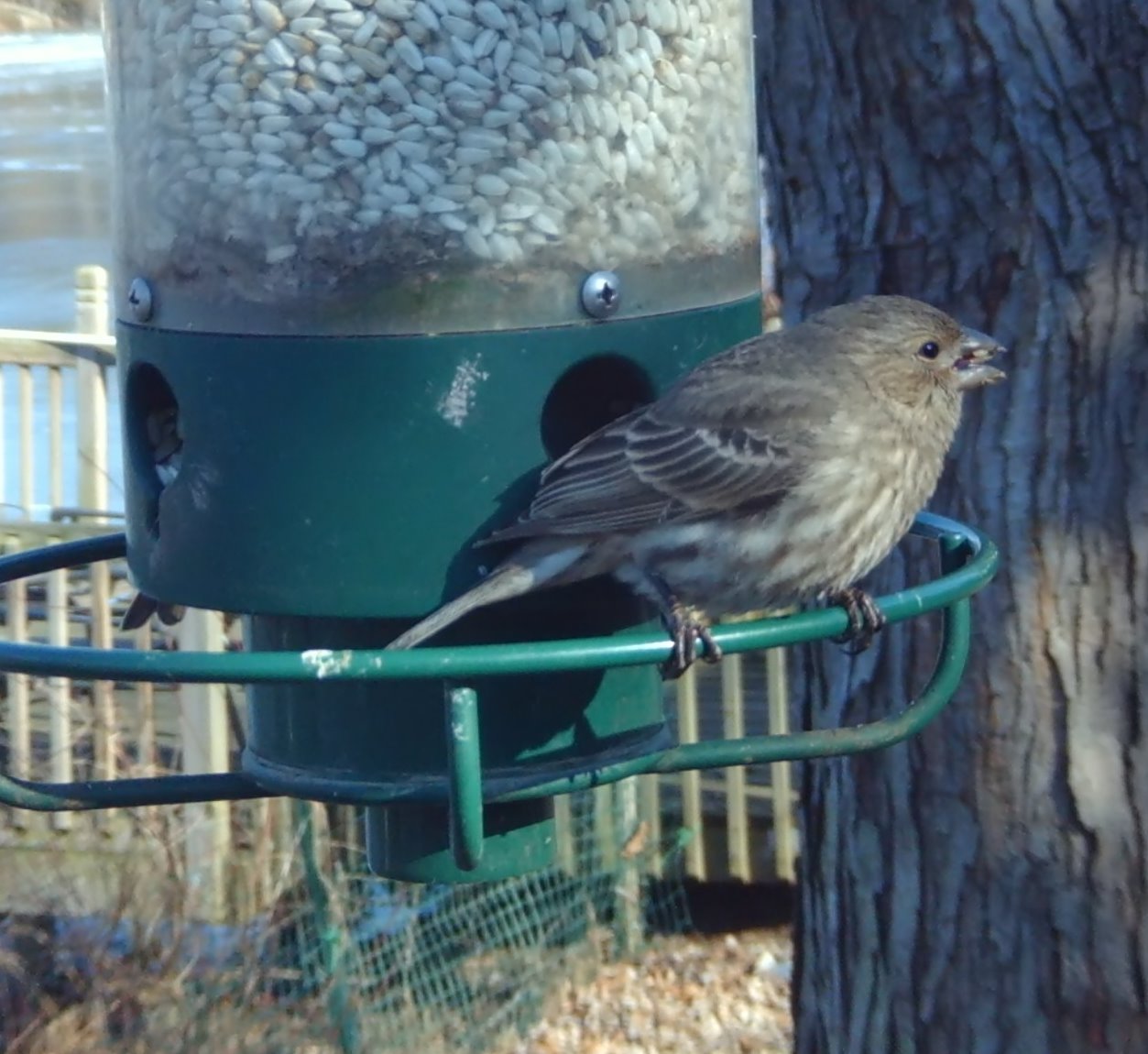
Female house finches and female sparrows cause more backyard identification confusion than almost any other bird comparison, precisely because both sexes shed the obvious color clues that make male house finches (bright red) and male sparrows so much easier to sort out at a glance. A female house finch is a plain grayish-brown bird with blurry, soft streaking on the breast and a notably stubby, conical seed-eating bill, while a female House Sparrow, the small brown bird most Americans actually mean by “sparrow” at a feeder, shows a plainer, unstreaked buffy breast, a distinctive pale eyebrow stripe behind the eye, and a slightly different bill shape.
Because this comparison specifically targets the trickiest case, brown female finches versus brown female sparrows, rather than the more general question covered in our finch vs sparrow guide, this article focuses narrowly on the field marks, behavior, and structural differences that actually separate these two look-alike females at your feeder. Getting comfortable with these distinctions unlocks confident identification of two of the most common visitors to backyard feeders across the entire United States.
| Feature | Female House Finch | Female House Sparrow |
|---|---|---|
| Breast pattern | Blurry, soft brown streaking | Plain, unstreaked buffy brown |
| Face pattern | Plain, no eyebrow stripe | Pale buffy eyebrow stripe |
| Bill shape | Distinctly conical, curved culmen | Stouter, straighter-edged |
| Overall build | Slightly slimmer, longer tail | Chunkier, shorter tail |
| Typical flock | Loose finch flocks | Dense sparrow flocks |
Breast Pattern: The Fastest Field Mark
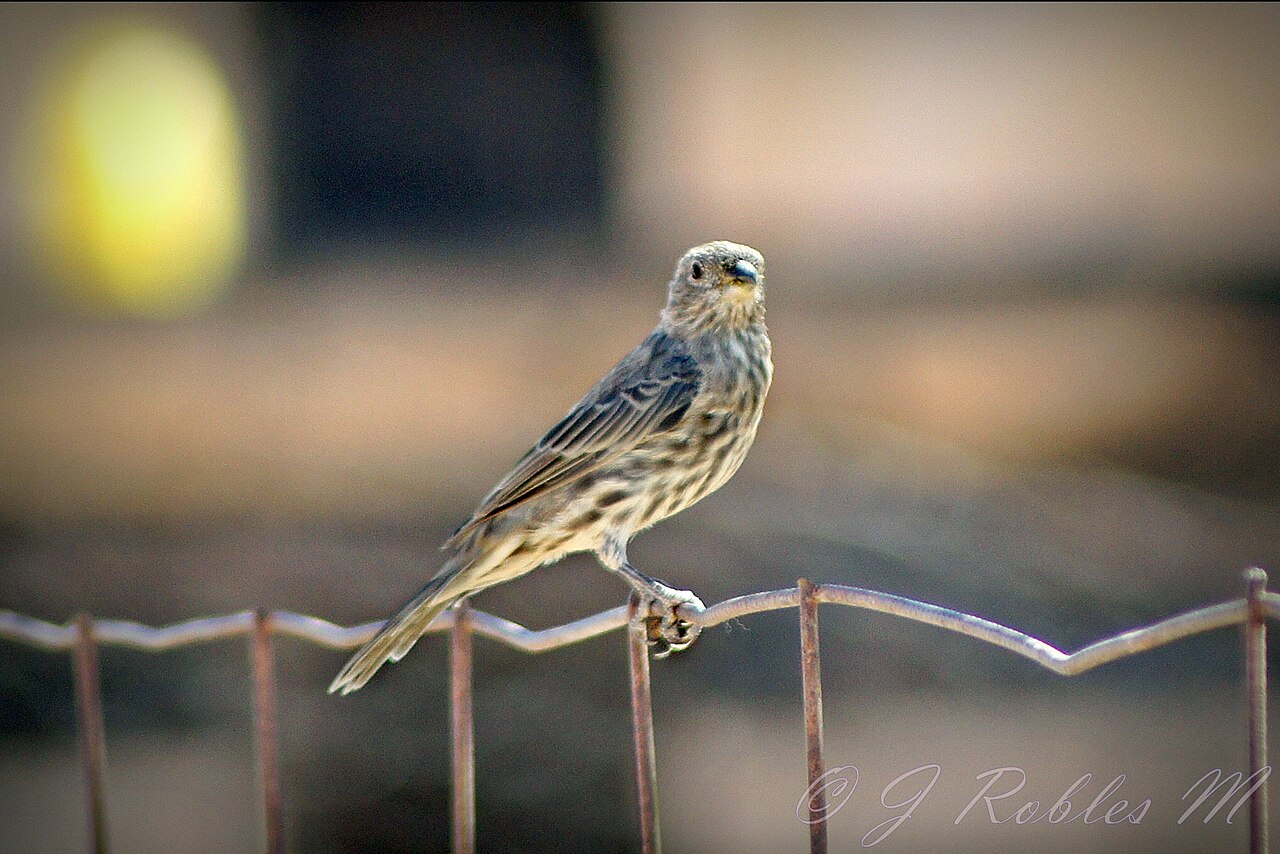
The single quickest distinguishing feature between these two females is breast pattern, and it rewards even a brief, distant look. A female house finch shows soft, blurry brown streaking running down a whitish to pale gray breast, streaks that lack sharp edges and blend somewhat into the background color, giving the whole underside a slightly smudged, unfocused appearance rather than crisp lines.
A female House Sparrow, by contrast, shows an essentially plain, unstreaked breast in a warm buffy or dingy brown tone, with no obvious streaking pattern at all, a genuinely stark difference once you know to look for it specifically, since many casual observers assume any small brown streaky-looking bird must be a sparrow when streaking itself is actually the finch’s field mark, not the sparrow’s.
This single distinction alone resolves the majority of confused sightings reported to birding forums and identification apps, and it works well even through binoculars at typical feeder-watching distance, making it the first feature worth training your eye to check before moving on to the subtler face and bill differences covered next.
Face Pattern: The Eyebrow Stripe
Beyond breast pattern, facial markings offer a second reliable checkpoint. Female House Sparrows show a distinctive pale, buffy eyebrow stripe extending backward from behind the eye, a feature present across essentially the entire species and genuinely useful for confirming an identification when breast pattern alone leaves any doubt.
Female house finches lack this eyebrow stripe entirely, showing a comparatively plain, unmarked face with only subtle shading differences rather than any bold contrasting stripe, an absence that, combined with the streaked breast covered above, creates a genuinely reliable two-point identification system requiring no rare or difficult-to-judge field marks.
This eyebrow stripe distinction proves particularly useful in situations where lighting or distance makes breast streaking harder to judge confidently, since the stripe tends to remain visible even in flatter or more distant lighting conditions where subtle breast texture differences can wash out entirely, making it a valuable backup check whenever the first field mark feels uncertain.
Bill Shape and Overall Structure
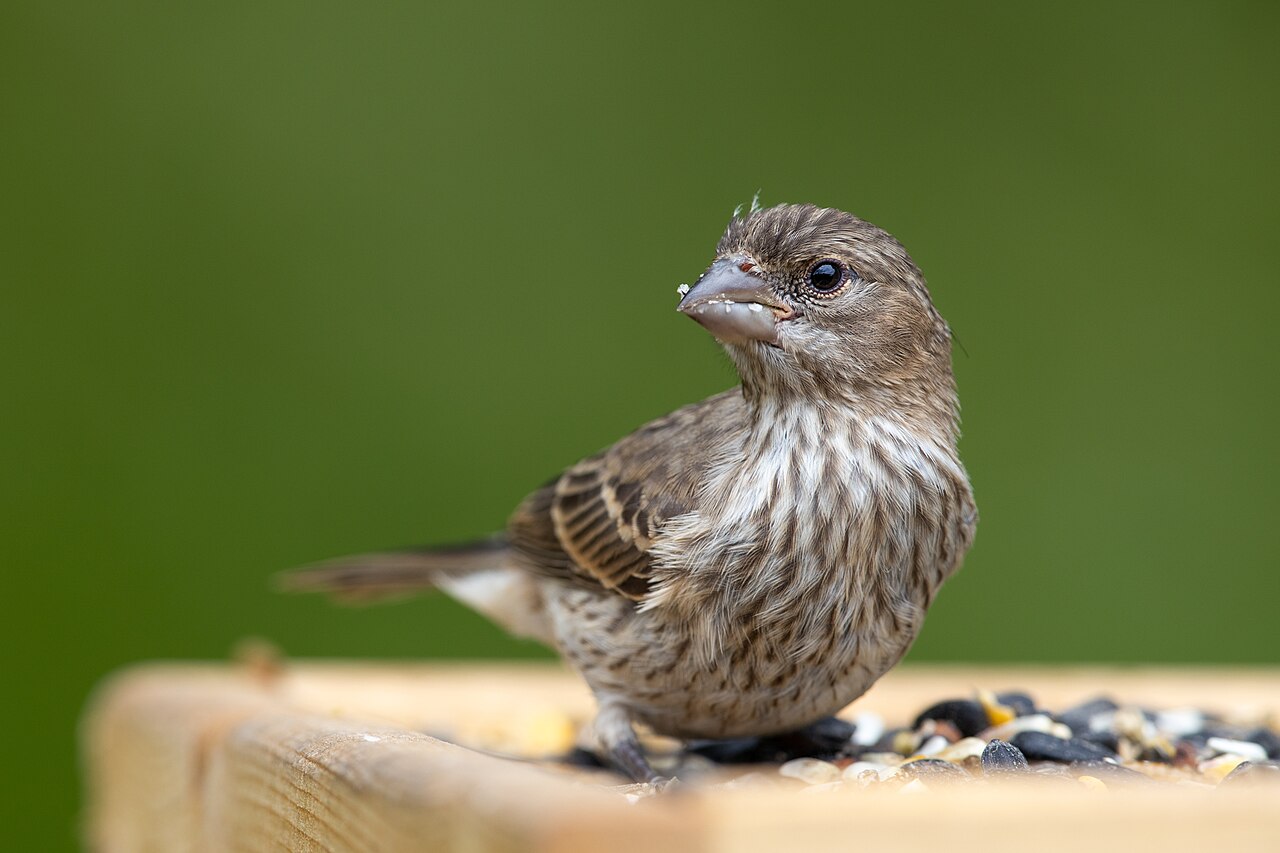
Bill shape offers a third, more subtle distinguishing feature useful once the more obvious plumage differences have been checked. Female house finches show a notably conical bill with a distinctly curved upper edge (culmen), an adaptation shared with their close relative the male house finch and reflecting the broader finch family’s seed-cracking specialization.
Female House Sparrows show a somewhat stouter, less dramatically curved bill by comparison, a difference genuinely subtle enough that it works best as a supporting confirmation rather than a primary identification tool, particularly useful when observing a bird at rest for an extended period rather than attempting a quick field call during brief feeder activity.
Overall body structure adds a final supporting clue: house finches tend to appear slightly slimmer and longer-tailed in silhouette compared to the chunkier, shorter-tailed, more compact build typical of House Sparrows, a general impression that experienced birders often notice almost unconsciously before consciously identifying any of the more specific field marks covered above.
Behavior and Flock Patterns
Beyond physical field marks, behavioral differences at feeders offer useful supporting evidence. House finches, including females, tend to move somewhat more gracefully and maintain looser flock cohesion at feeders, often perching for extended periods while feeding methodically, a pattern reflecting their fundamentally arboreal, tree-and-shrub-oriented natural history.
House Sparrows, by contrast, tend to feed in noticeably denser, more tightly packed flocks and show more aggressive, assertive behavior at feeders, frequently displacing other species including house finches through sheer persistence and numbers, a behavioral pattern well documented given the House Sparrow’s status as a highly successful introduced species across North America.
Vocalizations differ meaningfully as well, though this requires more careful listening than the visual field marks above: house finches produce a warbling, musical song even outside dedicated singing season, with a distinctive rising-and-falling quality, while House Sparrow vocalizations run toward simpler, more repetitive chirping calls lacking the same melodic complexity.
Why These Two Species Get Confused So Often
Part of the confusion stems directly from the House Sparrow’s name itself, since many casual observers assume any small brown streaky bird at a feeder must be “the sparrow,” when in fact numerous native sparrow species exist across North America with genuinely different plumage patterns, and the House Sparrow specifically is an introduced species originally from Europe now widespread across the continent, covered alongside its native relatives in our broader types of sparrows guide.
House finches present their own naming confusion, since males display the bright red coloration most people associate with the species, leaving many observers genuinely uncertain what an accompanying plain brown female actually represents, particularly in mixed flocks where a red male house finch feeding alongside several brown females and House Sparrows creates a genuinely challenging identification puzzle without careful attention to the specific field marks covered in this guide.
Regional abundance patterns add a final layer of complexity, since house finches were historically a western species before a notable range expansion across the eastern United States following a mid-20th century pet trade release, meaning relative abundance of each species varies considerably by region, with some areas seeing House Sparrows dominate feeders while others show house finches as the more common brown-streaky visitor, making local knowledge a genuinely useful supplement to the universal field marks covered above.
A Third Confusion: Purple Finch Females
Adding to the general finch-versus-sparrow puzzle, female house finches themselves get confused with a third species entirely: female purple finches, a close relative sharing the same general brown, streaked plumage pattern but showing a more strongly contrasting facial pattern with a bolder pale eyebrow and darker cheek patch than the comparatively plain-faced female house finch. Our dedicated house finch vs purple finch guide covers this additional layer of confusion in complete detail for anyone regularly seeing both species at their feeders.
This three-way confusion, female house finch, female House Sparrow, and female purple finch, means that birders in regions where all three species overlap regionally face a genuinely more complex identification challenge than the two-species comparison covered in the bulk of this guide, making careful attention to the specific field marks covered above considerably more valuable than a quick glance alone would typically provide in areas with all three species present simultaneously.
Fortunately, the core field marks covered throughout this guide, breast streaking pattern and the presence or absence of a pale eyebrow stripe, remain useful starting points even in this expanded three-species comparison, with the purple finch’s considerably bolder facial contrast typically standing out clearly enough once specifically looked for, even against the more subtle house finch and House Sparrow differences covered in greater detail above.
Quick Reference: Solving the Identification in the Field
When facing an uncertain brown, streaky-looking bird at your feeder, work through the checklist in order of reliability: first check breast pattern (streaked and blurry favors house finch, plain and unstreaked favors House Sparrow), then check for the pale eyebrow stripe (present favors House Sparrow, absent favors house finch), and finally consider bill shape and overall build if the first two checks still leave any doubt.
Context clues help round out an identification as well: a red male present in the same flock strongly suggests any accompanying brown females are house finches, since House Sparrows show a considerably more modest brown-and-gray male plumage lacking the house finch’s characteristic red coloration, making male presence in a mixed flock a genuinely useful shortcut when available.
With practice, most birders find this identification becomes essentially automatic within a season of regular feeder watching, since the combination of breast pattern and eyebrow stripe, checked together, resolves the overwhelming majority of sightings confidently without requiring the more subtle bill and structural differences at all, reserving those finer points mainly for the occasional genuinely ambiguous individual bird, and for anyone wanting to sharpen general backyard bird identification skills further, our broader backyard bird identification guide covers many additional common species pairs worth learning beyond just this specific finch-versus-sparrow comparison.
Frequently Asked Questions
How do I tell a female house finch from a female sparrow?
Check the breast first: female house finches show blurry brown streaking, while female House Sparrows show a plain, unstreaked buffy breast. A pale eyebrow stripe present only on the sparrow confirms the identification.
Do female house finches have any red coloring?
No, female house finches are entirely brown and gray with streaked underparts, lacking any of the red coloration found on adult males of the species entirely.
Why does the House Sparrow have that name if there are other sparrows?
The House Sparrow is actually an introduced species from Europe unrelated to most native North American sparrows, and its common name predates the widespread recognition of dozens of distinct native sparrow species now documented across the continent.
Which is more aggressive at feeders, house finches or House Sparrows?
House Sparrows generally show more assertive, aggressive feeder behavior and frequently displace house finches through persistence and dense flock numbers, a well-documented pattern given the House Sparrow’s highly successful introduced status.
Are house finches native to the eastern United States?
No, house finches were historically a western species, expanding into the eastern United States following a mid-20th century pet trade release that established a lasting eastern population alongside the original western range.
What is the easiest single field mark to remember?
Breast pattern: streaked and blurry favors house finch, plain and unstreaked favors House Sparrow. This single check resolves the majority of sightings even before considering the eyebrow stripe or bill shape.
Do male house finches help identify the females in the same flock?
Yes, a red male present alongside brown females strongly suggests house finches, since House Sparrow males show considerably more modest brown-and-gray plumage lacking any red coloration at all.