Female House Sparrow: ID and the House Finch Problem
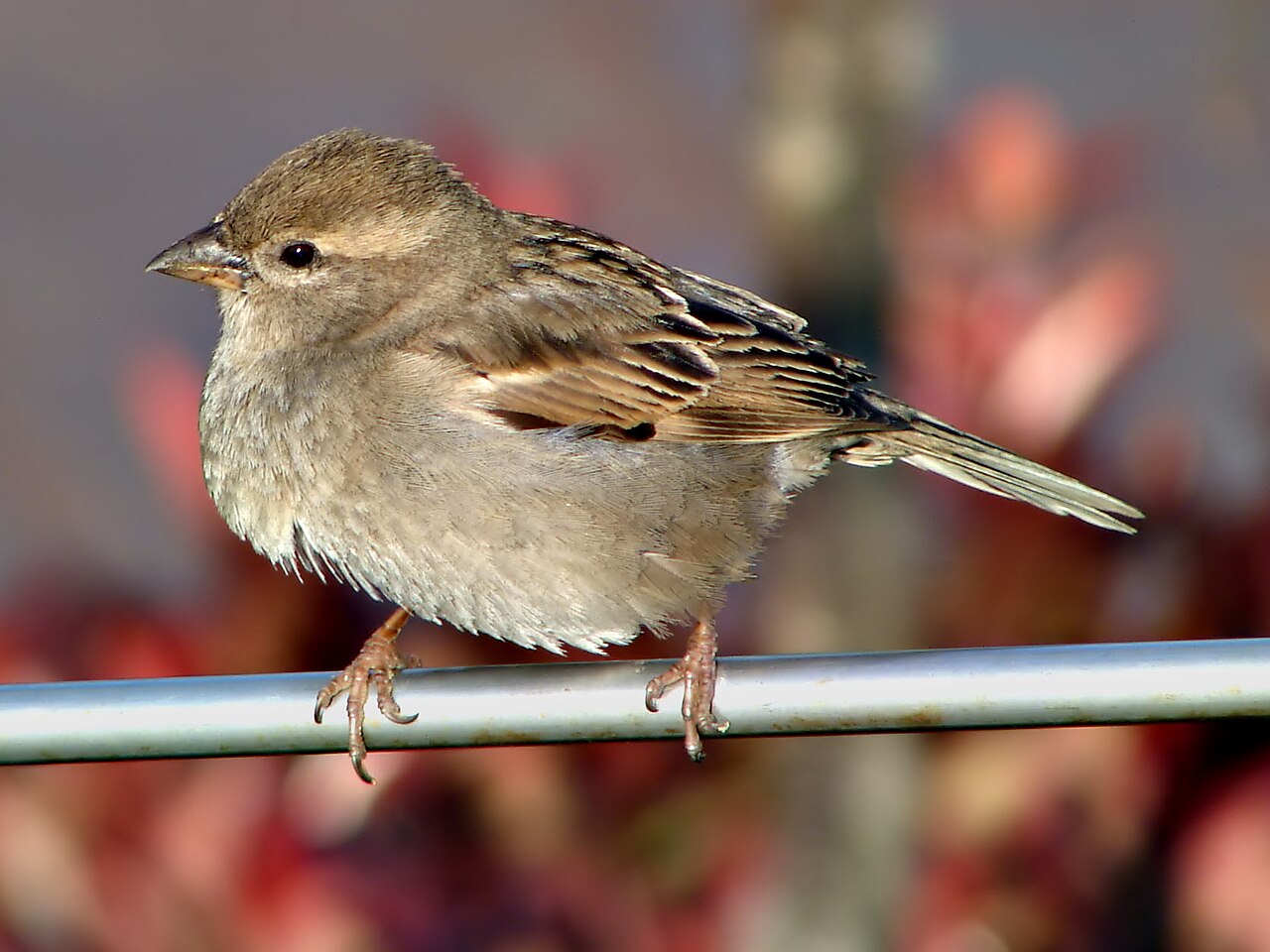
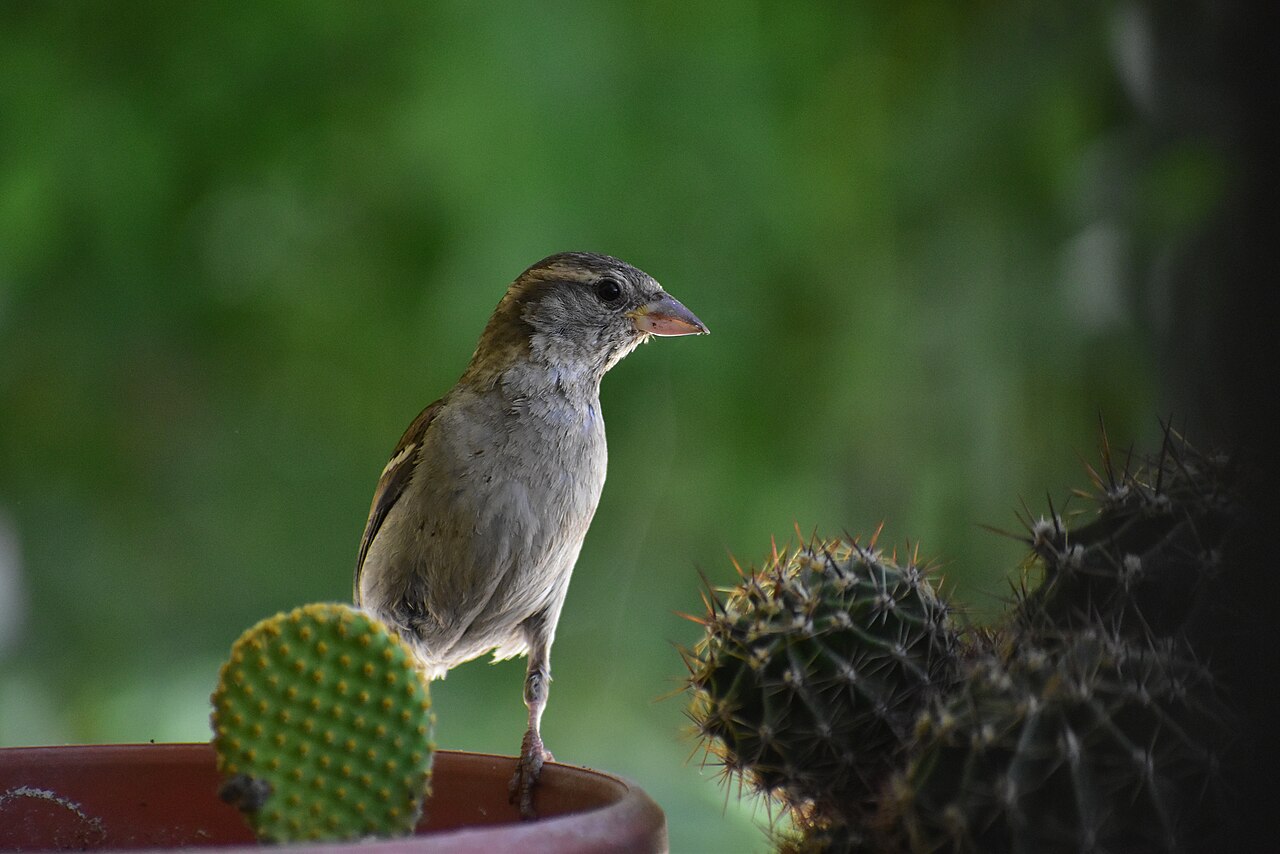
A female house sparrow is plain buff-brown with a pale stripe behind the eye, streaked brown and black upperparts, unmarked grey-buff underparts, and a horn-coloured bill. She has none of the male’s markings: no black bib, no grey crown, no chestnut nape, and no white cheek patch. The pale eyebrow stripe is the single most useful field mark.
That plainness is why she is one of the most misidentified birds in North America, routinely reported as a female house finch, a juvenile of some other species, or an unidentified brown bird. The two are separated by bill shape and by whether the underparts are streaked. This guide covers identification, the finch comparison, behaviour, nesting, and the awkward question of whether to encourage them.
A female house sparrow is plain buff-brown with a pale stripe behind the eye, streaked brown upperparts, and clean unstreaked underparts. Males have a black bib, grey crown, and chestnut nape. Female house finches look similar but have streaked underparts, a curved bill, and no eye stripe.
| Feature | Female House Sparrow |
|---|---|
| Head | Plain brown with pale stripe behind eye |
| Underparts | Grey-buff, unstreaked |
| Back | Streaked brown, black, and buff |
| Bill | Straight, conical, horn-coloured |
| Male comparison | Black bib, grey crown, chestnut nape |
| Female house finch | Streaked underparts, curved bill, no eye stripe |
| Broods per year | 2 to 4 |
How Do You Tell a Male From a Female House Sparrow?
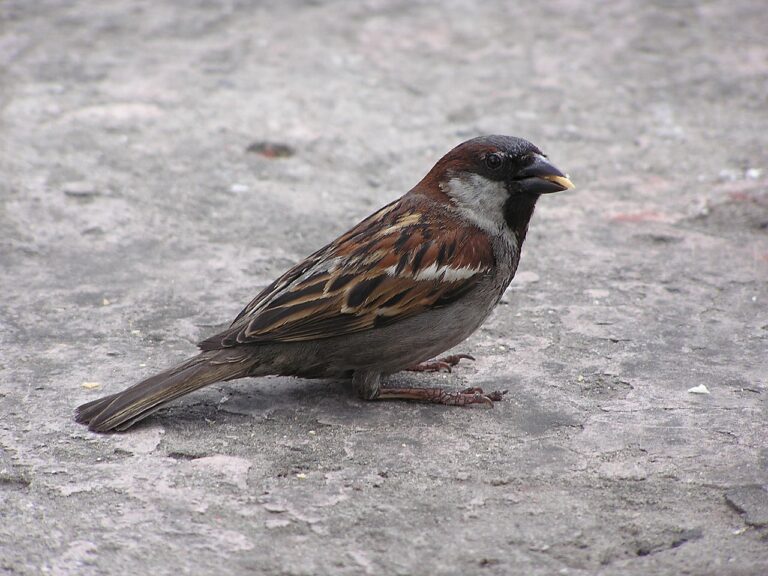
The male is unmistakable in breeding plumage: a grey crown bordered by chestnut, a white cheek, a bold black bib running from the chin down the throat and onto the chest, and a chestnut and black streaked back. The bill turns black in the breeding season.
The female has none of it. She is warm buff-brown overall, with brown and black streaking on the back and wings, plain unmarked greyish-buff underparts, and a plain face broken only by a pale buff stripe running back from behind the eye. Her bill stays horn-coloured or yellowish year-round.
Juveniles resemble females, which is why late-summer flocks look overwhelmingly female. Young males begin showing a faint bib by autumn, and in winter the male’s bib is partly obscured by pale feather tips that wear away by spring, so a male in January looks less striking than the same bird in April. The types of sparrows guide covers the native species that share the name.
How Is She Different From a Female House Finch?
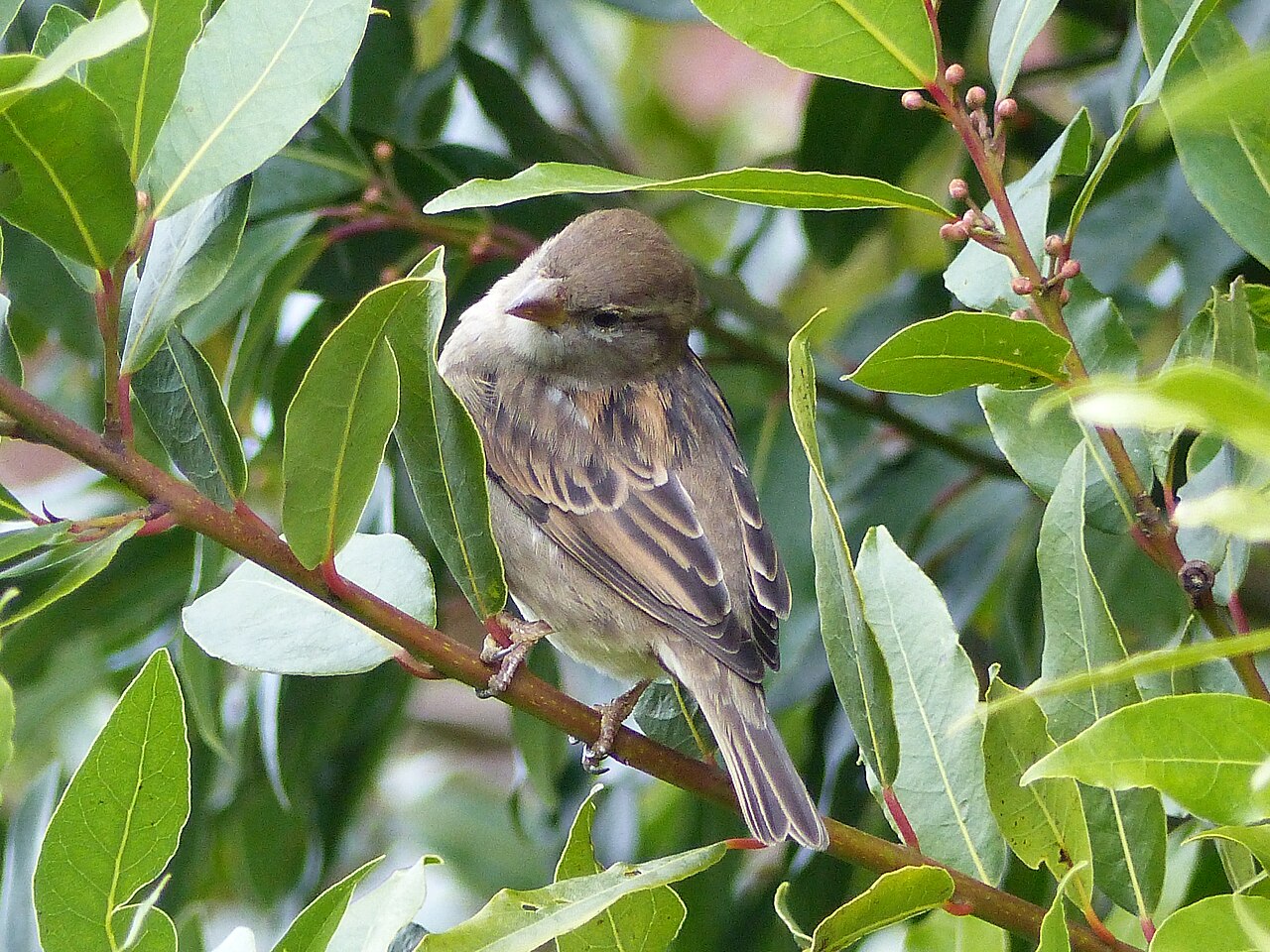
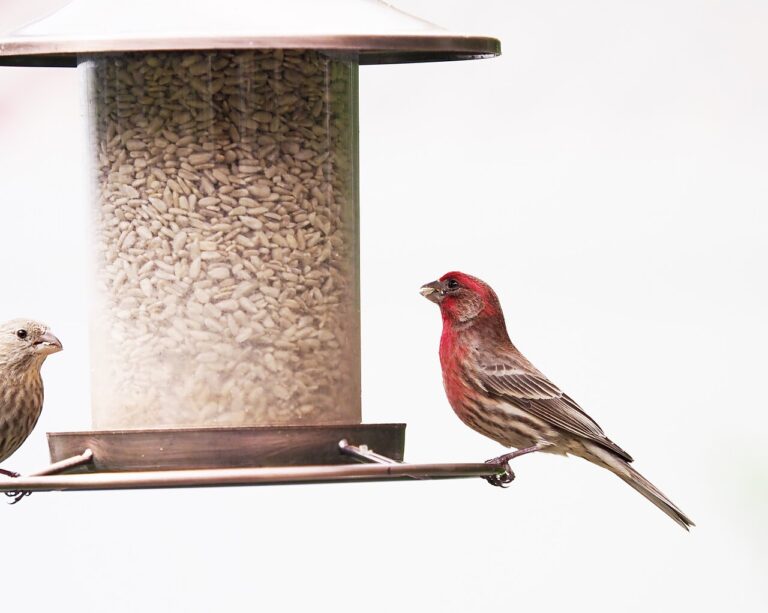
This is the confusion that matters most, because both are common at feeders across North America. Female house finches have blurry brown streaking down the breast and flanks; female house sparrows have clean, unstreaked underparts. That single difference settles nearly every case.
Bill shape confirms it. House sparrows have a thick, straight-edged conical bill built for seeds. House finches have a smaller bill with a distinctly curved upper edge. The face pattern helps too: the sparrow has a pale stripe behind the eye, the finch has a plainer face with a faint pale eyebrow at most.
Structure and behaviour add a final check. House sparrows are chunkier, shorter-tailed, and hop about on the ground in noisy flocks; house finches are slimmer with a longer notched tail and spend more time in shrubs and at feeders than on open ground. The female house finch vs sparrow guide covers the comparison in full.
What Does a Female House Sparrow Do?
She chooses the nest site, or at least approves it. Males claim a cavity first and display at the entrance to attract a female, but she inspects it and either accepts or rejects it, and the pair then builds together, producing a bulky untidy mass of grass, feathers, paper, and string stuffed into the hole.
Both sexes incubate, though the female does most of it and does all of the night shift. Eggs hatch in about eleven to fourteen days, young fledge at around fourteen to seventeen days, and two to four broods run per year from spring into late summer, which is a large part of why the species is so numerous.
Outside breeding, females are in the flock like everyone else, foraging on the ground for seeds and scraps and dust bathing in dry soil. House sparrows are highly social year-round and rarely occur alone. The sparrow symbolism guide covers the cultural side.
Do Females Sing?
Not in the way males do, but they are far from silent. The male’s cheep or chirrup, repeated monotonously from a perch near the nest, is the species’ equivalent of song and functions as territory advertisement and mate attraction, and males do the great majority of it.
Females give a range of calls including a churring or chattering used in disputes, alarm notes, and a distinctive call given during nest-site interactions. Female house sparrows are notably aggressive toward each other, and chattering scuffles between females over nest sites are common.
The overall sound of a house sparrow colony is a constant background chirping, and because it is so familiar most people stop hearing it. It is one of the sounds that has followed humans around the world, present in almost every city on every inhabited continent. The finch vs sparrow guide covers telling the calls apart.
Where Do They Nest?
In cavities, and almost any cavity will do. House sparrows use holes in buildings, gaps under eaves and roof tiles, vents, signs, streetlight housings, dryer vents, and nest boxes, and in the absence of a cavity they will build a bulky domed nest in a dense shrub, conifer, or climbing vine.
They also take cavities that belong to other birds, and this is where the species becomes a problem. House sparrows evict bluebirds, tree swallows, purple martins, chickadees, and wrens from nest boxes, and the eviction is frequently lethal: males kill adults, nestlings, and eggs to claim a box.
Because the species is introduced, it is not protected under the Migratory Bird Treaty Act in the United States, unlike almost every other bird likely to use a nest box. That is why box monitoring guidance from bluebird and martin organisations takes a very different line on house sparrows than on any native competitor.
Are House Sparrows Good to Have Around?
Honestly, it depends on where you are. In North America they are introduced, having been released in Brooklyn in the 1850s and spread across the continent within fifty years, and their impact on native cavity nesters is real and well documented. Anyone running bluebird or martin boxes treats them as a problem.
They also do useful things. House sparrows eat large numbers of insects during the breeding season, since nestlings need protein, and they clean up spilled grain and food waste in urban areas where little else does. They are among the few birds that thrive in dense city centres.
In their native range the picture is reversed. House sparrow populations in Britain and much of Europe have crashed since the 1970s, with declines steep enough that the species is red-listed in the UK, and the causes are still debated: loss of nest sites in modern buildings, reduced insect availability for chicks, and changes in urban vegetation are all implicated. The RSPB (rspb.org.uk) tracks the decline.
How Do You Keep Them Out of Nest Boxes?
Design and placement first. House sparrows prefer boxes mounted on buildings and near structures, so siting bluebird boxes on poles in open ground well away from buildings reduces occupation substantially. Boxes with the entrance hole close to the floor and shallow designs are less attractive to them.
Monitoring is the other half. Checking boxes weekly through the season and removing house sparrow nests as they are built, repeatedly, usually persuades a pair to go elsewhere, and it needs to be done consistently rather than once. Sparrow-resistant designs including slot entrances and hanging boxes that swing have mixed results.
Not feeding them helps more than most people expect. House sparrows dominate feeders offering cheap mixed seed, bread, and cracked corn, and switching to safflower, nyjer, and straight black-oil sunflower in tube feeders with short perches reduces their numbers while still serving finches, chickadees, and cardinals. The guide to birds that look like sparrows covers the native species you may be excluding by accident.
How Long Do House Sparrows Live?
About three years on average in the wild, with most birds dying in their first year and a small number reaching seven or eight. Ringing records include individuals past thirteen, but those are exceptional and the working figure for a garden population is short.
High mortality is offset by high output. Two to four broods of four to six eggs each, starting in the bird’s first spring, means a pair that survives two seasons can produce twenty or more fledglings, which is how a population maintains itself despite heavy losses to cats, hawks, weather, and disease.
Cats are the largest single cause of death in suburban populations, followed by collisions and by sparrowhawks and other bird-hunting raptors in Europe. Cornell Lab of Ornithology (allaboutbirds.org) maintains the North American demographic data through its feeder and nest monitoring projects.
What Do They Eat?
Mostly seeds and grain, with a strong seasonal shift toward insects when feeding young. Adults take grass and weed seeds, cereal grain, buds, and a great deal of human food waste, which is a large part of why the species is so successful around people.
Nestlings are fed almost entirely on insects for the first days, since they need protein for growth, and this is where a decline in urban insect populations is thought to hit hardest. Chicks fed a poor insect diet fledge underweight and survive less well, which is one of the leading explanations for the European decline.
At feeders they take almost anything and dominate through numbers and persistence rather than aggression toward other species. Ground feeding is their preferred mode, and a tray or platform feeder will draw far more of them than a hanging tube. The guide to birds that eat ants covers the insect side of the diet that nestlings depend on.
Frequently Asked Questions
How do you tell if a house sparrow is male or female?
Males have a black bib, grey crown, white cheek, and chestnut nape. Females are plain buff-brown with clean unstreaked underparts and a pale stripe behind the eye, and their bill stays horn-coloured.
How do you tell a female house sparrow from a female house finch?
Underparts. House sparrows are clean and unstreaked; house finches have blurry brown streaking on the breast and flanks. Sparrows also have a straight conical bill and a pale eye stripe.
Do female house sparrows sing?
Not in the male’s advertising way. Males give the repeated chirrup that serves as song. Females give chattering calls, alarm notes, and nest-site calls, and are aggressive toward each other.
How many broods do house sparrows have?
Two to four per year, from spring into late summer, with eggs hatching in eleven to fourteen days and young fledging at fourteen to seventeen days. That output is a large part of their abundance.
Are house sparrows good to have in your yard?
In North America they are introduced and evict bluebirds, swallows, and chickadees from nest boxes, often lethally. In their native Europe they have declined sharply and are a conservation concern.
How do you keep house sparrows out of nest boxes?
Mount boxes on poles in open ground away from buildings, monitor weekly and remove their nests repeatedly, and switch feeders to safflower, nyjer, and black-oil sunflower instead of mixed seed.
Where do house sparrows nest?
In cavities of almost any kind: building gaps, eaves, vents, signs, streetlight housings, and nest boxes. Without a cavity they build a bulky domed nest in a dense shrub or vine.

Similar Posts
The Best Heated Bird Baths: 9 Top Picks for Year-Round Bird Activity (2026)
Winter is when birds need water most — and when most bird baths become useless ice. A heated bird bath solves the single biggest seasonal limitation in backyard birding: providing…
Types of Loons: A Complete Guide
North America has five types of loons, from the common loon to the yellow-billed loon. Learn how to tell them apart, where they live, and facts about loons.
The Best Squirrel-Proof Bird Feeders: 9 Top Picks That Actually Work (2026)
Affiliate Disclosure: This article contains affiliate links. We may earn a small commission when you purchase products through these links, at no additional cost to you. This supports our research and content creation. We only recommend products that match the specifications and quality standards we cover in our complete bird feeders guide. Squirrels can empty…
Types of Hawks in Tennessee: A Complete Guide
Tennessee is home to several types of hawks, from the red-tailed hawk to Cooper’s hawk. Learn the common hawk species in Tennessee, how to ID them, and where to see them.
Sparrow Symbolism: Meaning and Spiritual Signs
Sparrow symbolism means community, hard work, joy, and protection. Discover its spiritual meaning, role in Christianity, and what the sparrow means as a spirit animal.
Cardinal Symbolism: Spiritual Meaning & Visits
Cardinals symbolize a departed loved one’s presence, hope, and love. Explore the spiritual meaning of cardinal sightings, red cardinals, pairs, tattoos, and dreams.