Female Belted Kingfisher: Identification Guide
A female belted kingfisher is more colorful than the male, showing a rusty band across the belly in addition to the blue-gray chest band that both sexes share. This makes the belted kingfisher one of the few North American birds where the female is more ornamented than the male. This guide covers how to identify a female belted kingfisher, how she differs from the male, what she looks like, and where to see her.
| Feature | Female Belted Kingfisher |
|---|---|
| Belly band | Rusty band present (male lacks it) |
| Chest band | Blue-gray, like the male |
| Flanks | Rusty, chestnut wash |
| Head | Blue-gray, shaggy crest |
| Collar | White |
| Size | Stocky, large head, dagger bill |
How to Identify a Female Belted Kingfisher
Identifying a female belted kingfisher is unusual because, unlike most birds, the female is the more colorful sex. The belted kingfisher is a stocky, blue-gray bird with a large head, a shaggy crest, a white collar, and a heavy, dagger-like bill, and both males and females share a broad blue-gray band across the chest. The key to identifying a female is the additional rusty band, since the female has a second, chestnut or rufous band across her belly below the blue-gray one, along with rusty coloring on her flanks, while the male has only the single blue-gray band and clean white underparts below it. This reversal, where the female is more ornamented than the male, is rare among North American birds and makes the female belted kingfisher especially interesting to identify. So when you see a kingfisher with a rusty belly band, you are looking at a female. This striking waterside bird is a rewarding one to know, part of the wider world of birds covered in our guide to bird symbolism.
Female vs Male Belted Kingfisher
The difference between a female and male belted kingfisher is one of the clearest examples of the female being more colorful. The male has a single blue-gray band across his chest, with clean white underparts below it. The female has that same blue-gray chest band plus an additional rusty, chestnut belly band and rufous flanks, giving her more color than the male. Aside from the belly band, the two sexes look alike, both showing the blue-gray upperparts, the large crested head, the white collar, and the powerful bill used to catch fish. This makes the belted kingfisher one of the easiest birds to sex, once you know that the extra rusty band marks the female. Both sexes hunt fish by plunging into the water from a perch or a hover. Learning this reversal is a memorable piece of birding knowledge, as explored in our guide to the female cardinal.
What Does a Female Belted Kingfisher Look Like?
A female belted kingfisher is a stocky, powerful bird with a distinctive shape and rich coloring. She has blue-gray upperparts, a large head topped with a shaggy, spiky crest, a white collar around her neck, and a heavy, straight, dagger-like bill suited to catching fish. Across her chest she wears a broad blue-gray band, and below it, setting her apart from the male, she shows a rusty chestnut band across her belly, with rufous coloring along her flanks. Her throat and collar are white, and her underwings flash white in flight. She is about the size of a large jay but chunkier, with a big-headed, top-heavy look and a short tail. In flight she is often noisy, giving a loud, dry rattling call as she flies along rivers and shorelines. This handsome, rusty-belted bird is unmistakable near water, as explored in our guide to the female red-winged blackbird.
Where to See Female Belted Kingfishers
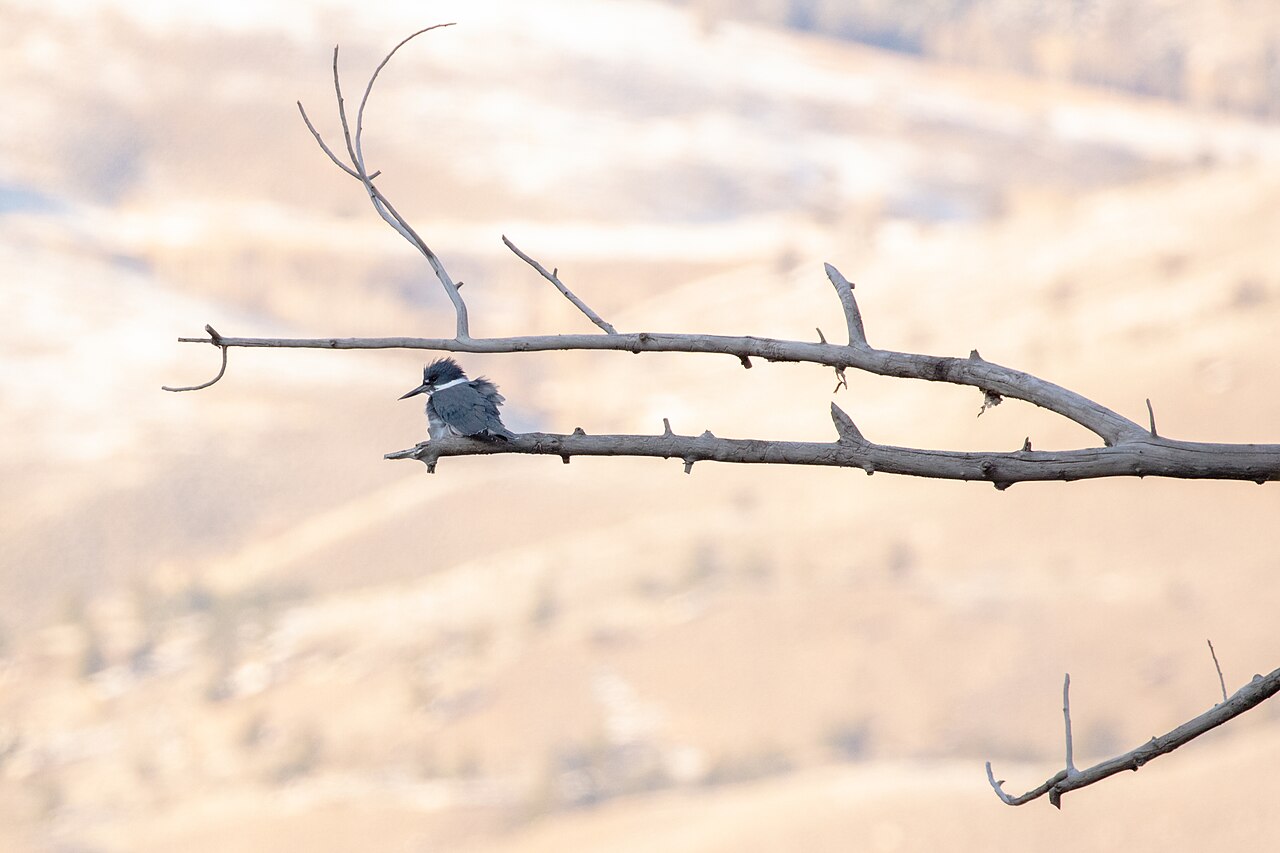
Female belted kingfishers can be found near water throughout much of North America, wherever the species occurs. Belted kingfishers live along rivers, streams, lakes, ponds, estuaries, and coastlines, anywhere with clear, calm water holding small fish and a perch or bank nearby. A female may be seen perched on a branch, wire, or post overlooking the water, watching for fish, or hovering above the surface before plunging in to catch prey. Kingfishers are often detected first by their loud, rattling call as they fly along a waterway. They nest in burrows that they dig into earthen banks near water, an unusual nesting habit. In the northern parts of their range they migrate south when waters freeze, while in milder areas they remain year-round. Because they are tied to water and are noisy and conspicuous, female belted kingfishers can be found by visiting rivers, lakes, and shorelines and watching perches over the water, as detailed in our guide to the female house finch.
Belted Kingfisher Behavior and Nesting
The female belted kingfisher shares the species’ dramatic hunting style and remarkable nesting habits. According to the Cornell Lab of Ornithology, belted kingfishers nest in burrows that they dig into earthen banks, an unusual habit for a bird. A female helps excavate a long tunnel, often several feet deep, into a vertical dirt bank near water, at the end of which the eggs are laid in a chamber. When hunting, she perches over clear water or hovers above it, then plunges headfirst to seize a small fish in her heavy bill, returning to a perch to beat and swallow it. Kingfishers are highly territorial along stretches of shoreline, and both sexes give the loud, dry, rattling call that so often announces their presence before they are seen. Unusually, the female is the more colorful sex, with her extra rusty belly band. These bold hunting and burrow-nesting behaviors make the female belted kingfisher a fascinating bird to observe, as explored in our guide to the female cardinal.
Where the Rusty Band Comes From
The female belted kingfisher’s rusty belly band is worth understanding, since it makes her a special case among birds. In the great majority of bird species, the male is the more colorful sex, using bright plumage to attract mates, while the female is duller for camouflage while nesting. The belted kingfisher reverses this in a small but striking way, since the female carries an extra rufous band across her belly and rusty flanks that the male entirely lacks, making her more ornamented than he is. This kind of reversal is uncommon in North American birds and makes the belted kingfisher a favorite example among birdwatchers of a female being showier than the male. The reason for this pattern is not fully understood, but it gives observers a reliable and memorable way to tell the sexes apart. Appreciating this rare reversal adds interest to every kingfisher sighting, as explored in our guide to the female house finch.
Appreciating Female Belted Kingfishers
Female belted kingfishers are a rewarding bird to appreciate, both for their striking looks and their dramatic lifestyle. As one of the few birds where the female is more colorful than the male, she offers a memorable lesson in the variety of nature, and her extra rusty band makes her easy and satisfying to identify. Watching a kingfisher perch over the water, hover, and plunge headfirst to catch a fish is one of the great spectacles of waterside birding, and hearing the loud, rattling call announce her arrival adds to the experience. Because kingfishers are tied to water and are noisy and conspicuous, they are among the more observable birds along rivers and lakes. Taking the time to find a female belted kingfisher and appreciate her rare, showy plumage makes time by the water more rewarding and memorable.
Frequently Asked Questions
How can you tell if a belted kingfisher is female?
A female belted kingfisher has a rusty chestnut band across her belly in addition to the blue-gray chest band. The male has only the single blue-gray band.
Is the female belted kingfisher more colorful than the male?
Yes, the female belted kingfisher is more colorful than the male, with an extra rusty belly band. This reversal is rare among North American birds.
What does a female belted kingfisher look like?
She is a stocky blue-gray bird with a shaggy crest, white collar, heavy bill, a blue-gray chest band, and a rusty chestnut band across her belly with rufous flanks.
What is the difference between a male and female belted kingfisher?
The male has only a blue-gray chest band with white underparts below, while the female adds a rusty belly band and rufous flanks, making her the more colorful sex.
Why is the female kingfisher more colorful?
The belted kingfisher is one of the few birds where the female is more ornamented than the male. She shows an extra rusty belly band that the male lacks.
Where do belted kingfishers live?
Belted kingfishers live near water, along rivers, streams, lakes, ponds, and coastlines, where they hunt fish. They nest in burrows dug into earthen banks near water.
Where can you see a female belted kingfisher?
Look near water. Female kingfishers perch on branches or wires over rivers and lakes, watching for fish, and are often heard first by their loud, rattling call.