Female Mallard: Identification Guide
The female mallard is a mottled brown duck with an orange-and-black bill and a blue-and-white wing patch, quite different from the male’s glossy green head. Her camouflaged plumage helps her blend in while nesting, but a few reliable clues make her easy to identify. This guide covers what a female mallard looks like, how she differs from the male, how to identify her, her behavior and nesting, and where and when to see her.
| Feature | Female Mallard |
|---|---|
| Color | Mottled brown |
| Bill | Orange with dark patches |
| Wing patch | Blue, bordered white |
| Face | Dark eyeline, pale stripe |
| Group | Dabbling duck |
What Does a Female Mallard Look Like?
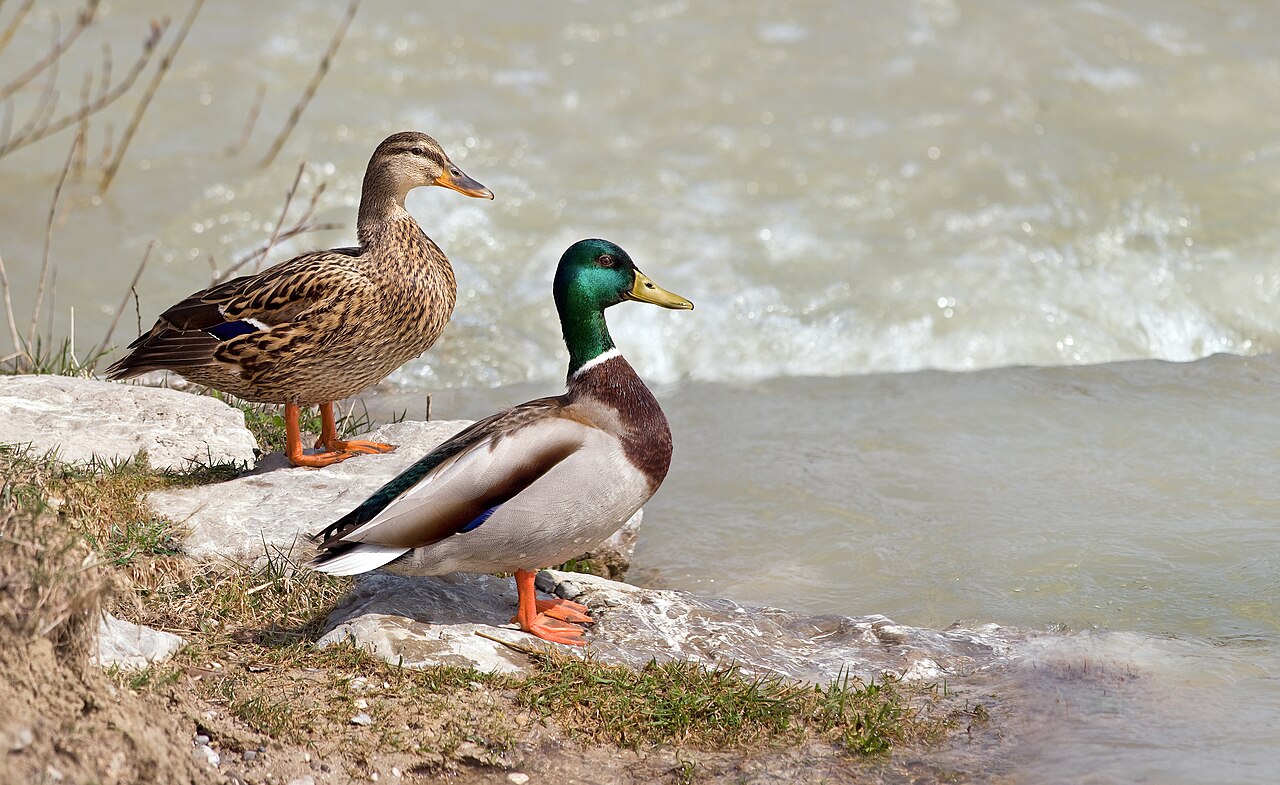
A female mallard is a mottled brown duck, quite different in appearance from the familiar green-headed male. Her body is patterned in various shades of brown, buff, and tan, which gives her excellent camouflage. Her bill is orange marked with dark patches, unlike the male’s plain yellow bill, and her face shows a darker line through the eye with paler areas around it. One of the best identification clues is the speculum, the iridescent blue patch on the wing bordered by white on both edges, which both male and female mallards share and which is often visible even at rest or in flight. Overall she looks like a classic brown dabbling duck, well suited to blending into marsh and pond edges. This combination of mottled brown plumage, orange-and-black bill, and blue-and-white wing patch is the key to recognizing her, as covered in our guide to types of ducks.
Female vs Male Mallard
The differences between female and male mallards are striking, at least when the male is in breeding plumage. The male, or drake, is unmistakable, with a glossy green head, a white neck ring, a chestnut breast, a gray body, and a yellow bill. The female is far more subdued, in mottled brown throughout, with an orange-and-black bill rather than yellow. Both sexes, however, share the blue speculum bordered with white, which is a helpful shared field mark. It is worth noting that for part of the year, males molt into a drab eclipse plumage and temporarily look much more like females, though their bill stays yellowish, which helps tell them apart. In general, the colorful drake and the camouflaged brown hen are easy to distinguish, and the female’s brown plumage serves the important purpose of concealment while she nests and raises her young.
How to Identify a Female Mallard
Identifying a female mallard involves confirming her key field marks and ruling out similar brown ducks. Look for the overall mottled brown plumage, the orange bill with dark patches, and especially the blue speculum bordered by white, which is one of the most reliable clues. Her size and typical dabbling-duck shape, along with her habit of tipping forward to feed, also help. Be aware of a few possible mix-ups: the female gadwall is grayer with a white speculum, the American black duck is darker with a purplish speculum lacking bold white borders, and domestic and hybrid ducks around parks can be confusing. In areas where mottled ducks occur, they look very similar too. Focusing on the orange-and-black bill and the white-bordered blue wing patch makes identification much more reliable, a useful skill for anyone enjoying waterfowl at ponds and feeders, as covered in our guide to what ducks eat.
Female Mallard Behavior and Nesting
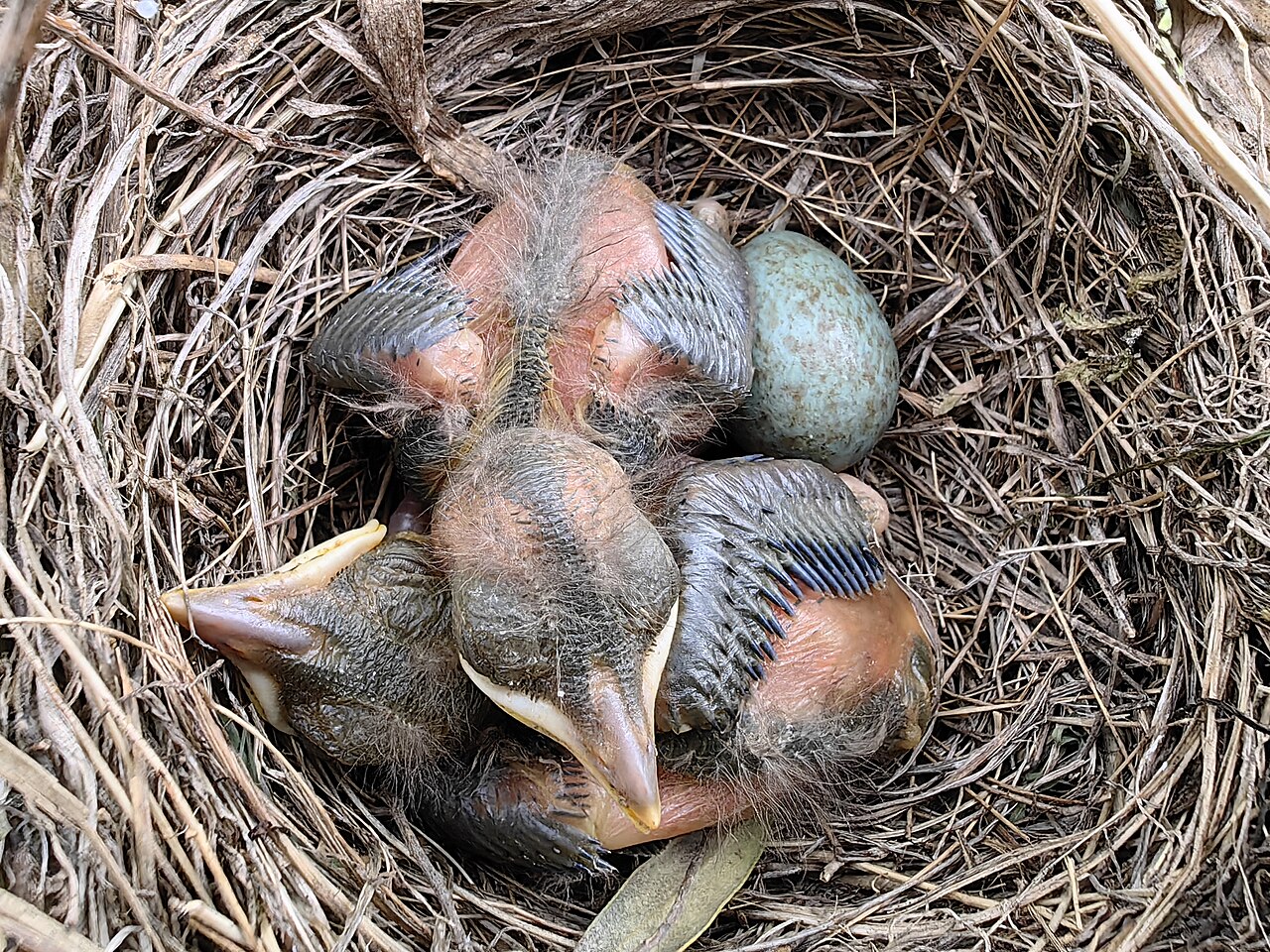
The female mallard takes on nearly all the work of nesting and raising the young, which is central to her behavior. She selects a nest site, usually on the ground and often concealed in vegetation near water, though sometimes surprisingly far from it, and she builds a nest lined with grasses and her own soft down feathers. She lays a clutch of eggs and incubates them alone, sitting tight and relying on her camouflage for protection, while the male typically departs. Once the ducklings hatch, the female leads them to water, where they can feed themselves almost immediately, and she watches over them as they grow. Her mottled brown plumage is essential during this vulnerable period, keeping her hidden on the nest. This strong maternal role, from nest-building to guiding the ducklings, makes the female mallard a devoted parent and a familiar sight leading a line of ducklings across a pond.
Where and When to See Female Mallards
Female mallards are extremely common and widespread, found alongside males in a huge range of watery habitats. Look for them on ponds, lakes, rivers, marshes, flooded fields, city parks, and even drainage ditches, since mallards are highly adaptable and comfortable around people. As dabbling ducks, they feed by tipping forward in shallow water to reach plants and invertebrates. Mallards are present year round in much of North America, though many migrate, and numbers often increase in winter when birds gather on open water. Spring and early summer are great times to see a female with a brood of ducklings, one of the most charming sights in the bird world. Because mallards are so abundant and tolerant of human surroundings, the female mallard is one of the easiest ducks to observe up close, making her a perfect starting point for learning waterfowl, as explored in our guide to bird symbolism.
Female Mallard Plumage Explained
The mottled brown look of a female mallard is well documented by ornithologists. According to the Cornell Lab of Ornithology, female mallards are mottled brown with a blue speculum bordered by white, and it is the female who incubates the eggs and tends the ducklings. This camouflaged plumage is a clear advantage, keeping her hidden on the nest and while leading vulnerable young, whereas the male’s bright green head serves for display. The shared blue speculum, present in both sexes, ties her visually to the male despite their different overall colors, and it remains one of the most reliable field marks for the species. Understanding this difference makes the female easier to identify and reveals the biology behind the mallard’s appearance, since her brown plumage is perfectly suited to her central role in raising the next generation, much like the pattern seen in our guide to the female house finch.
Female Mallards and Their Ducklings
One of the most endearing sights in nature is a female mallard leading her ducklings, and it reflects her devoted parenting. Soon after hatching, mallard ducklings are able to walk, swim, and feed themselves, and the female leads them from the nest to water, often making a notable overland journey if the nest is away from a pond. She then watches over the brood, guiding them to food and safety and brooding them to keep them warm, while they feed on insects, small aquatic creatures, and plants. The ducklings stay with their mother for several weeks as they grow and develop their flight feathers. This strong maternal care is essential for the ducklings’ survival, and it is why female mallards are so often seen shepherding a line of youngsters across ponds and park lakes, a familiar and charming scene for anyone who enjoys birds, as covered in our guide to attracting birds.
Female Mallard Sounds
One surprising way to recognize a female mallard is by her voice, since she is the source of the classic duck sound. The loud, familiar quack that most people associate with ducks is actually made mainly by the female mallard, often given as a series of loud, descending quacks. The male, by contrast, makes much quieter, raspier calls that sound nothing like the textbook quack. So when you hear a duck delivering a hearty, unmistakable quack, especially a repeated, attention-grabbing series, it is almost certainly a female mallard. This vocal difference is a handy clue, letting you identify a female mallard by ear even when she is out of sight or mixed in with other ducks, and it adds another dimension to recognizing this common and familiar bird.
Related reading: female wood duck identification.
Frequently Asked Questions
What does a female mallard look like?
A female mallard is a mottled brown duck with an orange bill marked with dark patches and a blue wing patch bordered by white, unlike the male’s green head.
How can you tell a female mallard from a male?
The male has a glossy green head and yellow bill, while the female is mottled brown with an orange-and-black bill. Both share a blue, white-bordered wing patch.
Do female mallards have a green head?
No, only male mallards have the glossy green head. Females are mottled brown all over, which camouflages them while nesting and caring for ducklings.
Do female mallards build the nest?
Yes, the female mallard builds the nest on the ground near water, lines it with down, incubates the eggs alone, and leads the ducklings to water after they hatch.
What is the blue patch on a mallard’s wing?
It is the speculum, an iridescent blue wing patch bordered with white that both male and female mallards have. It is a useful clue for identifying mallards.
How do you tell a female mallard from other brown ducks?
Check the orange-and-black bill and the blue, white-bordered speculum. A gadwall has a white speculum and a black duck is darker with no bold white borders.
Where do female mallards live?
Female mallards live on ponds, lakes, rivers, marshes, and city parks across North America. They are highly adaptable and present year round in much of their range.