Female Purple Finch: Identification Guide
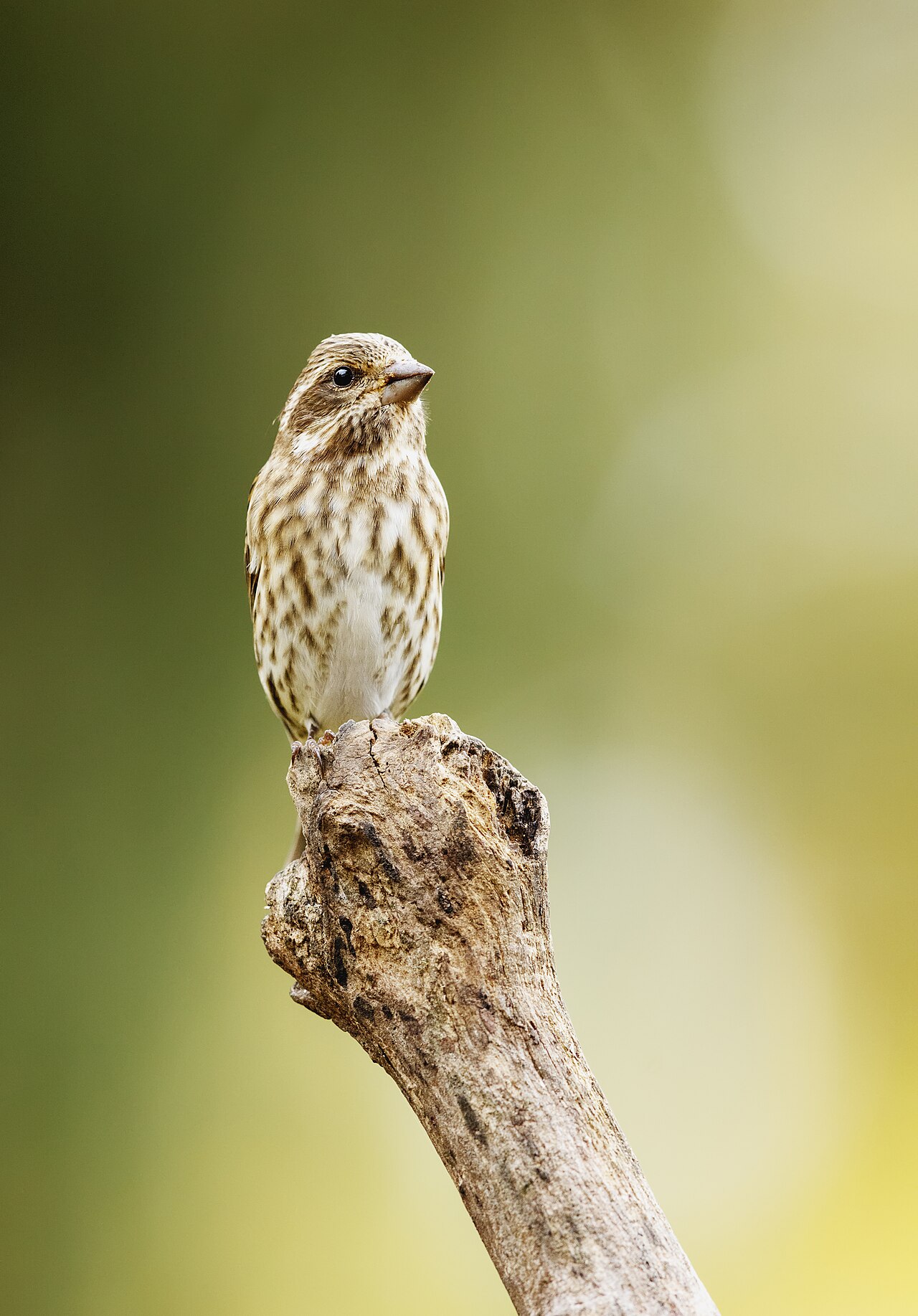
A female purple finch is brown and heavily streaked with no red, showing a bold whitish eyebrow and a dark cheek patch that give her a strongly patterned face. She is often confused with the female house finch, but her crisper face pattern and cleaner streaking set her apart. This guide covers how to identify a female purple finch, how she differs from the male and from house finches, and what she looks like.
| Feature | Female Purple Finch |
|---|---|
| Color | Brown, no red or raspberry |
| Face | Bold white eyebrow, dark cheek |
| Underparts | Crisp, heavy brown streaks |
| Jaw stripe | Dark malar stripe |
| Bill | Strong, conical |
| Tail | Short, notched |
How to Identify a Female Purple Finch
Identifying a female purple finch relies on her bold face pattern and crisp streaking. Unlike the male, which is washed in raspberry-red, the female purple finch has no red at all, being brown and white with heavy streaking. The key features are on her face, since she shows a broad whitish eyebrow stripe above the eye and a dark brown cheek or ear patch below it, along with a dark stripe down the side of the throat, giving her a strongly patterned, contrasting face. Her underparts are white with bold, crisp brown streaks, and she has a strong conical bill and a short, notched tail. This clean, well-marked appearance distinguishes her from the plainer-faced female house finch, with which she is often confused. Learning her bold face pattern is the key to identifying a female purple finch, part of the wider group covered in our guide to types of finches.
Female Purple Finch vs Female House Finch
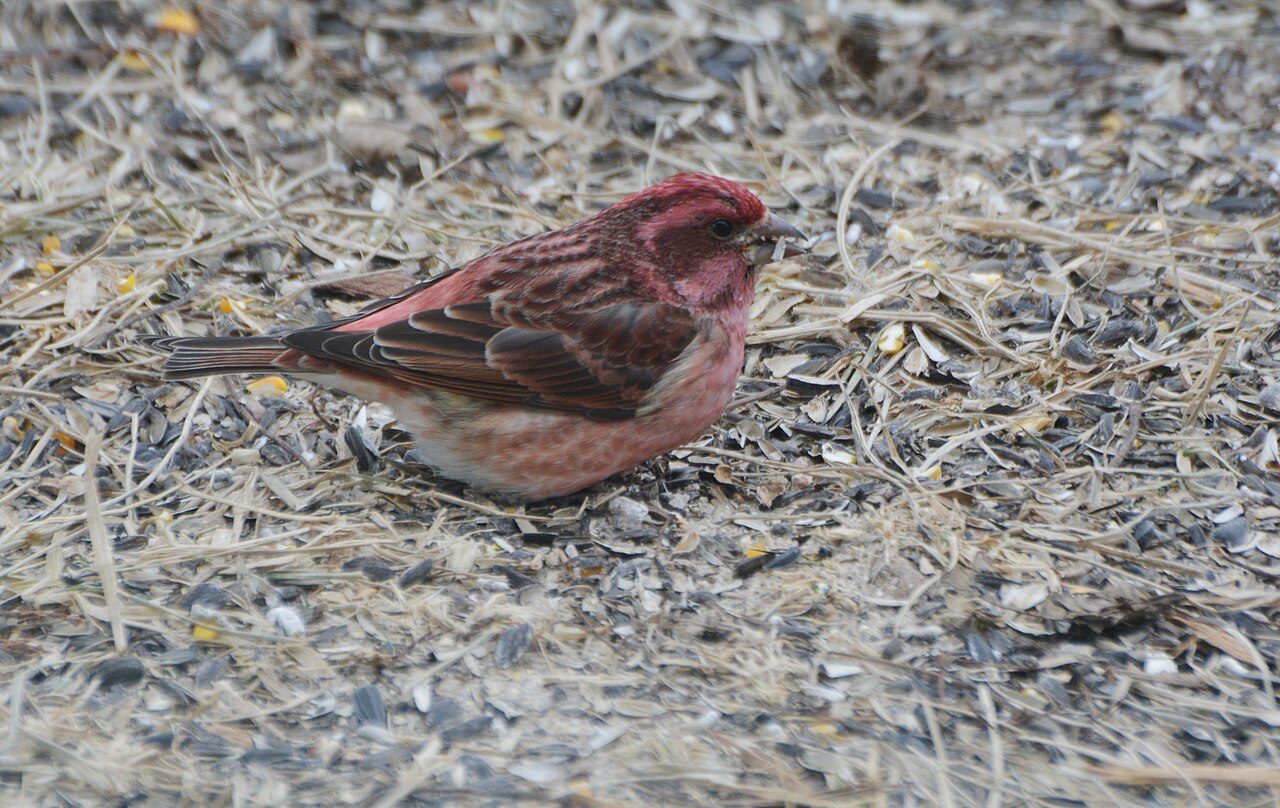
Telling a female purple finch from a female house finch is a classic identification challenge, since both are brown, streaky finches. The female purple finch has a bold, contrasting face pattern, with a strong whitish eyebrow, a dark cheek patch, and a dark jaw stripe, and her underpart streaks are crisp and well defined. The female house finch, by contrast, has a plainer, blurrier face with little pattern, lacking the strong eyebrow and cheek contrast, and her streaks tend to be softer and less distinct. The purple finch also has a slightly larger, more powerful bill and a shorter, more deeply notched tail. Overall the purple finch female looks crisper and more boldly marked, while the house finch female looks plainer and more uniform. These differences take practice but become reliable with experience. Comparing the two side by side is very helpful, as explored in our guide to the female house finch.
What Does a Female Purple Finch Look Like?
A female purple finch is a sturdy brown finch with striking facial markings and heavy streaking. She is brown above and whitish below, with bold, crisp brown streaks covering her breast and sides. Her most distinctive feature is her face, which shows a broad creamy-white eyebrow stripe, a dark brown cheek patch, and a dark stripe running down from the bill along the side of the throat, creating a strong, contrasting pattern. She has a large, conical, seed-cracking bill, a relatively large head, and a short tail with a notched tip. Despite the species name, there is no purple or red on the female, only browns, whites, and buff tones. She is a bit chunkier and larger-billed than a house finch, with a more powerful look. This boldly patterned brown finch is a rewarding bird to identify correctly, as explored in our guide to the house finch.
Where to See Female Purple Finches
Female purple finches can be found across much of North America, though they are more numerous in some regions and seasons than others. Purple finches breed in coniferous and mixed forests across the northern United States, Canada, and the western mountains and coast, and in winter they move south and to lower elevations, appearing across much of the eastern and central United States. They favor woodlands, forest edges, and wooded suburbs, and in winter they readily visit backyard feeders, especially those offering black oil sunflower seed. A female may be seen at a feeder alongside house finches, giving a good chance to compare the two. Purple finch numbers at feeders vary from year to year, since they sometimes move south in large numbers when northern food crops are poor. Because they come to feeders in winter, female purple finches are often seen in yards during the colder months, as detailed in our guide to the best bird seed.
Purple Finch Behavior and Movements
The female purple finch shares the species’ feeding habits and interesting seasonal movements. According to the Cornell Lab of Ornithology, purple finch numbers vary greatly from year to year, and in some winters they move south in large numbers when food is scarce farther north. This means that in some years female purple finches may be common at feeders across the eastern and central United States, while in other years they are scarce, a pattern known as irruption. A female uses her strong, conical bill to crack seeds, favoring black oil sunflower seed at feeders, and she also eats buds, berries, and insects in season. Purple finches often feed in small flocks, and they may mix with house finches and goldfinches at feeders, giving a good chance to compare them. They breed in cool northern and mountain forests, where the female builds a nest on a conifer branch. These feeding habits and year-to-year movements make the female purple finch an interesting bird to watch for, as explored in our guide to the American goldfinch.
Confusion With Other Finches
Female purple finches are involved in one of the trickiest identification puzzles at the feeder, so it helps to know the pitfalls. The most common confusion is with the female house finch, which is also brown and streaky but has a plainer, blurrier face lacking the purple finch’s bold white eyebrow and dark cheek, and softer, less crisp streaking. In parts of the West and in some areas, the closely related Cassin’s finch adds further complication, since its females are also streaky, though it favors mountain forests. Immature male purple finches can also cause confusion, since they look like females for their first year, being brown and streaky before acquiring the raspberry color, so a brown, streaky purple finch may be either a female or a young male. Focusing on the bold face pattern and crisp streaks, and comparing birds directly, is the best approach. Mastering these distinctions is a satisfying birding skill, as explored in our guide to types of sparrows.
Appreciating Female Purple Finches
Female purple finches are a rewarding bird to appreciate, both for their subtle beauty and for the identification challenge they present. Learning to recognize a female by her bold face pattern and crisp streaks, and to separate her from the similar female house finch, is a satisfying birding skill that sharpens your eye for detail. Watching purple finches appear at feeders in winter, sometimes in numbers during an irruption year, is a seasonal treat, and comparing them directly with house finches and goldfinches is instructive and enjoyable. Because their numbers vary from year to year, spotting a female purple finch feels like a small reward, especially in years when they move south in strength. Taking the time to study a female purple finch and appreciate her clean, well-marked plumage makes winter feeder watching more engaging and rewarding.
Frequently Asked Questions
How can you tell if a purple finch is female?
A female purple finch is brown and streaked with no red, showing a bold whitish eyebrow, a dark cheek patch, and crisp brown streaks on white underparts.
What is the difference between a female purple finch and a female house finch?
The female purple finch has a bold, contrasting face with a strong white eyebrow and dark cheek, and crisp streaks. The female house finch has a plainer, blurrier face.
Do female purple finches have any red?
No, female purple finches have no red or purple. Only the male purple finch shows the raspberry-red coloring. The female is brown, white, and buff with heavy streaking.
What does a female purple finch look like?
She is a brown, streaky finch with a bold white eyebrow, a dark cheek patch, a dark jaw stripe, crisp brown streaks below, and a strong conical bill.
Why are female purple finches confused with house finches?
Both are brown, streaky finches that visit feeders together. The purple finch has a bolder face pattern and crisper streaks, while the house finch looks plainer.
When do purple finches visit feeders?
Purple finches visit feeders mainly in winter, when they move south and to lower elevations. Their numbers vary from year to year depending on northern food supplies.
Where can you see a female purple finch?
Female purple finches live in woodlands and forest edges and visit backyard feeders in winter, often alongside house finches, giving a chance to compare the two.