Northern Saw-whet Owl: Identification, Sounds, and Facts
The Northern Saw-whet Owl is one of the smallest owls in North America, a round-headed, big-eyed forest sprite barely the size of a robin, named for a repetitive tooting call once likened to the sound of a saw being whetted (sharpened). With no ear tufts, a cat-like face, and an oversized appearance of innocence, it is among the most endearing of all owls, and also among the hardest to find, roosting motionless in dense conifers by day. Despite being common in many northern forests, most people never see one. This guide covers how to identify a Northern Saw-whet Owl, its distinctive call, diet, its remarkable secret migration, and how it nests.
| Feature | Detail |
|---|---|
| Scientific name | Aegolius acadicus |
| Length | 7 to 8.5 in (18 to 21 cm) |
| Wingspan | 16.5 to 22 in (42 to 56 cm) |
| Weight | 2.3 to 5.3 oz (65 to 151 g) |
| Range | Forests of the northern US, Canada, mountains |
| Diet | Mostly deer mice and small rodents |
| Conservation | Least Concern (secretive) |
How to identify a Northern Saw-whet Owl
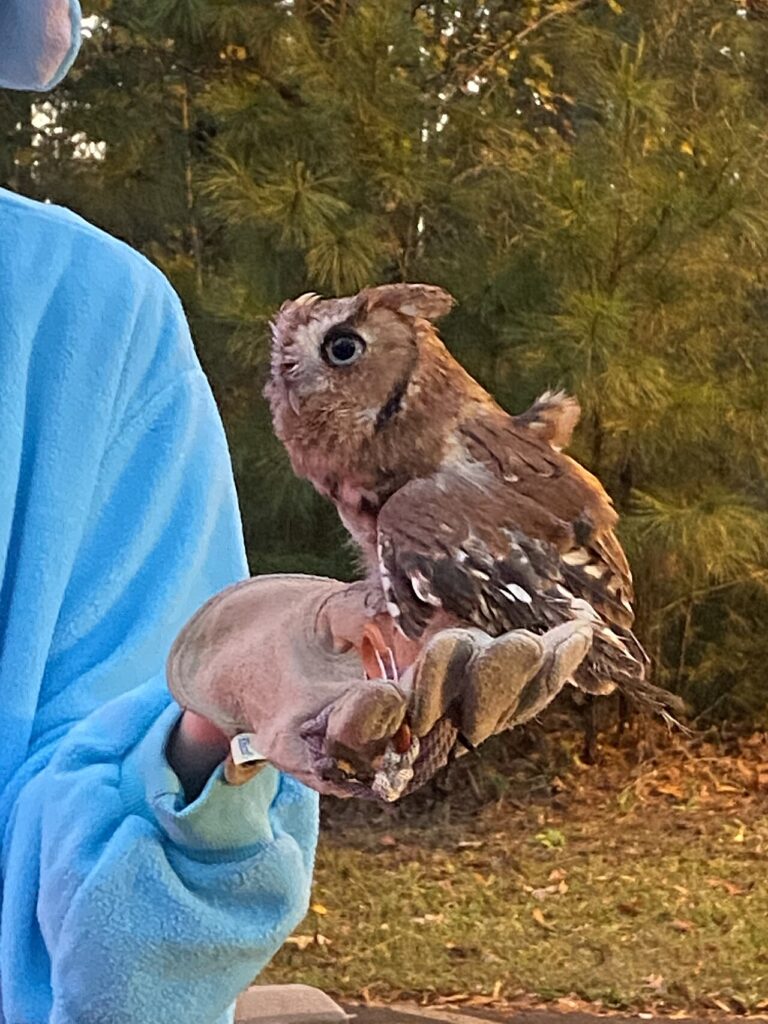
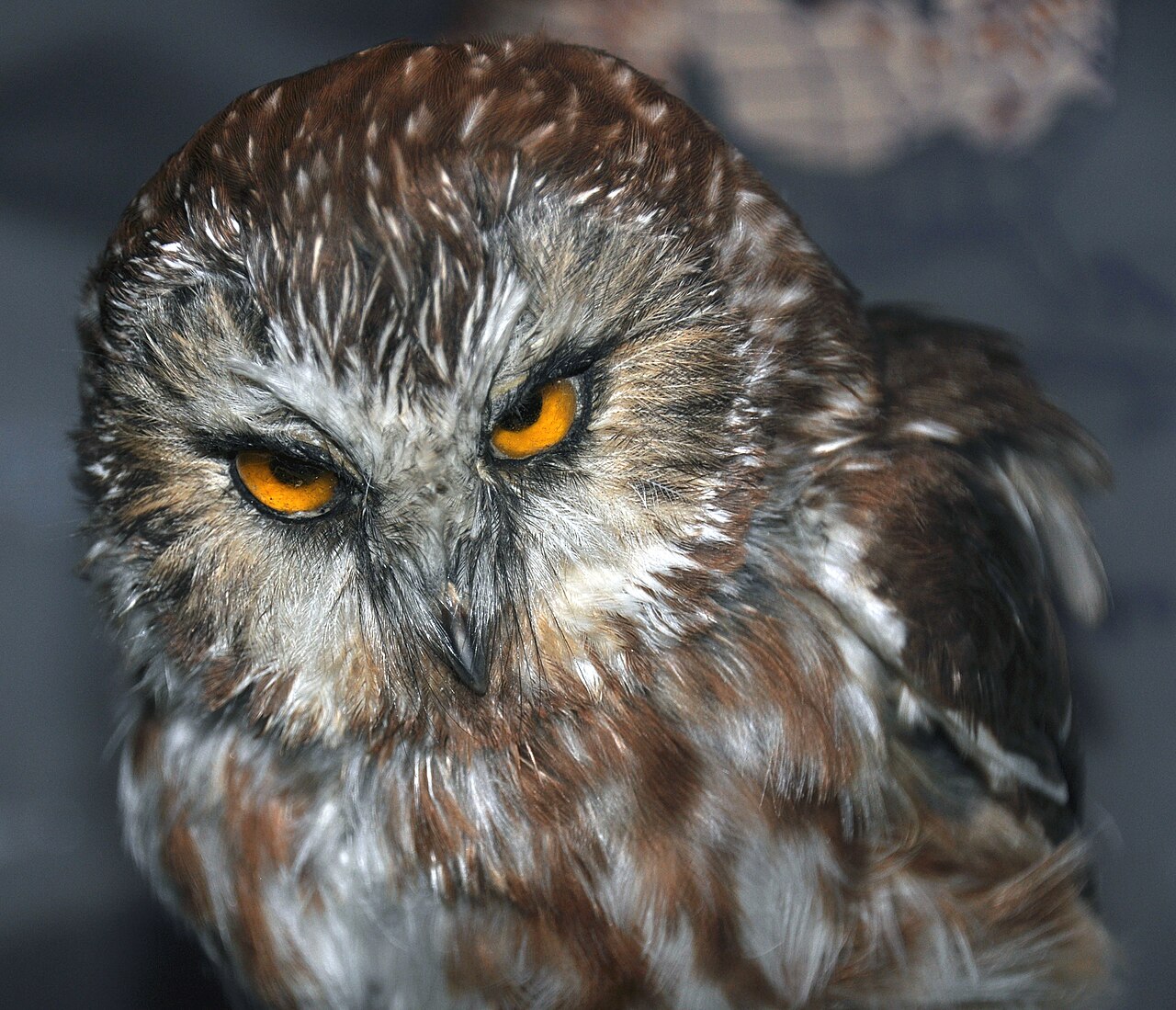
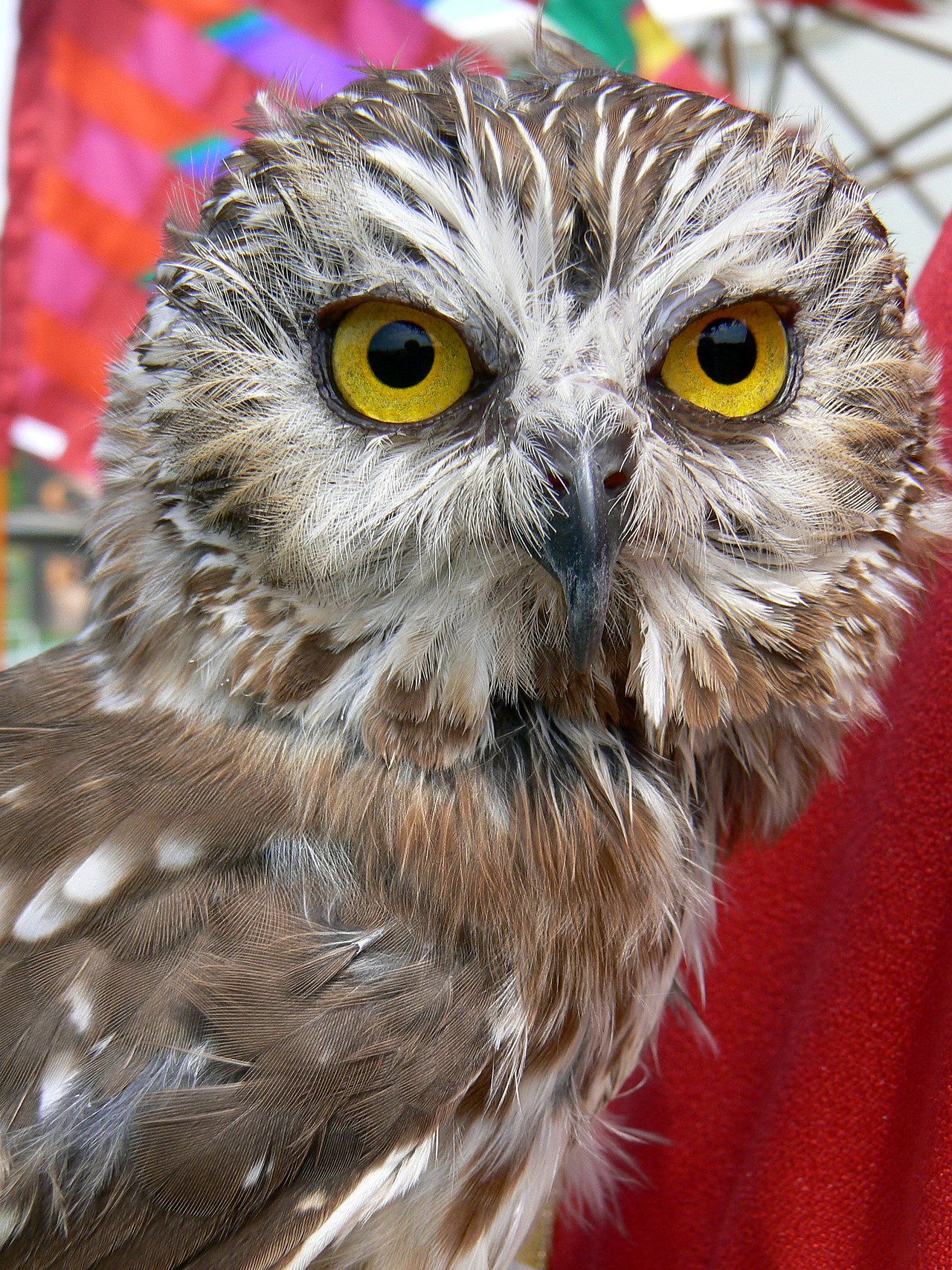
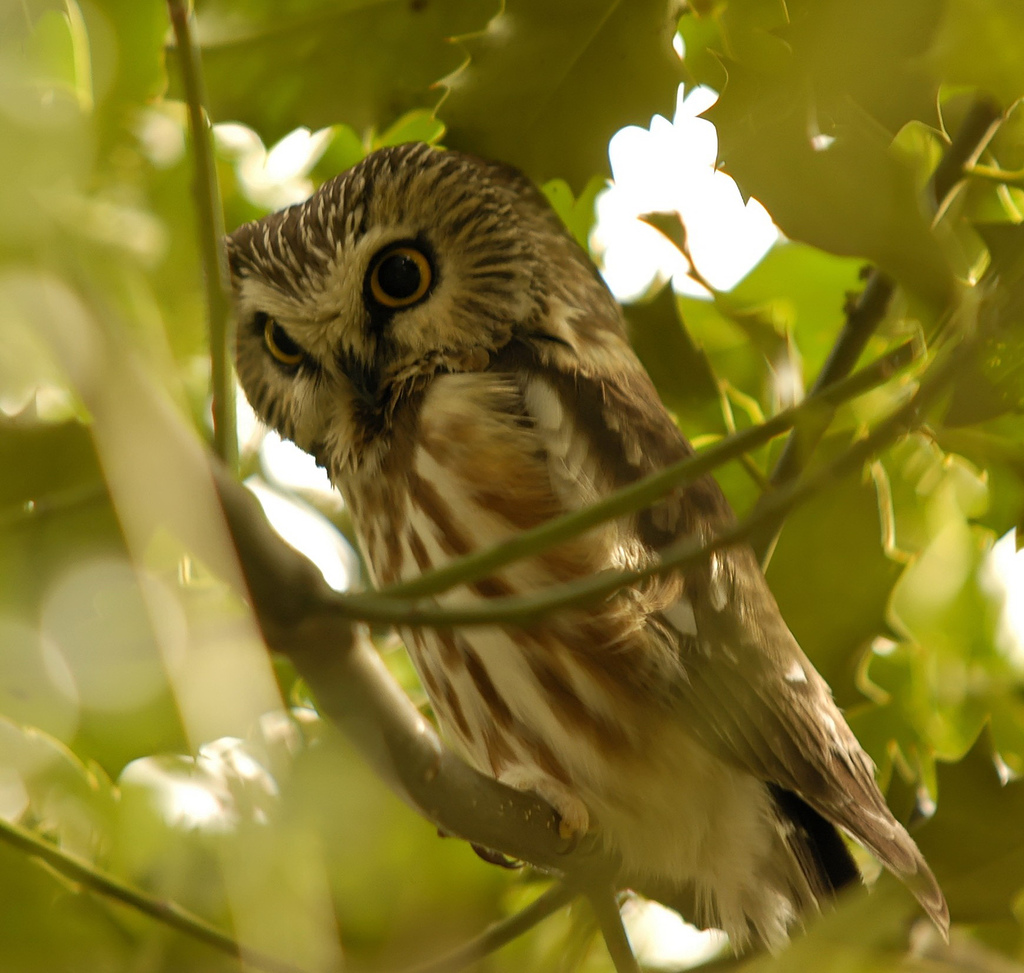
The Northern Saw-whet Owl is tiny, only seven to eight inches tall, with a large, rounded head and no ear tufts, giving it a compact, big-headed look. Its face is pale with a distinctive white Y or V between and above the bright yellow eyes, and its body is brown above and streaked with reddish-brown below. Juveniles look completely different, with a rich chocolate-brown head and chest and a buffy belly, a plumage that surprises many people.
Its diminutive size instantly separates it from nearly every other owl, and its round, tuftless head rules out the small screech-owls, which have ear tufts. About the only similar species is the rare Boreal Owl of the far north, which is larger with a pale-framed face. If you are lucky enough to find a palm-sized owl with a white V on its face roosting low in a dense evergreen, you have found a Northern Saw-whet Owl. Place it among relatives in our owl types guide.
Range and habitat
The Northern Saw-whet Owl breeds in conifer and mixed forests across the northern United States, throughout Canada, and southward down the mountain ranges of the West and Appalachians. It favors dense, damp woodland with thick cover for roosting and nearby openings for hunting. In winter many birds move south and to lower elevations, appearing in wooded areas well beyond the breeding range, including thickets, cedar groves, and even suburban parks.
Because it roosts so quietly in dense foliage, often at eye level in a young evergreen, the saw-whet is far more common than sightings suggest. It is a bird you are more likely to hear than see, and even then only during its calling season. This combination of abundance and invisibility is a big part of the owl’s mystique among birdwatchers.
What Northern Saw-whet Owls eat
The Northern Saw-whet Owl is a specialist on small mammals, above all the deer mouse, which forms the bulk of its diet across much of its range. It also takes voles, shrews, and other small rodents, plus the occasional small bird or large insect. For such a small predator, a single mouse is a substantial meal, and a saw-whet will often cache extra prey on a branch, thawing frozen leftovers by sitting on them like eggs in cold weather.
It hunts at night from a low perch, dropping silently onto prey detected mostly by sound, since its hearing is acute. Like all owls, it swallows small prey whole and coughs up pellets. This tight focus on mice, in contrast to the broad menus of larger owls in our guide to what owls eat, ties the saw-whet’s fortunes closely to rodent abundance each year.
Northern Saw-whet Owl sounds and calls
The saw-whet owl’s name comes from its distinctive advertising call: a steady, repetitive series of clear, whistled toots, often given at a rate of about two per second and continuing for minutes on end. Early naturalists thought the rhythmic tooting resembled the sound of a saw being sharpened on a whetstone, hence “saw-whet.” The call carries surprisingly far through the night forest and is most often heard from late winter into spring, when males advertise for mates.
Outside the breeding season the saw-whet is largely silent, which adds to how easily it goes undetected. Its monotonous tooting is unmistakable once learned and is by far the best way to locate this secretive owl. If you hear an endless string of even, whistled toots from northern woods on a spring night, a Northern Saw-whet Owl is calling.
Nesting and secret migration
The Northern Saw-whet Owl is a cavity nester, using old woodpecker holes, natural tree hollows, and nest boxes. The female lays four to seven white eggs, usually in spring, and does all the incubating while the male hunts. Uniquely, the female often leaves the nest once the older chicks are partly grown, letting the male finish raising them, and she may even go on to nest again with another mate in a good food year.
One of the great surprises of modern ornithology is that this owl is a strong migrant. For decades it was thought to be mostly resident, until nighttime banding stations began capturing thousands of migrating saw-whets each autumn, revealing a huge, previously hidden migration. Coordinated banding projects have transformed our understanding of the species, showing that these tiny owls stream south through the eastern forests every fall in numbers no one suspected. According to the Cornell Lab of Ornithology, this discovery makes the saw-whet one of the most-banded owls in North America.
Conservation and interesting facts
The Northern Saw-whet Owl is listed as Least Concern and is thought to be reasonably common, though its secretive habits make it hard to census accurately. Its main threats are the loss of mature forest with nesting cavities and, like all owls, rodenticides and vehicle collisions. Providing nest boxes in appropriate forest and conserving old trees both help this diminutive predator.
A few facts capture its charm: it is so tame at the roost that early observers could sometimes touch it, its huge autumn migration went unnoticed for generations, and juveniles look so different from adults that they were once thought to be a separate species. Small owls like the saw-whet have fed centuries of owl symbolism and the wonder behind seeing an owl. To find out which owls occur in your area, browse regional guides such as types of owls in Texas.
How to find a Northern Saw-whet Owl
Finding a saw-whet owl takes patience and a bit of local knowledge, because the bird is tiny, silent outside the breeding season, and superbly hidden. In winter, the best approach is to search dense evergreens, young spruces, cedars, and pines, at roughly eye level, looking for a small, round-headed owl pressed against the trunk. Telltale signs on the ground or snow beneath a roost include concentrations of small white droppings and tiny pellets.
During the late-winter and spring breeding season, listening at night is far more productive than looking. The male’s endless, even tooting carries well through the forest and is unmistakable once learned. Whether you search by day or listen by night, keep any encounter brief and calm; these confiding little owls will often sit tight, and it is important not to crowd or repeatedly disturb a roosting bird.
Juveniles look like a different owl
One reason the Northern Saw-whet Owl surprises people is that juveniles look nothing like adults. A young saw-whet, in the weeks after leaving the nest, has a rich chocolate-brown head and chest, a plain dark face, and a warm buffy-orange belly, with only the white V between the eyes hinting at the adult pattern. Early naturalists were so struck by the difference that the juvenile was once described as a separate species.
Adults, by contrast, are brown above and streaked reddish-brown on white below, with a pale, well-marked face. Knowing about this dramatic age difference helps birdwatchers avoid confusion in late summer, when fresh juveniles appear. It is a good reminder that a bird’s plumage can change enormously with age, a theme that runs through owl identification and the wider world of owls.
Related reading: Western Screech-Owl.
Related reading: Northern Hawk Owl.
Frequently Asked Questions
How big is a Northern Saw-whet Owl?
It is one of the smallest owls in North America, just 7 to 8.5 inches tall with a 16.5 to 22 inch wingspan, weighing only 2.3 to 5.3 ounces, about the size of a robin.
Why is it called a saw-whet owl?
Its repetitive, whistled tooting call reminded early naturalists of the sound of a saw being sharpened, or whetted, on a stone. The name comes from that resemblance.
What does a Northern Saw-whet Owl sound like?
It gives a steady, monotonous series of clear whistled toots at about two per second, continuing for minutes. It is heard mostly on late-winter and spring nights when males advertise.
What do Northern Saw-whet Owls eat?
Mostly deer mice, along with voles, shrews, and other small rodents, plus occasional small birds and insects. They often cache extra prey and thaw frozen food by sitting on it.
Where do Northern Saw-whet Owls live?
They breed in conifer and mixed forests across the northern US, Canada, and western and Appalachian mountains, moving south and to lower elevations in winter, when they appear in dense thickets.
Do Northern Saw-whet Owls migrate?
Yes, far more than once believed. Nighttime banding revealed a massive, previously hidden autumn migration, making the saw-whet one of the most-banded owls in North America.
Why are Northern Saw-whet Owls so hard to see?
They are tiny and roost motionless in dense evergreens by day, often at eye level, relying on camouflage and stillness. Most people detect them only by their tooting call at night.
Will Northern Saw-whet Owls use nest boxes?
Yes. They are cavity nesters that use old woodpecker holes and readily accept nest boxes placed in suitable forest, which is a helpful way to support local breeding.