Barn Owl: Identification, Sounds, and Facts
The Barn Owl is a pale, ghostly owl with an unmistakable heart-shaped facial disk, dark eyes, and a long-legged, buoyant flight, and it is one of the most effective rodent hunters on Earth. Instead of hooting, it delivers a long, harsh, rasping screech that has startled people for centuries and earned it a reputation as a ghost of the night. Found on every continent except Antarctica, the Barn Owl thrives in open country worldwide, often nesting in barns, church towers, and nest boxes close to people. This guide covers how to identify a Barn Owl, its range, its remarkable hunting ability, its eerie sounds, how it nests, and why it is a farmer’s best friend.
| Feature | Detail |
|---|---|
| Scientific name | Tyto alba |
| Length | 13 to 16 in (33 to 40 cm) |
| Wingspan | 39 to 49 in (100 to 125 cm) |
| Weight | 14 to 25 oz (400 to 700 g) |
| Face | White, heart-shaped disk; dark eyes |
| Diet | Rodents (voles, mice, rats) |
| Conservation | Least Concern (declining regionally) |
How to identify a Barn Owl
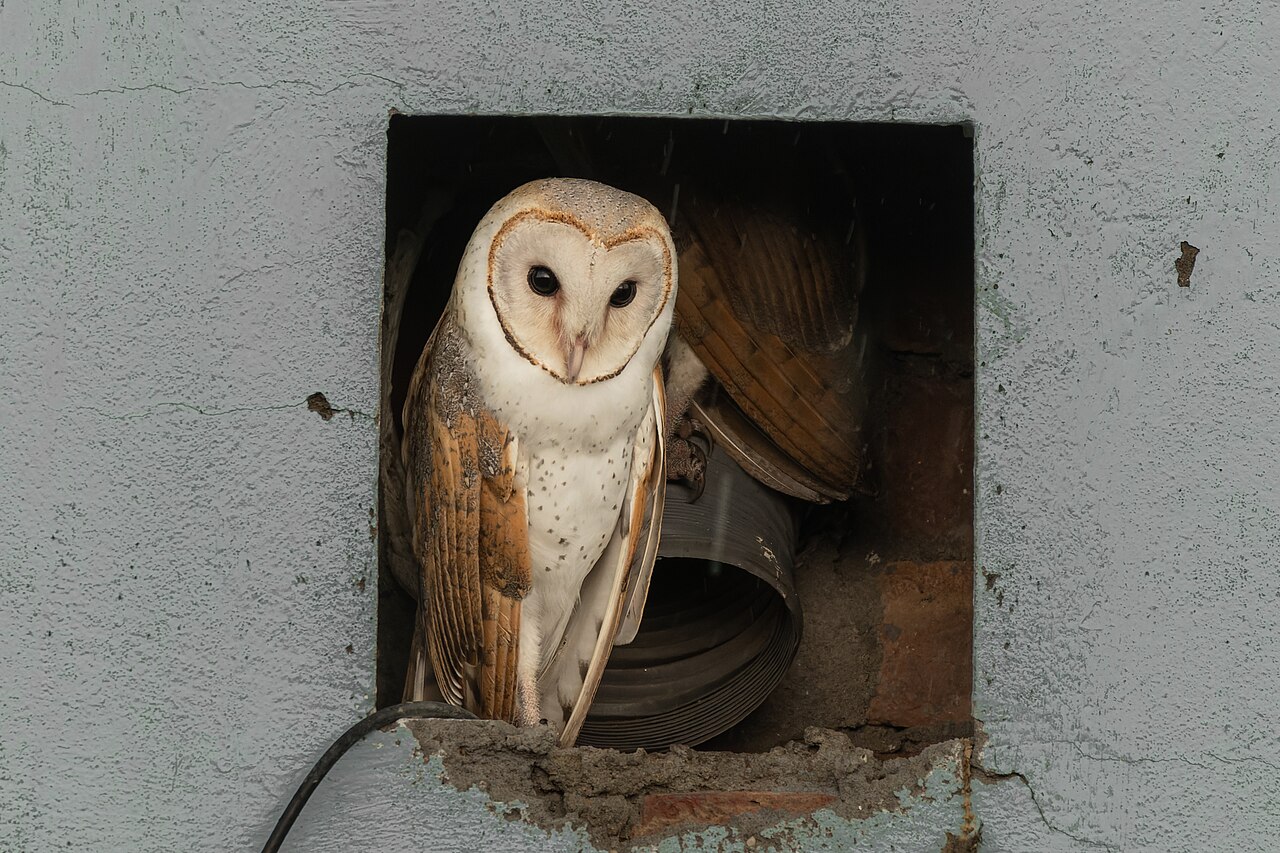
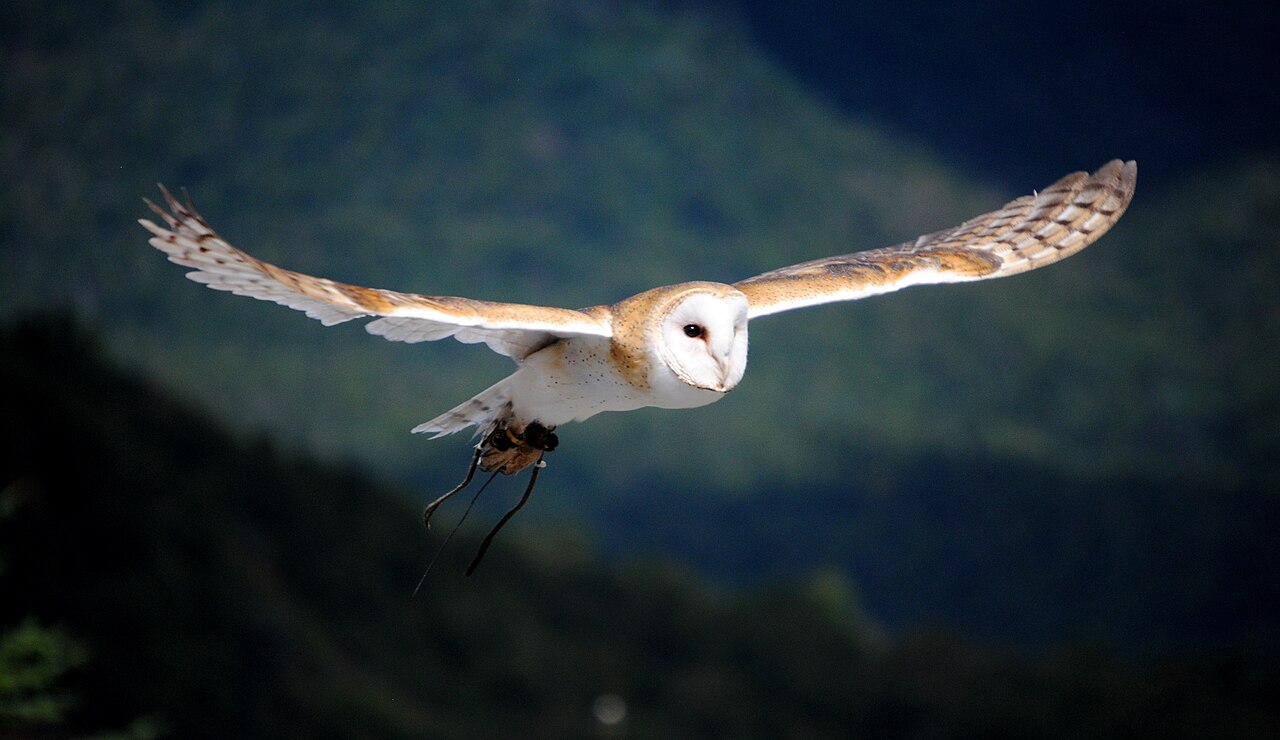
The Barn Owl is instantly recognizable by its white, heart-shaped facial disk and small, dark eyes, a look unlike any other North American owl. Its upperparts are a soft golden-buff washed with gray and delicately speckled, while the underparts and face are pale, often appearing pure white in flight or in headlights. It has long legs, a rounded head with no ear tufts, and long, broad wings that give it a light, wavering, moth-like flight low over fields.
In flight at night a Barn Owl can look ghostly white, which is the source of countless “ghost” sightings around old buildings. The heart-shaped face alone separates it from every other owl in the region, including the yellow-eyed, round-faced Barred Owl, with which it is sometimes confused by name. Females tend to be more heavily spotted and slightly darker than the paler males. See how it fits among relatives in our owl types guide.
Range and habitat
The Barn Owl is one of the most widely distributed birds in the world, found on six continents. In North America it ranges across much of the United States and into southern Canada and Mexico, favoring open and semi-open country: grasslands, farmland, marshes, deserts, and the edges of towns. It is closely tied to habitats rich in rodents and to structures or cavities where it can nest and roost by day.
True to its name, the Barn Owl often lives in and around human structures, roosting and nesting in barns, silos, abandoned buildings, church towers, and nest boxes, as well as tree hollows and cliff crevices. This close association with farms and open fields, where rodents abound, makes it a familiar if seldom-seen neighbor across rural landscapes. It is largely non-migratory, though young birds disperse widely.
What Barn Owls eat
The Barn Owl is a rodent specialist and arguably the most efficient small-mammal hunter of any bird. Its diet is dominated by voles, mice, rats, shrews, and pocket gophers, and a single family can consume thousands of rodents in a year, which is why farmers and vineyards actively welcome them. It hunts by flying low and slow over open ground, listening for the faint rustle of prey, then dropping with pinpoint accuracy.
Its hunting depends on extraordinary hearing. A Barn Owl’s ear openings are set asymmetrically, one higher than the other, allowing it to pinpoint a mouse in total darkness by sound alone, and its facial disk funnels sound to those ears like a satellite dish. Combined with silent flight, this makes it a devastatingly effective nocturnal predator. Its heavy focus on rodents sets it apart from the broad menus of other owls in our guide to what owls eat.
Barn Owl sounds and calls
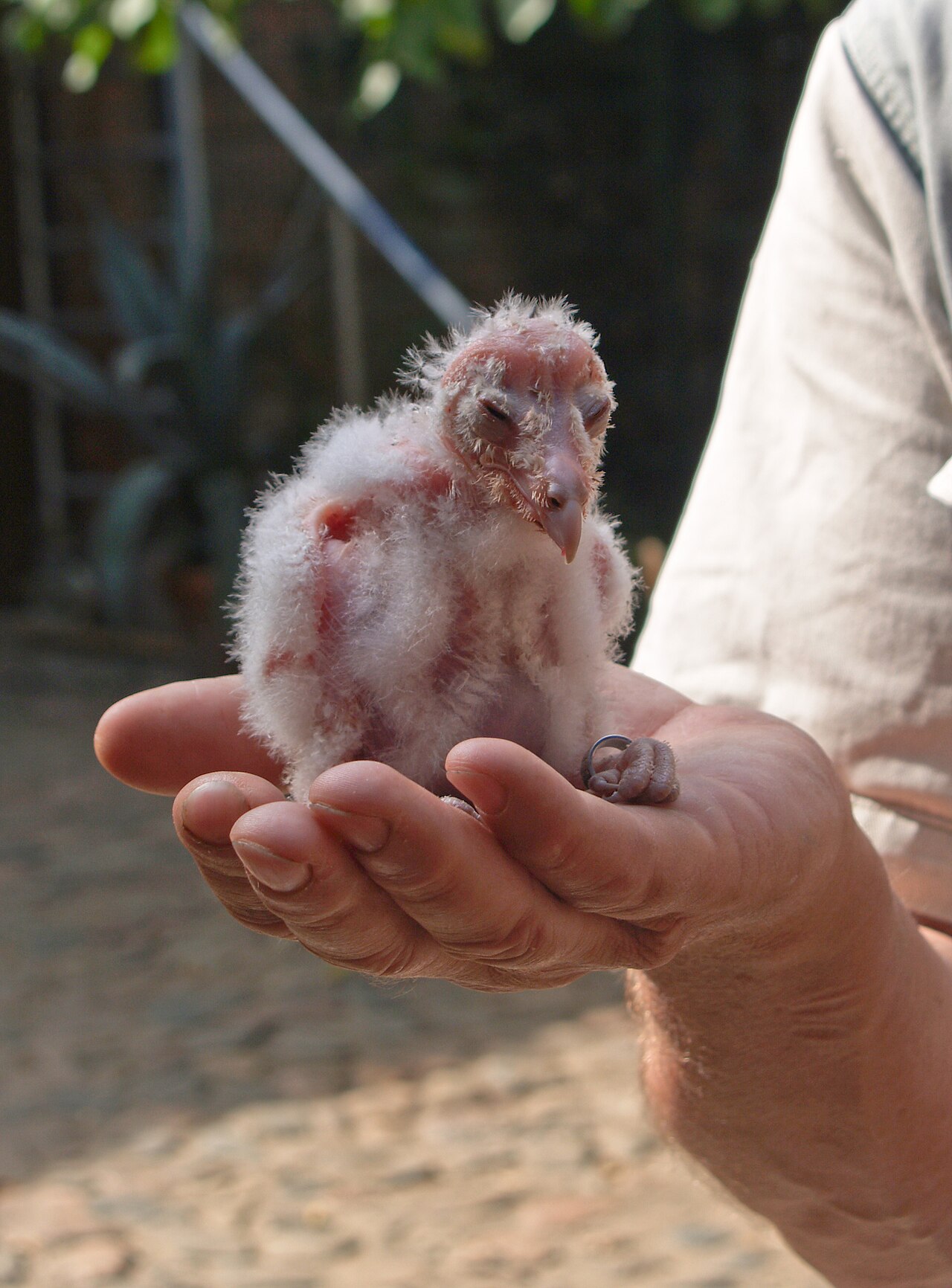
Unlike the hooting owls, the Barn Owl does not hoot at all. Its signature sound is a long, harsh, rasping screech or shriek, an eerie, drawn-out scream that carries across the night and has fueled ghost stories for generations. It also makes hisses, snores, and bill-snapping sounds, especially at the nest, and nestlings give raspy, wheezing snores that can be surprisingly loud when they beg for food.
Because the Barn Owl is silent in flight and vocal mainly around its roost and nest, hearing that unearthly screech from a barn or field at night is often the first sign one lives nearby. The sound is so distinctive that once heard it is never mistaken for the gentle hoots of other owls. If a bloodcurdling shriek drifts from an old building after dark, a Barn Owl is the likeliest source.
Nesting and life cycle
The Barn Owl nests in cavities and sheltered ledges, barns, tree hollows, cliff niches, and nest boxes, laying its eggs on a bed of its own crushed pellets rather than building a nest. Clutch size is unusually variable and tracks food supply: in years when voles are abundant a female may lay a large clutch, sometimes many eggs, while in lean years she lays fewer. She incubates for about a month while the male hunts for the family.
The owlets hatch at intervals, so a brood contains chicks of different sizes, and in poor food years only the oldest may survive. Young barn owls are covered in white down and grow quickly, fledging after about two months. Baby Barn Owls, with their comical faces and loud snoring calls, are a favorite subject of the nest-box cameras that have made this species a wildlife-watching star. In good conditions Barn Owls can raise two broods in a year.
Conservation and interesting facts
Globally the Barn Owl is listed as Least Concern, but many regional populations have declined due to the loss of old barns and hollow trees, the conversion of grassland to intensive crops, rodenticide poisoning, and collisions with vehicles on roadside verges where they hunt. In many areas, nest-box programs have become vital to keeping local populations healthy, and they are among the most successful owl conservation tools anywhere. The Cornell Lab of Ornithology highlights the Barn Owl’s outsized value as a natural controller of rodents.
A few facts capture its wonder: it can locate prey in complete darkness by hearing alone, its color ranges from nearly white to rich golden-buff (the “black” or “blue” barn owls of internet lore are not natural color forms), and it is among the most beneficial birds a farmer can host. Its pale, silent, night-flying form has inspired ghostly owl symbolism and the beliefs behind seeing a white owl. To learn which owls live near you, browse regional guides such as types of owls in Texas.
Baby Barn Owls and nest cameras
Few young birds are as endearing, or as strange-looking, as baby Barn Owls. Newly hatched owlets are covered in white down, with oversized heads and the beginnings of the heart-shaped face, and because eggs hatch at intervals, a single brood contains chicks of visibly different sizes. They grow rapidly on the steady stream of rodents their parents deliver, and by a few weeks old they are a jostling, snoring crowd at the nest entrance.
Barn Owls’ willingness to nest in boxes and buildings has made them stars of live nest cameras, which have taught researchers and the public an enormous amount about owl family life. Watching a brood grow, from blind hatchlings to fledglings testing their wings, is one of the most popular wildlife-cam experiences anywhere. If you host a barn owl box, resist the urge to peek inside during nesting; a camera lets you watch without disturbing the family.
Barn Owl colors and common myths
Barn Owls range in color from nearly pure white below to a rich golden-buff above, flecked with fine gray. Females tend to be darker and more heavily spotted than the paler males, and in some regions birds are more richly colored overall, but the striking “black barn owl” and “blue barn owl” images that circulate online are not natural color forms, they are digitally altered or fanciful. A real Barn Owl is always some blend of white, buff, and gray.
Its pale, silent, night-flying form is also the source of countless ghost legends, since a Barn Owl drifting past a window or through a churchyard at night can look genuinely spectral. This eerie reputation feeds directly into owl symbolism and the beliefs behind seeing a white owl, even though the bird itself is simply a superbly adapted rodent hunter going about its night’s work.
Related reading: Short-eared Owl.
Frequently Asked Questions
What sound does a Barn Owl make?
Barn Owls do not hoot. They give a long, harsh, rasping screech or shriek, along with hisses and snores. The eerie scream carries across the night and has inspired many ghost stories.
How big is a Barn Owl?
Barn Owls are 13 to 16 inches long with a 39 to 49 inch wingspan, weighing 14 to 25 ounces. They look larger in flight because of their long, broad wings.
What do Barn Owls eat?
Almost entirely rodents, especially voles, mice, and rats. A single family can eat thousands of rodents a year, which is why they are prized as natural pest control on farms.
Why does a Barn Owl have a heart-shaped face?
The heart-shaped facial disk funnels sound to the owl’s asymmetrically placed ears, letting it pinpoint prey in complete darkness by hearing alone. It is a highly effective sound-gathering adaptation.
Where do Barn Owls live?
In open country worldwide, including farmland, grassland, marshes, and deserts. They often nest in barns, silos, church towers, tree hollows, and nest boxes near open fields rich in rodents.
Are Barn Owls white?
They are pale, with white underparts and face and golden-buff, gray-flecked upperparts. In flight they can look ghostly white. The ‘black’ or ‘blue’ barn owls seen online are not natural.
How can I attract a Barn Owl?
Provide a large nest box mounted 10 to 15 feet high on a pole or building near open fields, and avoid rodenticides. Barn Owls are excellent pest control and readily use well-placed boxes.
How many eggs do Barn Owls lay?
Clutch size varies with food supply. In good vole years a female may lay a large clutch, while in lean years she lays fewer. Eggs hatch at intervals, so chicks differ in size.