Pink Bird: Identifying Flamingos, Spoonbills, and Finches
The most likely pink bird you’ve spotted is either a flamingo, an all-pink wading bird best known from Florida, or a roseate spoonbill, a genuinely wild pink bird found across the Gulf Coast and often mistaken for a flamingo. Smaller songbirds like house finches and purple finches show rosy-red tones too, though “pink” describes their coloring more loosely than it does the two large wading birds.
Pink coloring in birds almost always traces back to diet rather than pigment the bird produces itself, a detail that explains a lot about which species show it and why captive or malnourished individuals sometimes look pale by comparison. This guide covers the main pink birds you’re likely to see, how to tell them apart, and why they’re pink in the first place.
The pink bird most people spot is either a flamingo or a roseate spoonbill, the two large wading birds with genuinely pink plumage, most common along the Gulf Coast and in Florida. Smaller birds like house finches and purple finches show reddish-pink tones on males. Pink coloring in all of these species comes from carotenoid pigments in their diet, not from the bird’s own pigment production.
| Bird | Pink Coloring |
|---|---|
| Flamingo | All-over pink to reddish-pink; diet-dependent intensity |
| Roseate Spoonbill | Bright pink body, spoon-shaped bill; often mistaken for flamingo |
| Purple Finch | Raspberry-pink wash on head and breast, males only |
| House Finch | Reddish to pinkish-red on head and breast, males only |
| Rosy-Finch | Pinkish wing and belly patches; mountain habitat |
What Kinds of Birds Are Pink?
Genuinely all-pink birds in North America are a short list, headed by flamingos and roseate spoonbills, both large wading birds found mainly along the Gulf Coast, in Florida, and in parts of the Caribbean and Central America, favoring shallow coastal wetlands and lagoons.
Beyond those two, “pink” gets applied more loosely to birds with rosy or reddish-pink patches rather than all-over pink plumage, including several finch species where males show a rosy wash on the head and breast rather than solid pink coverage across the whole body.
Outside North America, additional genuinely pink species exist, including certain pigeon and cockatoo species in other parts of the world, but for someone asking about a pink bird seen locally in the United States, the flamingo-and-spoonbill pairing, plus the finch group, covers the overwhelming majority of real sightings.
What Bird Is Completely Pink?
The flamingo is the bird most associated with head-to-toe pink coloring, appearing as a tall wading bird with long legs, a curved neck, and a distinctively shaped bill, with color ranging from pale pink to a deep reddish-pink depending on the individual bird’s diet and health.
Wild flamingo sightings in the continental United States are concentrated in Florida, where a small resident population has become established in recent years in addition to occasional wandering individuals that show up further north after storms, though flamingos are far more commonly seen in zoos and wildlife parks across the country.
Color intensity in flamingos varies noticeably between individuals and populations, since it depends directly on how much carotenoid-rich food, primarily algae and small crustaceans, an individual bird has been eating, which is why captive flamingos on a poor diet can look noticeably paler than wild ones. The baby flamingo guide covers the surprising detail that chicks are actually born gray, not pink.
What Bird Is Often Mistaken for a Flamingo?
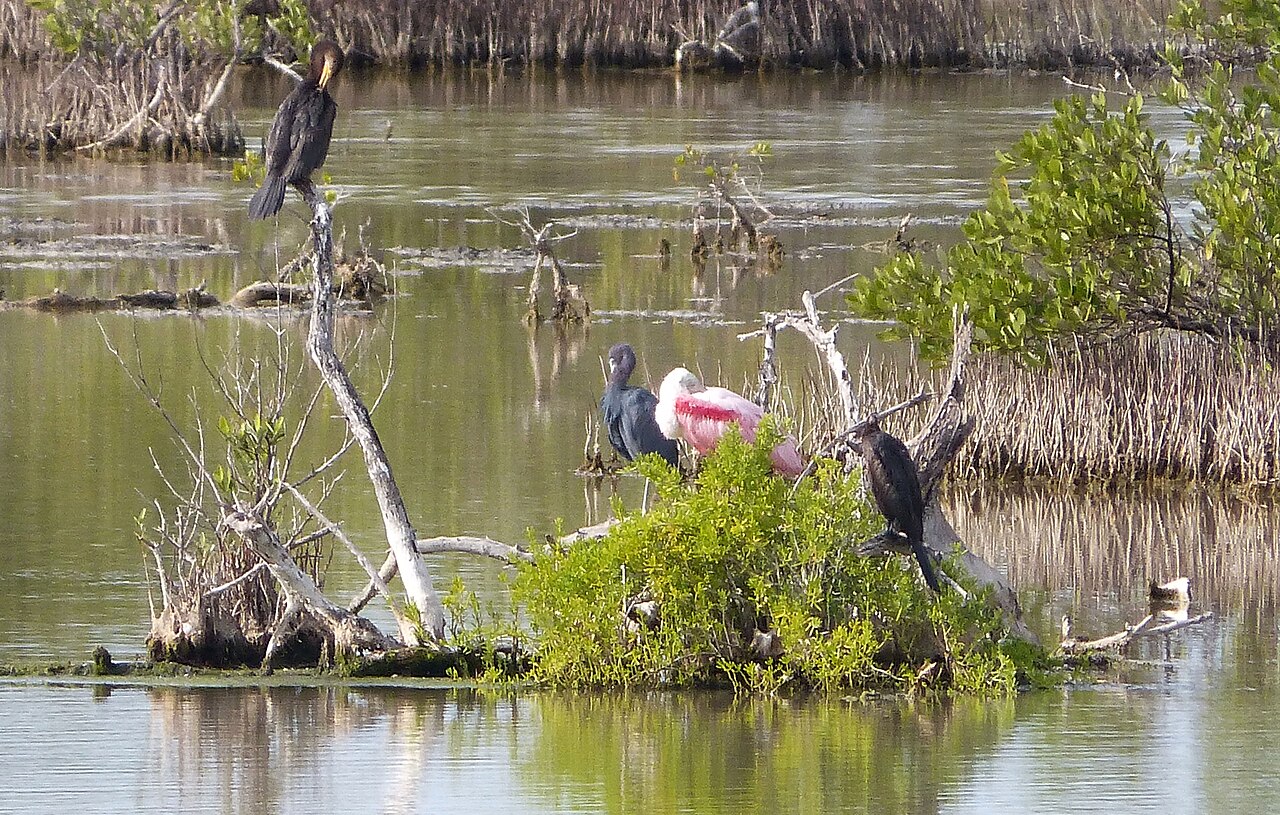
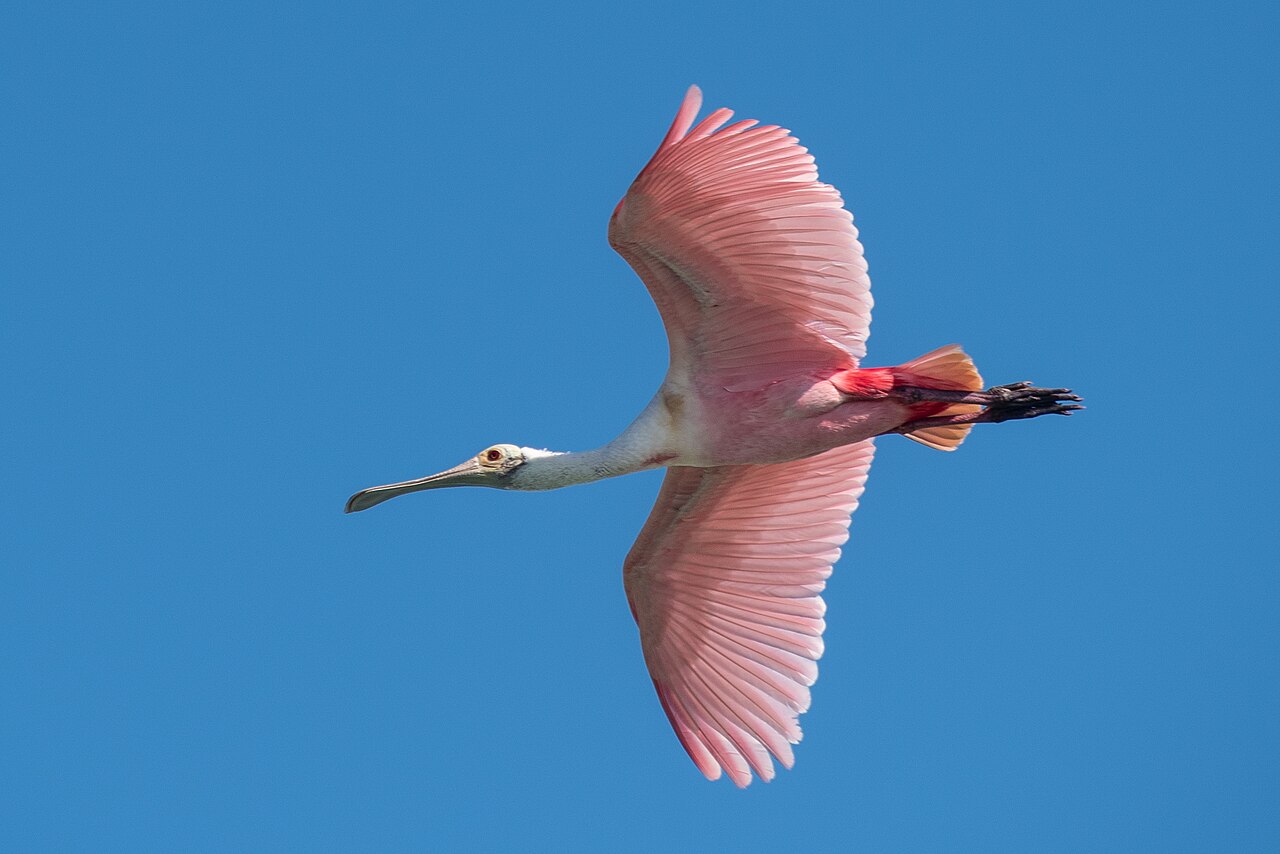
The roseate spoonbill is the classic case of mistaken identity, sharing the same bright pink plumage and similar wading habitat along the Gulf Coast and in Florida, but distinguished by its flat, spoon-shaped bill, which it sweeps side to side through shallow water to feed rather than the flamingo’s characteristic downward-bending filter-feeding posture.
Body shape offers a second clear distinction: roseate spoonbills have a shorter neck and a more compact overall shape compared to a flamingo’s long, elegant neck and taller stance, and spoonbills are typically seen in smaller numbers rather than the large flocks flamingos often form.
Range overlap is real, both species turn up in Florida wetlands and coastal areas, which is exactly why the confusion is so common, but bill shape alone resolves the identification in nearly every case once you know to look for it. The flamingo flock guide covers flamingo group behavior in more detail.
What Does It Mean If You See a Pink Bird?
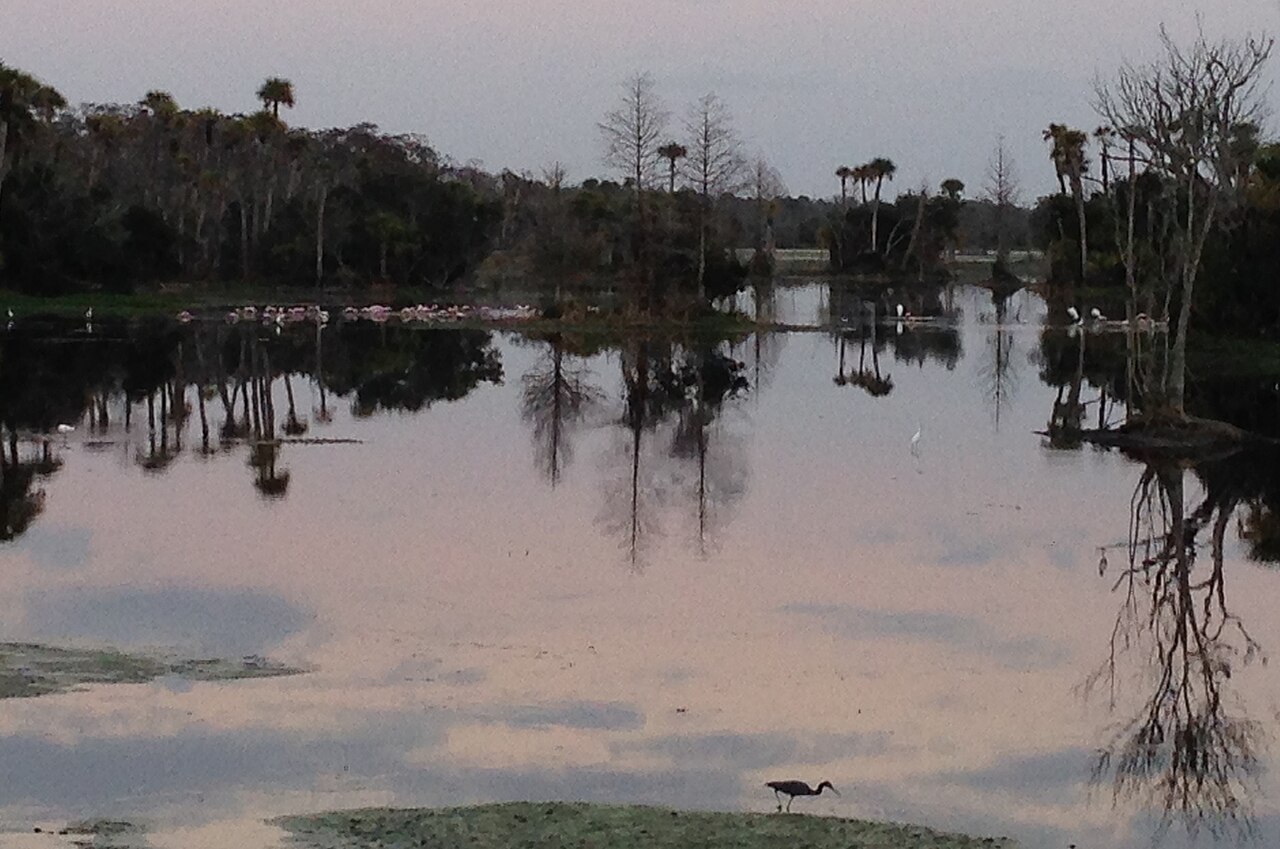
Practically, it usually means you’re near suitable wetland or coastal habitat with the shallow water, algae, and small crustaceans that both flamingos and roseate spoonbills depend on for food, since neither species turns up far from that specific kind of environment by chance.
A pink bird seen well outside its typical range, further inland or further north than usual, is sometimes the result of storm displacement, particularly for flamingos, which have occasionally been blown well off course by major hurricanes and turned up hundreds of miles from their normal range afterward.
Beyond the practical habitat explanation, pink birds carry symbolic associations in some traditions, often linked to grace, tranquility, or good fortune, though these are cultural interpretations rather than anything tied to the bird’s actual behavior or ecology, and different cultures assign different meanings to the same species.
What Pink Birds Are Found in Florida?
Florida hosts both major genuinely pink species: the American flamingo, with a small wild resident population plus regular vagrant sightings, and the roseate spoonbill, which is more widespread and reliably seen across Florida’s coastal wetlands, mangroves, and shallow bays.
Both species favor similar habitat, shallow saltwater and brackish wetlands rich in the small aquatic invertebrates that provide their carotenoid-rich diet, which is part of why Florida’s extensive coastal wetland system supports healthy populations of both.
Birdwatchers visiting Florida specifically to see pink birds generally have better luck with roseate spoonbills, given their wider distribution and more reliable presence, while a flamingo sighting remains a genuinely notable event even within the state, since the resident population remains comparatively small.
Is There a Pink Finch?
Not solid pink, but several finch species show a genuine rosy-pink wash, most notably the purple finch, whose common name is misleading since the actual color is closer to a raspberry or wine-red pink than true purple, concentrated on the head, breast, and rump of males.
The house finch shows a related but distinct reddish coloring on males, ranging from orange-red to a deeper pinkish-red depending on the individual bird’s diet, since the carotenoid pigments responsible for the color come directly from food rather than being produced by the bird itself.
Females of both species lack this coloring entirely, showing streaky brown plumage instead, which is a useful identification shortcut: any solid brown, streaky finch in the same flock as a rosy-colored male is very likely the female of the same species rather than a different bird entirely. The house finch guide and purple finch guide cover full identification for each species.
What Is a Rosy-Finch?
Rosy-finches are a small group of finch species found primarily in mountainous regions of the western United States and Canada, named directly for the pink wash visible on their wings and belly, contrasting with darker brown or gray body plumage.
Unlike house finches and purple finches, which are widespread across much of the country including many backyard feeders, rosy-finches favor high-elevation alpine and subalpine habitat, making them a considerably less common sighting for most birdwatchers outside their specific mountain range.
Their pink coloring, like other pink and red birds, ultimately traces back to carotenoid pigments obtained through diet, following the same underlying biological mechanism that colors flamingos, spoonbills, and the more familiar backyard finches, despite the very different habitats each group occupies.
How Does a Pink Bird Compare to Other Backyard Finches?
A rosy-colored male purple finch or house finch stands out clearly against the more common backyard finch palette, which runs mostly to yellows, browns, and streaky patterns rather than pink or red. The American goldfinch guide covers a bright yellow species often seen at the same feeders.
Feeder placement and seed choice affect which finches show up regularly, and a yard already attracting goldfinches or sparrows has a reasonable chance of also attracting house finches or purple finches given similar seed preferences, making a pink-toned visitor a plausible addition to an already active feeder rather than an unusual one-off.
Seasonal timing matters too, since purple finches are more of a winter visitor across much of their range compared to the year-round presence of house finches in many regions, so a rosy finch spotted at a feeder in January carries different identification odds than the same bird in July.
How Do You Identify a Pink Bird You’ve Seen?
Start with size and shape before color intensity, since a rough size comparison narrows the options quickly: a tall wading bird well over two feet is almost certainly a flamingo or roseate spoonbill, while anything sparrow-sized with pink patches is a finch, not either of the large wading species.
For the two large species, bill shape settles the identification immediately, a downward-curving bill means flamingo, a flat spoon-shaped bill means roseate spoonbill, and this single feature is more reliable than color shade, which varies with individual diet and lighting conditions.
For finches, checking for a solid gray or brown female nearby is a useful confirming step, since seeing a plain-colored bird of the same size and general shape alongside the rosy-colored one strongly suggests a male-female pair of the same finch species rather than two different birds. The Cornell Lab of Ornithology’s All About Birds database is a reliable reference for confirming a specific species once size, bill shape, and habitat narrow the possibilities.
Why Are Some Birds Pink?
Pink and red coloring in birds comes almost entirely from carotenoid pigments obtained through diet rather than pigments the bird’s own body manufactures, meaning the color a bird displays is a direct, visible record of what it has been eating over recent weeks and months.
Flamingos get their color from algae and small crustaceans containing carotenoid compounds, which the bird’s body processes and deposits into growing feathers; a flamingo raised on a carotenoid-poor diet, whether in the wild during a food shortage or in poorly managed captivity, grows noticeably paler feathers as a direct result.
The same mechanism applies to finches, where males eating a diet richer in specific fruits, seeds, and insects containing the right carotenoid compounds develop more vivid rosy-red coloring, which research has linked to mate selection, since brighter coloring can signal better foraging ability or overall condition to potential mates.
Related reading: Purple Bird.
Related reading: red bird not cardinal.
Frequently Asked Questions
What kinds of birds are pink?
Flamingos and roseate spoonbills are the genuinely all-pink species in North America. Several finches, including house finches and purple finches, show rosy-pink patches on males.
What bird is completely pink?
The flamingo, ranging from pale to deep reddish-pink depending on diet. Wild sightings in the US are concentrated in Florida.
How do you tell a flamingo from a roseate spoonbill?
Bill shape is the fastest clue. A flamingo’s bill bends sharply downward; a roseate spoonbill’s bill is flat and spoon-shaped.
Why are flamingos pink?
Carotenoid pigments from algae and small crustaceans in their diet color the feathers. A poor diet produces noticeably paler plumage.
Is there a pink finch?
Not solid pink, but purple finches and house finches show a rosy-red wash on males, and rosy-finches show pink patches on the wings and belly.
What pink birds are in Florida?
Roseate spoonbills, widespread across coastal wetlands, and American flamingos, with a small resident population plus occasional vagrant sightings.