Purple Finch: Identification and How to Tell It From a House Finch
The purple finch (Haemorhous purpureus) is often confused with the far more widespread house finch, but true purple finches show a deeper raspberry-red wash covering the head, back, and breast, rather than the house finch’s more restricted, brighter red patches. Despite the name, purple finches aren’t actually purple; the color is better described as a rich, wine-red or raspberry tone that saturates more of the body than its common lookalike. Less common in most backyards than the house finch, purple finches are more strongly tied to coniferous and mixed forests and show more pronounced seasonal movement, making a confirmed sighting genuinely rewarding for backyard birders who take the time to learn the distinguishing details.
| Quick Reference | Detail |
|---|---|
| Length | 4.7 to 6.3 inches |
| Wingspan | 8.7 to 10.2 inches |
| Male color | Raspberry-red wash over head, back, and breast |
| Female color | Brown and white with a bold facial pattern |
| Most common confusion | House finch (more restricted red, streaked belly) |
| Diet | Seeds, buds, berries, some insects |
| Habitat | Coniferous and mixed forests, sometimes feeders |
Purple Finch vs House Finch: The Key Differences
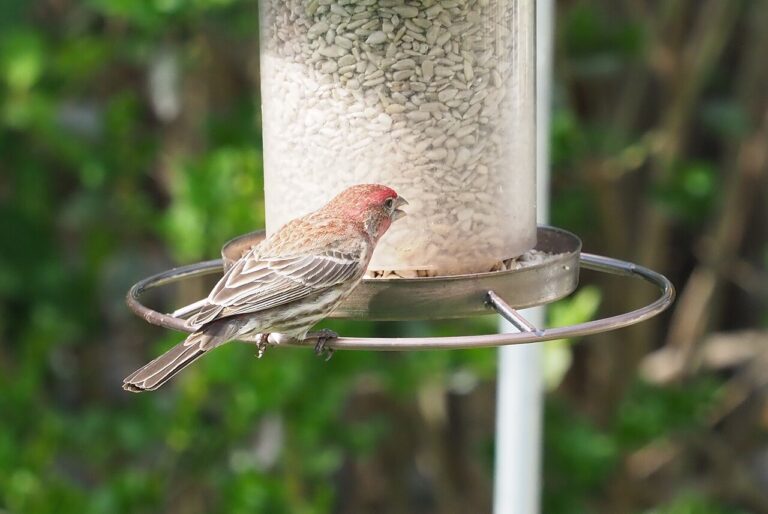
The single most useful distinction is how far the red color extends: a male purple finch has a raspberry-red wash covering the entire head, back, and breast in a smooth, blended gradient, while a male house finch shows brighter, more orange-red color concentrated on the head and upper breast with distinct brown streaking continuing down the belly and flanks. Purple finches also have a shorter, more notched tail and a stockier, more robust body shape, while house finches appear slightly slimmer with a longer, more squared-off tail. Because house finches are vastly more common and widespread across suburban feeders nationwide, most “purple finch” sightings reported by casual observers actually turn out to be house finches on closer inspection, a mistake experienced birders learn to avoid quickly once they’ve studied a genuine purple finch side by side with photos of its far more common look-alike.
Female Purple Finch Identification
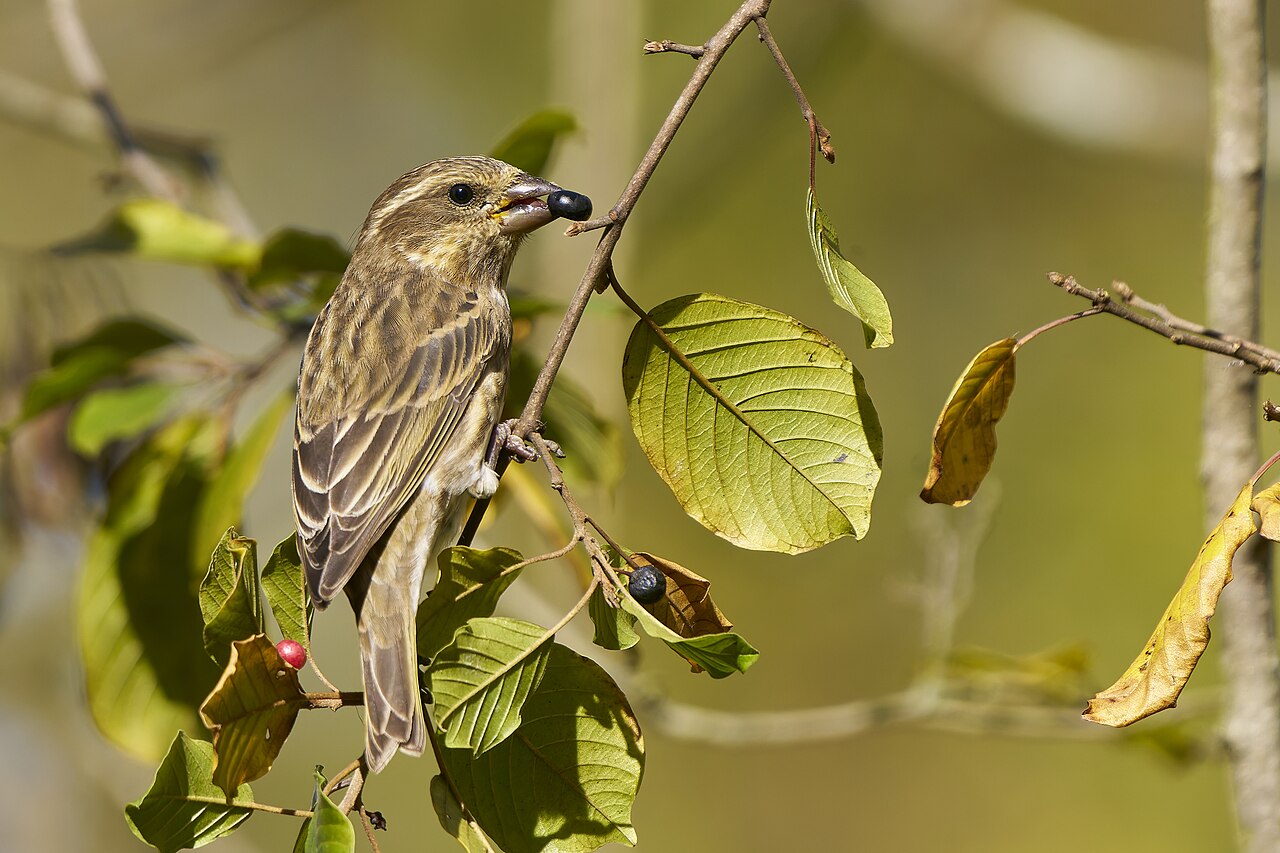
Female purple finches lack any red coloring and instead show a bold, contrasting facial pattern: a strong white eyebrow stripe and a dark line through the eye and down the cheek, set against an overall brown, heavily streaked body. This facial pattern is considerably more defined than the female house finch’s plainer, less contrasting brown face, making females sometimes easier to distinguish reliably than males, despite lacking the more obvious color difference, a pattern of bolder female facial markings also seen in the female red-winged blackbird relative to other streaky brown songbirds she’s sometimes mistaken for.
Diet and Feeding Behavior
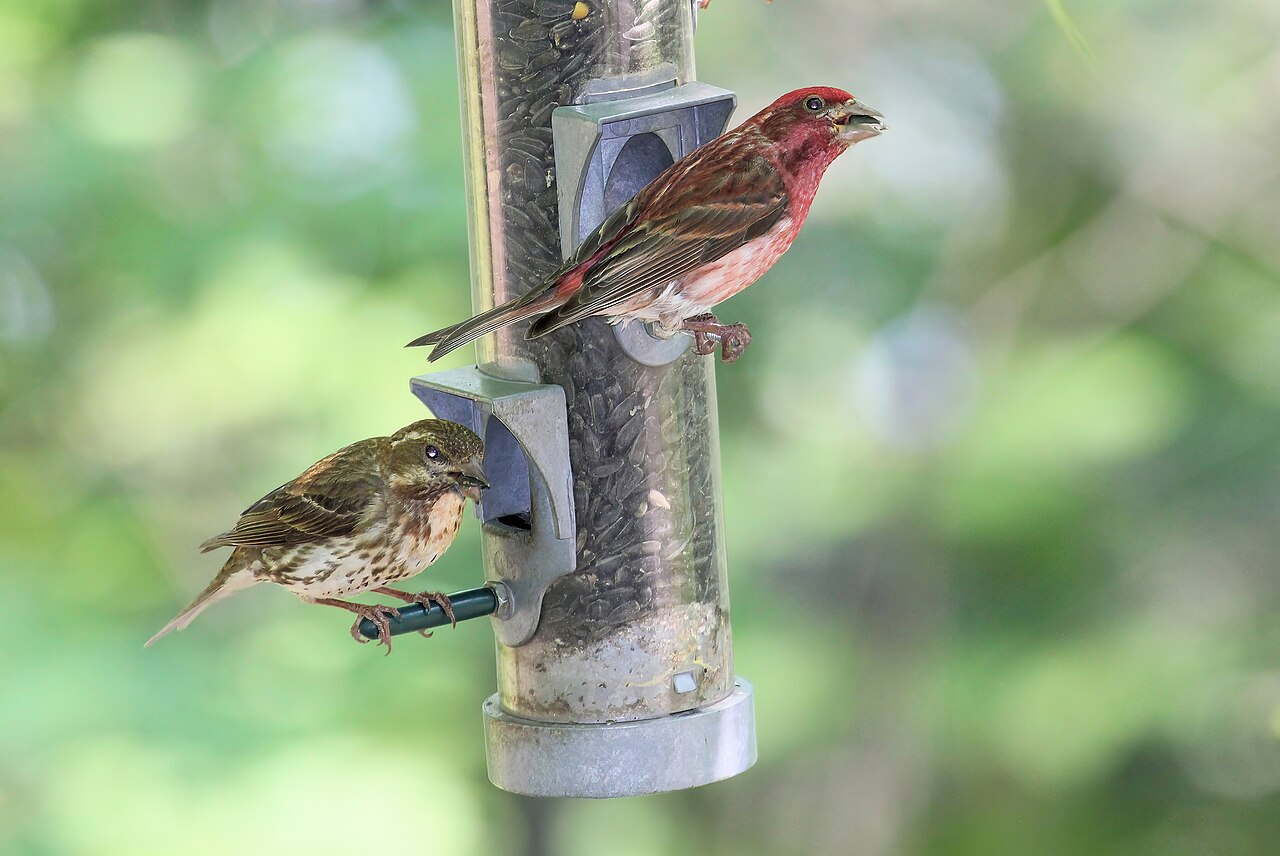
Purple finches eat a wide variety of seeds, tree buds, berries, and some insects, with a particular preference for the seeds of coniferous trees like spruce and fir, reflecting their stronger association with northern and mountain forest habitats compared to the more urban-adapted house finch. At backyard feeders, they favor sunflower seeds and readily use tube feeders, though they tend to be more sporadic visitors than the near-constant presence of house finches in many suburban areas, similar to how the cedar waxwing appears unpredictably based on fruit availability rather than maintaining a steady feeder presence.
Range and Seasonal Movement
Purple finches breed across Canada, the northeastern United States, and the Pacific coast, and their winter range extends further south and varies considerably from year to year based on food availability, a pattern known as irruption. In years when conifer seed crops fail across the north, large numbers of purple finches move much farther south than usual, showing up at feeders in regions where they’re normally rare, while in good seed years they may stay largely within their typical northern range all winter. This unpredictable movement is quite different from the house finch, which maintains a fairly stable, non-migratory presence across most of its range year-round, meaning a purple finch sighting one winter offers no guarantee of another the following year, unlike the near-certain presence of house finches at almost any suburban feeder in the eastern United States.
Historical Range Expansion of the House Finch
Part of why purple finch identification has become more challenging for casual birders is the dramatic range expansion of the house finch, a species originally native only to the western United States that was illegally sold as a caged bird (“Hollywood finch”) in the East in the 1940s. Released or escaped birds established wild populations that expanded explosively across the entire eastern United States over the following decades, meaning house finches are now a near-universal presence at feeders where purple finches were once the only red finch species seen at all, a striking example of how a single introduction event can reshape backyard birdwatching for an entire region within just a few generations of birds.
Vocalizations
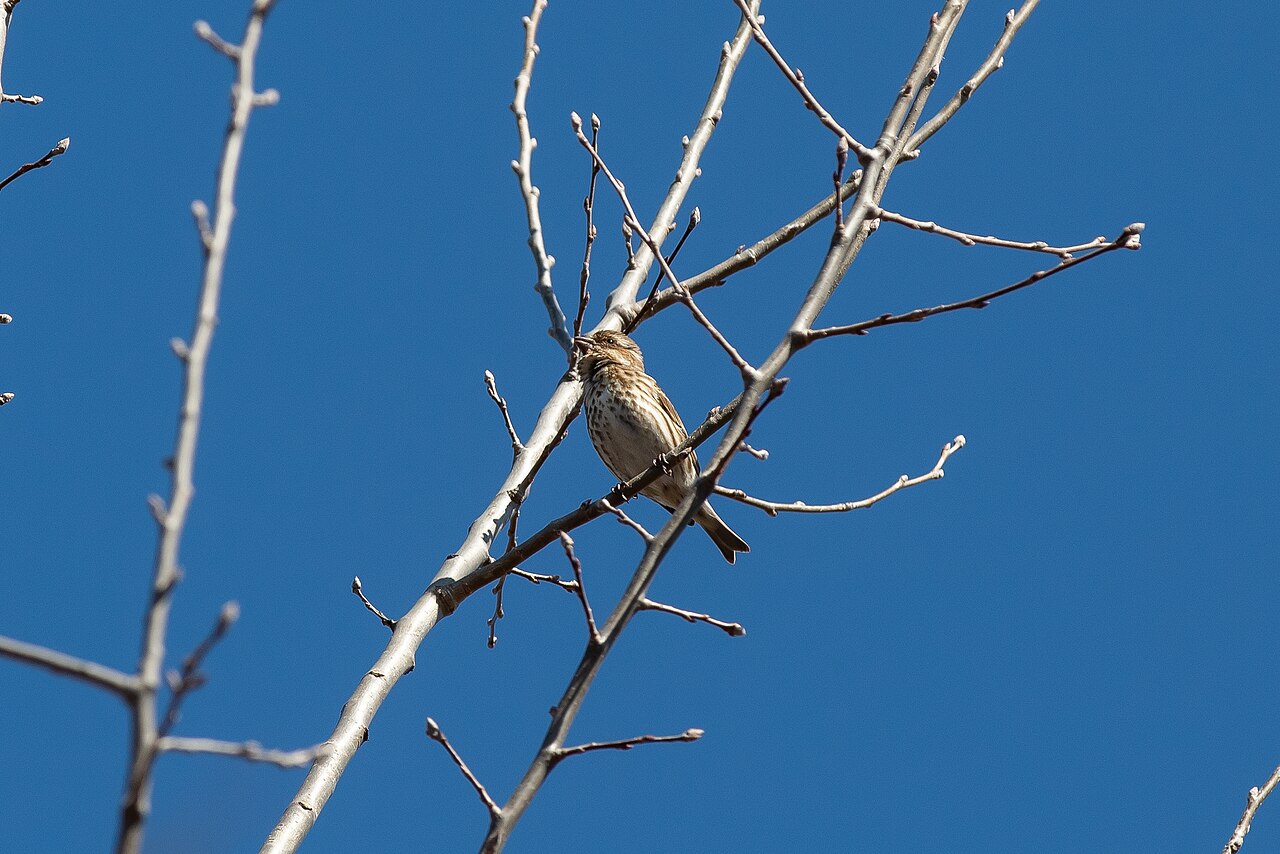
The purple finch’s song is a rich, warbling series of notes, generally considered more musical and varied than the house finch’s simpler, more repetitive warbling song. Both species give sharp, distinctive call notes in flight, but distinguishing them by ear takes considerably more practice than the visual cues of color extent and tail shape.
Similar Species Beyond the House Finch
Purple finches can also occasionally be confused with the Cassin’s finch, a similar western species with a more restricted range and a slightly different, more defined red cap contrasting with a browner back. For most people in the eastern and central United States, the house finch remains by far the most likely source of confusion, since Cassin’s finch range barely overlaps with most purple finch territory. For a direct comparison guide, see our house finch vs purple finch identification breakdown.
Conservation and Population Status
According to the Cornell Lab of Ornithology, purple finch populations have declined gradually in parts of their eastern range over recent decades, a trend researchers attribute largely to competition with the far more numerous and aggressive house finch for feeder space and nesting sites. This kind of competitive displacement between a native species and an introduced or range-expanding relative is a recurring theme in North American bird conservation, and it’s part of why purple finches have become noticeably scarcer at suburban feeders in areas where house finches are now firmly established year-round.
Attracting Purple Finches to Your Yard
Because purple finches favor coniferous habitat and irrupt southward unpredictably based on food availability, attracting them reliably is harder than attracting more sedentary feeder birds like the gray catbird or common backyard sparrows. Offering black oil sunflower seed in a tube feeder gives you the best chance during years when purple finches do move south in numbers, though you may go an entire winter without a single visit if the regional conifer seed crop stays strong farther north. Birders serious about seeing the species often track state-level rare bird alerts and regional irruption forecasts published each fall, since local abundance can swing dramatically from one winter to the next depending on food conditions across the boreal forest, similar to the unpredictable winter flocking patterns seen in common grackles moving south in response to food availability.
Frequently Asked Questions
How do you tell a purple finch from a house finch?
Purple finches show a raspberry-red wash covering the entire head, back, and breast, while house finches have brighter, more orange-red color restricted to the head and upper breast with streaking continuing down the belly.
Are purple finches actually purple?
No, despite the name, purple finches are better described as raspberry-red or wine-red rather than truly purple, a naming choice that has confused birders for generations since the color is not a true purple by any modern definition.
What does a female purple finch look like?
Female purple finches are brown and heavily streaked with a bold white eyebrow stripe and a dark line through the eye, lacking any red coloring, a facial pattern noticeably bolder than the plainer face of a female house finch.
Why did purple finches become harder to see at feeders?
The house finch, originally a western species, expanded explosively across the eastern United States after being released from the illegal pet trade in the 1940s, making it far more common at feeders than the purple finch in many regions.
What do purple finches eat?
Purple finches eat seeds, tree buds, and berries, with a strong preference for conifer seeds, and readily visit feeders offering sunflower seeds.
Do purple finches migrate?
Their movement is irruptive rather than strictly migratory, meaning large numbers move south in years when northern conifer seed crops fail, while they may stay north in good seed years.
What is the easiest way to tell males apart at a glance?
Check the tail shape: purple finches have a distinctly notched tail while house finches have a squarer tail, a reliable cue even when color is hard to judge in poor light.