Cedar Waxwing: Identification and Behavior Guide
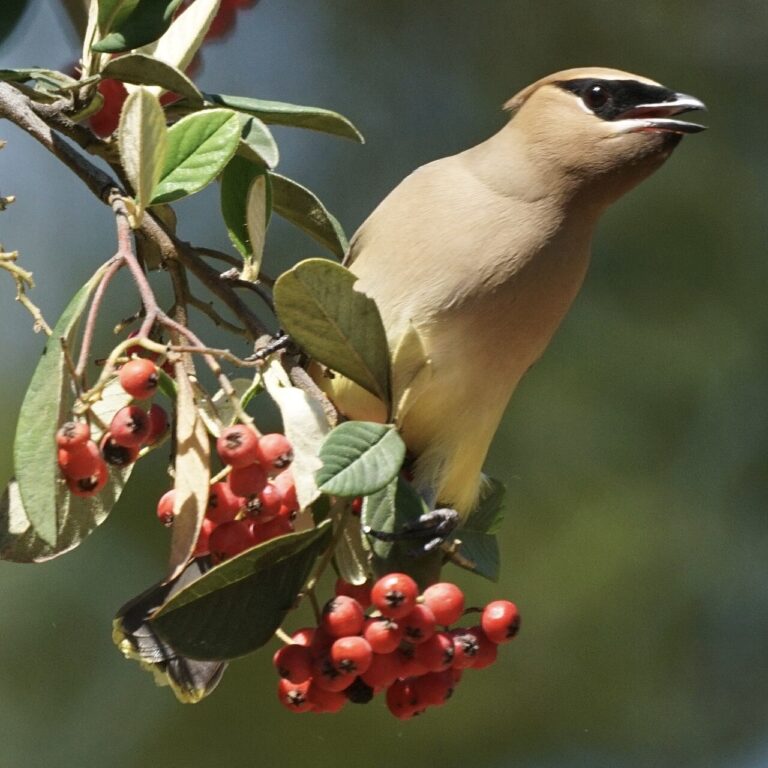
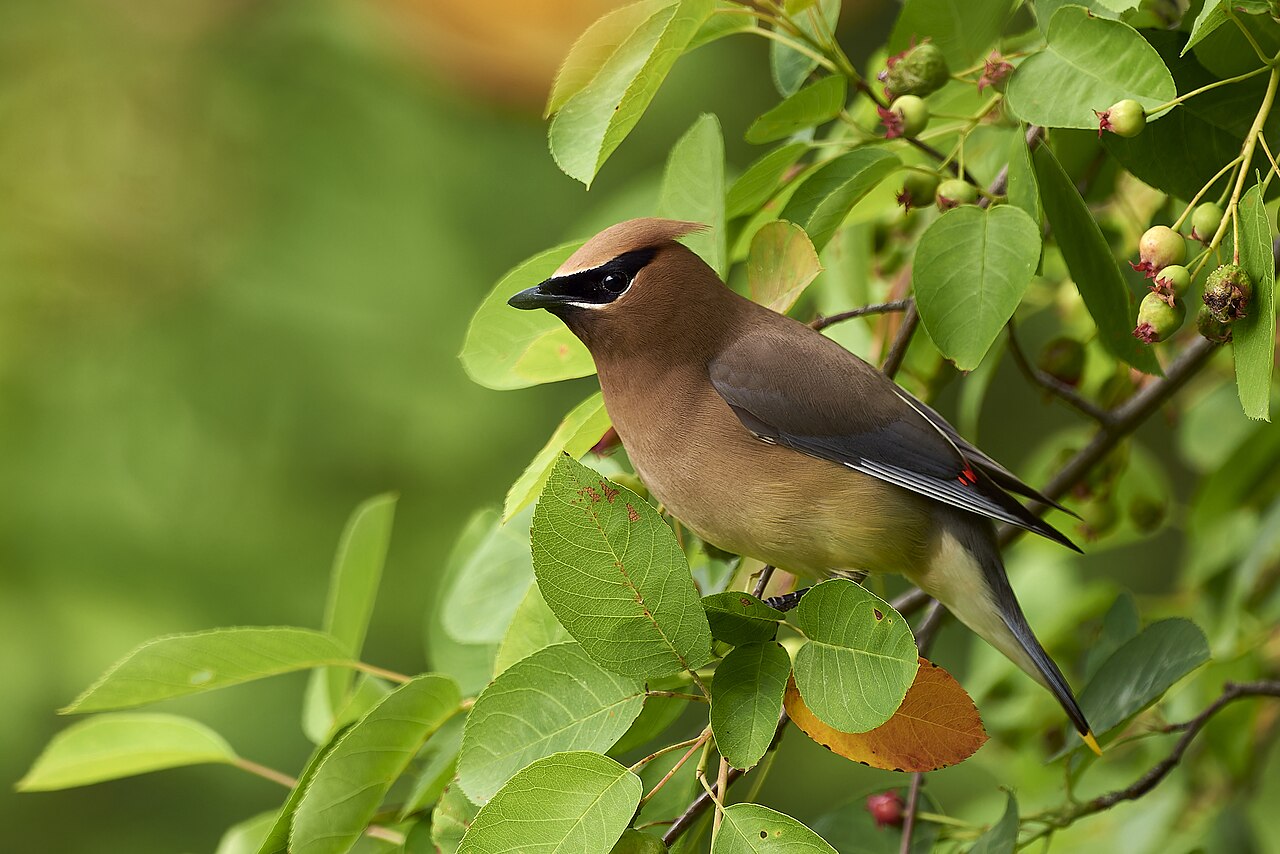
The cedar waxwing (Bombycilla cedrorum) is one of North America’s most elegant songbirds, easily identified by its sleek, silky brown plumage, prominent crest, black bandit-style mask, and bright yellow-tipped tail. Its name comes from the small, waxy red tips found on some wing feathers, which resemble drops of sealing wax. Highly social and almost always seen in flocks, cedar waxwings are berry specialists so devoted to fruit that entire flocks occasionally show visible signs of intoxication after eating overripe, fermented berries, a genuinely documented phenomenon rather than an exaggeration or folk tale.
| Quick Reference | Detail |
|---|---|
| Length | 6.3 to 6.9 inches |
| Wingspan | 8.7 to 11.8 inches |
| Color | Silky brown body, black mask, yellow-tipped tail |
| Signature feature | Red, wax-like tips on some wing feathers |
| Diet | Primarily fruit and berries; insects in breeding season |
| Social behavior | Highly flocking, rarely seen alone |
| Lifespan | Up to 7 years recorded, typically shorter |
How to Identify a Cedar Waxwing
Cedar waxwings have an unmistakable silky, soft-looking brown plumage that fades to gray on the wings and pale yellow on the belly, topped with a prominent, sleek crest that gives the bird a distinctly elegant profile, a crest shape shared by relatively few other North American songbirds besides the less crested finches and titmice. A bold black mask outlined in white crosses the eyes like a bandit’s disguise, and the tail ends in a bright yellow band, as if dipped in paint. Look closely at the wings for the feature that gives the species its name: small, red, waxy-looking tips on the secondary feathers, resembling drops of sealing wax, though not every individual bird shows these tips prominently.
Why Cedar Waxwings Sometimes Appear Drunk
Cedar waxwings are such committed fruit specialists that they sometimes gorge on berries that have over-ripened and started to ferment on the branch, particularly in late fall and winter when fresh fruit is scarce. The fermentation process produces small amounts of alcohol, and waxwings eating large quantities of these berries can show genuine signs of intoxication, stumbling, disorientation, and reduced coordination, sometimes even leading to birds flying into windows or being unable to fly properly for a short period. While amusing to observe, heavily intoxicated waxwings are more vulnerable to predators and window collisions, so wildlife rehabilitators do occasionally treat affected birds during particularly bad fermentation years, and some documented mass die-off events have even been traced directly back to unusually severe berry fermentation following an early hard freeze.
Diet: One of the Most Fruit-Dependent Songbirds
Cedar waxwings eat a higher percentage of fruit than almost any other North American songbird, relying on berries such as cedar, juniper, dogwood, and serviceberry for the majority of their diet outside breeding season. During the summer breeding period, they shift to include more insects, caught in midair in a flycatcher-like sallying technique, which provides the extra protein needed for raising young. This heavy reliance on fruit also means waxwing populations move somewhat unpredictably across the landscape, following wherever berry crops happen to be abundant in a given year rather than maintaining fixed territories like many other songbirds, a nomadic pattern that can make waxwings genuinely difficult to reliably find in the same location from one week to the next.
Highly Social, Flocking Behavior
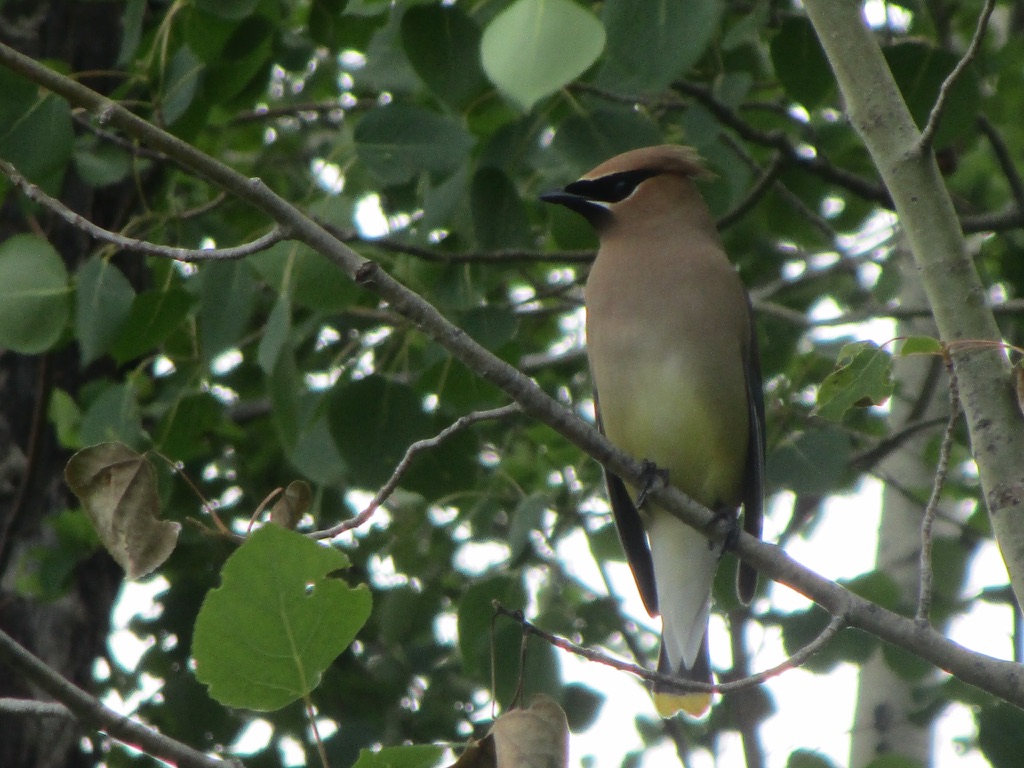
Cedar waxwings are almost never seen alone, traveling in tight flocks that can range from a handful of birds to several hundred, moving together to strip a fruiting tree or shrub before moving on as a group. This social behavior extends to courtship: paired birds are known to pass a berry or flower petal back and forth between their bills several times before one finally eats it, a distinctive bonding display rarely seen in other backyard birds, quite different from the loud, competitive courtship displays of species like the wild turkey. Their flight is also notably tight and coordinated compared to many species, with flocks wheeling and turning almost in unison.
Vocalizations
Unlike many songbirds, cedar waxwings do not have a complex melodic song. Instead, they communicate with a very high-pitched, thin, trilling whistle, often described as a “seeeee” sound, which can be difficult for some people to hear, especially as high-frequency hearing declines with age. This call is used to keep flock members coordinated while foraging and in flight, functioning more as a contact call than a territorial song.
Similar-Looking Birds
The Bohemian waxwing, a less common relative found mainly in the northern US and Canada in winter, looks similar but is slightly larger, grayer overall, and shows a rusty patch under the tail along with more prominent white and yellow wing markings. Cedar waxwings can also occasionally be confused with other crested birds like the tufted titmouse at a distance, though the waxwing’s black mask, yellow tail tip, and overall silky coloring make a confirmed identification straightforward with a clear view, especially once you’ve learned to notice the smooth, almost polished texture of the plumage that gives the species its name in the first place.
Habitat and Range
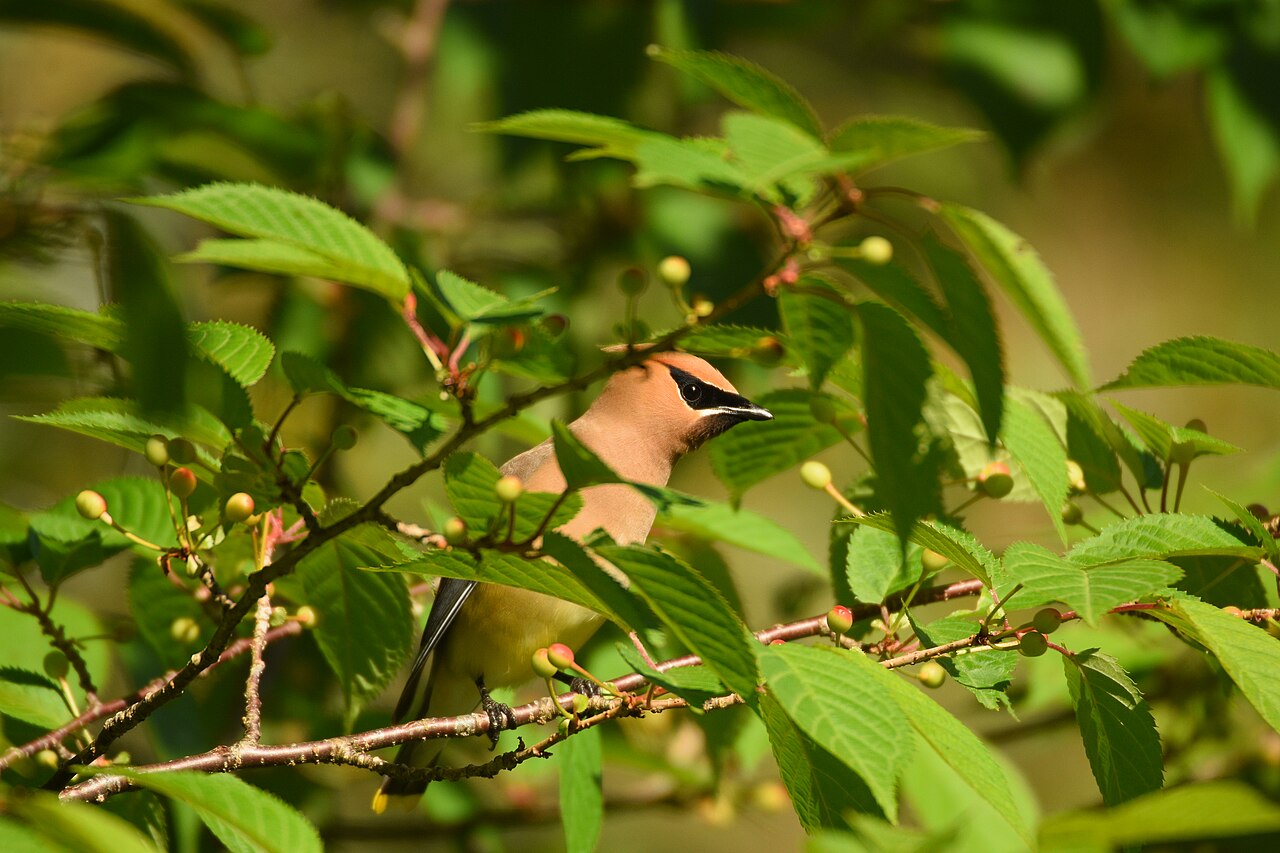
Cedar waxwings breed across the northern half of the United States and much of Canada, then move more widely across the entire country in winter, following available fruit crops rather than a fixed migratory route. They favor open woodlands, orchards, parks, and suburban yards with fruiting trees and shrubs, making them a common and welcome sight for anyone who plants native berry-producing shrubs. For other fruit-loving birds you might attract to a similar yard, see our guide to attracting more bird species to your backyard, since a yard planted with a mix of nectar sources and native berry shrubs tends to draw a noticeably wider variety of species than one relying on seed feeders alone.
Conservation and Population Trends
According to the Cornell Lab of Ornithology, cedar waxwing populations have actually increased over recent decades, a notable exception among North American songbirds given widespread declines documented across many other species over the same period. This growth is thought to be linked to the widespread planting of ornamental fruiting trees and shrubs in suburban landscaping, which has expanded the available food supply for a species so heavily dependent on berries throughout the year. Unlike species tied to a single specialized habitat, the waxwing’s fruit-based diet allows it to thrive across a huge range of landscapes, from remote northern forests to suburban shopping center parking lots planted with ornamental crabapple trees.
Cedar Waxwings Compared to Other Fruit-Eating Birds
While many North American songbirds eat some fruit seasonally, few rely on it as heavily or as consistently as cedar waxwings, which can subsist almost entirely on berries for months at a time. This is a sharp contrast to more insect-dependent species like the Eastern phoebe, which shifts to fruit only reluctantly once insect prey becomes scarce in winter. Other backyard birds that occasionally compete with waxwings for the same fruiting shrubs include the gray catbird and various thrushes, though none match the waxwing’s tendency to strip a shrub completely bare in a single coordinated flock visit. For tips on making your yard more attractive to fruit-eating species like waxwings, see our guide to attracting more birds to your backyard.
Frequently Asked Questions
How do you identify a cedar waxwing?
Look for a silky brown bird with a prominent crest, a black bandit-style mask, and a tail tipped in bright yellow, sometimes with small red, wax-like tips on the wings.
Why do cedar waxwings sometimes act drunk?
They occasionally eat overripe, fermented berries in late fall and winter, and the small amount of alcohol produced can cause temporary intoxication, disorientation, and reduced coordination, sometimes serious enough that wildlife rehabilitators step in to help affected birds recover.
What do cedar waxwings eat?
Cedar waxwings primarily eat fruit and berries, especially cedar, juniper, dogwood, and serviceberry, switching to more insects during the summer breeding season when extra protein is needed to raise young.
Why do cedar waxwings travel in large flocks?
They are highly social birds that move together to efficiently strip fruiting trees and shrubs, and flocking also provides some protection from predators.
What does a cedar waxwing sound like?
Cedar waxwings produce a very high-pitched, thin, trilling whistle rather than a complex melodic song, used mainly to keep the flock coordinated.
What’s the difference between a cedar waxwing and a Bohemian waxwing?
Bohemian waxwings are slightly larger and grayer overall, with a rusty patch under the tail and more prominent white and yellow wing markings compared to cedar waxwings, and are also considerably less common across most of the United States.
Where do cedar waxwings live?
Cedar waxwings breed across the northern United States and Canada, then range more widely in winter across the country, following available fruit crops rather than sticking to any fixed migratory path.