How to Attract Hummingbirds: Complete Guide
To attract hummingbirds, hang a nectar feeder filled with a simple four to one sugar water mix, plant tubular red and orange flowers, and provide water and a pesticide-free yard. Hummingbirds are drawn to bright color, especially red, and to reliable nectar sources, so a clean feeder plus native flowering plants is the winning combination. Adding a mister or fountain and avoiding insecticides makes a yard even more inviting. This guide covers feeders, the right nectar, the best plants, water, and placement to bring hummingbirds in and keep them coming back.
| Attractor | What to Provide |
|---|---|
| Feeder | Red nectar feeder, kept clean |
| Nectar | 4 parts water to 1 part white sugar |
| Flowers | Tubular red and orange blooms |
| Water | Mister, fountain, or dripper |
| Insects | No pesticides, they need small bugs |
| Color | Red accents around the yard |
Hang a Nectar Feeder
A nectar feeder is the fastest way to attract hummingbirds, and it can bring them in within days during migration and the breeding season. Choose a feeder with red parts, since red strongly attracts hummingbirds, and one that is easy to take apart and clean, because a dirty feeder is the biggest mistake people make. Fill it with a simple homemade nectar and hang it where you can see it from a window. Several small feeders spread around the yard often work better than one large feeder, because male hummingbirds are territorial and will chase rivals away from a single source. For feeder styles and features to look for, see our guide to the best hummingbird feeders.
Use the Right Nectar
The nectar itself is simple and should never be complicated. The correct recipe is four parts water to one part plain white table sugar, with nothing else added. Never use honey, brown sugar, artificial sweeteners, or red food dye, since honey can promote harmful mold, and dyes are unnecessary and potentially harmful. The red color on the feeder is all the attraction you need. This exact ratio closely matches the sugar concentration of natural flower nectar, which is why hummingbirds readily accept it. For the full step by step method, including whether to boil the water and how often to change it, see our guide to the hummingbird sugar water recipe.
Plant Flowers Hummingbirds Love
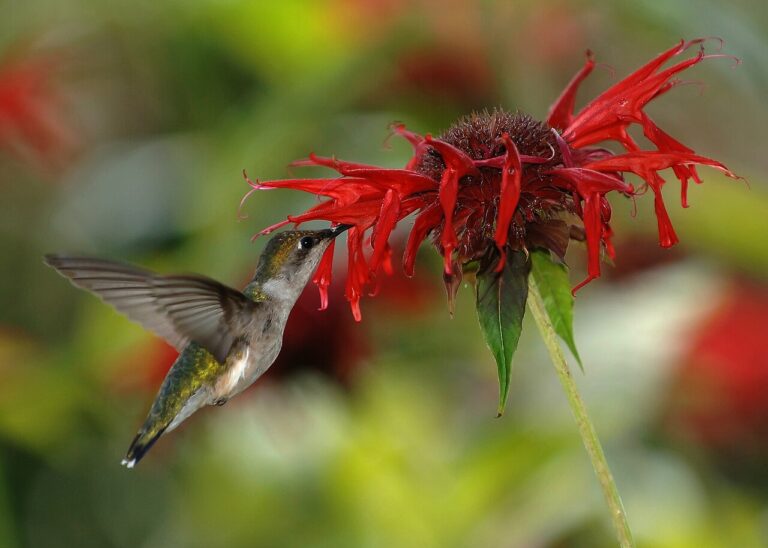
Feeders bring hummingbirds in, but flowers keep them coming and support them naturally. Hummingbirds are drawn to tubular blooms in red, orange, and pink, whose shape fits their long bills and tongues. Excellent choices include bee balm, cardinal flower, salvia, trumpet vine, columbine, and native honeysuckle, along with many other nectar-rich natives. Planting a range of species that bloom from spring through fall provides a continuous natural nectar supply, which is better for the birds than feeders alone. Native plants also host the tiny insects hummingbirds need for protein. For more on nectar gardening, see our guides to flowers that attract birds and plants that attract birds.
Add Water and Avoid Pesticides
Hummingbirds bathe and love moving water, but they are too small for a standard deep birdbath. Instead, a fine mister, a gentle fountain, or a dripper that creates moving droplets will attract them to bathe and drink. Just as important, avoid using insecticides in your yard. Hummingbirds do not live on sugar alone. They rely on large numbers of tiny insects and spiders for protein, especially when feeding young, so a pesticide-free yard full of small bugs is essential to truly support them. A yard that offers moving water and a healthy insect population, alongside nectar, meets all of a hummingbird’s needs.
Use Color and Smart Placement
Because hummingbirds find food largely by sight and are strongly attracted to red, adding red accents around the yard helps draw their attention, whether that is red flowers, a red feeder, or even a red ribbon near a new feeder. Place feeders in a spot that is partly shaded to slow nectar spoilage, visible and open enough for the birds to spot, and near cover like shrubs or trees where they can perch and rest between visits. Hanging feeders and flowers at different heights and locations reduces territorial fighting. Once hummingbirds discover a reliable, clean nectar source in an inviting yard, they show strong loyalty and will return year after year. For the broader picture of what draws hummingbirds, see our complete hummingbird guide.
Keep Ants and Bees Away from Nectar
Sweet nectar attracts more than hummingbirds, and insects at the feeder are a common frustration. For ants, an ant moat, a small water-filled cup that hangs above the feeder, blocks them simply and safely, since ants cannot cross water. For bees and wasps, choose a feeder with built-in bee guards or one where the nectar sits too deep for insects to reach, and avoid yellow feeder parts, which attract bees. Never use oils, sprays, or insecticides on or near a feeder, as these can harm hummingbirds. Keeping the outside of the feeder clean and wiping up drips also reduces insect interest. A little management keeps the nectar available for the birds it is meant for.
When to Expect Hummingbirds
Timing your setup to the seasons makes a big difference. Hummingbirds arrive in spring as they migrate north, reaching the Deep South as early as late February and northern states by late April into May, so hanging your feeder a week or two before they are due means early arrivals find food waiting. According to the Cornell Lab of Ornithology, the Ruby-Throated Hummingbird is the primary breeding species across the entire eastern United States, and it returns each spring from Central America. Knowing roughly when your local birds appear lets you be ready for those exciting first sightings. For the full regional timing, see our guide on when hummingbirds come back.
Do Hummingbirds Remember Feeders?
Hummingbirds have excellent memories and will remember a reliable feeder from one visit to the next and even from one year to the next. An individual bird can recall the location of feeders and productive flowers across its whole range, and returning migrants often reappear at the exact spot where a feeder hung the previous season. This is a powerful reason to be consistent, since a hummingbird that finds your yard dependable will keep coming back and may return every spring. Keep your feeder in a steady location, refill it reliably, and maintain fresh nectar, and you build the kind of trusted, remembered food source that hummingbirds return to faithfully throughout the season and beyond.
Attracting Hummingbirds Without a Feeder
You do not strictly need a feeder to enjoy hummingbirds, since a well-planted garden can draw them all on its own. A yard full of tubular, nectar-rich flowers in red, orange, and pink provides natural food that hummingbirds prefer, and native plants also host the insects they need for protein. Adding a gentle water feature such as a mister or dripper gives them somewhere to bathe. Avoiding pesticides preserves the small bugs they hunt. Many gardeners find that a strong nectar garden attracts just as many hummingbirds as a feeder, with the bonus of supporting bees, butterflies, and other pollinators too. A feeder and a garden together, of course, make the most inviting yard of all.
How Long Until Hummingbirds Find a New Feeder
Patience pays off with a new feeder, though during peak season the wait is often short. If hummingbirds are already active in your area, a fresh, visible feeder can attract its first visitor within hours to a few days. Early in spring, before many birds have arrived, it may take a week or two for a passing hummingbird to discover it. Placing the feeder where it is easy to spot, adding red nearby, and positioning it near flowers all speed up discovery. Once one hummingbird finds and trusts your feeder, others usually follow, and the location becomes established. If weeks pass with no visitors, check the nectar is fresh, the feeder has red, and the spot is not too hidden or too exposed.
Related reading: hummingbird symbolism and meaning.
Related reading: what do hummingbirds eat.
Frequently Asked Questions
How do I attract hummingbirds fast?
Hang a clean red nectar feeder filled with a four to one sugar water mix where it is easy to see, and add red tubular flowers. During migration and summer, hummingbirds often find a new feeder within days.
What is the best nectar for hummingbirds?
Four parts water to one part plain white sugar, with nothing else added. Never use honey, brown sugar, artificial sweeteners, or red dye.
What flowers attract hummingbirds?
Tubular red, orange, and pink blooms such as bee balm, cardinal flower, salvia, trumpet vine, columbine, and native honeysuckle. A mix that blooms spring through fall is best.
Where should I hang a hummingbird feeder?
In partial shade to slow spoilage, in an open spot where birds can see it, and near shrubs or trees for perching. Several small feeders spread out reduce territorial fighting.
Do hummingbirds need water?
Yes, but they are too small for deep birdbaths. A fine mister, gentle fountain, or dripper with moving droplets attracts them to bathe and drink.
Why aren’t hummingbirds coming to my feeder?
Common reasons are dirty or spoiled nectar, a feeder without red, a location that is hidden or too exposed, or heavy pesticide use nearby that removes the insects they also need.
Should I use red dye in hummingbird nectar?
No. Red dye is unnecessary and potentially harmful. The red parts of the feeder provide all the attraction needed, so keep the nectar clear.