How Do Birds Sleep? Where and How They Rest
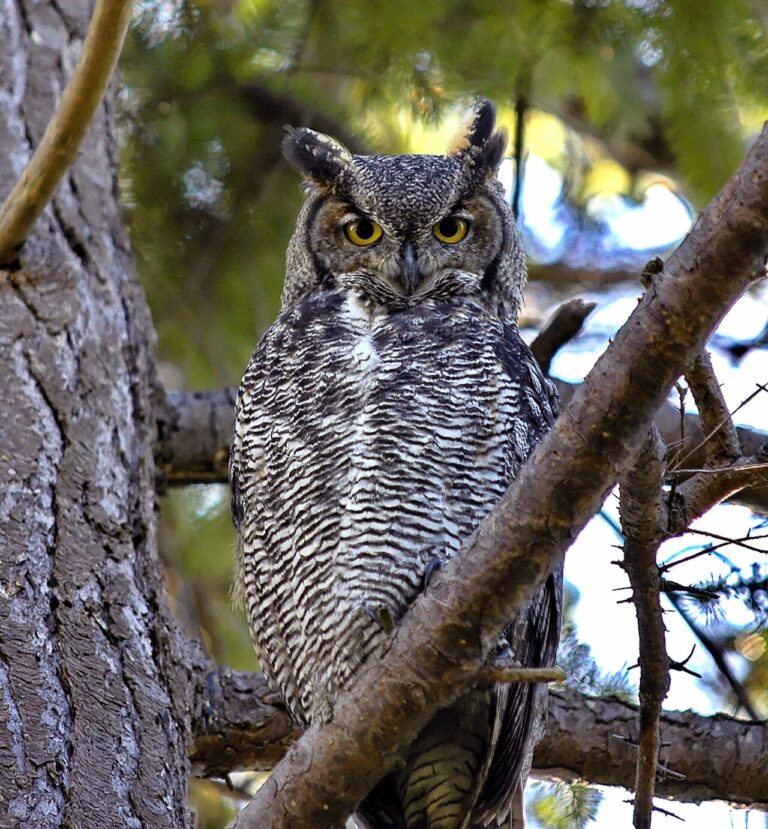
Birds sleep by perching or roosting in a safe spot, tucking the head into the back feathers, and often standing on one leg, while a special tendon system locks their toes around the branch so they cannot fall. Most sleep at night, though owls and other nocturnal species flip that schedule. What makes bird sleep remarkable is that many species can rest one half of the brain at a time, keeping one eye open to watch for danger. Small songbirds may sleep 10 to 12 hours in winter, using deep rest to survive cold nights. This guide explains how birds sleep, where they go, how long they rest, and why they do not tumble off the branch.
| Feature | Detail |
|---|---|
| Common position | Perched, head tucked, often on one leg |
| Why they do not fall | Flexor tendons lock toes around the perch |
| Half brain sleep | Unihemispheric sleep, one eye stays open |
| Typical duration | About 10 to 12 hours, more in winter |
| Where | Trees, dense shrubs, cavities, reeds, ground |
| Nocturnal exceptions | Owls, nighthawks sleep by day |
Why sleeping birds do not fall off the branch
The classic image of a bird asleep on a thin twig raises an obvious question: why does it not fall? The answer is a clever tendon arrangement. When a perching bird bends its legs to settle, tendons running down the back of the leg and around the ankle pull tight automatically, curling the toes into a firm grip. No muscle effort is required, so the grip holds even in deep sleep. The bird actually has to straighten its legs to let go. This passive locking is why a chickadee can doze on a swaying branch through a windy night without tumbling.
Standing on one leg adds another trick. By pulling one foot up into the warm belly feathers, a bird cuts heat loss through its bare legs nearly in half. Alternating legs spreads the cost. It looks precarious, but the locked tendon keeps the single standing foot secure.
Sleeping with half the brain awake
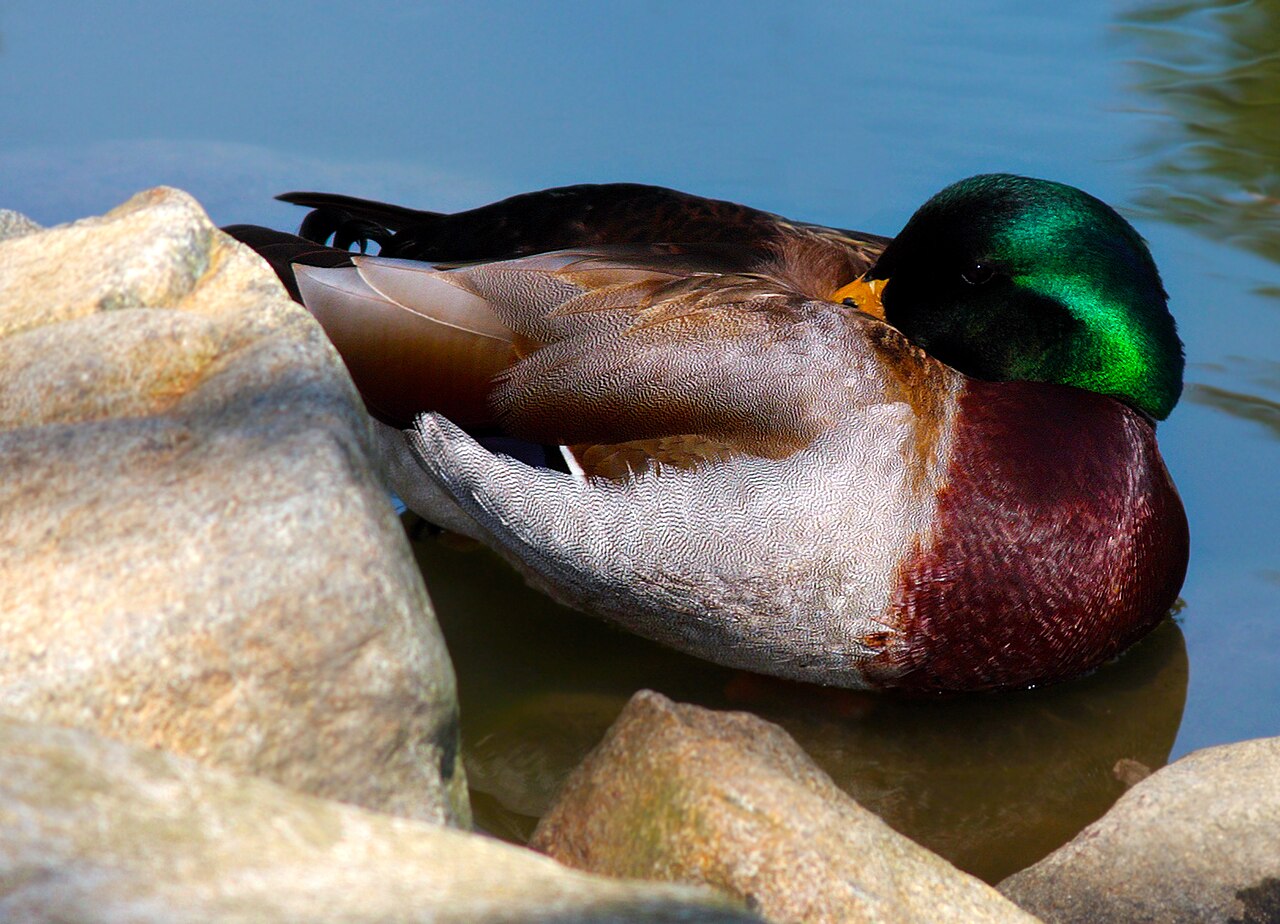
Birds have a survival adaptation mammals mostly lack: unihemispheric slow wave sleep. One half of the brain sleeps while the other stays alert, and the eye on the alert side remains open. Birds on the edge of a roosting flock use this most, keeping the outward facing eye open to watch for predators, while birds in the safe center sleep with both eyes shut. Ducks resting in a row do exactly this. According to research summarized by the Audubon Society, this lets birds balance the deep rest they need against the constant threat of being caught off guard.
Where do birds sleep at night?
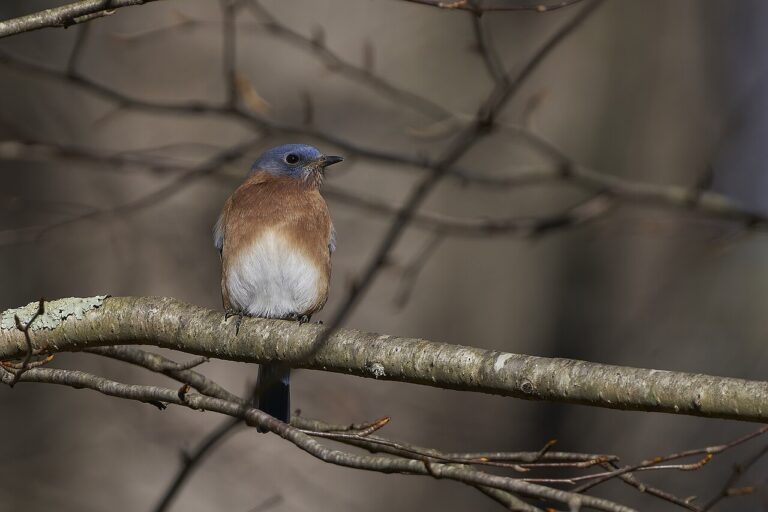
Birds choose roosts for safety and warmth, and the spot varies by species. Songbirds like sparrows and finches tuck into dense shrubs, evergreens, and vine tangles that hide them and block wind. Cavity nesters such as woodpeckers, chickadees, and bluebirds sleep inside tree holes and will pile into a single roost box on freezing nights to share heat. Waterfowl float on open water or stand on one leg along the shore, where an approaching predator makes ripples that wake them. Ground birds like quail huddle in a circle facing outward. Crows and starlings gather in enormous communal roosts of thousands, gaining safety in numbers.
Backyard birders can help by leaving a few dense shrubs or a roost box in place through winter. Many of the birds that visit your yard by day are sleeping nearby at night.
How long do birds sleep?
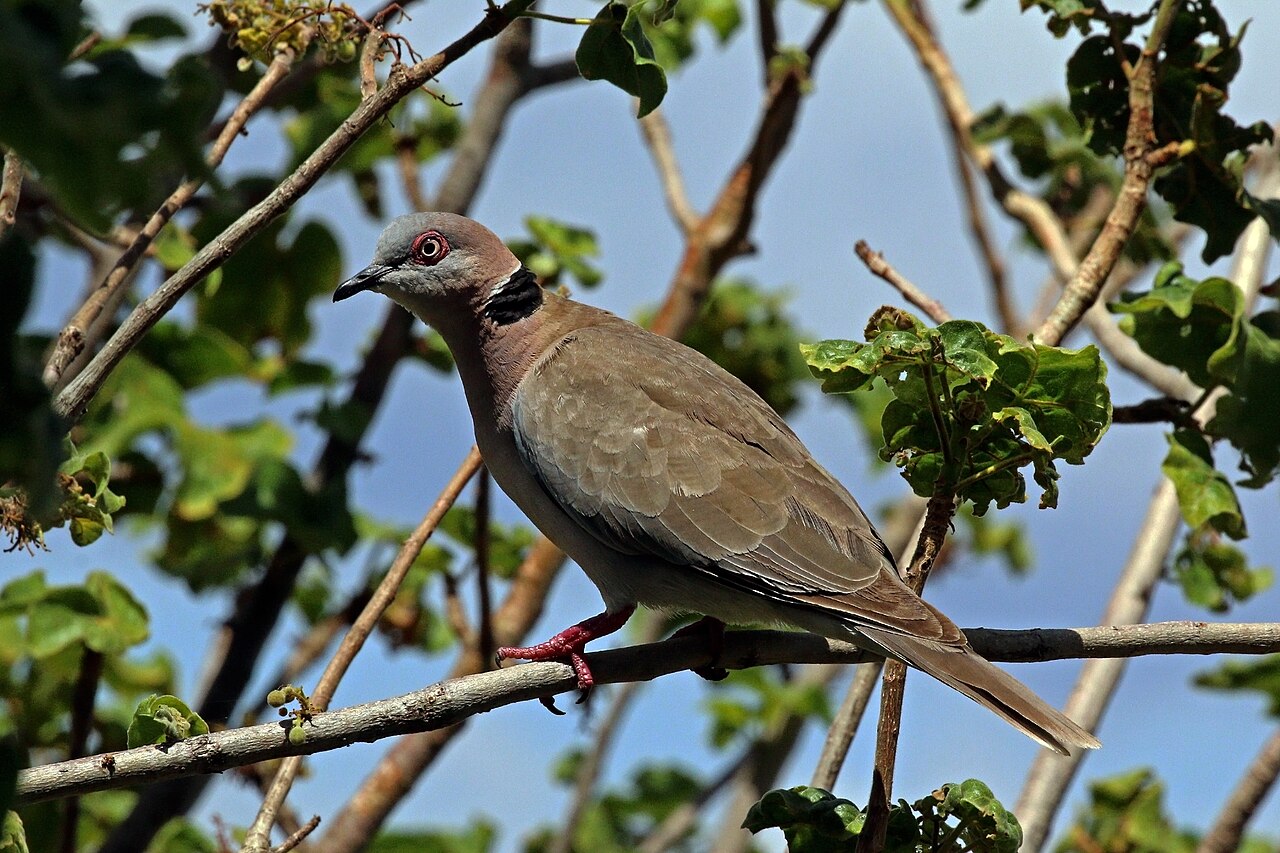
Sleep length shifts with the seasons and the length of the night. In winter, when nights are long and cold, small songbirds may rest 12 hours or more, using that time to lower their body temperature slightly and conserve energy. In summer’s short nights they sleep far less and may nap during the day. Migrating birds sleep in tiny bursts, sometimes seconds long, snatched in flight or at stopovers. Overall, most birds do not sleep in one unbroken block the way humans aim to; they take a long night rest supplemented by short daytime naps, staying ready to flee at any moment.
Do birds sleep in their nests?
This is a common misconception. Nests are nurseries, not bedrooms. Most birds build a nest only to lay eggs and raise chicks, and they abandon it once the young fledge. Outside the breeding season, adults sleep in roosts, not nests. The main exception is incubation: a parent bird sleeps on the nest while warming eggs, and cavity nesters may reuse a hole as a winter roost. But the idea that birds return to a cozy nest every night is a myth. For more on this, see our overview of whether and how birds sleep and our guide to how robins build nests.
Helping backyard birds roost safely in winter
Cold nights are the hardest test of a bird’s sleep, and small choices in your yard can help the birds you watch by day survive until morning. The biggest need is shelter from wind and predators. Dense evergreens, brush piles, and vine tangles give roosting birds a place to tuck in, so leaving some cover unmanicured through winter matters more than any single feeder. Cavity nesters such as chickadees, nuthatches, and bluebirds will use a roost box on freezing nights, sometimes piling in together to share body heat, so leaving nest boxes up through winter gives them a warm option. A reliable food source late in the day helps birds go to roost with a full crop, which they burn overnight to stay warm, so keeping feeders stocked into the afternoon is genuinely helpful. Moving water helps too, since birds that drink and bathe stay in better feather condition for insulation. All of these steps make your yard a safer place to sleep, and the birds that roost nearby are the same ones that will brighten your yard the next day. Regional weather shapes which species stick around, as our state bird guides explain.
Surprising facts about bird sleep
Bird sleep holds some genuine astonishments. On the coldest nights, tiny birds like chickadees and hummingbirds can enter torpor, a deep sleep like state in which they drop their body temperature and slow their heart rate dramatically to save energy, essentially a nightly mini hibernation they must rouse from by morning. Some birds barely sleep on the ground at all: the Common Swift can stay aloft for months at a time and sleeps in short bursts while gliding high in the air. Ducks resting in a row deliberately place the birds on the ends facing outward, each keeping the outer eye and half its brain awake to guard the flock. Frigatebirds have been recorded sleeping in flight during long ocean crossings. And unlike humans, most birds never sleep in one unbroken stretch; they string together a long night rest and many micro naps, always poised to flee. These adaptations let birds get the rest they need while staying alert in a world full of predators, the same balance that shapes how they fly and survive.
Do Birds Sleep with Their Eyes Open?
Sometimes, and it ties directly back to the half awake brain. When a bird is in unihemispheric sleep, the eye linked to the sleeping hemisphere closes while the eye linked to the awake hemisphere stays open. Studies of roosting flocks show that birds on the outer edge keep their outward facing eye open more often, watching for danger, while birds in the safe center of the group are more likely to close both eyes and sleep deeply. So a bird sleeping with one eye open is not restless; it is running a highly efficient security system.
Can Birds Sleep While Flying?
Remarkably, some can. Certain birds that undertake enormous nonstop journeys, including some swifts, frigatebirds, and other seabirds, are able to sleep in flight by resting one hemisphere at a time, exactly as roosting birds do. They catch brief episodes of sleep on the wing during migrations or foraging trips that can last days or even weeks without landing. This ability lets them cross oceans and remain airborne for astonishing stretches. It is one of the clearest examples of how bird sleep has evolved to fit lives that would be impossible under human style rest. To learn which species are built for such feats, see our guide to remarkable fliers and broader bird identification resources.
How Birds Choose a Roosting Spot
A bird’s choice of where to spend the night is a careful calculation balancing safety, warmth, and familiarity. The ideal roost is hidden from predators, sheltered from wind and rain, and close enough to good foraging that the bird can start feeding at first light. Many birds return to the same trusted roost night after night, learning its safe approaches and escape routes. In cold weather the calculation shifts toward warmth, and some species will crowd into a single cavity, several birds sharing body heat in a tight huddle that can mean the difference between surviving a freezing night and not. Dense evergreens, thick shrubs, and cavities all rate highly. By providing these features in a yard, along with a winter roost box, you give birds the safe, warm spots they need to make it through the night.
Seasonal and Communal Roosting
Bird sleep is not always a solitary affair. Outside the breeding season, many species gather into communal roosts, sometimes in spectacular numbers. Crows are famous for assembling in winter roosts that can number in the thousands, streaming in from miles around each evening to a shared site. Starlings, blackbirds, and other flocking birds do the same. Communal roosting offers safety in numbers, shared warmth, and possibly a way to exchange information about good feeding areas. Seasonally, roosting behavior shifts with day length and temperature: winter’s long, cold nights demand more sheltered, insulated roosts and often more social ones, while summer roosting is looser and shorter. Watching a winter crow roost fill at dusk is one of the great free spectacles of the season. Learn more about these social birds in our guide to crows.
Related reading: v formation.
Frequently Asked Questions
How do birds sleep without falling?
When a perching bird bends its legs to rest, tendons automatically pull its toes into a tight grip around the branch. The grip needs no muscle effort, so it holds through deep sleep.
Why do birds sleep on one leg?
Pulling one leg up into the warm belly feathers reduces heat loss through the bare leg by roughly half. Birds alternate legs to share the load and stay warm.
Do birds really sleep with one eye open?
Yes. Many birds use unihemispheric sleep, resting one half of the brain while the other stays alert with the matching eye open to watch for predators.
Where do birds go at night?
They roost in dense shrubs, evergreens, tree cavities, reed beds, or on open water, choosing spots that hide them from predators and shelter them from wind and cold.
How many hours do birds sleep?
It varies with the season, but most birds rest around 10 to 12 hours on long winter nights and much less in summer, adding short daytime naps.
Do birds sleep in their nests?
Usually no. Nests are built for eggs and chicks, then abandoned. Adults sleep in roosts. The exceptions are incubating parents and cavity nesters reusing a hole in winter.
Do birds sleep during the day?
Daytime birds may take short naps, but nocturnal species such as owls and nighthawks do their main sleeping during the day and hunt at night.
How do birds sleep in winter?
They fluff their feathers for insulation, tuck the head and one leg into the body, seek sheltered roosts, and may share cavities in groups to pool body heat.

Similar Posts
Dove Tattoo Meaning: Peace, Faith, and Memorial Designs
A dove tattoo means peace, love, and hope, and often memorial. What one, two, or three doves mean, the olive branch and broken chain, and which dove you are actually getting.
Northern Mockingbird vs Brown Thrasher: How to Tell Them Apart
Gray with white wing flashes or rusty and streaked? Learn to separate the northern mockingbird vs brown thrasher by color, song repeats, and habitat.
Backyard Birds of New York: 15 Common Species (2026 Identification Guide)
Identify 15 common backyard birds of New York — Eastern Bluebird, Black-Capped Chickadee, Northern Cardinal, Blue Jay, American Goldfinch. Photos and field marks.
What Does It Mean When You See a Hawk?
Seeing a hawk is a powerful sign of vision, focus, and freedom, and often a call to trust your higher perspective. Here is the full spiritual meaning.
Blue Birds: 12 Common Blue Birds in North America with Identification (2026)
Blue is one of the rarest colors in nature — and one of the most striking when it appears on a bird. From the sky-blue Mountain Bluebird to the deep…
Owl Symbolism: Spiritual Meaning and Signs
The owl symbolizes wisdom, intuition, and mystery. Here is its spiritual meaning, its role across cultures, and what an owl feather or spirit animal represents.