Baby Duck: Why Ducklings Are Not Waterproof
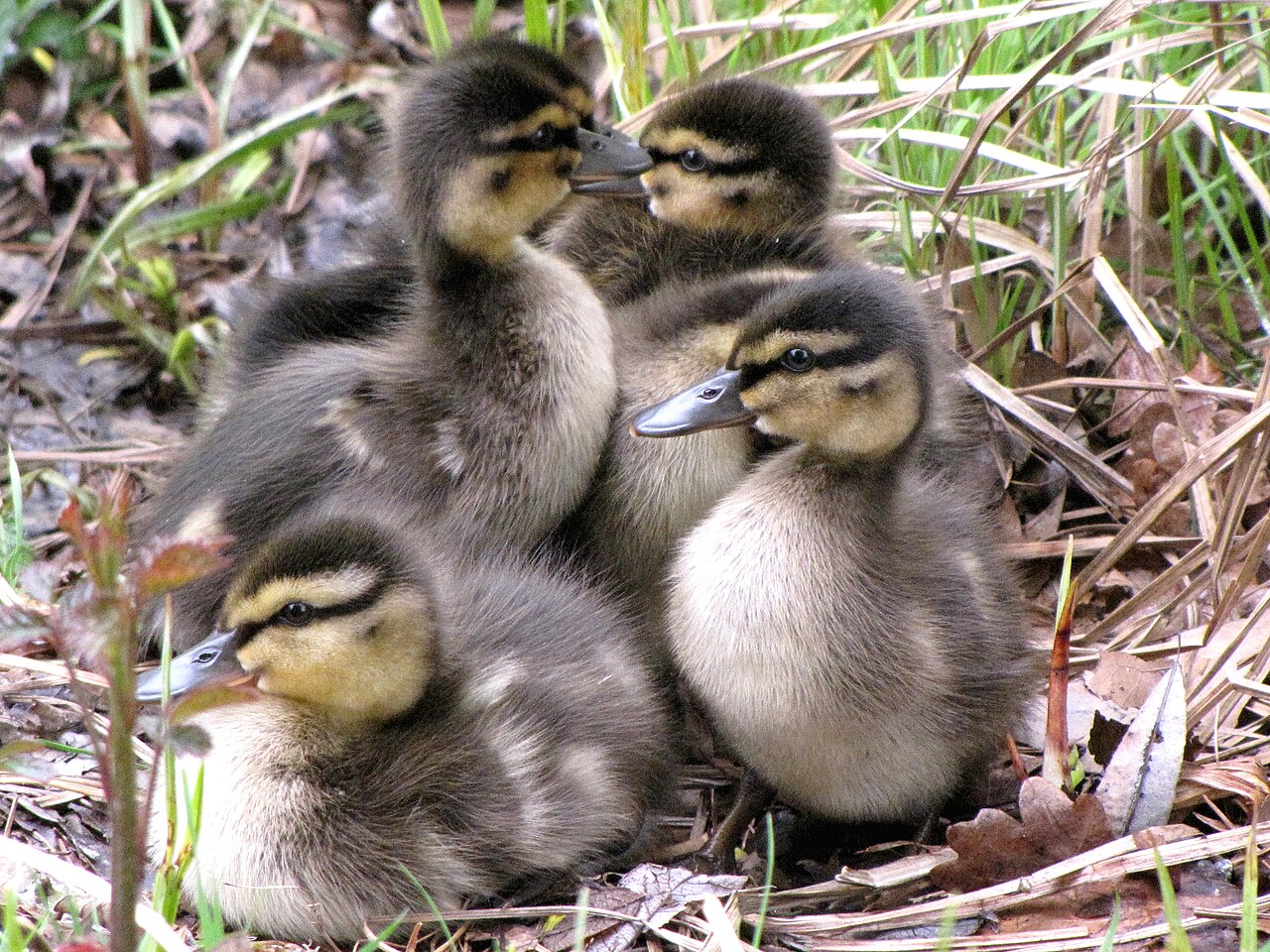
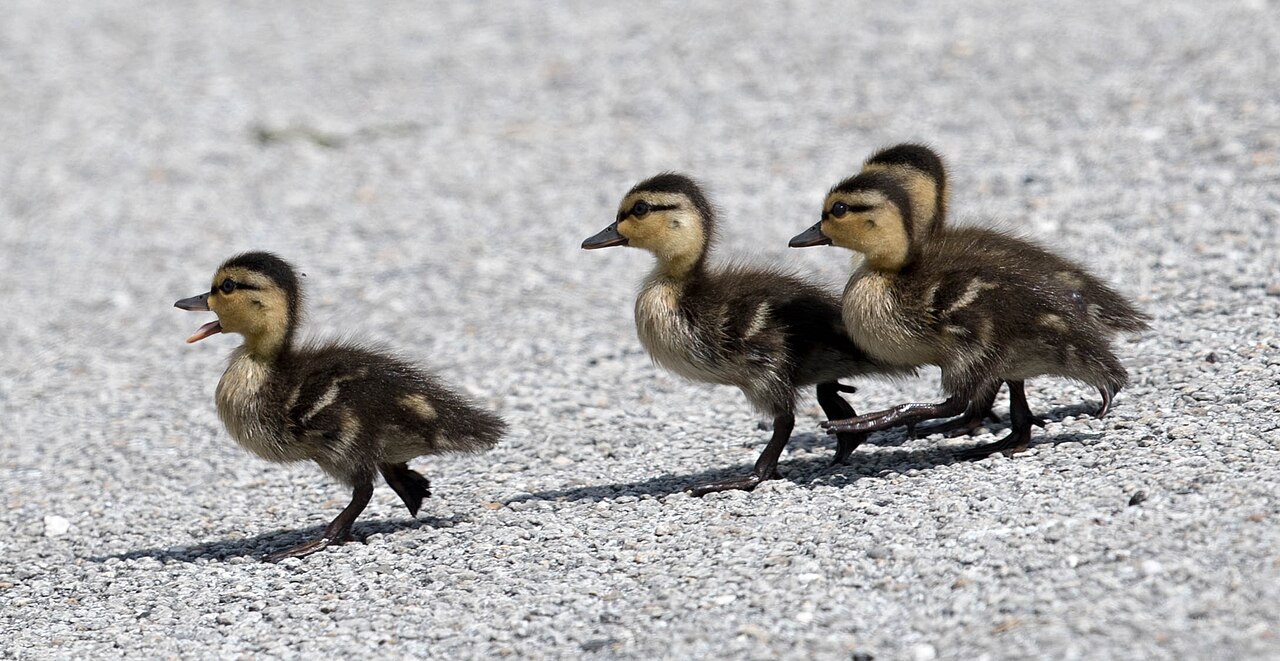
Baby ducks are called ducklings, and they hatch ready to go. They emerge covered in down with their eyes open, leave the nest within 24 hours, walk, swim, and feed themselves from day one, and follow their mother rather than being fed by her. That is called precocial development and it is the opposite of how songbirds raise young.
One detail catches out everyone who takes in an orphaned duckling. Young ducklings are not naturally waterproof, and they get that protection from contact with their mother’s preen oil, so an unaccompanied duckling put in deep water becomes waterlogged, chilled, and drowns. This guide covers development, the niacin requirement that kills more hand-raised ducklings than anything else, what to do about a found duckling, and how to raise them properly.
| Quick Facts | Ducklings |
|---|---|
| Called | Ducklings |
| Development | Precocial, mobile and feeding within a day |
| Incubation | Roughly 26 to 30 days |
| Waterproofing | Not innate, comes from the mother’s preen oil |
| Key nutrient | Niacin, higher requirement than chicks |
| Fledging | Roughly 50 to 60 days in mallards |
Baby ducks are called ducklings. They hatch with eyes open, covered in down, and leave the nest within 24 hours to walk, swim and feed themselves. They are not waterproof at first and depend on oil from the mother’s preen gland, which is why orphaned ducklings chill so easily.
Hatching and the First Day
The hen incubates alone for around 26 to 30 days, and hatching is synchronized so that the whole clutch emerges within a few hours. That synchrony matters because the family leaves together and stragglers are left behind.
Ducklings dry off in the nest for several hours, then follow the hen to water, sometimes travelling considerable distances overland. Wood duck ducklings famously jump from tree cavity nests 20 to 50 ft up on their first day, landing on leaf litter without injury because they are light and their bones are not yet fully hardened.
Imprinting happens in this window. Ducklings fix on the first suitable moving object they encounter, normally the hen, and follow it thereafter, which is the mechanism Konrad Lorenz demonstrated by having goslings imprint on him. It is also why hand-raised ducklings bond so strongly to people, which is charming and creates problems later.
The Waterproofing Problem
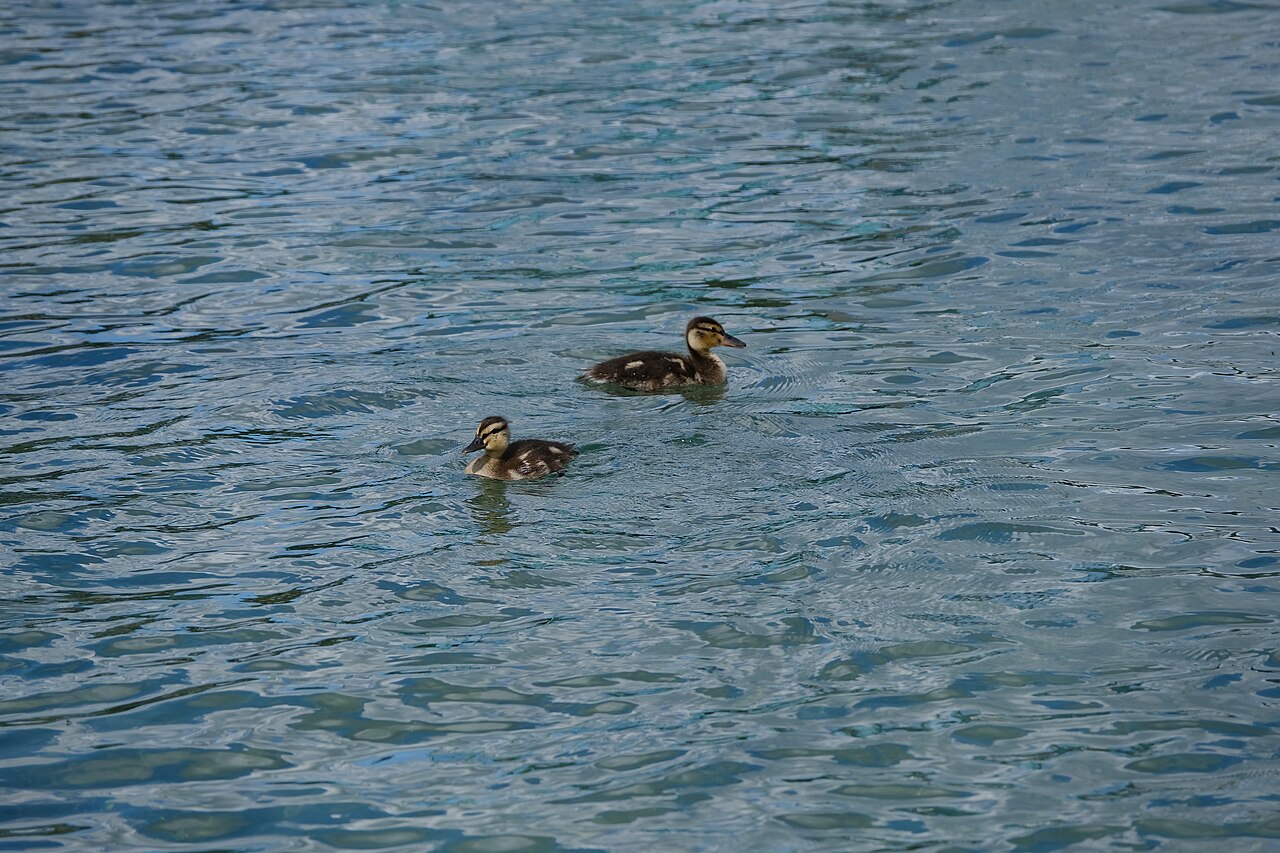
This kills more rescued ducklings than any other single mistake. Ducklings hatch with down rather than feathers, and down is not waterproof on its own.
In the wild, protection comes from the hen. She produces oil from a gland at the base of her tail, spreads it while preening, and the ducklings acquire it through constant physical contact with her plumage, which coats their down and keeps water out.
An orphaned duckling has no such source. Placed in deep water it becomes waterlogged within minutes, loses body heat rapidly, and drowns or dies of cold. Hand-raised ducklings need shallow water only, deep enough to dip the head and clean the nostrils and eyes, with a ramp or shallow edge, and they must be dried and warmed afterward until their true feathers grow in at around four to six weeks.
Niacin: The Other Thing That Kills Them
Ducklings need considerably more niacin, vitamin B3, than chicks do, and standard chick starter is formulated for chickens. Feeding chick starter alone is the most common cause of leg problems in hand-raised ducklings.
The symptoms appear within a couple of weeks. Bowed or weak legs, reluctance to stand, difficulty walking, and in severe cases permanent deformity, all caused by a deficiency that is entirely preventable and, if caught early, reversible.
The fix is straightforward. Use a waterfowl starter feed where available, or supplement chick starter with brewer’s yeast at roughly a tablespoon and a half per cup of feed, which is the standard remedy and provides the additional niacin. Avoid medicated chick feed, since ducklings eat more than chicks by body weight and can overdose on the coccidiostat. Our guide to whether chickens can eat bread covers the wider point that poultry feeds are species-specific for good reasons.
What Ducklings Eat
Wild ducklings feed themselves from the first day, taking insects, aquatic invertebrates, small crustaceans, and duckweed. The diet is heavily protein-based in the first weeks because they grow extremely fast.
That protein requirement then falls, and this matters for anyone raising them. Waterfowl starter at around 18 to 20 percent protein suits the first two to three weeks, then a grower at 15 to 16 percent, because excessive protein in later growth contributes to angel wing, a permanent deformity in which the wing twists outward.
Bread is the specific thing to avoid, and the harm is well documented. It provides calories with almost no protein or micronutrients, it is implicated in angel wing in fast-growing waterfowl, and uneaten bread fouls water and attracts rats. Defrosted peas, corn, oats, chopped lettuce, and proper waterfowl feed are all better if you want to feed ducks at a pond.
Growth and Fledging
Growth is fast. Mallard ducklings roughly quadruple their weight in the first two weeks, replace down with true feathers from around three weeks, and are fully feathered by six to seven weeks.
Fledging follows at roughly 50 to 60 days in mallards, with larger species taking longer. The hen stays with the brood until they can fly, then the family disperses, and juveniles are independent from that point.
Sexing becomes possible before fledging in some species. Voice is the earliest reliable method in mallards, with females developing the loud descending quack from around six to eight weeks while males give a raspy call, and our guide to the female duck covers that difference in detail. Plumage differences appear later, and the drake feather at the base of the tail comes later still.
If You Find a Duckling
Look for the hen first, and look properly, because she may be sitting quietly out of sight or leading the rest of the brood some distance away. Watch from a distance for a while rather than intervening immediately.
If the family is nearby and the duckling is uninjured, reuniting is usually straightforward. Ducklings respond to the hen’s calls, and placing the duckling where it can see and hear her generally resolves it within minutes. Hens accept returned ducklings readily, and the belief that touching a bird causes rejection is a myth, since ducks have a poor sense of smell and do not abandon young over human handling.
If it is genuinely orphaned, contact a licensed wildlife rehabilitator rather than raising it yourself. It is illegal to keep native waterfowl without permits in the United States under the Migratory Bird Treaty Act, single ducklings raised alone imprint on people and cannot be released successfully, and rehabilitators raise them in groups specifically to prevent that.
Ducklings Trapped Somewhere
Storm drains are the classic emergency and they happen constantly in spring. A hen leads her brood across a road, the ducklings fall through a grate, and the hen remains nearby calling.
The response is to call rather than to improvise. Fire departments, animal control, and wildlife rescue organizations handle these routinely, and lifting a heavy grate without equipment is dangerous. Keeping the hen calm and nearby matters, since a successful rescue depends on reuniting them.
Swimming pools are the other common trap. Ducklings enter easily and cannot climb the vertical sides, and they drown when they tire, so a ramp, a partly submerged board, or a towel draped over the edge gives them a way out. If a hen has settled a brood on a pool, providing an exit and leaving them to move on works better than attempting to catch them.
Predators and Brood Losses
Duckling mortality is severe and it is normal. Published figures for mallard broods commonly find that only a minority of ducklings survive to fledging, with losses concentrated in the first two weeks when they are smallest and least mobile.
The predator list is long. Snapping turtles, large fish, herons, gulls, crows, raccoons, mink, foxes, and domestic cats all take ducklings, and a brood of ten reduced to three or four over a fortnight is an ordinary outcome rather than a sign of anything wrong.
Weather takes its share too. Cold wet spells chill young ducklings that have not yet developed proper waterproofing, and a late storm can end a brood outright. Hens compensate by laying large clutches, which is the same volume strategy that runs through our guide to the baby frog.
Raising Ducklings Properly
Warmth comes first. Brood at around 90 F for the first week, reducing by roughly five degrees weekly until they are feathered, using a heat plate rather than a heat lamp where possible since lamps carry a fire risk and ducklings are messy with water.
Water management is the practical challenge. Ducklings splash enormously, saturate bedding, and need constant access to drinking water deep enough to submerge their bills for clearing nostrils, so a waterer set on a wire rack over a tray keeps the brooder dry. Wet bedding chills ducklings and causes respiratory problems fast.
Never raise a single duckling. They are intensely social, and a lone duckling is stressed, calls constantly, and imprints hard on its keeper, so two is the practical minimum and more is better. Give them space to move, since they grow rapidly and outgrow a small brooder within days, and introduce them to shallow supervised swimming only once they are a couple of weeks old. Our guides to what ducks eat and types of ducks cover the adults they become.
Related reading: Baby Goose.
Related reading: Baby Swan.
What Are Female and Male Ducks Called?
A female duck is a hen and a male is a drake, with the young called ducklings and a group on water called a raft or a paddling. There is no separate word for a father duck, since drakes take no part in raising the brood in most species, and the term duck itself strictly refers to the female when used precisely.
The naming matters for identification because the two sexes look so different. In Mallards, the drake carries the glossy green head, white neck ring and grey body, while the hen is mottled brown throughout so that she disappears against nest cover during the four weeks she incubates alone. Both share the blue speculum patch on the wing, which is the mark that ties them together.
One seasonal complication catches people out. From midsummer, drakes moult into a dull eclipse plumage that closely resembles the hen for several weeks while they are flightless, which is why a pond can seem to fill with female ducks in July and August. Bill colour is the tell: a drake Mallard keeps a yellow bill, a hen has a blotchy orange and black one. Audubon’s Mallard account covers the eclipse window and the brood-rearing split.
Frequently Asked Questions
What is a baby duck called?
A duckling. They are precocial, hatching with down and open eyes, leaving the nest within 24 hours, and walking, swimming, and feeding themselves from the first day rather than being fed by the hen.
Can baby ducks swim right away?
With their mother, yes. Alone, no. Ducklings are not naturally waterproof and acquire protection from contact with the hen’s preen oil, so an orphaned duckling in deep water becomes waterlogged and drowns. Hand-raised ducklings need shallow supervised water only.
Why do hand-raised ducklings get leg problems?
Usually niacin deficiency from feeding standard chick starter, which is formulated for chickens with lower requirements. Use waterfowl starter, or add roughly a tablespoon and a half of brewer’s yeast per cup of feed. Caught early, the damage is reversible.
I found a duckling alone, what should I do?
Look for the hen first, since she may be out of sight or leading the brood nearby, and reuniting usually works within minutes once the duckling can hear her. Touching it does not cause rejection. If genuinely orphaned, call a licensed wildlife rehabilitator.
Can I raise a wild duckling myself?
Not legally in the United States, where native waterfowl are protected under the Migratory Bird Treaty Act. A single duckling also imprints on people and cannot be released successfully, which is why rehabilitators raise them in groups.
Should I feed bread to ducklings?
No. Bread provides calories with almost no protein or micronutrients, is implicated in angel wing, and fouls water while attracting rats. Defrosted peas, corn, oats, chopped lettuce, and proper waterfowl feed are all better options.
How long until ducklings can fly?
Roughly 50 to 60 days in mallards, with larger species taking longer. Down is replaced by true feathers from around three weeks, they are fully feathered by six to seven weeks, and the hen stays until they can fly.