Baby Goose: Gosling Growth and Why It’s Rarely an Orphan
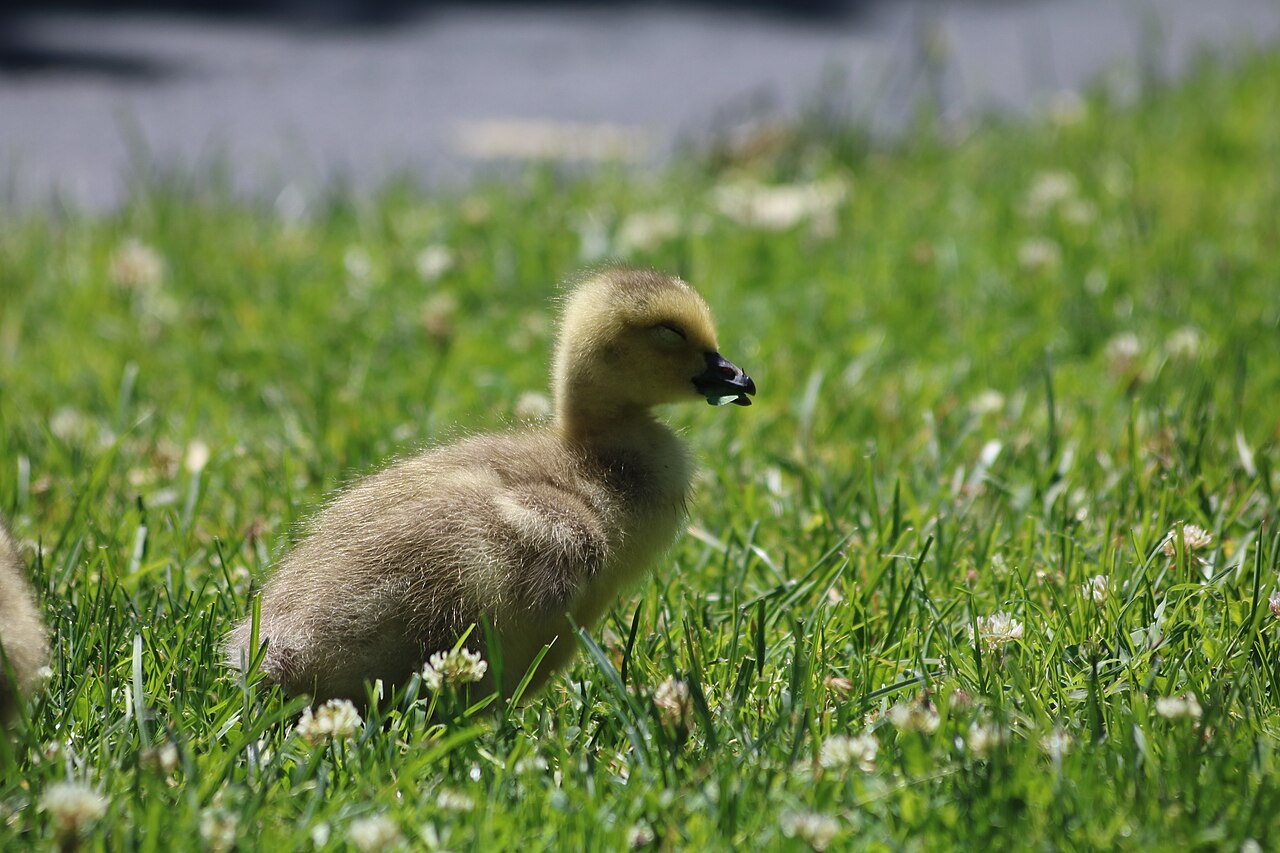
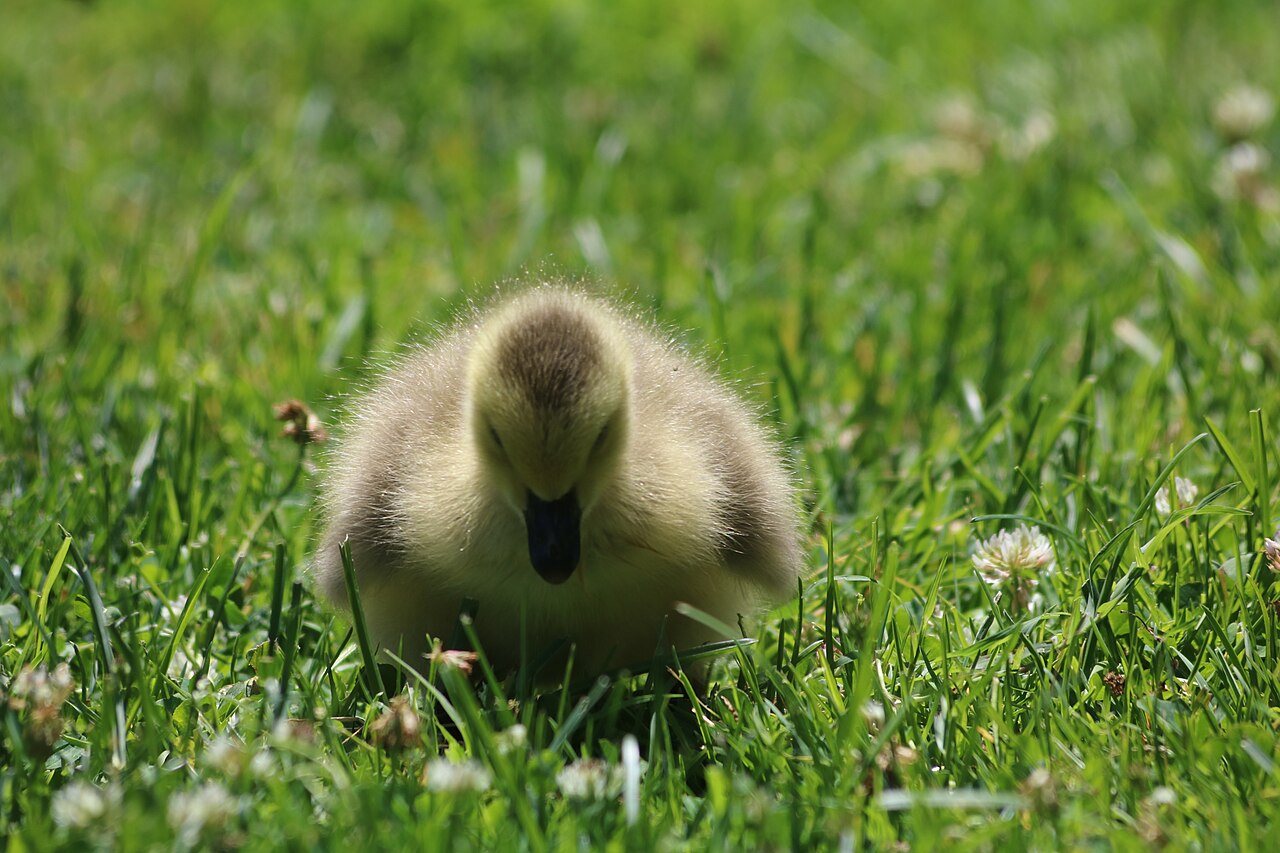
A baby goose is called a gosling, and it hatches remarkably ready for the world: covered in soft yellow-green down, eyes open, and able to walk, swim, and even feed itself within 24 hours. Canada goose goslings hatch in clutches of 4 to 8 in April or May, and within a day or two the entire family, both parents included, leaves the nest for good and walks or swims to open water, often crossing roads, parking lots, and yards in a tight single-file line that stops traffic every spring.
That precocial head start is also why goslings look so vulnerable and yet almost never need rescuing: a family of geese marching a gosling across a busy road is not an emergency, it is Tuesday. This guide covers how goslings grow week by week, why the “orphaned baby goose” call is nearly always a false alarm, the real dangers goslings face, and how to safely help a family cross without ever touching a bird.
| Fact | Baby Goose (Gosling) |
|---|---|
| Name | Gosling |
| Clutch size | 4 to 8 eggs |
| Hatch season | April to May |
| Mobile after | 24 hours |
| First flight | 9 to 10 weeks |
| Parents | Both, highly protective |
A baby goose is called a gosling. It hatches covered in yellow-green down with its eyes open and can walk, swim and feed itself within 24 hours. Canada goose clutches run four to eight eggs, and goslings fledge and fly at about nine to ten weeks.
What Is a Baby Goose Called?
Baby geese are goslings, and Canada geese, the species most Americans encounter, raise exactly one clutch per year of 4 to 8 eggs, incubated by the female alone for about 28 days while the male, called a gander, stands guard nearby, occasionally driving off anything that approaches, including dogs, other geese, and unwary joggers, a defensiveness shared by the swans that often nest along the same shorelines.
Unlike songbirds, geese are precocial: goslings hatch with a full coat of down, open eyes, and functioning legs, needing no feeding from their parents at all. What the parents provide instead is guidance and ferocious protection, leading goslings to food and water and physically confronting threats, a defense system responsible for most of the goose aggression people experience each spring.
Both parents also imprint the goslings for life within the first day, which is why goose families are inseparable: a gosling that loses sight of its parents in a crowd will panic-peep loudly until reunited, and adults will search and call in return, a bond strong enough that “orphaned” goslings are almost always simply separated, not abandoned.
Growth Timeline: Down to Flight
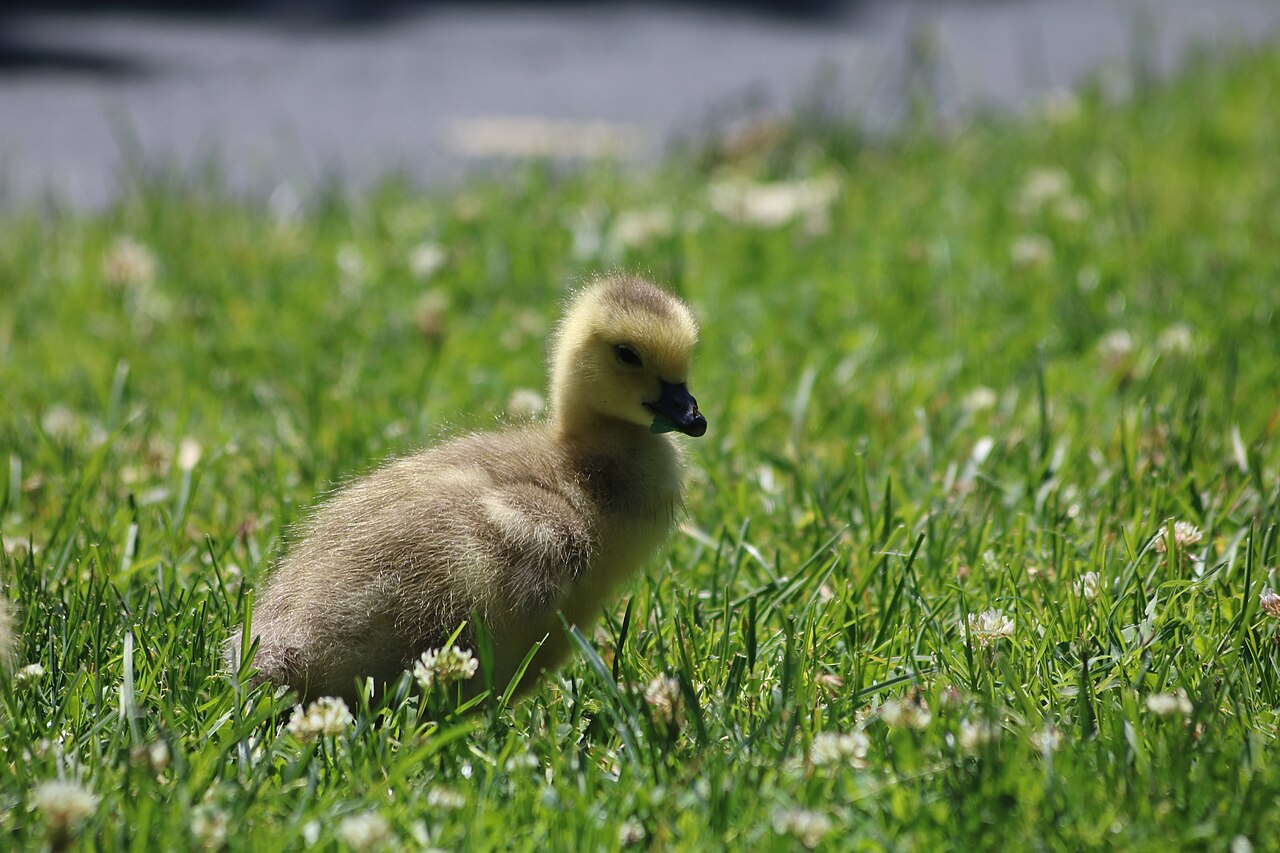
Day one is already active: goslings leave the nest within 24 hours of the last hatch and follow their parents directly to water, where they can swim immediately, buoyed by down that traps air, though they tire faster than adults and need frequent rest on shore or a parent’s back in cold water. Feeding is self-directed from the start, goslings peck at grass, aquatic plants, and insects while parents supervise.
Over the following weeks, down gradually gives way to true feathers, starting around 3 weeks and largely complete by 6 to 7 weeks, while body size climbs from a few ounces to several pounds. Goslings grow fastest of any North American waterfowl relative to their size, an adaptation that compresses the vulnerable flightless period into as short a window as possible.
Flight arrives at 9 to 10 weeks, timed so goslings hatched in April are capable fliers by July, well before fall migration. Interestingly, this is also when adult Canada geese undergo their own flightless molt, shedding and regrowing flight feathers over 4 to 5 weeks, so for part of early summer the entire family, parents and goslings alike, is grounded together, which is why goose families cluster densely near water in June.
Why “Orphaned” Goslings Almost Never Are
The single most common goose rescue call, a lone gosling or small group without adults visible, is nearly always a temporary separation rather than true orphaning. Canada geese frequently combine broods into large creches of 20 or more goslings supervised by just one or two adult pairs while other parents forage nearby, a communal strategy also seen among some duck species, so a cluster of goslings with only one visible adult, or none within immediate sight, is normal cooperative parenting, not abandonment.
Geese also actively search for missing goslings, calling repeatedly and backtracking a route, so the right first move is patience: watch from a distance for 30 to 60 minutes before assuming anything is wrong. Genuine orphans exist but are rare, identifiable by a gosling that is persistently distressed, alone for hours with no adults responding to its calls, injured, or found beside confirmed dead parents (often a road fatality), the same rarity of true abandonment covered for other precocial waterfowl.
If true orphaning is confirmed, geese are federally protected migratory birds, and a licensed wildlife rehabilitator, not a private citizen, must handle the raising, since hand-raised waterfowl can imprint on humans and never integrate with wild flocks. The all-purpose finder rule that applies to a baby duck in the same situation applies here too: keep it warm, quiet, and unfed, and call a professional the same day.
Helping a Family Cross the Road
Nothing produces more traffic-stopping drama each spring than a goose family crossing a road in single file, goslings between the parents, moving at their own unhurried pace toward water on the other side. The line formation is deliberate defense, adults front and back where they can react, and interrupting it by honking, herding aggressively, or splitting the line causes far more chaos and risk than simply waiting it out.
Safe helping looks like this: if you are driving, stop well back and let the family finish crossing rather than nudging forward; if you are on foot, giving a wide, calm berth is safer than trying to shoo them faster, since a startled adult goose may charge to defend goslings rather than flee. Never attempt to pick up or carry a gosling to speed things along; a defensive adult goose can deliver a surprisingly hard wing-strike or bite.
Where a crossing is a recurring hazard, a call to local animal control or the parks department is more effective long-term than repeated individual intervention; many municipalities install temporary signage or even coordinate escort during peak gosling season. The birds will use the same route again next spring, so a known crossing point is worth flagging once rather than managing daily, the same practical logic covered for waterfowl generally in our backyard bird identification guide.
Real Dangers Goslings Face
Predation is the leading natural threat: snapping turtles take goslings from below in ponds, and foxes, raccoons, coyotes, and large birds of prey take them on land, which is precisely why parental vigilance is so intense and why lone adults so readily confront perceived threats, including people who approach too closely. Survival to flight age is far from guaranteed even under attentive parenting.
Human environments add their own risks: the same pond edges frequented by other water birds, storm drains and steep-walled retention ponds trap goslings that cannot climb back out, chemically treated lawns expose them to herbicides and pesticides while grazing, and fishing line and hooks left near shorelines snag feet and bills. A gosling struggling repeatedly at a curb or drain grate, unlike a simply separated one, is a legitimate call for help, ideally to remove the specific hazard rather than to catch the bird.
Cold snaps and heavy spring rain are the other quiet killer, since goslings lose body heat fast before their insulating down and later feathers are complete, and a family caught in a prolonged cold rain may lose several goslings to hypothermia even with attentive parents. There is no human intervention for weather; it is simply why clutch sizes run larger than the number of goslings that typically survive to flight.
What Goslings Eat and How They Learn
Goslings are grazers from day one, plucking tender grass shoots, clover, and aquatic vegetation, supplemented with insects and small invertebrates for extra protein during the fastest growth weeks. They learn what to eat largely by watching and mimicking their parents rather than through direct feeding, pecking at whatever the adults peck at within their first days.
This is also why feeding bread to goslings (or any waterfowl) is discouraged by wildlife agencies: bread offers minimal nutrition, displaces natural foraging behavior, and can contribute to a painful, twisted-wing deformity called angel wing in fast-growing young waterfowl when carbohydrate-heavy diets overwhelm calcium and vitamin needs. If you want to support a local goose family, the better option is simply protecting their grazing lawn from pesticide treatment.
By 6 to 8 weeks, goslings are foraging almost entirely independently alongside the family group, and the parent-offspring bond shifts from feeding-adjacent supervision to defense and migration guidance, the skills that matter once flight arrives and the family needs to move as a coordinated unit for the first time.
Aggressive Geese: Reading Parental Defense
Spring goose aggression toward people and dogs is almost entirely gosling defense, and reading the warning sequence prevents most confrontations: a goose that lowers its head and neck, hisses, and pumps its head up and down is escalating and about to charge; backing away calmly at this stage nearly always ends the encounter without contact. Running triggers chase instinct in geese just as it does in dogs, so a slow retreat beats a sprint.
Dogs draw the sharpest response, since geese correctly read off-leash dogs as gosling predators, and keeping dogs leashed and away from goose families through late spring avoids the vast majority of goose-versus-dog incidents. The U.S. Fish and Wildlife Service (fws.gov) notes that Canada geese are protected under the Migratory Bird Treaty Act, so removal or harassment of nesting or brood-rearing geese requires proper permits; the practical answer to a temporarily inconvenient goose family is nearly always to wait out the few weeks until goslings fledge.
Property owners with a recurring nesting goose problem have legal, non-lethal options, egg addling under permit, grass height management to reduce attractiveness, and border collie patrol services, all more effective long-term than confrontation with an adult defending a brood that will disperse on its own schedule regardless.
Related reading: Baby Swan.
Can a Goose and a Duck Have Babies Together?
Geese and ducks do not produce offspring together. They belong to different genera within the waterfowl family and are too distantly related for a viable cross, so despite mixed park flocks, courtship displays across species and the occasional shared nest, no goose-duck hybrid exists.
What does happen and gets reported as a cross is a mixed brood. Ducks and geese both practise nest parasitism, laying eggs in another female’s nest, so a goose can end up raising a duckling or a duck can end up with a gosling. The mismatched youngster usually imprints on the foster parent and follows it, which looks exactly like a hybrid to anyone watching from a path.
Hybrids within a group are a different matter and are common. Mallards cross readily with domestic ducks, American Black Ducks and pintails, and Canada Geese cross with domestic and Greylag geese, producing the odd-looking birds seen on many park ponds. Audubon’s Canada Goose account covers nesting and brood behaviour in the species most people are watching.
Frequently Asked Questions
What is a baby goose called?
A gosling. Canada geese hatch 4 to 8 goslings per clutch in April or May, and the whole family leaves the nest permanently within about 24 hours of hatching.
Do baby geese need their parents to survive right away?
They can walk, swim, and feed themselves within a day, but they rely on parents for guidance to food and water and for defense against predators. They are not fed directly the way songbirds are.
I found a gosling alone. Is it orphaned?
Almost certainly not immediately. Geese form large creches with shared supervision and actively search for separated young, so wait 30 to 60 minutes and check the surrounding area before assuming abandonment.
Why are geese so aggressive around goslings?
Parents are defending vulnerable young from real predators like foxes, raccoons, and snapping turtles. A lowered, hissing head is a warning to back away calmly; running or approaching triggers a charge.
Should I feed bread to baby geese?
No. Bread lacks nutrition, displaces natural grazing, and can contribute to a wing deformity called angel wing in fast-growing goslings. Let them forage on grass and natural vegetation.
When can baby geese fly?
Around 9 to 10 weeks old, timed so spring-hatched goslings are flying well before fall migration. Adults are briefly flightless during their own molt around the same period.
What should I do if a goose family is crossing the road?
Stop well back and let them finish at their own pace rather than honking or herding. The single-file formation is deliberate parental defense, and interrupting it causes more risk than a short wait.