What Is a Group of Geese Called? Gaggle and Skein Explained
A group of geese is called a gaggle when the birds are on the ground or on water, and a skein when they are flying. A group of geese in flight is also called a wedge or a team, and older sources add a plump for geese sitting on water. The gaggle and skein distinction is the important one, because it is genuinely used by birders and it captures the two completely different impressions geese make: a noisy, gabbling crowd on a field, and a silent line cutting across the sky.
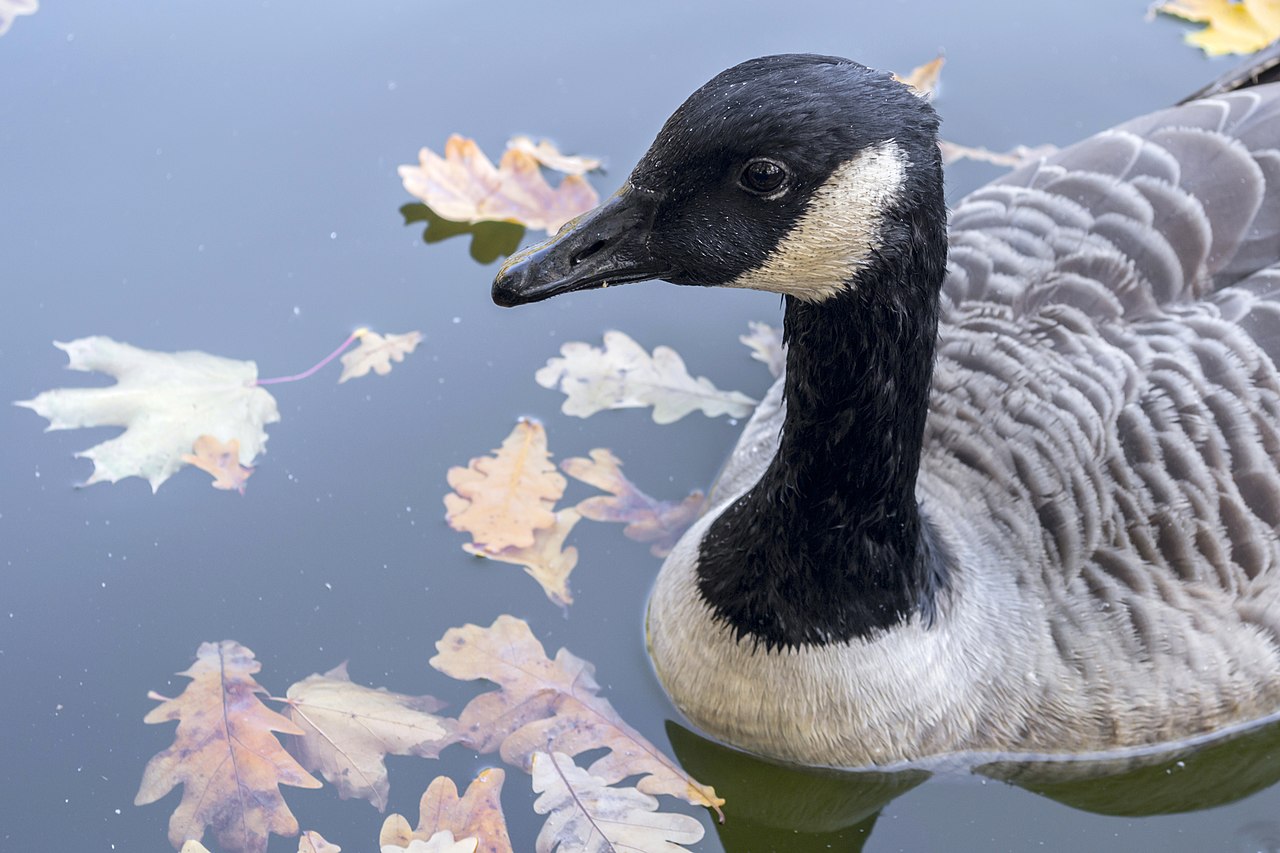
Gaggle is one of the few medieval collective nouns still in ordinary speech, and it survived because it is onomatopoeic. The word imitates the cackling, gabbling racket a flock of geese makes while feeding, and anyone who has walked past a hundred Canada geese on a park lawn understands immediately why that sound became the name. This guide covers every term for a group of geese, explains the flight formation that gives us skein and wedge, sorts out what a gander and a gosling are, and describes how goose flocks are actually structured.
A group of geese is called a gaggle on the ground or on water and a skein when in flight. Geese flying in a V are also called a wedge or a team, and a group resting on water is sometimes a plump. Gaggle imitates the cackling noise a feeding flock makes. A male goose is a gander and a baby is a gosling.
| Situation | Term |
|---|---|
| On the ground or water | Gaggle |
| In flight | Skein, wedge, or team |
| Resting on water (archaic) | Plump |
| Male goose | Gander |
| Female goose | Goose (no separate term) |
| Baby goose | Gosling; a group is a brood |
| Plural of goose | Geese (never gooses) |
Why Is a Group of Geese Called a Gaggle?
A group of geese is called a gaggle because the word imitates the sound they make. Gaggle is related to cackle, gabble, and giggle, all formed from the same imitative root, and it has been applied to geese in English since at least the fifteenth century. The term appears in the Book of Saint Albans and other early lists of terms of venery, but unlike most of those inventions it never fell out of use, because it describes something anyone can hear.
The sound is genuinely distinctive. A feeding flock of geese produces a continuous overlapping babble of low honks, murmurs, and grunts, punctuated by louder calls when a bird is disturbed or when the group prepares to move. It is a social noise, and geese use it to maintain contact and coordinate movement within the flock. Individual Canada geese have recognizable voices, and mated pairs and family members respond preferentially to each other’s calls.
Gaggle has also escaped the bird world entirely, which few collective nouns manage. English uses a gaggle of tourists, a gaggle of reporters, or a gaggle of children to mean a disorderly, noisy group, and the metaphor is understood without explanation. Only murder of crows has achieved comparable reach outside of birding. The vividness of the original image is why: a gaggle sounds like what it describes.
What Is a Skein of Geese?
A skein of geese is a group of geese in flight, particularly a line or V formation crossing the sky. The word comes from the textile sense of skein, a loosely coiled length of yarn, and the comparison is to the long, trailing, slightly wavering line of birds. A skein of snow geese or Canada geese against a dusk sky is one of the classic sights of autumn, and skein is the correct term for it in a way that gaggle is not.
Skein is genuinely used by birders and waterfowl hunters, especially in Britain where the word is common in birding reports. The related terms wedge and team both refer to formation flight as well, with wedge specifically describing the V shape. A team of geese is older usage and is applied more loosely. Some sources reserve skein for a loose line and wedge for a tight V, though the distinction is not consistently maintained.
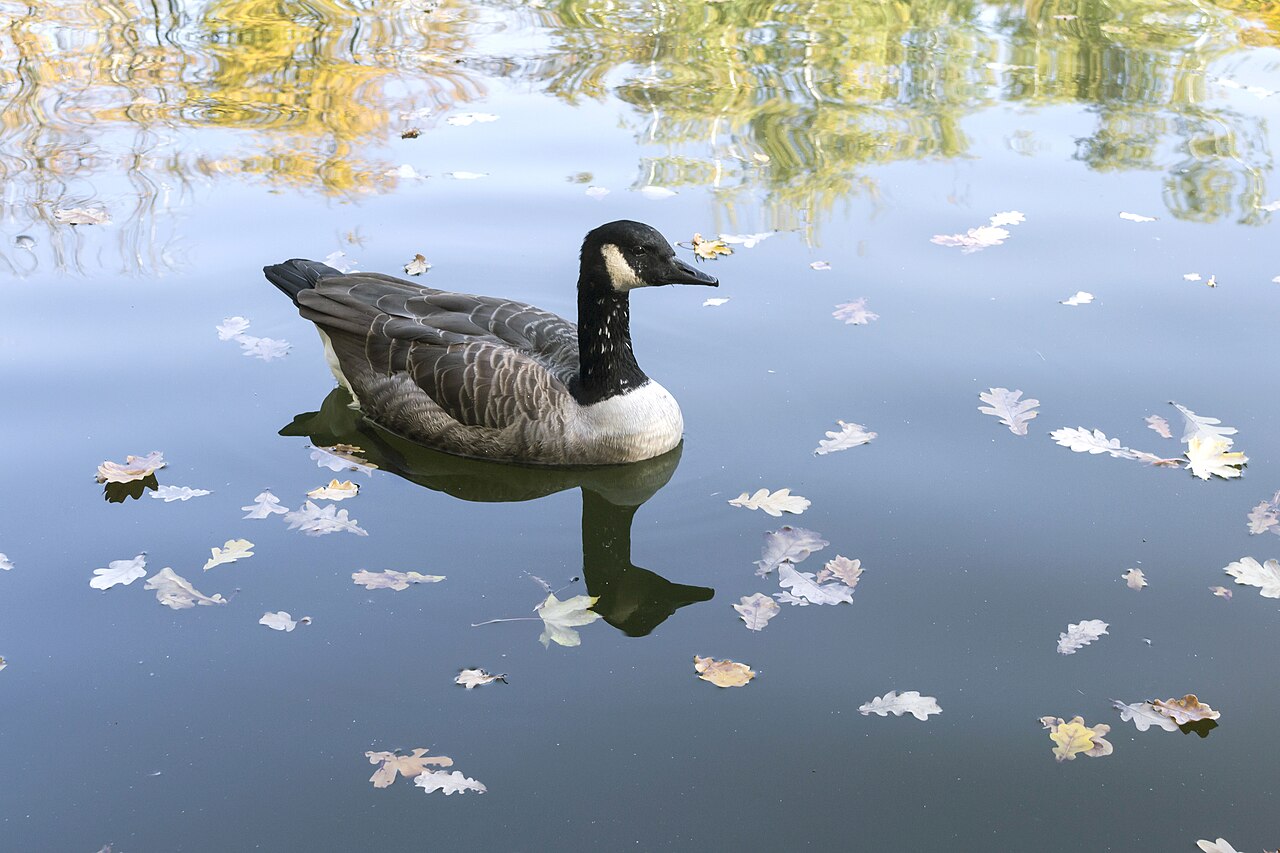
The practical point is that geese change their collective noun the moment they take off. A hundred Canada geese grazing a soccer field are a gaggle; the same hundred birds a minute later, honking overhead in a ragged V, are a skein. No other bird except the swan has this crisp two-term system in living use, and it exists because geese present such different impressions in the two states. The Canada goose guide covers the species behind most American gaggles and skeins.
Why Do Geese Fly in a V Formation?
Geese fly in a V formation to save energy and to maintain visual contact with each other. Each bird positions itself slightly behind and to the side of the bird ahead, catching the upwash of air spilling off that bird’s wingtip. The rising air reduces the effort required to stay aloft, and studies of large birds in formation have measured energy savings in the range of 10 to 20 percent, with heart rate and wingbeat frequency both dropping for birds in the trailing positions.
Research on northern bald ibises flying with a microlight aircraft, published in Nature in 2014, showed that birds not only find the optimal position but also time their wingbeats to match the rhythm of the wake ahead, which is a remarkable feat of flight control. Birds also rotate through the lead position, which receives no aerodynamic benefit, sharing the hardest work across the flock rather than exhausting a single leader.
The second function is coordination. A V or a line lets every bird see the ones ahead without obstruction, which matters over long migrations where a flock must stay together through weather, darkness, and unfamiliar terrain. Canada geese may travel over a thousand miles between breeding and wintering grounds, and some populations of bar-headed geese cross the Himalayas at altitudes above 20,000 feet, which makes any energy saving significant. The constant honking during flight appears to help maintain the formation.
Is It a Flock or a Gaggle of Geese?
Both are correct. Flock is the general term for any group of birds and applies to geese in any situation, on land, on water, or in the air. Gaggle is the specific traditional term for geese on the ground or water, and skein is the specific term for geese flying. Nobody will consider flock wrong, and it is what many birders use in casual conversation and in field notes.
The choice is one of register. Gaggle is the more colorful and more precise word for a feeding group, and using it correctly signals familiarity with the tradition. Flock is neutral and always safe. In scientific writing, flock is standard, and researchers describing goose behavior use flock, family group, and pair rather than any of the traditional collective nouns.
The one usage that is genuinely incorrect is applying gaggle to birds in flight, which is the most common mistake people make with these terms. A V of geese overhead is a skein, not a gaggle, precisely because the noise and disorder that gaggle describes are absent. If you are unsure which state applies, flock covers both without risk. The types of geese guide covers the species you are likely to see in each.
What Are Male, Female, and Baby Geese Called?
A male goose is called a gander, a female goose is simply called a goose, and a baby goose is a gosling. A group of goslings with their parents is a brood. Unlike ducks, where drake and hen are clearly separated, geese leave the female without a distinct term, which occasionally causes confusion when someone asks what a female goose is called and finds that the answer is just goose.
The plural is geese, an irregular form inherited from Old English along with foot and feet and tooth and teeth. Gooses is not standard English. The word gander survives in the idiom to take a gander, meaning to have a look, which comes from the way a goose stretches its neck to inspect something. Gander is also used in the phrase what is good for the goose is good for the gander, meaning the same standard should apply to both parties.
Telling ganders from geese in the field is difficult because the sexes look nearly identical in most species. Ganders are typically slightly larger with a thicker neck and a more upright posture, and they take the lead in defending the nest and goslings, hissing and charging at intruders while the female stays with the young. In Canada geese, the size difference is modest, roughly 10 percent, and reliable sexing usually requires handling the bird. The baby goose guide covers goslings from hatching through fledging.
How Do Goose Flocks Work Socially?
Goose flocks are built from family units rather than from unrelated individuals, which sets them apart from most bird flocks. Geese form long-term pair bonds, often for life, and the pair stays together year-round. Goslings remain with their parents through the first migration and often through their first winter, so a flock of a thousand Canada geese is really a collection of a few hundred family groups traveling together.
This family structure has real consequences. Migration routes and stopover sites are learned from the parents rather than being innate, which is why introduced or relocated goose populations can take generations to establish traditional routes, and why the resident, non-migratory Canada goose populations that now live in parks and golf courses across North America persist: the young learn from parents that never migrate. Family groups also have higher social status within a flock than pairs or single birds, gaining better access to feeding areas.
Aggression within a flock follows the same logic. Ganders defend their family’s space with head-low threat postures, hissing, and occasional wing-beating fights, and disputes are most intense during the breeding season when a pair holds a nesting territory. Outside the breeding season, geese are far more tolerant, which is what allows the huge winter gaggles to form on fields and reservoirs.
How Large Are Goose Flocks?
Goose flocks range from a single family of five or six birds to migratory concentrations in the hundreds of thousands. Snow geese form the largest gatherings in North America, and staging areas such as Squaw Creek in Missouri, Bosque del Apache in New Mexico, and the Sacramento Valley in California regularly hold flocks well over 100,000 birds. The takeoff of such a flock, when the whole mass lifts at once in a roar of wings, is among the most dramatic wildlife spectacles on the continent.
Canada geese form smaller but more familiar flocks. Migratory populations travel in groups of dozens to a few thousand, while resident urban populations typically hold in the tens to low hundreds and can be seen year-round on the same parks, ponds, and corporate lawns. Resident Canada goose numbers in the United States have grown substantially since the mid-twentieth century, from near extirpation of some subspecies to several million birds today, and they are now a management issue in many cities.
Snow goose numbers have grown even more dramatically. The mid-continent population expanded from roughly 800,000 birds in the late 1960s to well over 15 million, driven largely by agricultural food supplies on the wintering grounds, and the resulting grazing pressure has degraded Arctic breeding habitat significantly. Wildlife agencies have responded with liberalized hunting seasons aimed at reducing the population, an unusual situation in waterfowl management where most effort goes toward increasing numbers.
Collective Nouns for Geese and Related Birds
Geese share the water-and-air two-term system with the other large waterfowl. Swans are a bevy or a herd on water and a wedge in flight, and ducks are a raft or a paddling on water and a flock in the air. This consistent pattern across the swan, goose, and duck family reflects how much attention English hunters gave to waterfowl, since each of these situations mattered to them practically.
Other terms in the family are less familiar. A group of swans is occasionally called a lamentation or a whiteness, both later inventions, and a group of goslings has no special name beyond brood. Coots, which share the same ponds and are often mistaken for ducks, get a covert or a raft. The group of ducks guide covers the duck side of the system in detail, and the group of turkeys guide handles the other large ground bird that gets an unexpected name.
What makes gaggle worth knowing above all these is that it is one of the very few collective nouns that survived into ordinary speech rather than remaining a curiosity. The Cornell Lab of Ornithology (allaboutbirds.org) treats collective nouns generally as tradition rather than terminology, but gaggle has outgrown that category. It is a word people use, understand, and apply metaphorically, five centuries after it was first written down for the benefit of English gentlemen learning how to sound educated about game birds. Evidence of a gaggle passing through your yard is easy to find, as the goose poop guide explains.
Frequently Asked Questions
What is a group of geese called?
A group of geese is called a gaggle when on the ground or on water and a skein when in flight. Geese in a V are also called a wedge or a team. Flock is always correct in any situation.
Is it a flock or a gaggle of geese?
Both are correct. Gaggle is the traditional term for geese on the ground or water, flock is the general term for any group of birds. The one mistake is calling geese in flight a gaggle; that is a skein.
What is a flock of geese in flight called?
A skein, or a wedge if they are in a tight V. The word skein comes from a coiled length of yarn, describing the long trailing line of birds. Team is an older alternative.
Why is a group of geese called a gaggle?
Because the word imitates the cackling, gabbling noise a feeding flock makes. Gaggle is related to cackle and gabble and has been used for geese since at least the fifteenth century.
What is a group of baby geese called?
A brood. Individual baby geese are goslings. Goslings stay with their parents through their first migration and often their first winter, which is why goose flocks are made of family groups.
What is a male goose called?
A gander. Female geese have no separate term and are simply called geese. Ganders are slightly larger with thicker necks and take the lead in defending the nest and goslings.
Why do geese fly in a V?
To save energy and stay coordinated. Each bird catches the upwash from the wingtip of the bird ahead, cutting the effort of flight by 10 to 20 percent, and the V lets every bird see the others. Birds rotate through the lead position.