Goose Poop: Identification, Health Risk, and Cleanup
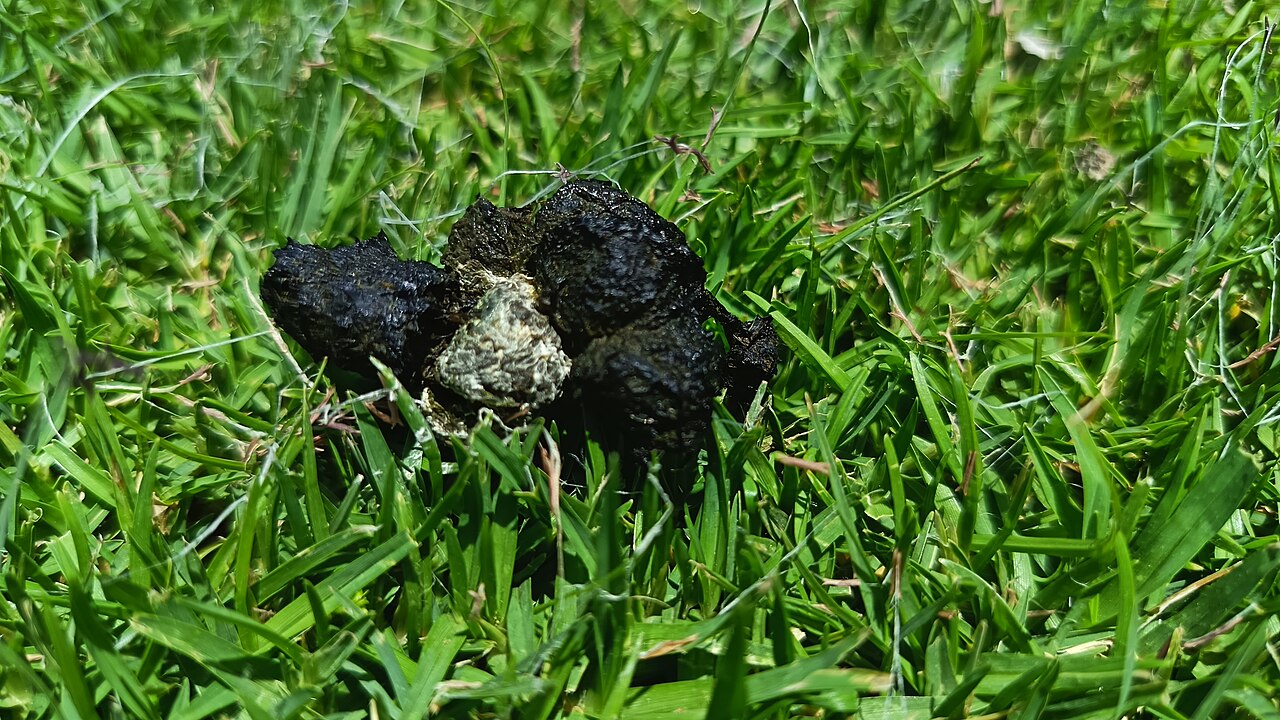
Goose droppings are firm green or greenish-brown cylinders roughly 5 to 8 cm long and about 1 cm thick, often with a white cap of uric acid at one end. A single Canada goose produces one to two pounds a day and defecates as often as every 12 minutes while grazing, which is why a flock of thirty birds can make a lawn or a park unusable within days.
The volume is a direct consequence of the diet. Geese are grazers eating grass with low nutritional density and no capacity to ferment it the way a cow does, so material passes through in two to three hours largely undigested. They are not producing waste inefficiently; they are running enormous quantities of low-value food through a short gut.
| Feature | Goose Poop |
|---|---|
| Shape | Firm cylinder, blunt ends |
| Length | Roughly 5 to 8 cm |
| Colour | Green to greenish-brown, white cap |
| Daily output | 1 to 2 lb per adult bird |
| Frequency | Roughly every 12 minutes while grazing |
| Main pathogens | Campylobacter, Salmonella, E. coli, Giardia |
| As fertiliser | Poor, too wet and unbalanced when fresh |
What Goose Droppings Look Like
The classic Canada goose dropping is a firm tubular pellet with blunt rather than tapered ends, green when fresh and darkening to olive or brown as it dries. Length runs 5 to 8 cm and thickness around 1 cm, which makes them noticeably larger than duck droppings and considerably firmer.
The white cap at one end is uric acid, the nitrogen waste birds excrete instead of urine, and it appears on the droppings of nearly all birds. On goose droppings it is usually a distinct white smear rather than mixed through, which helps distinguish them from mammal droppings of similar size.
Colour tracks diet closely. Birds grazing fresh grass produce bright green droppings, birds feeding on grain or bread produce paler brown ones, and a mixed diet gives something in between. Diarrhoea-like droppings usually indicate a bird feeding heavily on bread, which is one of several reasons feeding geese is discouraged.
Goose Poop vs Duck and Other Bird Droppings
Duck droppings are smaller, wetter, and far less structured, often forming loose splatters rather than firm cylinders. A pond edge covered in shapeless green smears is ducks, while one covered in discrete tubular pellets is geese.
Swan droppings are larger still and are usually wetter and more olive than green. Gull droppings are almost entirely liquid white splashes with little solid form, and they appear on hard surfaces and rooflines rather than on grass. Our guide to bird poop identification covers the full range.
The mammal confusion is with deer and rabbit droppings, and shape settles it immediately. Deer and rabbit produce separate rounded pellets in clusters, never a single long cylinder, and neither has a white uric acid cap. Our comparison of deer poop covers that side.
Why Geese Produce So Much
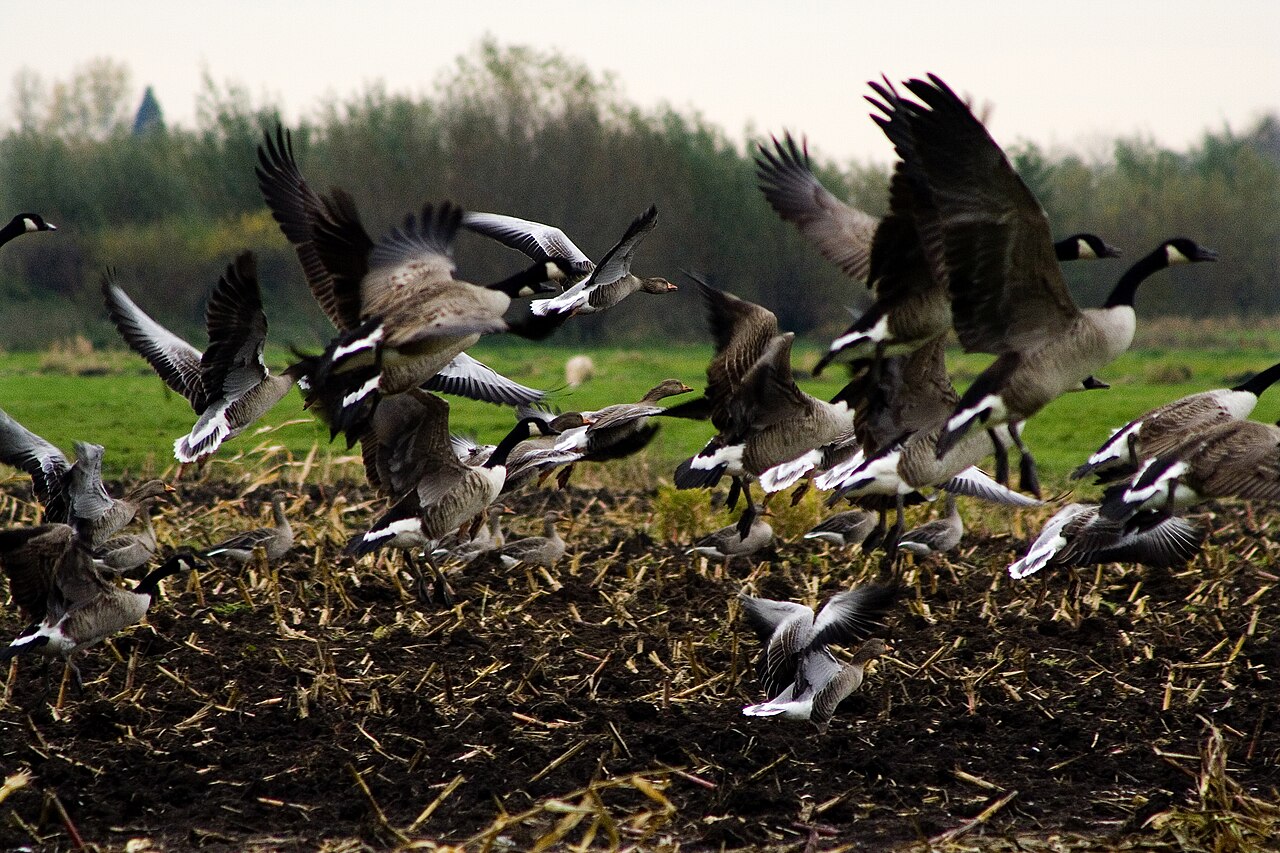
Grass is a poor food. It is low in protein, high in indigestible cellulose, and geese lack the multi-chambered stomach and long fermentation time that lets ruminants extract value from it. Their solution is throughput: eat continuously, pass material fast, and absorb what can be absorbed in the two to three hours available.
An adult Canada goose spends much of the daylight period grazing and consumes up to four pounds of grass a day. With most of that passing through, one to two pounds of droppings is the arithmetic result rather than a sign of anything wrong.
Flock size multiplies it fast. Thirty resident geese produce 30 to 60 pounds of droppings daily on a single park lawn or golf course, concentrated on the short mown grass they prefer. That preference for mown turf next to open water is exactly why the problem lands on parks, campuses, and waterfront properties. Our guide to what geese eat covers the diet in detail.
Are Goose Droppings a Health Hazard?
They carry real risk, though the risk is often overstated in the way it gets reported. Goose faeces can contain Campylobacter, Salmonella, E. coli, Giardia, and Cryptosporidium, and studies sampling park droppings routinely find at least one of these present.
Transmission requires ingestion, so the practical routes are hand to mouth after contact and contaminated water. Children playing on affected grass are the main concern, and swimming areas downstream of large flocks can register elevated bacterial counts that trigger beach closures.
The measures that matter are basic. Wash hands after any contact with grass in an affected area, keep young children from putting hands in their mouths on such ground, and clean footwear before entering a home. Direct contact with intact skin poses little risk, and the danger of simply walking through an area is minimal.
Is Goose Poop Safe for Dogs?
No, and dogs are more exposed than people because they eat it. Coprophagy is common, and goose droppings can transmit Giardia, Campylobacter, Salmonella, and Cryptosporidium to a dog, producing diarrhoea, vomiting, and lethargy that can be severe in puppies and older animals.
Some of these are zoonotic, meaning an infected dog can pass the organism to the household. This is the main reason veterinarians treat goose poop ingestion as worth acting on rather than shrugging off, particularly when a dog regularly visits a park with a resident flock.
If a dog eats goose droppings and then develops persistent diarrhoea, vomiting, or lethargy, a veterinary visit with a stool sample is the appropriate step. Prevention is largely a leash-and-attention matter in affected areas, since no dietary supplement reliably stops the behaviour.
Is Goose Poop Good Fertiliser?
Not in the state it arrives. Fresh goose droppings are high in nitrogen but also high in moisture and pathogens, and applying them directly can burn grass, spread bacteria, and leave the lawn worse than before. The nitrogen concentration is high enough to scorch turf in patches.
Composted properly they are usable. Hot composting at 55 degrees Celsius or above for several days kills the pathogens and stabilises the nitrogen, after which the material works much like composted poultry manure. This requires a functioning compost system rather than a pile in a corner.
The comparison people usually want is with other manures. Poultry manure is the strongest common option for nitrogen, cow manure the most balanced and forgiving, and horse manure the bulkiest and best for soil structure. Goose droppings sit near poultry in nitrogen content but are harder to collect and handle.
Why Geese Became a Year-Round Problem
Resident Canada geese are a recent phenomenon. The birds were nearly eliminated from much of their range by the early twentieth century, and restoration programmes through the mid century reintroduced non-migratory stock that had lost the migratory behaviour learned from parents.
Those birds found a landscape purpose-built for them. Suburban development created enormous quantities of exactly what geese need: mown turf beside retention ponds, golf courses, corporate campuses, and park lawns, all with abundant grass, open sightlines, and no hunting pressure or predators.
The population grew from tens of thousands to several million resident birds across North America, and because they no longer migrate, the droppings arrive every month of the year rather than for a few weeks in spring and autumn. Understanding this explains why the problem does not resolve on its own and why deterrence has to be structural.
How to Clean It Up
Wet is easier than dry. Fresh droppings hose off hard surfaces readily, while dried ones bond and need scrubbing. On paving and decking, a hose and a stiff brush handle most of it, and a pressure washer works for heavy accumulations, though it aerosolises material and warrants eye protection and standing upwind.
On lawns, mowing disperses droppings and speeds breakdown, but it also spreads material across footwear and pet paws. For heavily used areas, a lawn sweeper or a dedicated collection tool removes rather than distributes, which is what parks departments generally use.
Wear gloves, wash hands afterwards, and clean tools separately from anything used for food gardening. Bag heavy accumulations rather than composting them casually, since ordinary cold compost does not reach pathogen-killing temperatures.
How to Keep Geese Off a Property
Habitat modification is the only approach that works long term, and it targets what geese need: short mown grass next to open water with clear sightlines for spotting predators. Removing any one of those three reduces the appeal substantially.
Letting a buffer strip of tall vegetation grow along the water’s edge is the single most effective measure. Geese avoid walking through vegetation that blocks their view of approaching threats, and a strip 60 cm high and two metres wide changes the calculation for a whole shoreline. Native grasses and shrubs work and look better than bare turf.
Feeding is the other lever and it is the one people control directly. Fed geese abandon migration, become resident year round, and multiply, and a single household feeding a park flock sustains the problem for everyone else. Canada geese and their nests are federally protected in the United States, so harassment and habitat change are the legal tools. Our guide to the Canada goose covers the species and types of geese covers the others you may encounter.
Frequently Asked Questions
What do goose droppings look like?
Firm green or greenish-brown cylinders roughly 5 to 8 cm long and about 1 cm thick with blunt ends, usually carrying a white cap of uric acid at one end. Colour tracks diet, with fresh grass producing bright green and grain or bread producing paler brown.
Are goose droppings a health hazard?
They can carry Campylobacter, Salmonella, E. coli, Giardia, and Cryptosporidium. Transmission requires ingestion, so the practical risks are hand to mouth contact and contaminated water. Washing hands after contact and keeping young children from mouthing hands on affected grass handles most of it.
Is goose poop ok for dogs?
No. Dogs frequently eat it, and it can transmit Giardia, Campylobacter, Salmonella, and Cryptosporidium, producing diarrhoea and vomiting that can be severe in puppies and older dogs. Some of these are zoonotic and can pass to the household afterwards.
Is goose poop good for my yard?
Not fresh. It is high in nitrogen but also high in moisture and pathogens, and applying it directly can scorch grass and spread bacteria. Hot composted at 55 degrees Celsius or above for several days it becomes usable and behaves much like composted poultry manure.
Why do geese poop so much?
Grass is low in nutrition and geese cannot ferment it the way ruminants do, so material passes through in two to three hours largely undigested. An adult eats up to four pounds of grass a day and produces one to two pounds of droppings, defecating roughly every 12 minutes while grazing.
Which animal poo is the best fertilizer?
It depends on the goal. Poultry manure is the strongest for nitrogen, cow manure the most balanced and forgiving, and horse manure the best for soil structure and bulk. Goose droppings sit near poultry in nitrogen but are harder to collect and must be hot composted first.
How do I keep geese off my lawn?
Let a buffer strip of tall vegetation grow along any water edge, since geese avoid ground where they cannot see approaching predators. Stop all feeding, and avoid maintaining large expanses of short mown grass next to open water. Canada geese and their nests are federally protected, so habitat change is the legal route.