Eastern Tailed-Blue Butterfly: ID, Host Plants, and the False Head
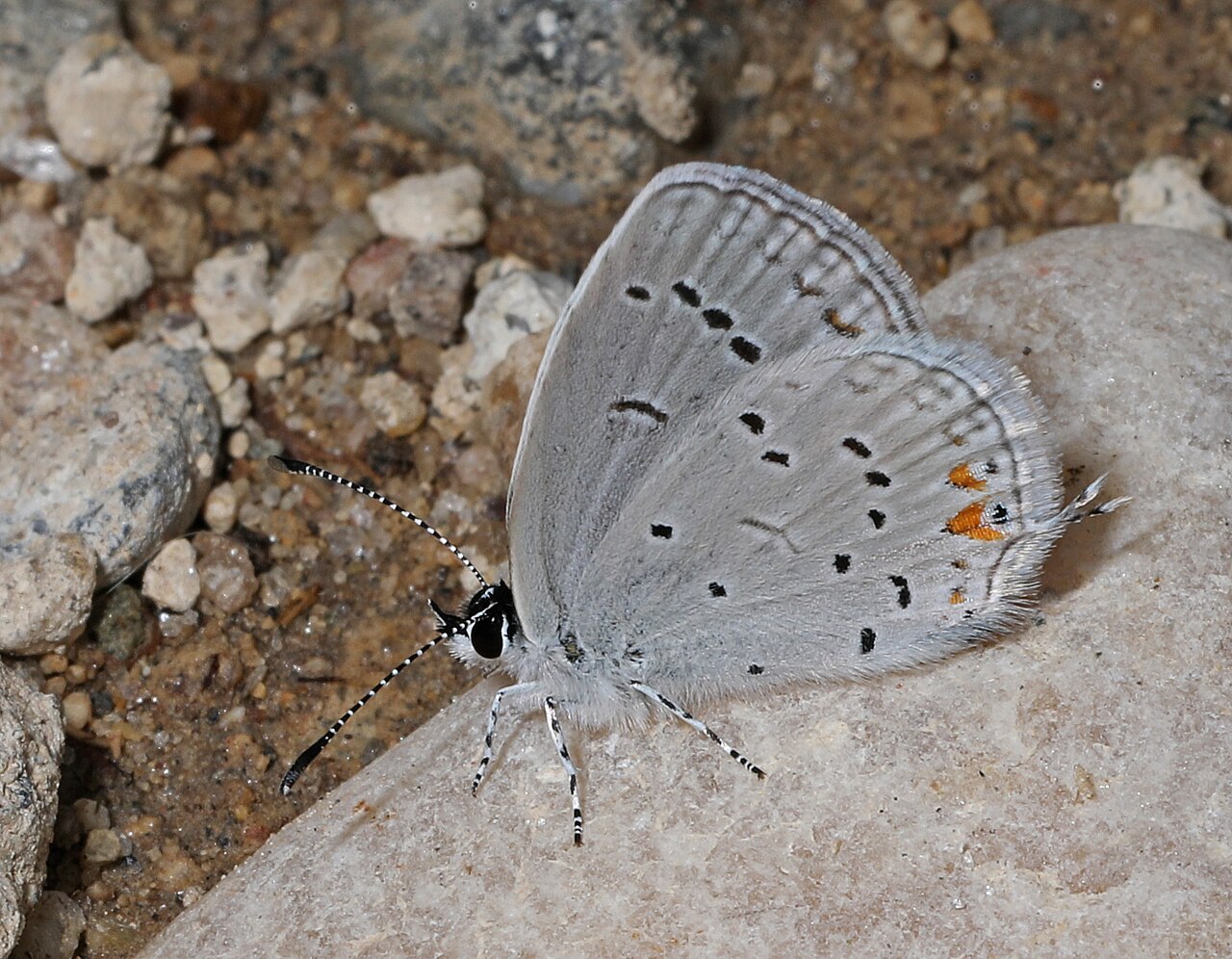
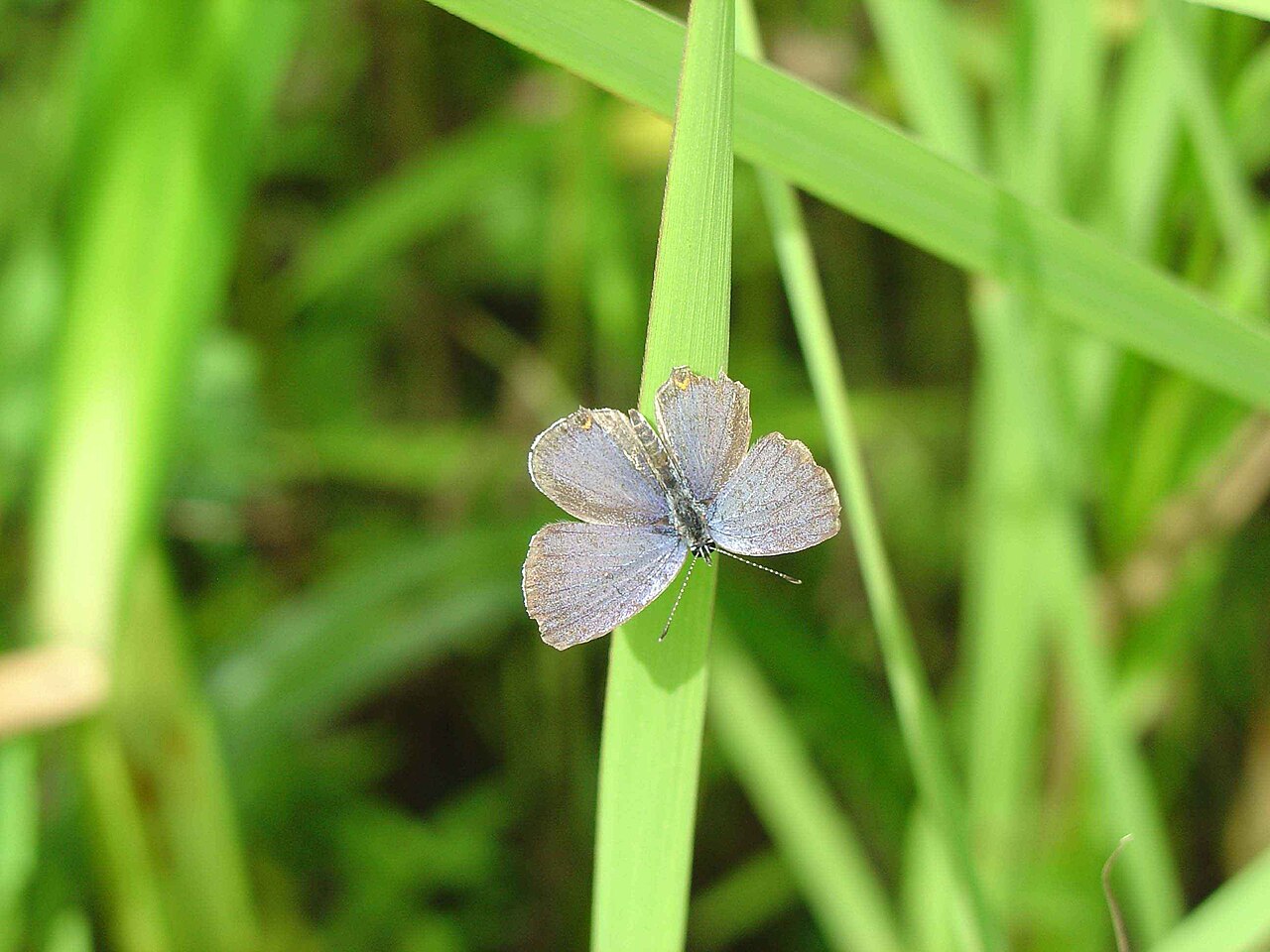
The eastern tailed-blue is a tiny butterfly with a wingspan of just 2 to 3 cm, silvery blue above in males and mostly greyish-brown in females, with a pair of hair-thin tails on the hindwings and small orange spots at their base. It is one of the most common butterflies in eastern North America and one of the least noticed, because most people register it as a moth or overlook it entirely at that size.
Its host plants are legumes, particularly clover, vetch, and wild peas, which is why it thrives in lawns, roadsides, vacant lots, and field margins rather than in carefully planted gardens. If you have clover in the grass, you very likely have eastern tailed-blues, and a slow walk across a mown lawn on a sunny afternoon will usually flush several.
| Feature | Detail |
|---|---|
| Scientific name | Cupido comyntas |
| Wingspan | 2 to 3 cm, one of the smallest |
| Male | Silvery blue above |
| Female | Greyish-brown, blue only near the body |
| Tails | One thin tail per hindwing, orange spot at base |
| Host plants | Clover, vetch, wild pea, other legumes |
| Broods | Three or more per year in the south |
What an Eastern Tailed-Blue Looks Like
Size is the first thing to register. At 2 to 3 cm across the wings, this is among the smallest butterflies in North America, comparable to a thumbnail. Anything blue and butterfly-shaped that seems too small to be a butterfly is very likely this species or one of its relatives in the family Lycaenidae.
Males are bright silvery blue on the upper surface with a narrow dark border. Females are largely greyish-brown above with blue restricted to the wing bases, and early-season females often show more blue than late-season ones. Both sexes are pale grey below with fine black spotting.
The tails are the identifying feature and give the species its name. Each hindwing carries a single hair-thin tail, and at the base of each sits a small orange spot. Those tails wear off with age, so a late-season individual may have lost them entirely, which is the most common cause of misidentification.
The False Head Trick
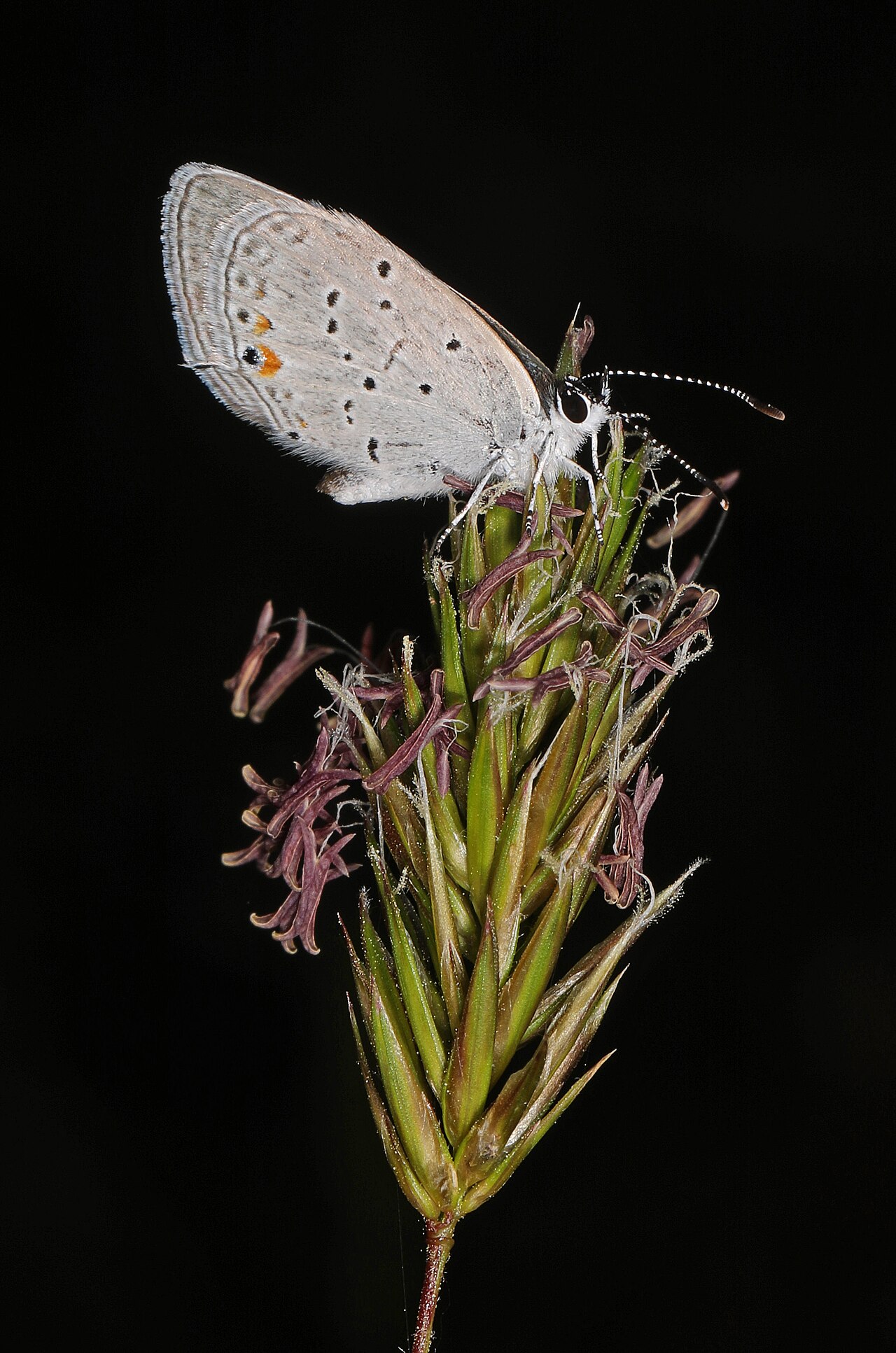
The tails and orange spots are not decoration. Together with the way the butterfly rubs its hindwings back and forth while perched, they create the impression of a head with antennae at the wrong end of the insect. A bird striking at that false head takes a piece of wing rather than the body.
The behaviour is deliberate and easy to observe. A settled eastern tailed-blue slides its hindwings against each other continuously, which makes the thin tails twitch exactly like antennae. Stand close and watch for ten seconds and the effect is unmistakable.
The evidence for it working is straightforward: a large proportion of individuals in any population carry symmetrical beak-shaped notches out of the hindwing margins, precisely where the false head sits. Those are butterflies that survived an attack that would otherwise have been fatal. Our guide to the blue butterfly covers the other blues that use similar tricks.
Host Plants and Caterpillars
Eastern tailed-blues lay on legumes, and the range of species used is wide: white and red clover, alfalfa, vetch, bush clover, wild pea, tick trefoil, and various beans. Females lay single eggs on flower buds rather than leaves, because the caterpillars feed on developing seeds inside the pods.
The caterpillar is a small, flattened, slug-shaped larva, usually green with faint darker markings and covered in short fine hairs. It bores into flower buds and young pods and feeds inside, which makes it almost impossible to find without opening the pods.
Caterpillars overwinter fully grown inside a seed pod and pupate the following spring. In the southern part of the range there are three or more broods a year and adults fly from March through November, while in the north there are typically two broods and a shorter season.
The Relationship With Ants
Like many members of the family, eastern tailed-blue caterpillars are myrmecophilous, meaning they associate with ants. The caterpillar has a gland on its back that secretes a sugary fluid, and ants feed on it while remaining in attendance on the larva.
The exchange is mutual. The ants get a reliable carbohydrate source, and the caterpillar gets protection from parasitoid wasps and flies, which are the main cause of mortality in butterfly larvae. Attended caterpillars survive at measurably higher rates than unattended ones.
The relationship is facultative rather than obligate, so the caterpillar can complete development without ants, unlike some European blues that cannot survive outside an ant nest. Our guide to what ants eat covers the other side of the arrangement.
Where They Live
The species is one of the most widespread butterflies in eastern North America, ranging from southern Canada through the eastern and central United States into Mexico and Central America, with an introduced population in parts of the West.
Habitat is anywhere disturbed and sunny with legumes present. Lawns, road verges, railway embankments, vacant lots, field margins, pastures, and gardens all qualify, and the species is genuinely more common in mown grass with clover than in wildflower meadows. It is a butterfly of untidy ordinary places.
That association with disturbance means it has done well while many specialised butterflies have declined. It is not threatened anywhere in its range, and clover in lawns supports it directly, which is a reasonable argument against herbicide programmes aimed at broadleaf weeds in turf.
How Rare Is a Blue Butterfly?
Small blue butterflies are common. The eastern tailed-blue, spring azure, summer azure, and various other lycaenids are among the most abundant butterflies across much of North America, and any of them will turn up in an ordinary suburban yard.
Large blue butterflies are a different matter. The blue morpho of Central and South America and the Ulysses swallowtail of Australia are the images people usually have in mind, and neither occurs anywhere in North America outside a butterfly house. Their scarcity in temperate regions creates the impression that blue butterflies generally are rare.
The colour itself is also worth understanding. Butterfly blues are almost always structural rather than pigmented, produced by microscopic layered scales that interfere with light. This is why blues shift and flash with viewing angle and why they can be far more intense than any pigment could achieve. Our guide to the black and blue butterfly covers other species people search for by colour.
What the Eastern Tailed-Blue Symbolises
Blue butterflies broadly carry associations with peace, calm, hope, and transformation in contemporary folklore, and in several traditions a blue butterfly is read as a message from someone who has died or as a sign that a difficult period is ending.
Nothing in that symbolism is specific to the eastern tailed-blue, which has no distinct folklore of its own. It is a recently named North American species with no place in the older European traditions that supply most butterfly symbolism, so anything attributed specifically to it is modern invention.
What it does have is the general butterfly meaning of transformation through the life cycle, intensified by the colour. A butterfly landing on someone is almost always seeking salt from perspiration rather than delivering a message, and both readings coexist comfortably. Our guide to what it means when a butterfly lands on you covers the symbolism in depth.
Behaviour Worth Watching
Males patrol low over vegetation through the middle of the day, flying slowly a few centimetres above the grass and investigating anything blue, including other males, small flowers, and occasionally scraps of litter. That patrol flight is the most reliable way to spot the species.
Puddling is common in males, which gather on damp soil, mud, and animal droppings to take up sodium. Groups of several individuals on a damp patch of a dirt path are a frequent sight in summer, and they tolerate close approach while feeding.
Basking behaviour separates the sexes further. Males often perch with wings partly open to catch sun on the blue upper surface, while females more often keep the wings closed. On a cool morning both sit low in the grass with wings shut, showing only the pale grey underside, which is when they are hardest to find.
How to Attract Them
Stop killing the clover. White clover in a lawn is the single most effective thing a property can offer this species, and broadleaf herbicide programmes remove it comprehensively. A lawn allowed to keep its clover supports eastern tailed-blues, bumblebees, and a range of other insects at no cost.
Leaving an unmown strip helps further, since the caterpillars feed inside developing seed pods and mowing during flowering removes the entire brood. Mowing a section on a rotation rather than all at once leaves refuges, which is the standard recommendation for insect-friendly lawn management.
Adults nectar on low flowers with accessible centres, since their tongues are short. Clover itself, plus asters, fleabane, cinquefoil, and various small composites, all work. Tall showy nectar plants aimed at swallowtails do nothing for a butterfly this size. Our guides to the painted lady and the viceroy cover species that respond to different planting.
Frequently Asked Questions
What are the host plants for the eastern tailed-blue butterfly?
Legumes, particularly white and red clover, alfalfa, vetch, bush clover, wild pea, tick trefoil, and beans. Females lay single eggs on flower buds rather than leaves, because the caterpillars feed on developing seeds inside the pods and overwinter inside them.
How big is the eastern tailed-blue butterfly?
Just 2 to 3 cm across the wings, about the size of a thumbnail, which makes it one of the smallest butterflies in North America. Many people mistake it for a moth or fail to register it as a butterfly at all because of the size.
Where does the eastern tailed-blue butterfly live?
Across eastern and central North America from southern Canada into Mexico and Central America, with an introduced population in parts of the West. It favours disturbed sunny ground with legumes: lawns, roadsides, vacant lots, pastures, and field margins rather than wildflower meadows.
Why does it have tails on its wings?
They form a false head. Combined with orange spots at the tail base and the way the butterfly rubs its hindwings while perched, the tails twitch like antennae and draw bird strikes to the wrong end of the insect. Many individuals carry beak-shaped notches exactly where the false head sits.
How rare is a blue butterfly?
Small blues such as the eastern tailed-blue and the spring azure are among the most common butterflies in North America. Large spectacular blues like the blue morpho are tropical and only seen in butterfly houses here, which creates the impression that blue butterflies generally are rare.
What does the eastern tailed-blue butterfly symbolize?
Nothing specific to the species. Blue butterflies broadly carry associations with peace, hope, and messages from those who have died, and general butterfly symbolism centres on transformation. The eastern tailed-blue has no distinct folklore of its own, since it plays no part in older European traditions.
Do eastern tailed-blue caterpillars really live with ants?
Yes. The caterpillar secretes a sugary fluid from a gland on its back, and attending ants feed on it while protecting the larva from parasitoid wasps and flies. Attended caterpillars survive at higher rates, though the relationship is optional rather than required.