Blue Butterfly
A blue butterfly in your yard is almost always one of a handful of species, and which one you saw depends heavily on where you live and how big it was. Small, quarter sized blues like the Eastern tailed-blue and the spring azure are common across most of the United States, while the true showstopper, the blue morpho, lives only in the rainforests of Central and South America and never appears in a backyard north of Mexico.
This guide covers the blue butterflies you are actually likely to encounter, why some of them look blue at all despite having no blue pigment in their wings, and how to tell a genuinely rare species like the Karner blue from a common visitor. The table below covers the basics before the full identification detail.
| Most common small blues | Eastern tailed-blue, spring azure, summer azure, silvery blue |
| Most famous blue butterfly | Blue morpho, found only in Central and South America |
| Rarest US blue butterfly | Karner blue, federally endangered since 1992 |
| Why they look blue | Mostly structural color from wing scales, not blue pigment |
| Typical wingspan | 1 to 1.5 inches for small blues, 5 to 8 inches for blue morphos |
| Best months to see them | Late spring through early fall in most US regions |
Common Blue Butterflies in US Backyards
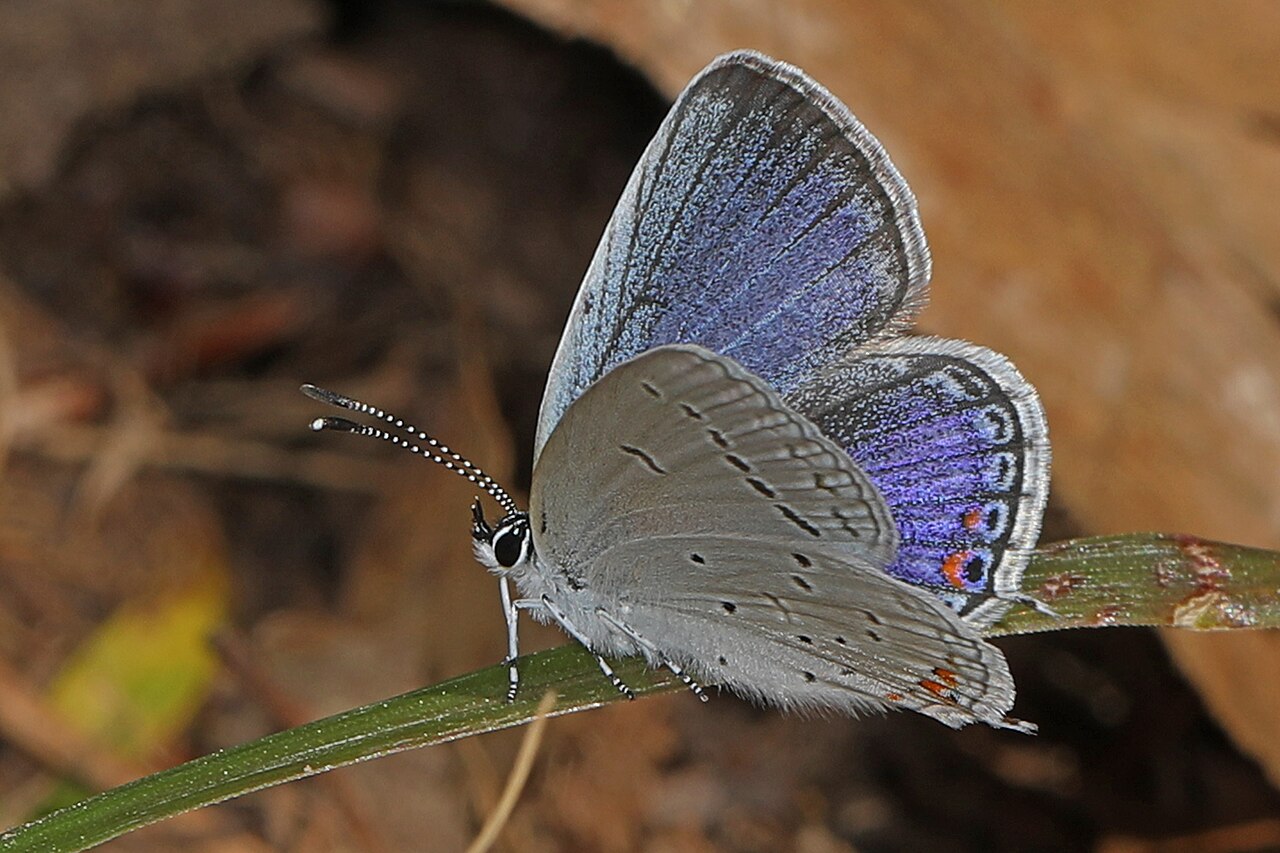
Most of the small blue butterflies people spot in home gardens belong to a group called the “blues,” a family that includes the Eastern tailed-blue, the spring azure, the summer azure, and the silvery blue. These species are widespread, often overlooked because of their small size, and tend to flutter low over lawns, clover patches, and garden edges rather than soaring at eye level.
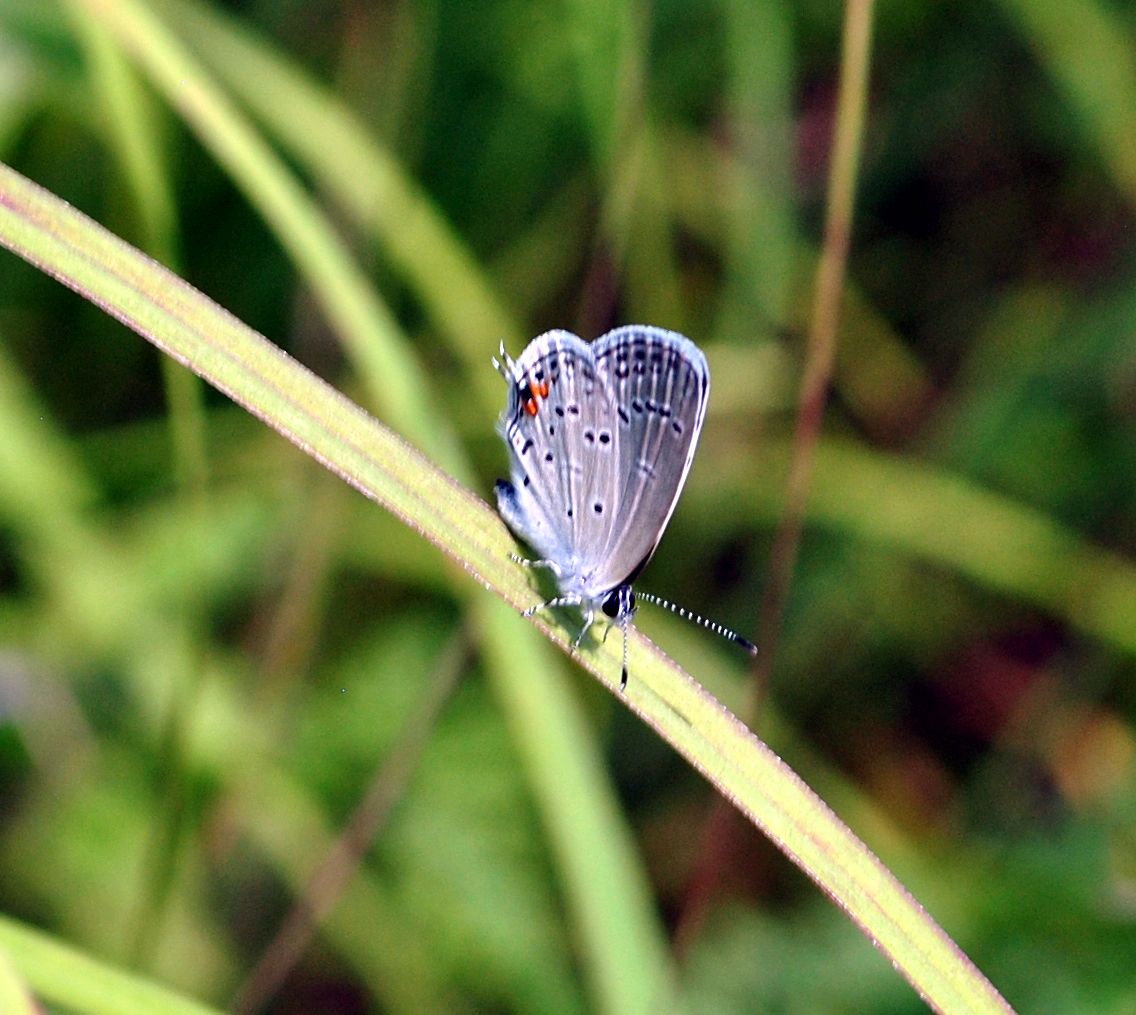
The Eastern tailed-blue is one of the most frequently reported, recognizable by the tiny hairlike tails on its hindwings and a small orange spot near that tail. Spring and summer azures look nearly identical to each other and are best told apart mainly by season, with spring azures appearing earlier and summer azures taking over later in the year.
Silvery blues favor open, sunny areas with legume host plants and tend to appear a bit earlier in spring than the azures in many regions. All of these species are small enough that a quick glimpse often just registers as “a little blue butterfly,” which is exactly why identification usually comes down to season, region, and close observation rather than a single obvious field mark.
The Karner Blue: A Rare Native Specialist
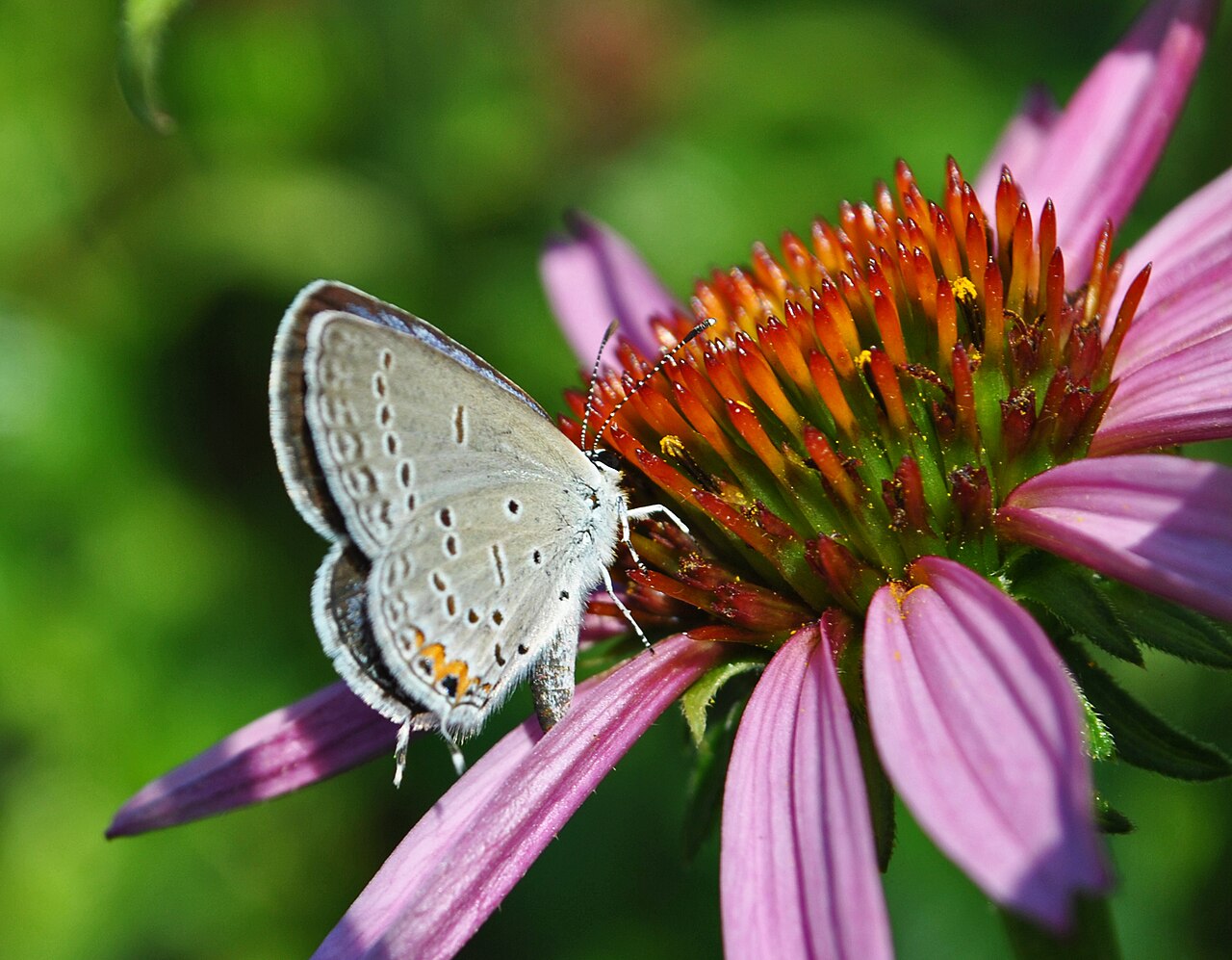
The Karner blue butterfly is one of the most conservation sensitive blues in North America, listed as federally endangered in the United States since 1992. Its range is limited to a narrow band of sandy soil habitat historically stretching from the upper Midwest into parts of the Northeast, and its numbers have dropped sharply as that habitat has been developed or altered.
What makes the Karner blue especially vulnerable is its total dependence on a single host plant, wild lupine, for its caterpillars. Without wild lupine present, Karner blue populations simply cannot reproduce, which ties the species’ survival directly to the health of specific sandy, open habitats rather than to eucalyptus style dietary flexibility.
Conservation programs in states like Wisconsin and New Hampshire actively manage habitat to protect remaining Karner blue populations, including controlled burns and plantings meant to keep wild lupine available. Spotting one in the wild is a genuinely notable sighting rather than a routine backyard event.
Black and Blue Butterflies
Not every blue looking butterfly is a true blue. Several dark colored species show striking blue highlights against black wings, which is where a lot of “black and blue butterfly” search interest actually comes from. The pipevine swallowtail is the classic example, with iridescent blue scaling across otherwise black hindwings, a look that starts out as a fairly ordinary looking caterpillar similar to those covered in our guide to fuzzy caterpillar identification.
The red-spotted purple, a close relative of the more famous red admiral, also shows deep blue iridescence on black wings, sometimes leading people to describe it as a blue butterfly even though blue is technically a secondary highlight rather than the base wing color. Both species use their bold coloring partly as a defense strategy, since several black and blue patterned butterflies mimic toxic species that predators learn to avoid.
Telling these apart from true blues usually comes down to overall wing shape and size. Pipevine swallowtails and red-spotted purples are both noticeably larger than the small blues covered earlier, with a wingspan closer to 3 to 4 inches rather than a single inch.
The Blue Morpho: The World’s Most Famous Blue Butterfly
When most people picture “a blue butterfly,” they are usually picturing a blue morpho, even if they have never seen one outside of a photo or a butterfly house exhibit. Blue morphos live in the tropical rainforests of Central and South America and do not occur naturally anywhere in the continental United States.
Their wingspan can reach 5 to 8 inches, dwarfing nearly every North American blue species, and their brilliant color is visible even in dim rainforest light. Blue morphos spend much of their adult life feeding on rotting fruit and tree sap rather than flower nectar, which is unusual among showy butterfly species.
Because blue morphos are such a popular image online, a lot of “blue butterfly” search interest is really about this single Central and South American species rather than anything native to a US backyard. Butterfly conservatories are typically the only realistic way to see one alive in the United States.
Why Some Butterflies Look Blue at All
Blue is an unusual color in nature partly because true blue pigment is rare. Instead, most blue butterflies, including the blue morpho, achieve their color through structural coloration, meaning microscopic ridges on the wing scales scatter and reflect light in a way that our eyes perceive as blue, without any blue pigment actually being present.
This is why blue morpho wings can look dramatically different depending on the viewing angle, sometimes appearing almost black when light hits them a certain way. Small blues rely on a similar structural effect, though at a much smaller and less dramatic scale.
Structural color also tends to be more resistant to fading than pigment based color, which is part of why blue butterfly specimens in collections can still look vividly blue decades after being collected, unlike many pigment colored insects that dull with age.
How to Attract Blue Butterflies to Your Yard
Attracting small blues starts with host plants for caterpillars, not just nectar flowers for adults. Clover, vetch, and other low growing legumes support several common blue species, while wild lupine specifically supports the rare Karner blue in the limited regions where it still survives. A butterfly friendly yard tends to attract other small predators too, including species covered in our guides to the jumping spider and the banana spider, both of which are harmless to people despite their intimidating looks.
Sunny, open areas tend to outperform shaded gardens, since most blues prefer to bask and feed in direct sunlight. Leaving small patches of lawn a little longer between mowings, or setting aside a wildflower strip, gives caterpillars places to develop that a tightly manicured yard does not offer.
Avoiding broad spectrum insecticides is just as important as adding the right plants. Blue butterfly caterpillars are just as vulnerable to pesticide drift as any other caterpillar, and a yard that looks butterfly friendly on paper can still fail to support them if spraying continues nearby.
Are Blue Butterflies Rare?
It depends entirely on which species someone means. Common small blues like the Eastern tailed-blue and the azures are genuinely widespread across most of the United States and show up reliably in gardens with the right host plants, so in that sense blue butterflies are not rare at all.
The picture changes completely for specialist species. The Karner blue is federally endangered and limited to a handful of protected sites, and several other regional blue species face habitat pressure serious enough to warrant conservation concern. The blue morpho, while not rare within its own rainforest habitat, is entirely absent from the wild in the United States, which makes it effectively unseeable outside of captivity for most Americans.
So a backyard blue sighting is usually a common, healthy species doing exactly what it should, while a genuinely rare blue butterfly sighting tends to make local or even national wildlife news.
Blue Butterfly Identification Tips
Size is the fastest first clue. Anything roughly the size of a fingernail is almost certainly one of the small blues, while anything closer to the size of an adult hand belongs to a different group entirely, most likely a swallowtail with blue highlights rather than a true blue species. The same size first approach works well for other misidentified backyard visitors, including the harmless house centipede and the often misjudged black beetle.
Season narrows things further. Spring sightings in much of the country point toward spring azures, while summer sightings of a similar looking butterfly are more likely summer azures, since the two species largely take turns through the warmer months rather than overlapping heavily.
Wing pattern details matter for the trickier cases. Small orange spots near tail like projections point toward Eastern tailed-blues, while a lack of any tails or spots points more toward an azure. For anything unusually large or richly patterned with black, checking against swallowtail and admiral species listed in our purple butterfly identification guide is often a faster path to an accurate identification than assuming every colorful flier is a true blue.
Related reading: Green Butterfly.
Related reading: Swallowtail Butterfly.
Related reading: Blue Morpho Butterfly.
Related reading: Moth vs Butterfly.
Related reading: Eastern Tailed-Blue Butterfly.
Related reading: Buckeye Butterfly.
Related reading: Xerces Blue Butterfly.
Related reading: Miami Blue Butterfly.
Frequently Asked Questions
What does it mean to see a blue butterfly?
Across many cultures, blue butterflies are associated with hope, change, or good fortune, though this is a symbolic tradition rather than a scientific claim. From a wildlife standpoint, seeing one simply means the right host plants and habitat conditions are present nearby.
Are blue butterflies rare in the US?
Common species like the Eastern tailed-blue and the azures are widespread, but specialist species such as the Karner blue are federally endangered and genuinely rare.
What is the most famous blue butterfly?
The blue morpho, native to Central and South American rainforests, is the species most people picture when they imagine a blue butterfly, even though it does not occur in the wild in the United States.
Why do some butterflies look blue but have no blue pigment?
Many blue butterflies get their color from structural coloration, where microscopic scale ridges scatter light in a way that appears blue to our eyes, rather than from an actual blue pigment.
What plants attract blue butterflies?
Clover, vetch, and other legumes support caterpillars of common blue species, while wild lupine is the essential host plant for the rare Karner blue specifically.
Is the Karner blue butterfly endangered?
Yes. The Karner blue has been listed as federally endangered in the United States since 1992 due to habitat loss affecting its only caterpillar host plant, wild lupine.
Can you find blue morpho butterflies in the United States?
Not in the wild. Blue morphos are native to Central and South American rainforests, and the only realistic way to see a living one in the US is at a butterfly conservatory or exhibit.