Xerces Blue Butterfly: The First US Butterfly Lost to a City
The Xerces blue was a small blue butterfly that lived only in the coastal sand dunes of the San Francisco Peninsula and went extinct in the early 1940s, the first American butterfly known to have been driven to extinction by urban development. The last confirmed individual was seen at the Presidio in San Francisco, and no population has been found since despite decades of searching.
Its name is pronounced ZER-seez, after the Persian king Xerxes, and it has since become the emblem of insect conservation worldwide through the Xerces Society, founded in 1971 and named for it. In 2021 genetic work on century-old museum specimens settled a long-running argument about whether it was a full species at all. This guide covers what it looked like, why it disappeared, what the genome showed, and what a de-extinction attempt would actually involve.
The Xerces blue was a small dune butterfly of the San Francisco Peninsula, extinct since the early 1940s and the first US butterfly lost to urban development. Its host plants were deerweed and lotus in coastal dunes, destroyed by city expansion. Genome work on museum specimens confirmed in 2021 that it was a distinct species.
| Feature | Xerces Blue |
|---|---|
| Scientific name | Glaucopsyche xerces |
| Wingspan | About 1 to 1.25 in |
| Males | Bright violet-blue above |
| Females | Brown above, blue at the wing base |
| Range | San Francisco Peninsula dunes only |
| Host plants | Deerweed and coastal lotus species |
| Last recorded | Early 1940s, the Presidio, San Francisco |
What Did the Xerces Blue Look Like?
A small butterfly with a wingspan of roughly one to one and a quarter inches, with males a bright violet-blue above and females brown with blue at the wing bases. Underneath both sexes were pale grey-brown with a row of prominent white spots on the hindwing, and in many individuals those spots were pure white without the dark centres found in related blues.
That spot variation was the species’ most distinctive feature and the source of long confusion. Some individuals had white spots with black pupils, others had unmarked white spots, and early naturalists described the two forms as separate species before they were recognised as variation within one population.
Everything known about its appearance comes from museum specimens, of which several hundred survive in collections including the California Academy of Sciences and the Smithsonian. No photographs of a living Xerces blue are known to exist, which is itself a marker of how early the extinction happened. The blue butterfly guide covers the living species that resemble it.
Why Did the Xerces Blue Go Extinct?
Because San Francisco was built on top of it. The butterfly lived only in a narrow band of coastal sand dune habitat on the San Francisco Peninsula, and as the city expanded westward through the late nineteenth and early twentieth centuries that habitat was built over, stabilised, and planted.
Its host plants disappeared with the dunes. Xerces blue caterpillars fed on deerweed and related lotus species growing in open sand, plants that need bare disturbed ground and are quickly shaded out when dunes are stabilised. Introduced European beach grass and iceplant, planted deliberately to hold the sand, converted open dune into dense cover.
A third factor probably finished it. The species had an ant mutualism, with caterpillars tended by ants that received sugary secretions in return for protection, and introduced Argentine ants displaced the native ants across the region. Losing the ant partner would have removed protection from parasitoids and predators even where host plants survived. The last confirmed sighting was in 1941 or 1943 depending on the source, at the Presidio.
Was It Really a Separate Species?
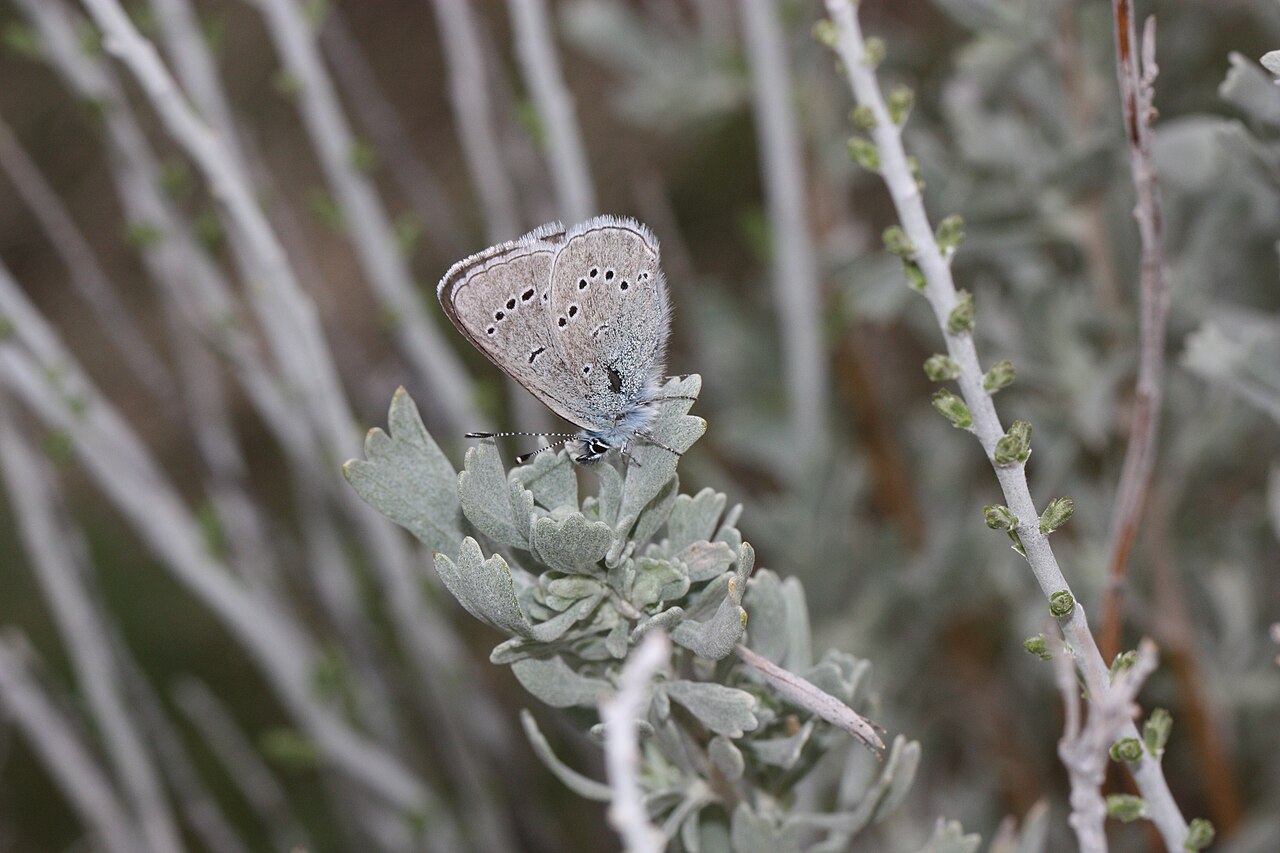
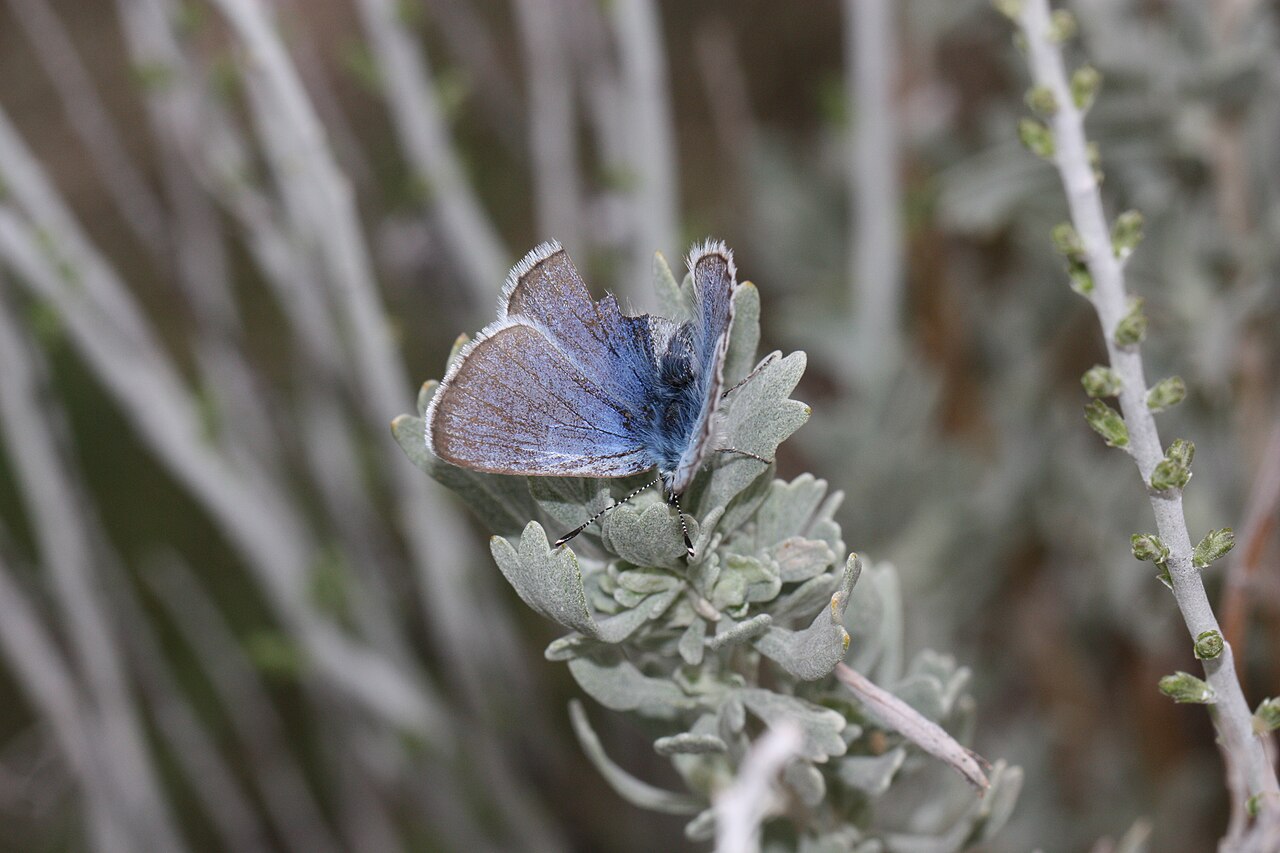
For decades this was disputed, with some entomologists arguing the Xerces blue was a coastal population of the widespread silvery blue, Glaucopsyche lygdamus, rather than a distinct species. That mattered enormously, because a lost subspecies and a lost species are different conservation facts.
The question was settled by genetics. In 2021, researchers at the Field Museum extracted and sequenced DNA from a pinned specimen collected in 1928, and follow-up work in 2022 produced a full genome. Both confirmed that the Xerces blue was genetically distinct from the silvery blue and represented a separate species, diverged long enough ago to be its own lineage.
The genome also showed low genetic diversity in the final population, consistent with a small isolated group already in decline before the last individuals disappeared. That is a useful finding beyond the species itself, since it demonstrates the same signature that conservation genetics looks for in living populations at risk.
Could the Xerces Blue Be Brought Back?
Not by cloning, and not in any near-term way. The DNA recovered from museum specimens is fragmented and degraded, there are no living cells, and butterflies cannot be cloned by the methods discussed for mammals. Full de-extinction in the sense the phrase usually implies is not on the table.
A different approach is underway. Researchers and conservationists have proposed introducing the silvery blue, the Xerces blue’s closest living relative, into restored dune habitat at the Presidio, effectively filling the ecological role the extinct species occupied. Work to restore dune habitat and reintroduce a related coastal silvery blue population has been carried out there since 2022.
That is habitat restoration with a related species rather than de-extinction, and the people involved are generally careful to describe it as such. The realistic value lies in the restored dune system supporting a suite of native plants and insects, not in recovering the lost butterfly. The monarch butterfly guide covers a species where intervention can still change the outcome.
What Is the Xerces Society?
An invertebrate conservation organisation founded in 1971 and named after the butterfly, on the reasoning that a species already lost makes the case for the ones still here. It was the first organisation devoted specifically to invertebrate conservation and remains the largest.
Its work covers pollinator conservation, endangered species protection, pesticide reduction, and habitat restoration, and it has been central to monarch monitoring, to the western monarch overwintering counts, and to petitions for federal protection of several bumblebee species. Much of the practical guidance available to gardeners on pollinator planting traces back to it.
The naming has proved effective as a piece of communication. A conservation organisation named after an extinction keeps the loss in view every time the name is used, and the Xerces blue is now far better known as a symbol than it ever was as a butterfly.
What Other US Butterflies Have Been Lost?
Several, and the pattern is consistent. The Rockland grass skipper and Zestos skipper of southern Florida are both considered extinct, last recorded in the early 2000s, lost to habitat destruction, mosquito spraying, and hurricanes. The Sthenele satyr of coastal California disappeared around the same period as the Xerces blue and for similar reasons.
Others survive only barely. The Lange’s metalmark, the Palos Verdes blue, the El Segundo blue, the Mission blue, and the Karner blue are all federally listed, and several exist in single-digit or low-hundreds populations dependent on active management. The Palos Verdes blue was declared extinct in 1983 and then rediscovered in 1994, which is the rare case that runs the other way.
The eastern tailed blue guide covers one of the small blues that remains common, which makes a useful contrast: it uses a wide range of legume hosts across most of the continent, and that generalism is exactly what the lost species lacked.
The common thread is specialisation plus small range. Butterflies tied to one host plant in one habitat type in one small area are the ones lost, and coastal California, with its combination of high endemism and intense development pressure, has more of them than anywhere else in the country. The U.S. Fish and Wildlife Service (fws.gov) maintains the listing status for each.
How Do You Pronounce Xerces?
ZER-seez, with the stress on the first syllable, the same as the Persian king Xerxes from whom the name derives. The spelling with a c rather than an x is the entomological convention and does not change the pronunciation.
The name was assigned by the entomologist Jean Baptiste Boisduval in 1852, part of a broad nineteenth-century habit of naming blue butterflies after figures from classical antiquity. Related genera and species in the group carry names from Greek and Persian history for the same reason.
The society named after it uses the same pronunciation, and the butterfly’s name is now heard far more often in that context than in any discussion of the insect itself. That is an odd afterlife for a species nobody alive has seen, and arguably a more useful one than most extinct animals get.
What Can Be Learned From It?
The most transferable lesson is that specialisation plus a small range equals vulnerability, and that the loss can be complete before anyone treats it as urgent. The Xerces blue was collected steadily through the 1930s by people who knew it was becoming scarce, and no protection existed to apply because the legal framework for it did not yet exist.
The second lesson is about indirect causes. Habitat loss was the main driver, but the Argentine ant displacing the native ants that tended the caterpillars is the kind of second-order effect that is easy to miss and difficult to reverse. Species interactions can fail before the species themselves do.
The third lesson concerns timing. The Endangered Species Act was passed in 1973, three decades after the last Xerces blue, and the Mission blue butterfly on the other side of the same bay was listed in its first cohort of protected species in 1976. A butterfly with a comparable range and comparable pressures survived because it happened to still exist when the legal framework arrived.
The third is that museum collections are worth far more than they look. A pinned specimen from 1928 answered a taxonomic question no living evidence could settle, and the specimens that made that possible were collected by people with no idea what they would eventually be used for. The blue morpho butterfly guide covers a living species whose brilliance has made it a collecting target, and the black and blue butterfly guide covers the North American blues still on the wing.
Frequently Asked Questions
What did the Xerces blue butterfly look like?
A small butterfly around an inch across, with males bright violet-blue above and females brown with blue at the wing bases. The underside was pale grey-brown with prominent white spots, often without dark centres.
Why did the Xerces blue go extinct?
San Francisco expanded over its only habitat, the coastal dunes of the peninsula. Its lotus host plants were lost to development and to introduced beach grass and iceplant, and Argentine ants displaced the native ants that tended its caterpillars.
When was the Xerces blue last seen?
In the early 1940s at the Presidio in San Francisco, with sources giving 1941 or 1943. It was the first American butterfly known to be driven to extinction by urban development.
Was the Xerces blue a real species?
Yes. The question was disputed for decades until DNA from a 1928 museum specimen was sequenced in 2021 and a full genome followed, both confirming it was genetically distinct from the silvery blue.
Could the Xerces blue be brought back?
Not by cloning. Recovered DNA is fragmented and butterflies cannot be cloned. The actual project at the Presidio restores dune habitat and introduces the closest living relative to fill the same role.
How do you pronounce Xerces?
ZER-seez, stress on the first syllable, from the Persian king Xerxes. The c spelling is the entomological convention and does not change the pronunciation.
What is the Xerces Society?
An invertebrate conservation organisation founded in 1971 and named after the butterfly. It was the first devoted specifically to invertebrates and leads much of the work on monarchs, bumblebees, and pollinator habitat.

Similar Posts
Black Caterpillar: Identification Guide by Markings
Black caterpillars are identified by what accompanies the black. Here is how to tell leopard moth, swallowtail, spiny elm and tent caterpillars apart.
Baby Mole Rat: The Bizarre Biology of Naked Mole Rat Pups
A baby naked mole rat is a pup born into a bee-like colony with a single queen. Its extreme cancer resistance, pain insensitivity, and 30-year lifespan explained.
Baby Alligator Snapping Turtle: ID, Care, and the Law
A baby alligator snapping turtle has three rows of spiked ridges from hatching. How to tell it from a common snapper, what to do if you find one, and why keeping one is usually illegal.
Should I Kill a Black Widow Spider?
Depends on location: remove it from active spaces, leave it in undisturbed corners. What the real bite risk is and how to handle an encounter safely.
Moose Poop: What It Looks Like and How to Identify It
Moose poop is a pile of large oval pellets in winter and a soft patty in summer. How to tell it from elk, deer and bear scat, how fresh it is, and why it ends up in jewelry.
Ladybug Eggs: ID, Hatching, and the Potato Beetle Mixup
Ladybug eggs are yellow clusters on leaf undersides, and gardeners destroy them by mistaking them for potato beetle eggs. Here is how to tell them apart.