Iguana Symbolism: What It Means to See One, by Situation
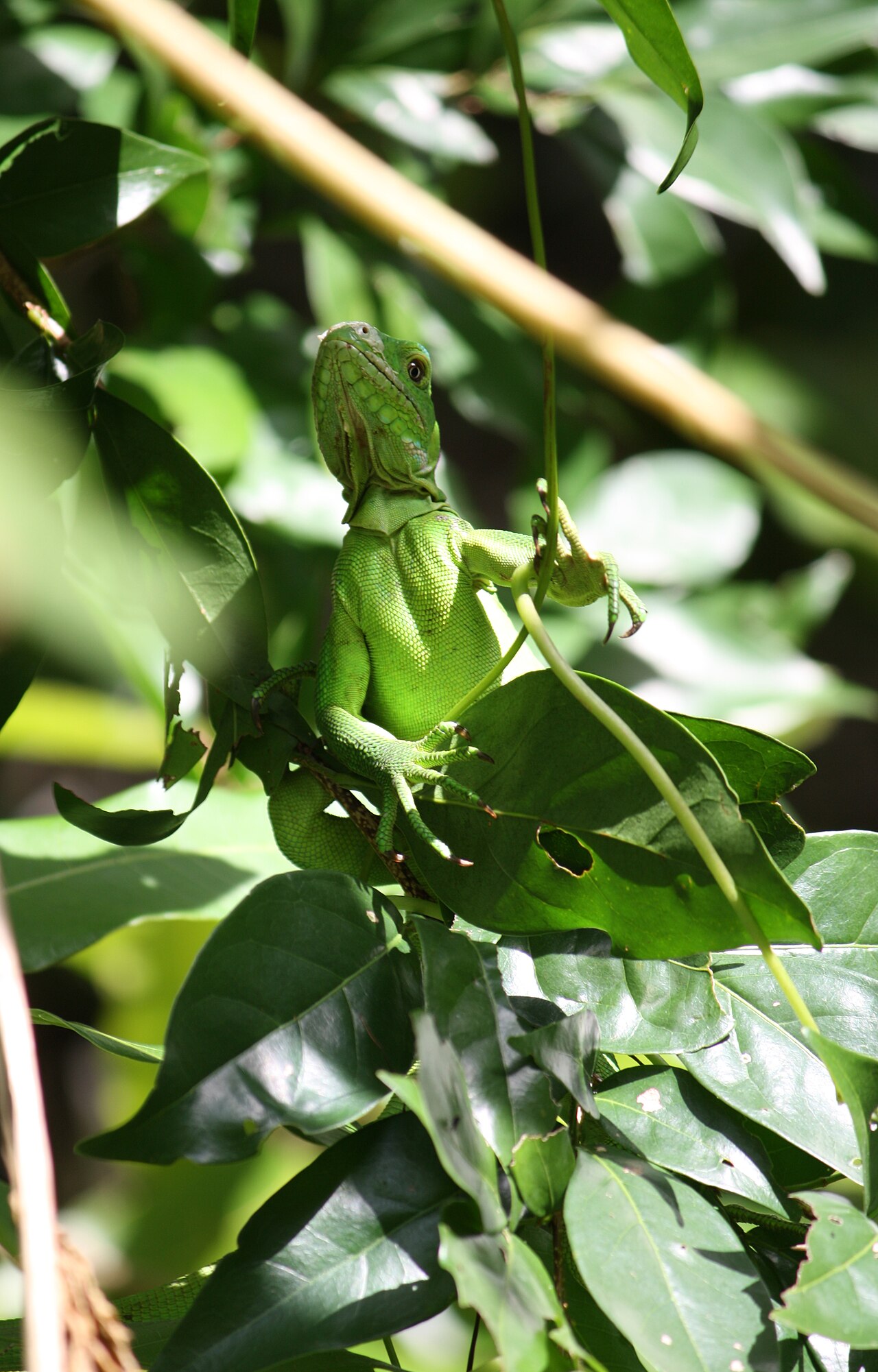
Seeing an iguana is widely read as a sign to slow down, hold your ground and wait for the right moment to move. Across the traditions that feature large lizards, the iguana stands for patience, self-reliance, regeneration and the quiet confidence of an animal that basks in the open without apologizing for taking up space.
Iguana symbolism is not one fixed meaning. It shifts with the tradition, the situation and the color of the animal. What follows separates those strands, states each belief as a belief, and gives a table to match against your own sighting.
In most symbolic traditions, an iguana represents patience, adaptability, self-protection and renewal, because it moves slowly but regrows its tail and survives in harsh conditions. Seeing one is commonly interpreted as a message to stop forcing a situation, guard your energy, and trust that a stalled part of your life is regenerating rather than ending.
What It Means to See an Iguana
The first reading is always situational. An iguana that holds still and watches you is traditionally taken as a prompt toward stillness and observation, while one that bolts for cover is read as a warning to protect something you have left exposed.
Because iguanas depend on sun to function, interpreters tie them to timing: the animal does nothing until conditions are right, then moves decisively. That is the core of the symbol wherever it appears.
| Situation | Common interpretation |
|---|---|
| Iguana in your garden | Grounding; a reminder to tend what is already yours |
| Iguana at your window | A message approaching from outside your usual circle |
| Iguana seen at night | Unusual; read as a matter you have been avoiding surfacing |
| Iguana seen repeatedly | A decision you keep postponing is now the lesson |
| Iguana found dead | A phase ending so regeneration can begin, not misfortune |
| Iguana crossing your path | Patience before action; the timing is not yet yours |
| Iguana in a dream | Self-protection, or a slow process you are rushing |
Iguana Symbolism Across Traditions

In various Native American traditions of the Southwest and Mesoamerica, lizards are associated with dreaming, survival in dry country and the ability to leave part of yourself behind to escape harm. Iguanas appear in Maya and Aztec iconography tied to earth, rain cycles and the underworld.
Christian and biblical readings do not name the iguana. Lizards appear in Leviticus among animals considered unclean, so in that frame an iguana is usually interpreted either as a call to examine what you allow close to you, or more generously as an emblem of patient endurance.
Celtic tradition had no iguanas and assigns lizard symbolism to dreams and shapeshifting instead. East Asian readings come through the dragon and the gecko: a small dragon figure tied to fortune, watchfulness and household protection. Both are later adaptations, not old teachings.
Iguana as a Spirit Animal, Totem and Power Animal
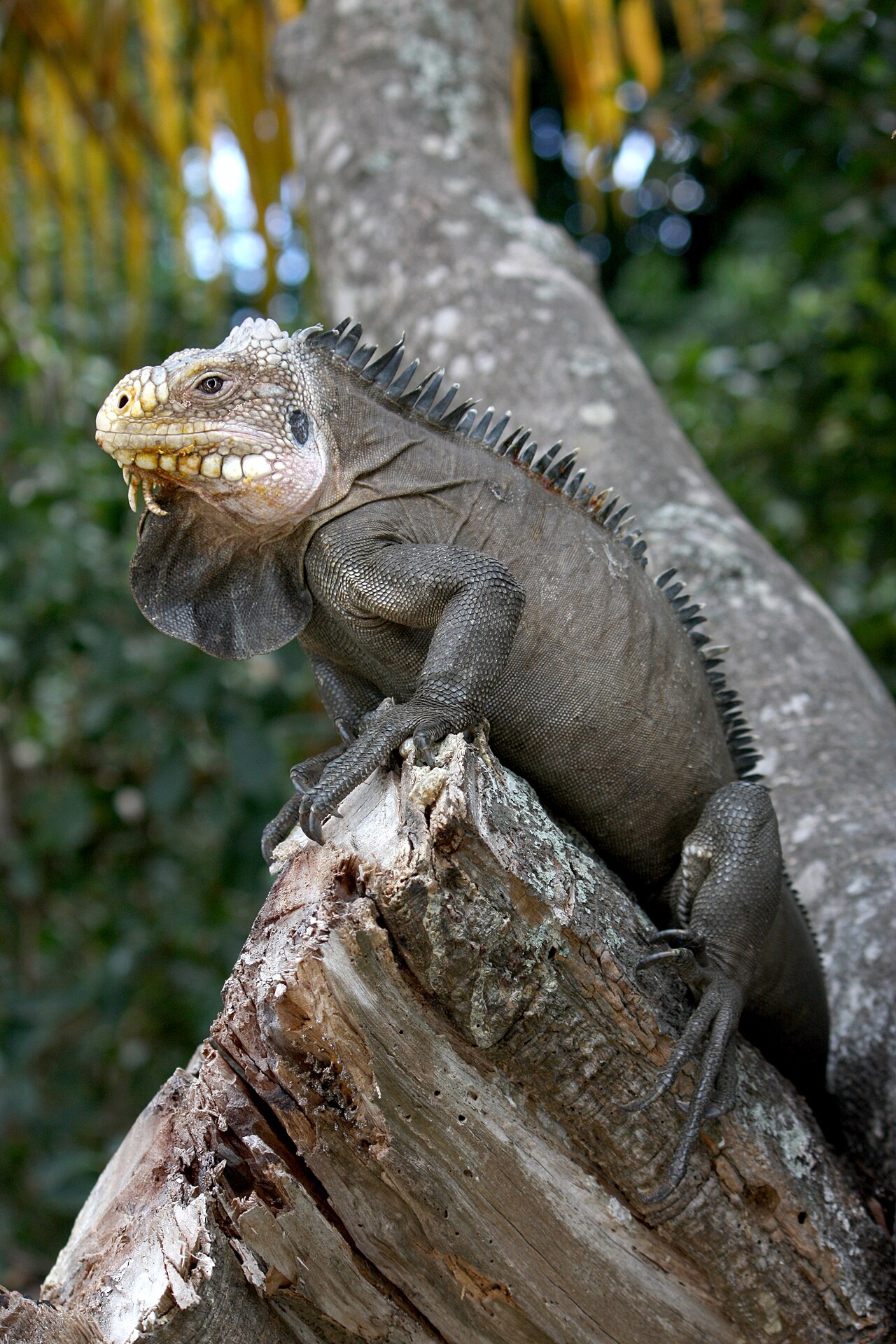
People who work with the iguana as a spirit animal describe it as a teacher of boundaries. The animal does not chase and does not flee early; it inflates its dewlap, bobs its head and makes itself look larger, and only runs when that fails. The lesson drawn from this is to signal clearly before you escalate.
As a totem, the iguana is linked to people who recover well from setbacks and who need more rest than others expect. The tail that regrows is the central image: what you lose under pressure can come back, though rarely in exactly the original form.
As a power animal it is called on for patience during long waits and for comfort with solitude. If this is your animal, you are said to do your best work in warmth and daylight and to be unreliable when forced to perform cold.
Iguana Omens by Situation
An iguana in the garden is the most common sighting and the most benign. Caribbean and Central American folk belief treats it as an ordinary neighbor, and where it is read as a sign at all, the reading is stability and household luck.
An iguana at the window or on a wall is interpreted as news from outside, and a repeated visitor as insistence: a decision you have deferred is now being presented a third time. A dead iguana is traditionally not read as bad luck. Because the animal is a symbol of regrowth, its death is usually interpreted as the closing of a cycle, in the same way bat symbolism treats endings as transitions rather than losses.
An iguana seen at night is worth noting precisely because it is unnatural. Iguanas are diurnal and sleep at night, so interpreters treat the sighting as something out of its proper order, usually a matter you have pushed into the dark.
Spiritual Meaning of an Iguana in Dreams
Dream interpreters read an iguana as the part of you that is armored and waiting. A calm iguana is taken as reassurance that a slow process is working; an aggressive one, dewlap out and head bobbing, as a boundary you need to state out loud.
Being bitten in a dream is interpreted as the cost of ignoring a warning you already received. Holding an iguana comfortably is read as acceptance of a part of yourself you find cold or unlovable, and a loose iguana you cannot catch as a goal you are pursuing with the wrong tempo.
None of this is predictive. The useful question is which situation in your own week matches the image.
Frequently Asked Questions
What is the spiritual message of the lizard?
Lizards are broadly read as symbols of regeneration, adaptability and dreaming, because many species shed and regrow their tails and bask in stillness before moving. The common message drawn from them is to let go of what is holding you in place and to trust the slower pace of your own recovery.
Are iguanas considered good luck?
In parts of the Caribbean and Central America an iguana around the home is treated as ordinary or mildly lucky, and East Asian dragon associations lend it a protective, fortunate character. No major tradition treats the iguana as an ill omen, so where a meaning is assigned at all it leans positive.
What does a white, black, blue, brown or red iguana mean spiritually?
Color readings follow general color symbolism rather than iguana lore. White is interpreted as clarity or a message from beyond, black as protection and hidden knowledge, blue as calm and communication, brown as grounding and home, and red as vitality, anger or urgent action. Wild iguanas change color with temperature and breeding season, so treat the color as atmosphere, not instruction.
What does an iguana mean for love and relationships?
Applied to love, iguana symbolism is read as a counsel of patience and honest signaling: state what you need before you withdraw, and do not mistake slow warming for lack of interest. A pair of iguanas basking is sometimes taken as a sign of a partnership that works through shared stillness rather than constant motion.
Behind the symbolism is a real animal worth knowing. The Smithsonian Institution publishes solid natural history on green iguanas and their relatives, and our guides to alligator symbolism, axolotl symbolism, bird symbolism and bear symbolism cover the other animals readers ask about most after a reptile sighting.