Grass Spider Bite: Symptoms, Treatment, and When to Worry
A grass spider bite is rare, and when it happens it usually amounts to a brief sting and a small red mark that fades within a day or two. Grass spiders (genus Agelenopsis) are fast funnel weavers with fangs that struggle to break human skin, and there are no confirmed medically significant bites from the common eastern species. The one documented exception is the desert grass spider, Agelenopsis aperta, which has produced localized tissue damage in a small number of reported cases.
Most people who think a grass spider bit them were actually bitten by something else while working in the yard, because the spider is the animal they saw and not necessarily the one that bit. The sections below cover what an actual bite feels like, how to tell a spider bite from the far more common alternatives, whether these spiders are a risk to dogs, and how to reduce the number of funnels in your grass.
Grass spider bites are uncommon and mild. Expect a sharp pinprick, mild redness, slight swelling under half an inch, and itching that resolves in 24 to 48 hours with soap, water, and a cold pack. Agelenopsis aperta bites have occasionally caused a small necrotic lesion. Seek care for spreading redness, pus, fever, or pain that worsens after day two.
| Feature | Grass spider bite |
|---|---|
| How common | Very rare; the spider flees rather than bites |
| Immediate feel | Sharp pinprick, sometimes not felt at all |
| Appearance | One small red bump, occasionally two tiny puncture points |
| Swelling | Usually under 0.5 in (1.3 cm) |
| Duration | 24 to 48 hours in typical cases |
| Serious cases | Reported only for Agelenopsis aperta, as a local lesion |
| Risk to dogs | Negligible; no recorded systemic effects |
What happens if a grass spider bites you?
You feel a quick sting, and in many cases nothing else. Agelenopsis venom is built for crickets and flies, and the volume delivered to something the size of a human is trivial. The usual course is a red papule within minutes, mild itching or a dull ache for a day, and no mark by the end of the second day.
The medical literature is thin for a reason. A ScienceDirect case series on envenomation by Agelenopsis aperta in the southwestern US describes local pain and a slowly healing lesion in a handful of patients, and that is close to the full extent of documented harm from this genus. Nothing about grass spiders resembles a black widow or a recluse, and comparisons to those species do more to spread anxiety than to describe a real risk.
What do grass spider bites look like?

They look like almost every other small arthropod bite: one raised red bump, sometimes with a pale center, often with faint redness spreading a quarter inch around it. Two fang punctures about 1 mm apart are occasionally visible in good light, and that spacing is the only visual hint that a spider rather than an insect was responsible.
What you should not see is a bullseye ring, a blister filling with fluid, a purple center, or a wound growing past the size of a dime. Those patterns point toward a recluse bite, an infected wound, or a tick borne illness, and they justify a clinic visit. Photos labeled as grass spider bites online frequently show cellulitis or bed bug bites instead, so treat image searches as a weak source.
How can I tell if my bite is from a spider?
You generally cannot, unless you saw the spider bite you. Spiders bite once; most biting insects bite repeatedly, so a cluster or a line of three or more marks is a strong sign of something other than a spider. Bites that appear overnight on covered skin also point away from spiders and toward bedding or carpet pests.
Use the pattern rather than the appearance of a single mark. Clusters on ankles and waistband skin after yard work suggest chiggers or fleas, which is the split covered in chigger bites vs flea bites. Scattered itchy welts in bedrooms suggest bed bugs. Small irritated patches with no known cause sometimes turn out to be carpet beetle hair reactions, which are not bites at all.
Are grass spiders poisonous, and are they poisonous to dogs?
Grass spiders are venomous, not poisonous, and the distinction matters: venom is injected, poison is ingested or absorbed. Their venom is not considered medically significant to humans, and no species in the genus is classified as dangerous by US extension entomologists. Pennsylvania State University Extension lists them plainly as harmless nuisance spiders, and you can read their summary at Penn State Extension.
For dogs and cats the answer is the same. A grass spider bite on a dog’s nose or paw may produce brief pain and a small swelling, and a dog that eats one digests it without trouble. There are no reported cases of systemic illness in pets from Agelenopsis. If a pet develops a growing wound, vomiting, tremors, or weakness, the cause is something else and needs a vet.
How aggressive are grass spiders, and do they go in houses?
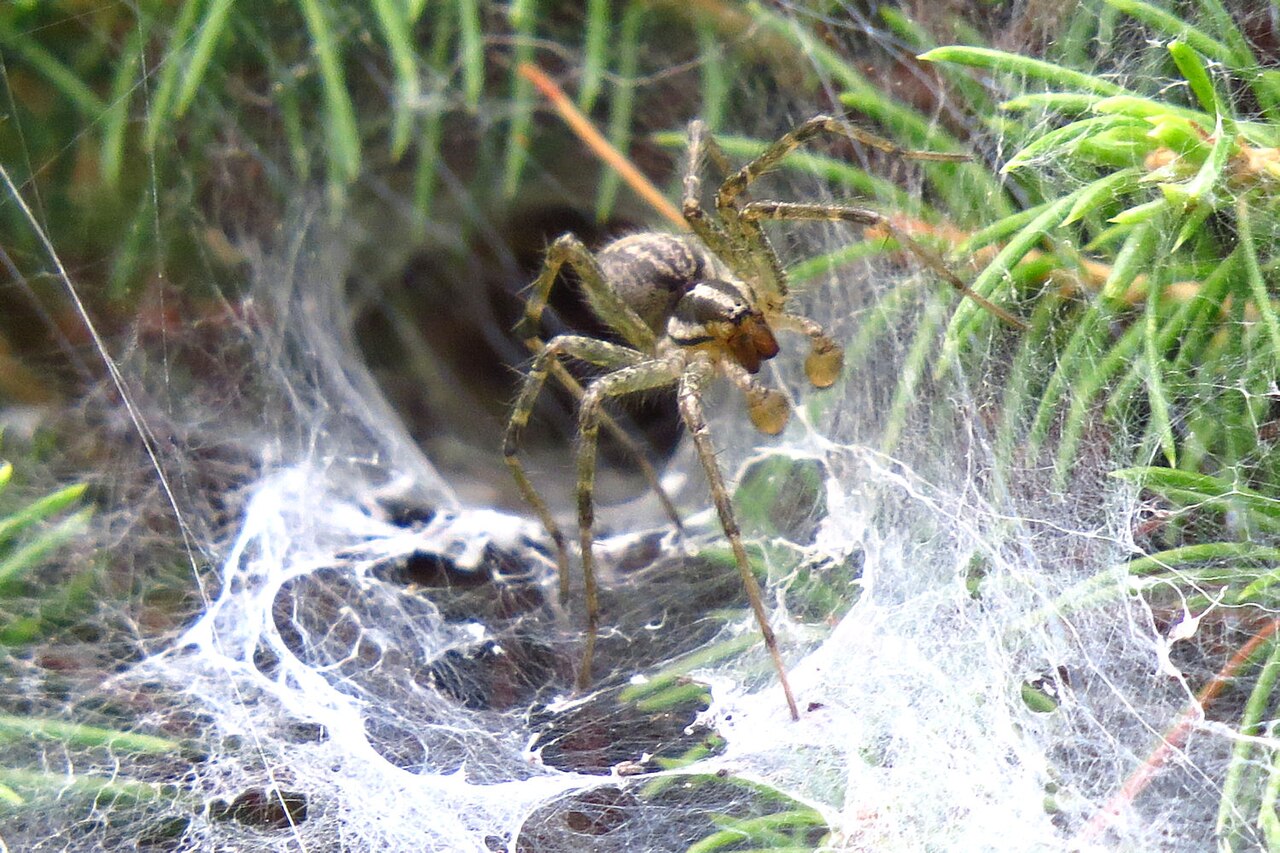
They are not aggressive toward people at all, though they are aggressive hunters. A grass spider sits in the mouth of its funnel, sprints across the sheet web at any vibration, and can cross several inches in a fraction of a second. That speed is what startles homeowners, and it is also why the spider almost always escapes rather than confronts you.
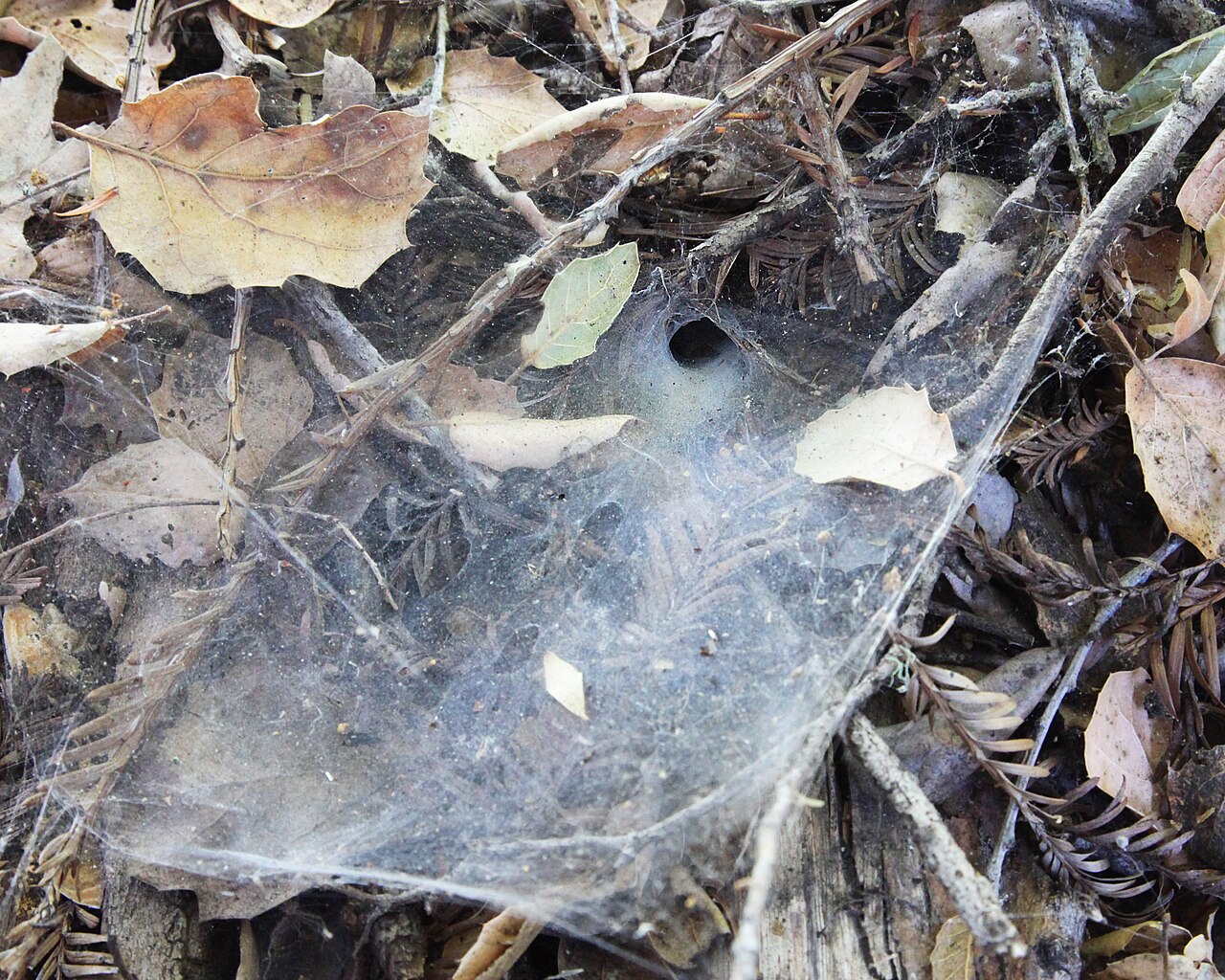
Grass spiders do come inside, mostly in late summer and fall when mature males wander looking for females. They are accidental visitors and do not establish indoors, since their flat sheet webs need grass, shrub tops, or ground cover for anchoring. Persistent indoor sheet webs in corners are more likely from a black house spider or a related funnel weaver, and the grass spider profile covers the identification marks that separate them.
How to get rid of grass spiders and what smell they hate
Reduce the habitat first. Mow regularly, trim shrubs back from the foundation, clear leaf litter and mulch piles within 2 ft (60 cm) of the wall, and break down the horizontal sheet webs with a hose or broom every few days. Spiders rebuild, but repeated disruption in a spot pushes them to relocate. Switching exterior bulbs to warm LED or yellow fixtures cuts the insect traffic that feeds them, which does more than any spray.
For indoor strays, seal door sweeps and window screens and pick them up with a cup rather than a shoe. Peppermint, citrus, eucalyptus, and vinegar are the smells most often recommended as repellents, and while lab support is limited, a peppermint oil spray along thresholds does deter some wandering spiders. Treat it as a mild edge, not a control method. A high number of funnels in your yard usually means abundant insect prey, the same reason large hunters such as the rabid wolf spider show up in well watered lawns.
Related reading: Camel Spider Bite.
Frequently Asked Questions
Do grass spider bites hurt?
Mildly, and briefly. Most people report a pinprick comparable to a mosquito bite or less, followed by an hour or two of dull ache and some itching. Pain that intensifies over the following day, or pain out of proportion to the mark, is not typical and should be checked.
How long do grass spider bites take to heal?
Typical bites fade within 24 to 48 hours and need nothing more than washing, a cold pack, and an antihistamine if itching bothers you. A lesion from Agelenopsis aperta can take one to three weeks. Any wound still enlarging after 48 hours deserves medical review for infection.
What happens if a grass spider bites my dog?
Almost always nothing significant. Expect a moment of pain, perhaps a small swelling on the muzzle or paw, and normal behavior within the hour. Watch the site for two days. Vomiting, weakness, tremors, or an expanding wound indicate a different cause and warrant a vet visit.
Why do I have so many grass spiders in my yard?
Because the yard feeds them. Dense turf, ground cover, low shrubs, irrigation, and outdoor lighting produce the insect population funnel weavers hunt. A heavy grass spider year usually follows a wet spring. They are a sign of a working yard ecosystem rather than an infestation.
How can I tell a grass spider from a hobo spider or a wolf spider?
Grass spiders show two long, obvious spinnerets and build flat funnel sheets in vegetation. Hobo spiders look similar but build indoors at floor level and lack the long spinnerets. Wolf spiders build no web at all, are bulkier, and hunt on open ground with two large forward facing eyes.