Hawk Poop Identification: Size, Color, and 3 Lookalikes
Hawk poop is a thin, chalky white splash that shoots out sideways from a perch and dries into a streak 6 to 18 inches (15 to 45 cm) long, usually with a small dark center. Birds of prey do not drop neat pellets of waste the way rabbits or rodents do. They expel urine and feces together as one liquid mute, and hawks fire it clear of the branch instead of letting it fall straight down.
That single habit, called slicing, is the fastest way to separate a hawk from almost every other large bird in your yard. Once you know what the splash looks like, where it lands, and what is mixed into it, you can tell a hawk perch from an owl roost or a crow staging tree without ever seeing the bird.
Hawk poop looks like a runny white splash with a dark brown or black center, sprayed horizontally from a perch rather than dropped below it. Streaks run 6 to 18 inches (15 to 45 cm), dry chalky and hard, and contain no visible fur, bone, or seeds.
What Does Hawk Poop Look Like?
The white portion is uric acid, the paste that birds produce instead of liquid urine, and it makes up most of the volume. The small dark core in the middle is the actual fecal matter, and in a healthy hawk it is dark brown to olive black and roughly the size of a pea before it spreads. Fresh mutes are wet, glossy, and run downward on vertical surfaces. After a day in the sun they turn flat white, crusty, and hard enough to need a scraper.
Shape is the giveaway. A hawk mute lands as a fan or a long narrow streak with a splatter head, not as a round coin. Owl and heron droppings sit in puddles directly under the roost; hawk droppings land several feet out from the trunk, on fence rails, deck boards, car hoods, and siding.
Hawk Poop at a Glance

| Feature | What hawk droppings show |
|---|---|
| Form | Liquid splash or streak, fan shaped, never a formed pellet |
| Size | Streak 6 to 18 in (15 to 45 cm); dark center about 0.25 to 0.5 in (6 to 13 mm) |
| Color | Chalk white with a dark brown, olive, or black center |
| Contents | No visible fur, bone, feather, or seed |
| Odor | Faint to none when dry; mildly sour when fresh |
| Location | Fence posts, dead limbs, light poles, barn rafters, car roofs |
| Pattern | Thrown outward from the perch, often several splashes in a radius |
What Is Inside Hawk Droppings?

Almost nothing solid, and that is diagnostic. A red-tailed hawk that just ate a vole still produces a clean white mute, because hawk stomach acid is strong enough to dissolve bone and the indigestible fur and feathers never enter the intestine at all. Mammal scat from the same yard behaves the opposite way: it holds hair, seed hulls, and bone chips you can tease apart with a stick.
If you find droppings with fur or seeds in them at ground level, you are looking at a mammal, not a bird of prey. Compare the tapered, hair packed pellets in our guide to squirrel and rat droppings or the segmented ground scat covered in deer and rabbit pellets. Neither one ever appears as a white splash on a vertical surface.
Where to Find Hawk Poop in Your Yard
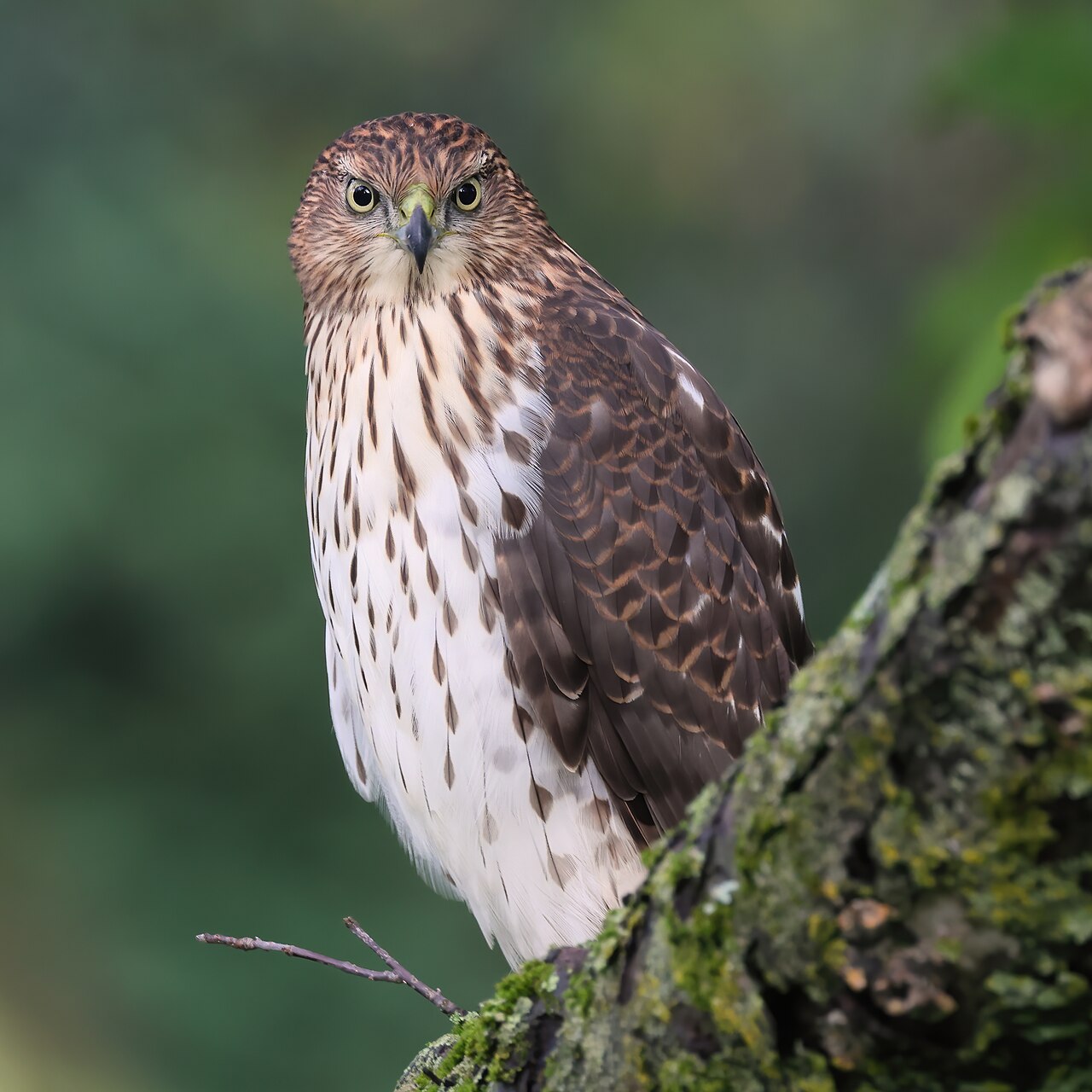
Hawks are perch hunters, so their droppings accumulate wherever they sit and watch. The classic spots are the top rail of a wooden fence, a bare limb overlooking a lawn or feeder, a utility pole crossarm, the ridge of a barn roof, and the rim of a satellite dish. A perch used for weeks builds a whitewash smear on the ground or wall below and several feet to one side.
Indoors matters too. Red-tailed and Cooper’s hawks regularly use open barns and equipment sheds, and the whitewash under a rafter is often the first sign a bird is roosting there. Look up and you will usually find scattered feathers, a few prey remains, and a pile of pellets near the same beam. The shed window sills in the same building often carry small dark deposits instead, and our comparison of lizard and mouse droppings covers what those are.
Hawk Poop vs Owl Poop
Owl droppings are also white and liquid, so color alone will not separate them. Position does. Owls let waste fall straight down, building a dense whitewash patch directly beneath the roost, while hawks propel it outward and leave scattered streaks in a loose arc. An owl roost also collects a tidy mound of pellets at the base of the tree; a hawk perch yields far fewer.
Pellet content is the clincher. Owl pellets hold whole skulls, jaws, and leg bones because owls swallow prey intact and digest weakly. Hawk pellets contain mostly fur and feather with bone fragments at most. If you can pick an intact mouse skull out of the mound, an owl made it.
Hawk Poop vs Crow Poop
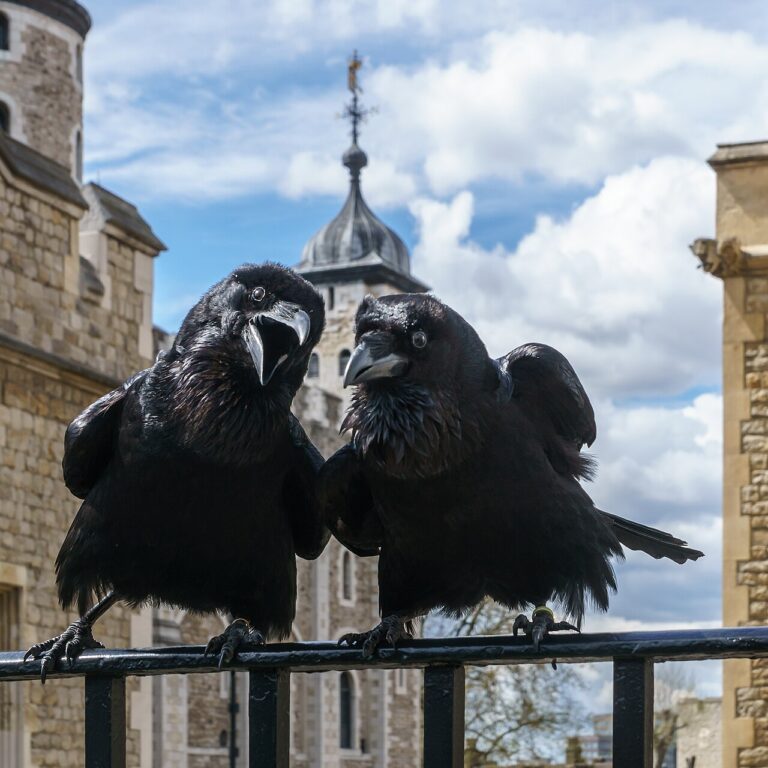
Crow droppings are smaller, often semi solid, and far more variable in color, because crows eat fruit, corn, garbage, and carrion. Purple, red, or dark green staining in a dropping points to a crow or another omnivore, never to a hawk. Crows also roost in flocks, so their mess arrives as dozens of small spots across a car or sidewalk rather than a few long streaks.
Size helps as well. A crow mute measures roughly 1 to 3 inches (2.5 to 7.5 cm) across, a fraction of a hawk streak. If you are seeing coin sized splatters spread over a wide area under a noisy tree at dusk, that is a crow roost.
Hawk Poop vs Vulture Poop
Turkey and black vultures produce the heaviest whitewash most homeowners ever see, because they roost communally and defecate on their own legs to cool off. The result is a thick, dripping white coating on a roof ridge, tower, or dead tree that no single hawk could ever create. Vulture whitewash also smells strongly; hawk mutes barely smell at all once dry.
Count the birds if you can. A dozen large dark birds on one structure means vultures, and the damage to shingles, caulk, and paint is correspondingly worse. One bird and a handful of streaks means a hawk.
Hawk Pellets Are Not Droppings
Every few days a hawk coughs up a compact gray mass of fur and feather called a pellet or casting. People find these under a perch and mistake them for scat, but they come out of the mouth, not the vent. A hawk pellet runs about 1 to 2 inches (2.5 to 5 cm) long, is dry and felted rather than wet, and breaks apart into hair with little odor.
Pellets are the one place you can read a hawk’s diet. Pull one apart with gloves and a toothpick and you will see rodent fur, sometimes a bird feather, occasionally a beetle shell. That tells you more than the droppings ever will, since the mutes themselves are essentially filtered waste.
How Can You Tell If It’s a Hawk and Not Another Bird?
Work the whole site, not just the splash. A hawk perch usually carries three signs together: outward thrown white streaks, a plucking post nearby with a ring of feathers or a bare patch of down, and prey remains such as a severed wing or a pair of feet. Songbird feeders go silent for ten to twenty minutes when a hawk is sitting close by, which is a useful live clue.
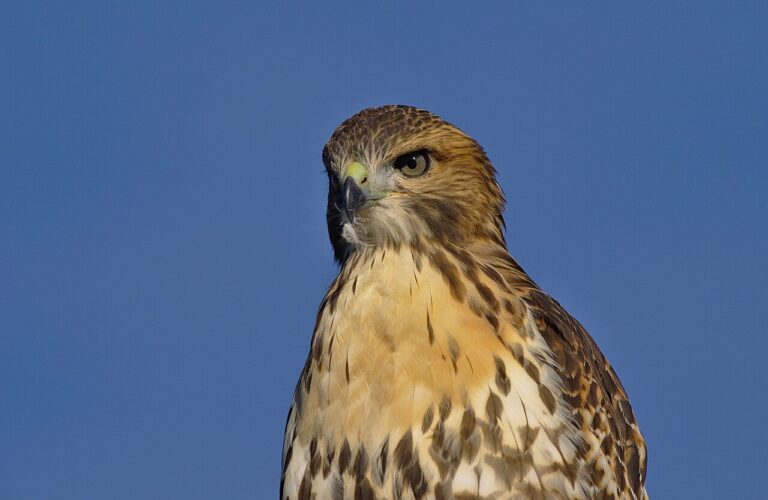
Watching the bird settles it. Cooper’s hawks and sharp-shinned hawks have short rounded wings and long banded tails and fly in a flap flap glide pattern through cover. Red-tailed hawks soar in wide circles with broad wings and a pale chest band. The Cornell Lab profile for the Cooper’s hawk is the quickest reference for separating the two backyard accipiters.
Why Is a Hawk Hanging Around My Yard?
Food and a view, in that order. A bird feeder is a reliable rodent and songbird buffet, and accipiters learn feeder locations within days. Brush piles, open compost, chicken runs, and birdbaths all raise the odds, as does a tall bare perch with sight lines across a lawn. Spilled seed under a feeder draws mice and rats first, and the rodent droppings you find there are the real reason the hawk keeps coming back.
If you want the bird to move on, take the feeders down for two weeks and the hunting draw disappears. Covered runs and overhead netting protect poultry without harming the hawk. Loose dogs and cats are at no real risk from a backyard hawk, though very small pets should not be left unattended where a red-tailed hawk is hunting.
Is Hawk Poop Dangerous to People and Pets?
The dropping itself is low risk, but bird waste that accumulates in one place for months is not. Long standing accumulations under roosts can support Histoplasma capsulatum, the fungus behind histoplasmosis, and bird droppings can also carry Salmonella and Chlamydia psittaci. Dry sweeping is the problem, because it sends spores and dust into the air you breathe.
Clean wet. Mist the area with water or a disinfectant solution first, wear disposable gloves and an N95 respirator for anything larger than a few splashes, bag the waste, and wash your hands afterward. Guidance on handling animal waste safely is published by the CDC. For enclosed spaces with years of buildup, hire a remediation contractor rather than scraping it yourself. The same precautions apply to the guano piles described in our comparison of bat and mouse droppings, which carry the identical fungal risk.
Frequently Asked Questions
How to tell if something is bird poop?
Bird droppings are the only common yard waste that combines a chalky white component with a small dark center. Mammal scat is uniformly brown or black, holds its shape, and contains hair or seeds. If the deposit is white, liquid when fresh, and sits on a vertical or elevated surface, a bird left it.
What color is hawk poop?
Chalk white with a dark brown, olive, or near black center. Fresh mutes look glossy and wet; dried ones turn flat matte white. Green or purple staining points to a fruit eating bird such as a crow or starling, not a hawk, since a raptor diet produces no plant pigment.
Do hawks poop in their own nest?
Adults avoid it by slicing over the rim, and nestlings back up to the edge to do the same from about two weeks old. The result is a ring of whitewash on the branches and ground under an active nest, which is how surveyors locate nests in winter when the trees are bare.
How often does a hawk poop?
Several times a day, with a large mute shortly after a meal and smaller ones between hunts. A perched hawk also empties before taking off, so a departure splash is common. Pellets come up roughly once every 18 to 24 hours, usually in the morning before the bird starts hunting.
Can I shoot a hawk that is attacking my chickens?
No. All North American hawks are protected under the Migratory Bird Treaty Act, and killing, trapping, or harassing one carries federal penalties. Legal options are physical: roofed runs, overhead netting, hardware cloth, and supervised range time. Depredation permits exist but are issued rarely and only after nonlethal measures fail.
Does hawk poop damage car paint or decking?
Yes, if it sits. Uric acid is mildly corrosive and etches clear coat within a few hot days, and it bleaches stained wood. Rinse with water and wipe gently rather than scrubbing dried crust, which drags grit across the finish. Parking away from favored perches is the simplest fix.
Explore more: Animal Poop Identification: A Field Guide by Species