Types of Hawks in Illinois: Identification Guide
Illinois is home to several hawks, including the red-tailed, red-shouldered, Cooper’s, sharp-shinned, and broad-winged hawks, plus the northern harrier and wintering rough-legged hawk. These raptors hunt over the state’s farmland, forests, and prairies year-round. This guide covers the types of hawks in Illinois, how to identify them, and where to see them.
| Hawk | Key Feature |
|---|---|
| Red-tailed Hawk | Brick-red tail, very common |
| Red-shouldered Hawk | Barred rusty chest, banded tail |
| Cooper’s Hawk | Long tail, backyard hunter |
| Sharp-shinned Hawk | Small, squared tail |
| Broad-winged Hawk | Compact, bold tail bands |
| Northern Harrier | White rump, low glide over fields |
| Rough-legged Hawk | Winter visitor, dark belly |
Illinois has seven regularly occurring hawks: the Red-tailed, Red-shouldered, Cooper’s, Sharp-shinned and Broad-winged Hawks, plus the Northern Harrier and the wintering Rough-legged Hawk. The Red-tailed is the default large hawk along Illinois highways and field edges, and the Broad-winged passes through only on migration.
How Many Types of Hawks Live in Illinois?
Illinois hosts a good variety of hawks, with several resident and breeding species plus additional winter visitors. The red-tailed hawk is the most familiar and widespread, seen soaring over open country and perched along highways statewide, while the red-shouldered hawk favors wooded areas, especially bottomland forests, and Cooper’s and sharp-shinned hawks are agile bird-hunters that visit yards and woodlands. The broad-winged hawk breeds in the state’s forests and passes through in spectacular migratory flights, and the northern harrier hunts low over marshes, grasslands, and farmland, recognizable by its white rump. In winter, the rough-legged hawk arrives from the Arctic to hunt over open fields, and the occasional Swainson’s hawk may appear. Illinois also hosts the American kestrel, a small falcon of open country, often seen on wires. Understanding Illinois hawks begins with these species, part of the wider group covered in our guide to types of hawks.
Common Illinois Hawks and How to Identify Them
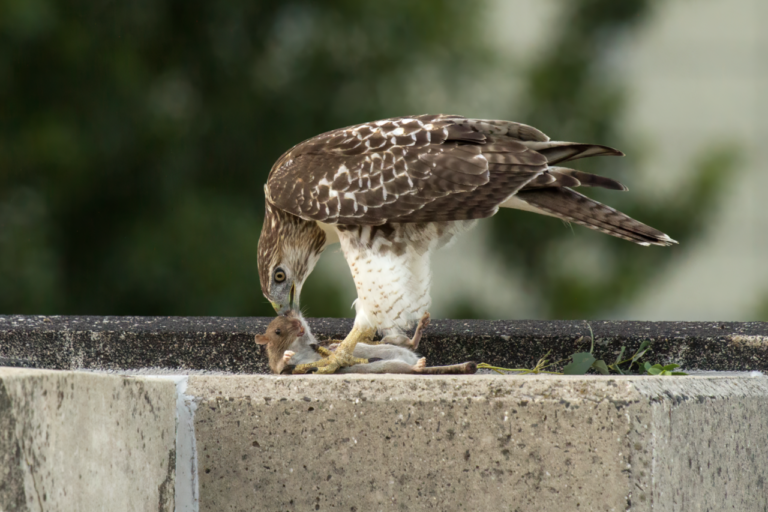
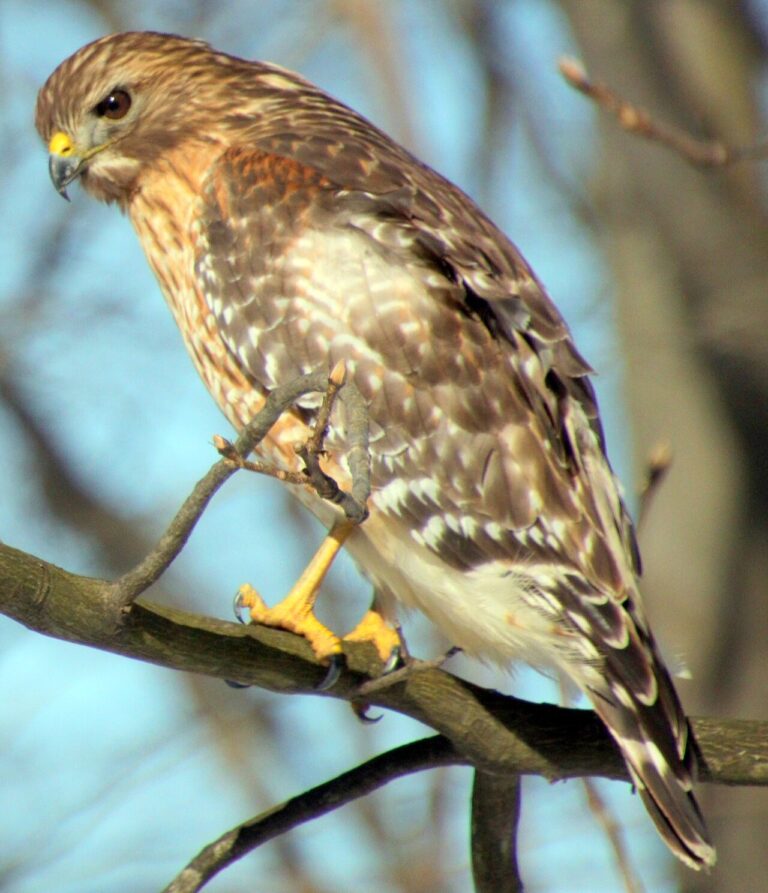
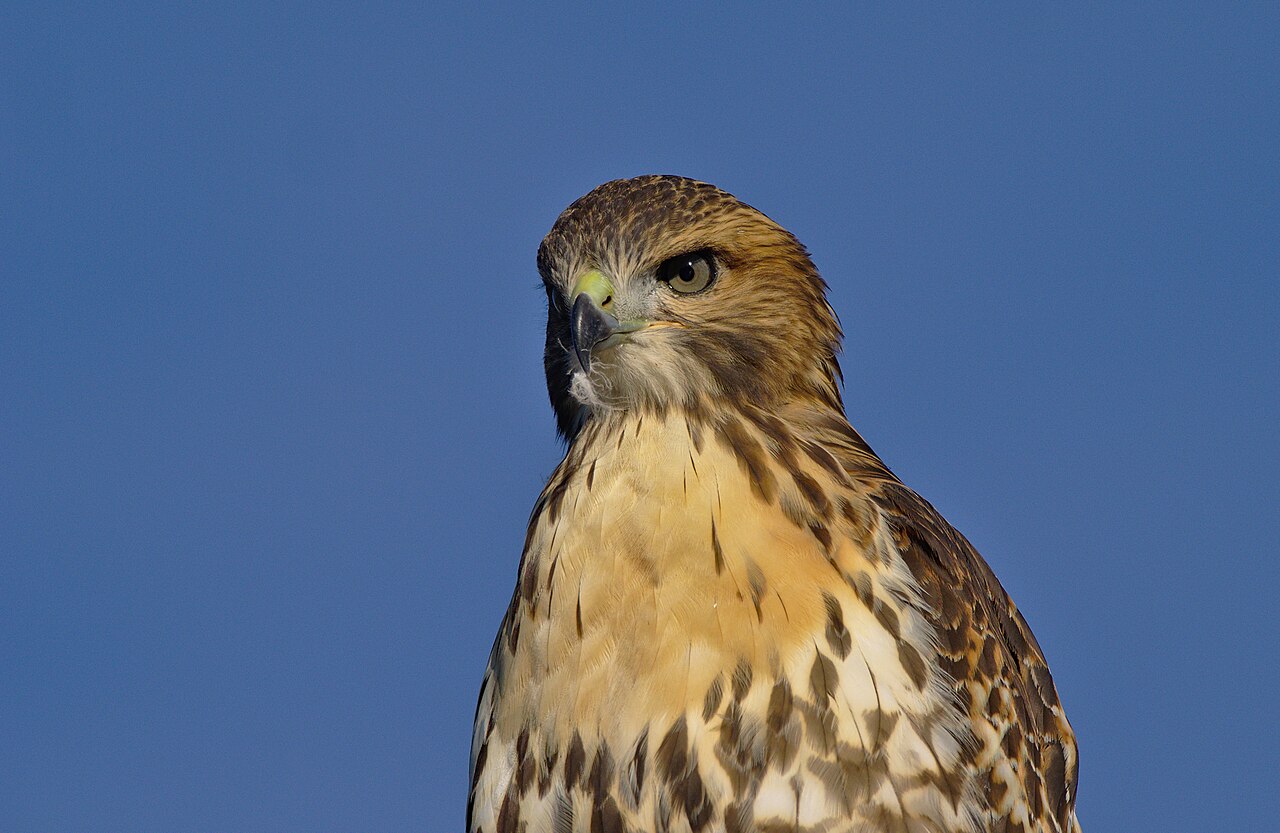
Several hawks are especially worth knowing in Illinois. The red-tailed hawk is a large, broad-winged hawk with a brick-red tail in adults, highly variable in color, and often seen perched in the open. The red-shouldered hawk shows a barred reddish chest, checkered wings, and a boldly banded tail, and is often heard giving a loud, repeated call in bottomland woods. The Cooper’s hawk and sharp-shinned hawk are woodland accipiters with rounded wings and long tails, the Cooper’s larger and crow-sized, the sharp-shinned smaller with a squared tail, and both hunt birds at feeders. The broad-winged hawk is a small, compact forest hawk with bold black-and-white tail bands, famous for migrating in huge flocks called kettles. The northern harrier glides low over open ground on raised wings, showing a white rump patch. Each hawk is a rewarding find, as explored in our guide to types of hawks in Texas.
Where to See Hawks in Illinois
Hawks can be found across Illinois in a range of settings. Open country, farmland, and roadsides are excellent for red-tailed hawks, which perch on poles and fenceposts scanning for prey, and for American kestrels on wires. Bottomland forests and wooded river corridors host red-shouldered and broad-winged hawks, while Cooper’s and sharp-shinned hawks often appear in towns and around bird feeders, where they hunt songbirds. Marshes, wet grasslands, and large agricultural fields are the place to find northern harriers coursing low over the ground, and in winter these same open areas attract rough-legged hawks from the Arctic. Illinois is also a good state for hawk migration, and in fall large flights of broad-winged hawks and other raptors pass through, best seen from ridges, lakeshores, and hawk-watch sites. Because different hawks favor different habitats, Illinois offers rewarding hawk-watching year-round, as detailed in our guide to types of owls in Illinois.
Hawk Migration Through Illinois
Illinois offers excellent hawk-watching, especially during migration. According to the Cornell Lab of Ornithology, broad-winged hawks migrate in enormous flocks called kettles, sometimes containing thousands of birds spiraling together on rising columns of warm air. In fall, especially around mid-September, these kettles pass over Illinois as the hawks travel from northern forests toward Central and South America, and on a good day with light winds after a cold front, a watcher may see hundreds or thousands of broad-winged hawks streaming south. Other raptors migrate through as well, including sharp-shinned and Cooper’s hawks, red-tailed hawks, and northern harriers, along with falcons and eagles. Lakeshores along Lake Michigan and elevated vantage points concentrate migrating raptors and make excellent hawk-watch sites. Spring migration brings birds back north. Watching a kettle of broad-winged hawks swirl overhead is one of the great spectacles of Illinois birding, as explored in our guide to types of hawks in Texas.
Telling Illinois Hawks Apart
With several hawks in Illinois, a few identification strategies help sort them out. Start with size and shape, since the large, broad-winged, soaring buteos like the red-tailed and red-shouldered hawks differ from the smaller, long-tailed, rounded-winged accipiters like Cooper’s and sharp-shinned hawks that dash after birds, and from the slim northern harrier that glides low with a white rump. Look at the tail, since the red-tailed hawk’s brick-red tail, the boldly banded tail of the red-shouldered and broad-winged hawks, and the harrier’s long tail are all distinctive. Note the setting, because a hawk perched on a pole over open farmland is often a red-tailed hawk, a hawk calling loudly in bottomland woods is likely a red-shouldered hawk, and a hawk chasing songbirds through a yard is a Cooper’s or sharp-shinned. In winter, a hawk hovering over fields may be a rough-legged hawk. Careful attention to these features, along with habitat and season, makes identification steadily easier, as explored in our guide to types of owls in Illinois.
Hawks Through the Seasons in Illinois
Illinois hawks bring different pleasures across the year, and knowing their seasonal patterns helps. Spring brings breeding, as red-tailed, red-shouldered, and Cooper’s hawks establish territories and nest in the state’s woods and farmland, and red-shouldered hawks become vocal in bottomland forests. Summer sees adults raising young, with broad-winged hawks nesting quietly in the forest. Fall is the highlight for many, when huge kettles of broad-winged hawks and streams of other raptors pass through on migration, especially in September along ridges and lakeshores. Winter brings a shift toward open-country hawks, as rough-legged hawks arrive from the Arctic to hunt over fields, red-tailed hawks concentrate along roadsides, and northern harriers course over grasslands and marshes. By watching through the seasons, Illinois birders can enjoy resident hawks, spectacular migration flights, and hardy winter visitors, making hawks a year-round pleasure across the state’s varied landscapes.
Appreciating Illinois Hawks
Illinois hawks are a rewarding group to appreciate, both for their variety and for the drama of their lives. From the familiar red-tailed hawk soaring over farmland to the woodland accipiters that dash after birds and the spectacular fall kettles of broad-winged hawks, the state offers rich hawk-watching. Learning to recognize the different species, watching the great migration flights, and observing hawks hunt all deepen the pleasure of birding in Illinois. Because hawks are large, often perch in the open, and can be watched soaring overhead, they are among the most accessible birds of prey to observe. Taking the time to appreciate Illinois hawks connects you to the wild character of the state’s prairies, woods, and skies.
Hawks and the Illinois Landscape
Hawks play an important role in the Illinois landscape, and understanding it adds to their appeal. As predators, hawks help keep populations of rodents, insects, and other small animals in balance, benefiting farms and natural areas alike, so a red-tailed hawk perched over a field or a kestrel on a wire is quietly providing pest control. The mix of farmland, prairie remnants, bottomland forests, and Lake Michigan shoreline gives Illinois a variety of habitats that support both resident and migrating raptors. Protecting grasslands, wetlands, and woodlots helps hawks find hunting grounds and nesting sites, and leaving hunting perches such as isolated trees benefits open-country species. From the prairies to the rivers, hawks are a valuable and fascinating part of the Illinois landscape, well worth watching and protecting throughout the year.
Illinois Hawk Identification by Size and Silhouette
Sort by size against a crow first. Clearly larger, with broad wings and a short fanned tail, means Red-tailed, Red-shouldered or Rough-legged Hawk. Crow-sized with a long rounded tail means Cooper’s Hawk. Jay-sized with a short squared tail means Sharp-shinned. Crow-sized with broad wings and a boldly banded black and white tail, seen in spring or late summer, means Broad-winged Hawk.
Then use setting and flight. A hawk on a highway pole or soaring in wide circles over farmland is a Red-tailed. A hawk calling repeatedly from wet bottomland woods along a river is a Red-shouldered. A hawk flying fast and low through a yard toward a feeder is a Cooper’s or Sharp-shinned. A hawk quartering low over a grassland or restored prairie with wings in a shallow V and a white rump is a Northern Harrier. A pale hawk hovering over a winter field is a Rough-legged, present only from late autumn to early spring.
Other Illinois Birds of Prey Besides Hawks
Several birds reported as Illinois hawks belong to other groups entirely. Turkey Vultures are the most frequent, soaring with wings held in a pronounced V and rocking side to side, and Black Vultures have expanded northward into the southern counties. Bald Eagles winter in large numbers along the Mississippi and Illinois rivers and near lock and dam sites, and now nest in the state as well.
Falcons are represented by the American Kestrel on roadside wires, the Merlin on migration, and Peregrine Falcons nesting on Chicago buildings and bridges. Ospreys hunt fish over reservoirs and larger rivers. Illinois owls, chiefly the Great Horned, Barred and Eastern Screech-Owl, occupy the same predatory role after dark, and a daytime hawk sighting in dense woodland is occasionally a mobbed owl instead. Audubon’s Red-tailed Hawk account is the benchmark to judge the others against.
Frequently Asked Questions
How many types of hawks are in Illinois?
Illinois hosts several hawks, including the red-tailed, red-shouldered, Cooper’s, sharp-shinned, and broad-winged hawks, plus the northern harrier and wintering rough-legged hawk.
What is the most common hawk in Illinois?
The red-tailed hawk is the most common and widespread hawk in Illinois, often seen soaring over open country or perched on poles and fenceposts along highways statewide.
What hawks hunt birds at feeders in Illinois?
Cooper’s hawks and sharp-shinned hawks are agile accipiters that hunt songbirds and often appear around bird feeders and in towns, using cover to ambush their prey.
What hawk flies low over fields in Illinois?
The northern harrier glides low over marshes, grasslands, and farmland on raised wings, showing a distinctive white rump patch, hunting by both sight and sound.
When is hawk migration in Illinois?
Hawk migration peaks in fall, especially September, when large flocks of broad-winged hawks called kettles pass through, along with other raptors heading south.
What hawk visits Illinois only in winter?
The rough-legged hawk visits Illinois in winter from the Arctic, hunting over open fields and grasslands, often hovering and showing a dark belly patch.
Where can you see hawks in Illinois?
Look in open country and roadsides for red-tailed hawks, bottomland woods for red-shouldered hawks, yards for Cooper’s hawks, and fields for harriers and winter rough-legged hawks.