Types of Owls in South Carolina: Identification Guide
South Carolina is home to several owls, including the great horned owl, barred owl, eastern screech-owl, and barn owl. The barred owl is especially common in the state’s swamps and bottomland forests. This guide covers the types of owls in South Carolina, how to identify them, and where to see them.
| Owl | Key Feature |
|---|---|
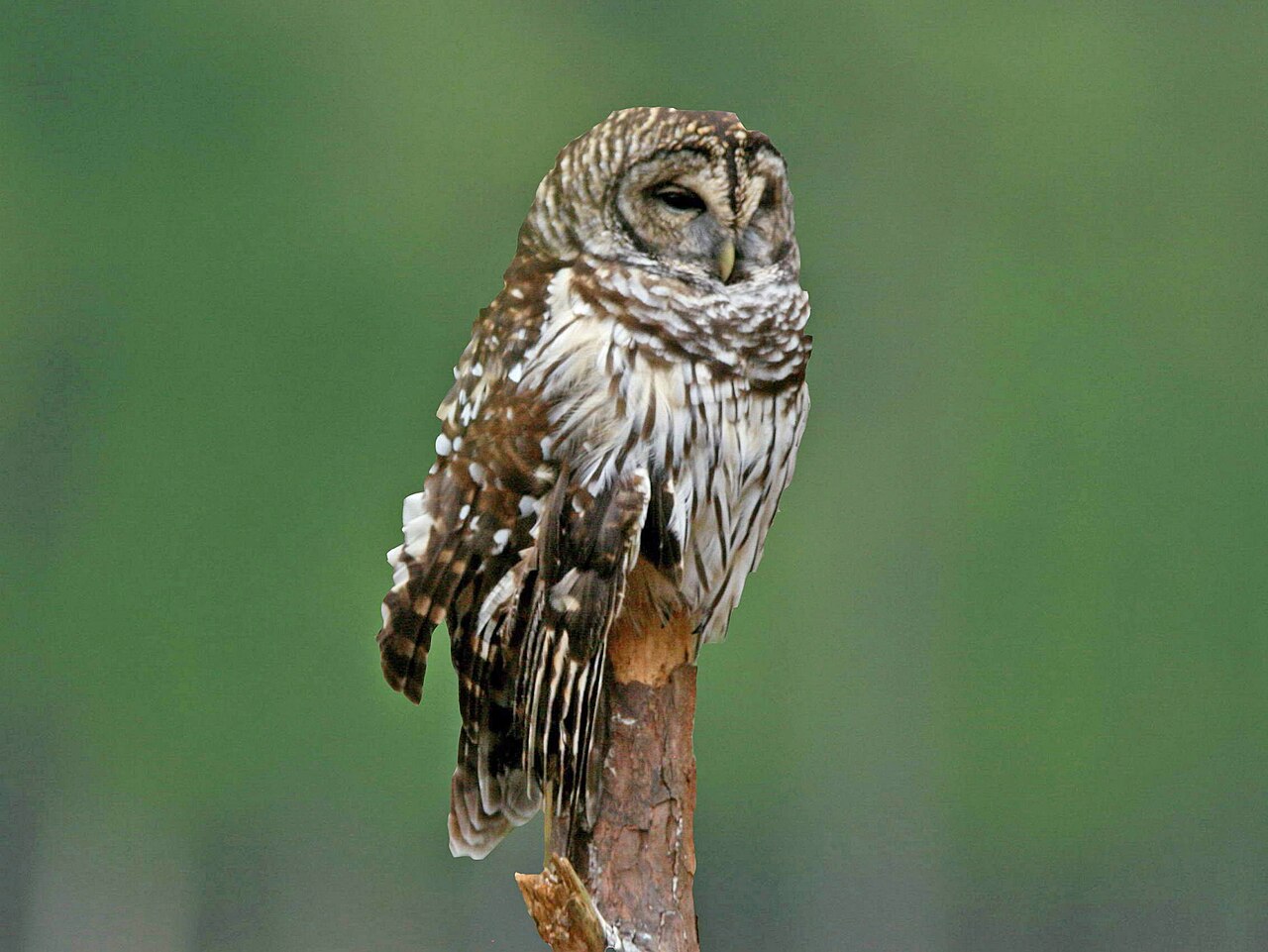
| Barred Owl | Dark eyes, “who cooks for you,” swamps |
| Great Horned Owl | Large, ear tufts, deep hoots |
| Eastern Screech-Owl | Small, ear tufts, trilling call |
| Barn Owl | Pale, heart-shaped face |
How Many Types of Owls Live in South Carolina?
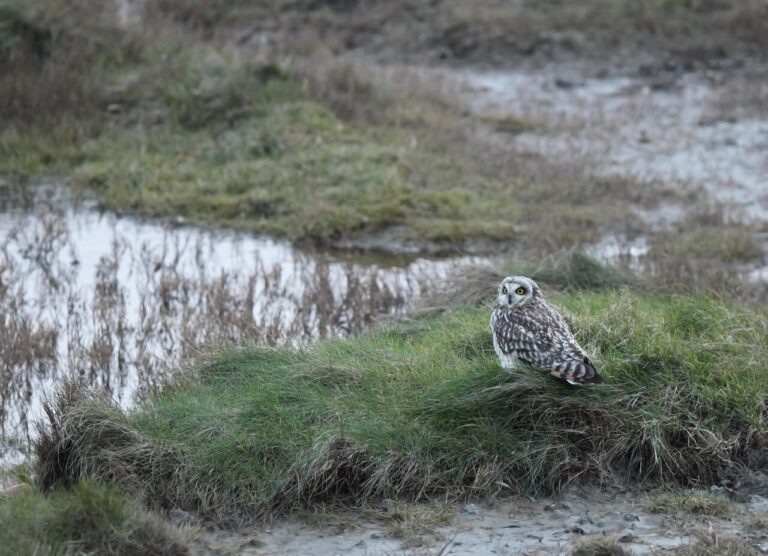
South Carolina hosts several owls, with a few common resident species and a couple of rarer ones. The barred owl is perhaps the most characteristic owl of the state, abundant in the swamps, bottomland hardwoods, and wet forests that cover much of the Lowcountry and beyond, and its loud hooting is a classic sound of southern woods. The great horned owl is the largest and most powerful owl in South Carolina, found statewide in forests, farmland, and wooded edges, while the eastern screech-owl is a small, common owl of woodlands, parks, and suburban yards. The barn owl, with its pale plumage and heart-shaped face, hunts over open fields, marshes, and farmland, though it is less often seen. Rarer visitors include the northern saw-whet owl and short-eared owl, mainly in winter and in small numbers. Understanding South Carolina owls begins with these species, part of the wider group covered in our guide to types of owls.
Common South Carolina Owls and How to Identify Them
Several owls are especially worth knowing in South Carolina. The barred owl is a stocky, round-headed owl with dark eyes, brown-and-white barring, and no ear tufts, best known for its call that sounds like “who cooks for you, who cooks for you all,” and it favors wet woods and swamps. The great horned owl is a large owl with prominent ear tufts, a barred body, a white throat, and deep, resonant hoots, at home across the state. The eastern screech-owl is small, with ear tufts and camouflaged plumage in either gray or reddish tones, giving a descending whinny and a trill, and it will use nest boxes in yards. The barn owl is a pale, ghostly owl with a white, heart-shaped face, golden-buff upperparts, and dark eyes, hunting silently over open ground at night. Each owl is a thrilling find, as explored in our guide to types of hawks in South Carolina.
Where to See Owls in South Carolina
Owls can be found across South Carolina in a range of habitats. The swamps, bottomland hardwood forests, and wooded river corridors of the Lowcountry and Midlands are prime for barred owls, whose calls echo through the cypress and tupelo, and these owls are often heard at dusk and even midday. Great horned owls range statewide in forests, farmland, and wooded edges, using large stick nests, often ones abandoned by hawks. Eastern screech-owls live in woodlands, parks, and suburban neighborhoods with mature trees, and they readily take to nest boxes. Barn owls hunt over open fields, marshes, farmland, and coastal areas, nesting in barns, buildings, and boxes, though they are less frequently observed because they are strictly nocturnal. The mountains of the Upstate add habitat for some species. Because different owls favor different habitats, South Carolina offers good owling year-round, as detailed in our guide to backyard birds of South Carolina.
The Barred Owl’s Voice
The barred owl is the voice of South Carolina’s swamps, and understanding it enriches every visit to the Lowcountry woods. According to the Cornell Lab of Ornithology, the barred owl is highly vocal, giving a distinctive series of hoots often described as sounding like the phrase “who cooks for you, who cooks for you all.” This call carries through the bottomland forests and cypress swamps, and barred owls are among the most talkative of owls, sometimes calling during the day as well as at night, and even engaging in raucous caterwauling duets and cackles when pairs or neighbors interact. Unlike many owls, barred owls are relatively bold and can be surprisingly easy to observe, roosting in trees over water and responding to imitations of their call. Their preference for wet woods makes South Carolina, with its abundant swamps, ideal habitat. Learning the barred owl’s varied voice is one of the joys of birding in the state, as explored in our guide to types of hawks in South Carolina.
How Owls Hunt in the Dark
Owls are superbly equipped for hunting at night, and South Carolina’s owls show these adaptations well. Owls have exceptional hearing, with many species able to locate prey by sound alone, aided by facial discs that funnel sound to their ears, and in some owls the ears are placed asymmetrically to pinpoint the exact location of a rustling mouse. Their large, forward-facing eyes gather what little light is available, giving excellent night vision, and their flight is nearly silent thanks to specially structured wing feathers that muffle the sound of air rushing over them, allowing them to approach prey undetected. The great horned owl combines these gifts with powerful talons capable of a crushing grip, while the barn owl is among the most accomplished of all at hunting by sound in total darkness. These adaptations make owls formidable nocturnal predators. Appreciating how owls hunt deepens the wonder of finding them, as detailed in our guide to backyard birds of South Carolina.
How to Find Owls in South Carolina
Finding owls in South Carolina is rewarding, especially given the abundance of barred owls in the state’s swamps and forests. Listening is the best approach, since owls are most vocal at night and around dusk and dawn, and the barred owl in particular is talkative, often responding to imitations of its “who cooks for you” call and sometimes calling in daylight, making it one of the easier owls to detect. Explore wooded rivers, cypress swamps, and bottomland forests at dusk to hear and perhaps see barred owls, and listen in wooded neighborhoods and parks for the whinny and trill of eastern screech-owls, which readily use nest boxes. Great horned owls give deep hoots from forests and farmland edges, often in late winter when they nest early. Barn owls hunt over open fields and marshes at night and can sometimes be found at traditional roost or nest sites in barns and buildings. With patient listening in the right habitats, South Carolina rewards the owl seeker well throughout the year, particularly in its rich Lowcountry swamps.
Appreciating South Carolina Owls
South Carolina owls are a rewarding group to appreciate, both for their variety and for the atmosphere they bring to the state’s wild places. From the talkative barred owl of the cypress swamps to the powerful great horned owl, the small screech-owl of wooded yards, and the ghostly barn owl of open fields, the state offers excellent owling across its habitats. Learning the calls, exploring the Lowcountry swamps at dusk, and putting up nest boxes for screech-owls all deepen the experience. Because owls are mysterious and mostly nocturnal, finding one feels like a special reward, and South Carolina’s abundant swamps make it especially good for the ever-vocal barred owl. Taking the time to appreciate South Carolina’s owls connects you to the quiet, wild heart of the state’s forests, swamps, and fields.
Frequently Asked Questions
How many types of owls are in South Carolina?
South Carolina hosts several owls, including the great horned owl, barred owl, eastern screech-owl, and barn owl, plus rarer winter visitors like the northern saw-whet owl.
What is the most common owl in South Carolina?
The barred owl is one of the most common and characteristic owls in South Carolina, abundant in the swamps and bottomland forests, where its hooting is often heard.
What owl says “who cooks for you” in South Carolina?
The barred owl gives the famous call that sounds like “who cooks for you, who cooks for you all.” It is common in South Carolina’s wet woods and cypress swamps.
What is the large owl with ear tufts in South Carolina?
The great horned owl is the large owl with prominent ear tufts in South Carolina, a powerful predator found statewide in forests, farmland, and wooded edges.
Does South Carolina have barn owls?
Yes, barn owls live in South Carolina, hunting over open fields, marshes, and farmland at night. Their pale plumage and heart-shaped face make them distinctive when seen.
What is the smallest owl in South Carolina?
The eastern screech-owl is the smallest common owl in South Carolina, a small owl with ear tufts that lives in woodlands, parks, and yards and uses nest boxes.
Where can you see owls in South Carolina?
Look in swamps and bottomland forests for barred owls, statewide woods for great horned owls, wooded yards for screech-owls, and open fields for barn owls.